

Japanese Coffee Cups
Coffee changes as it cools, which means the thickness of a Japanese coffee cup and the width of its mouth are still working on the last mouthful.
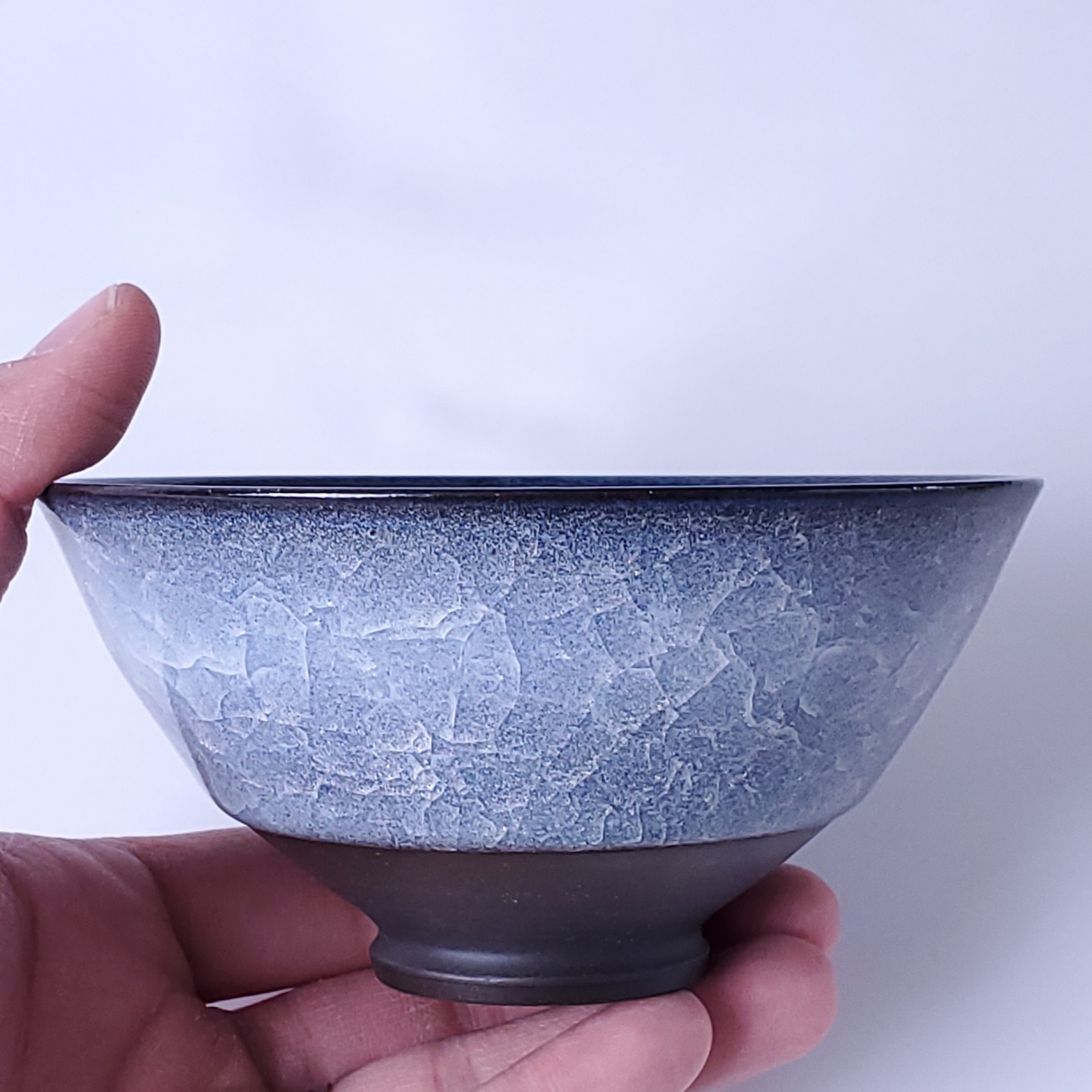
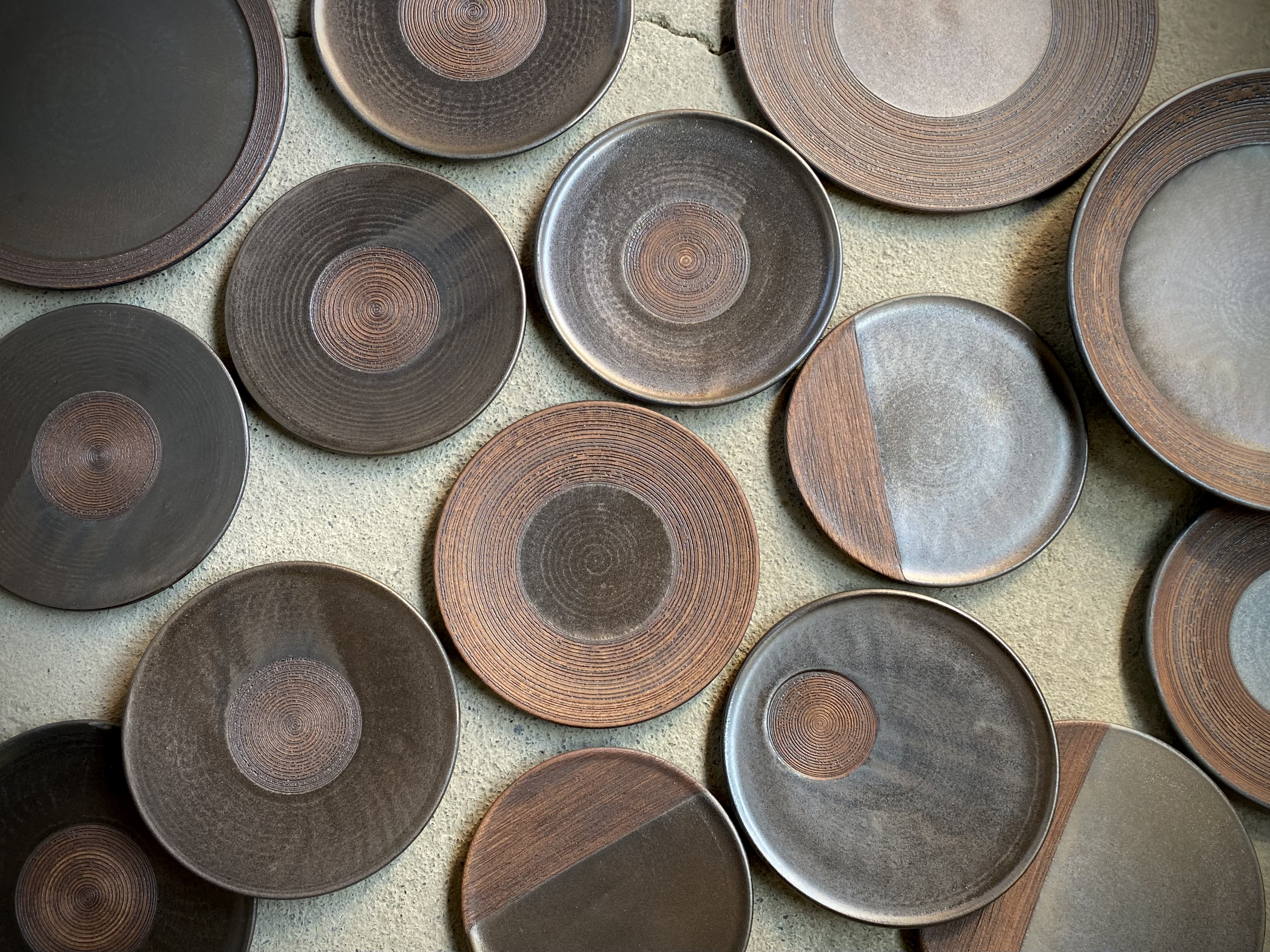
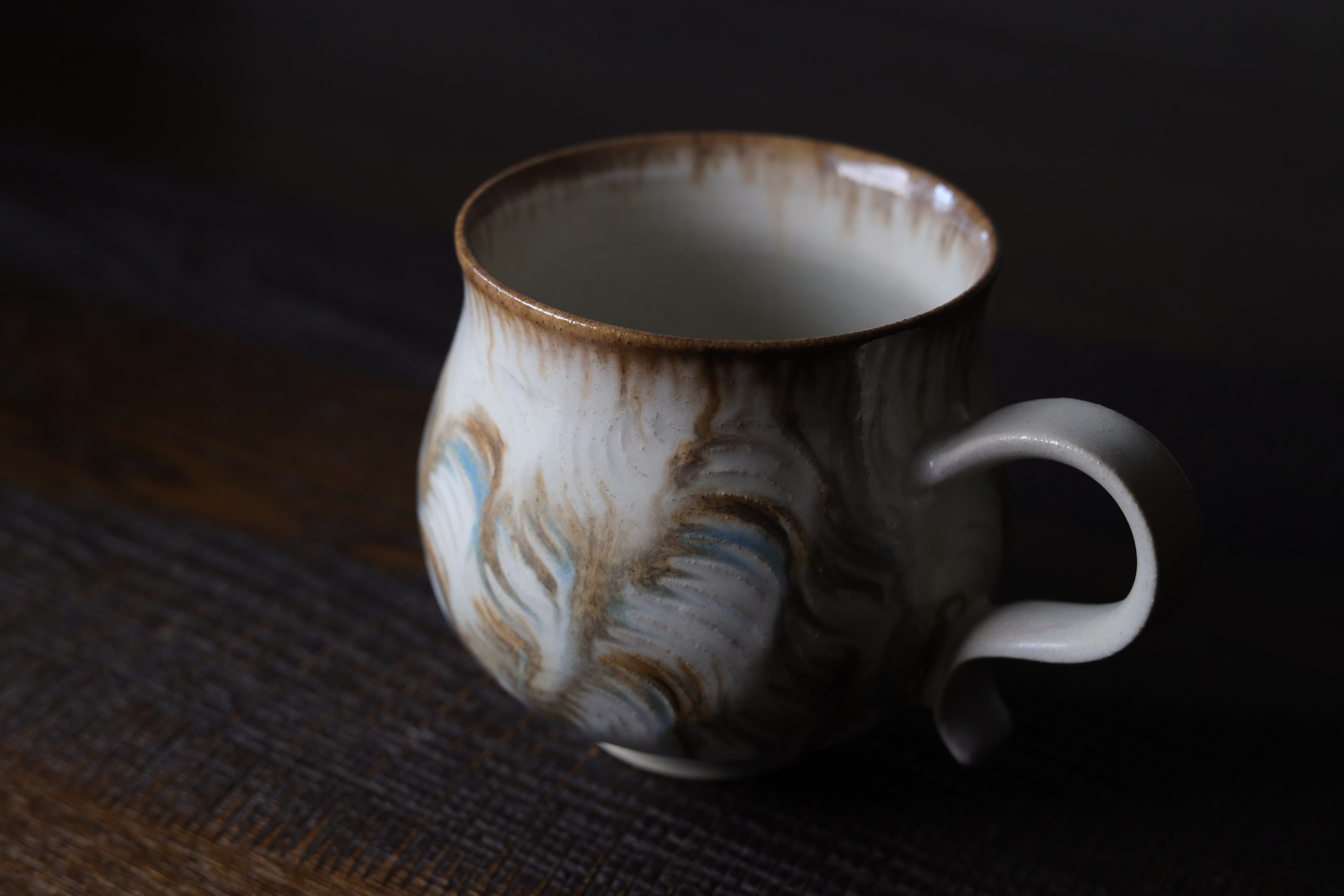
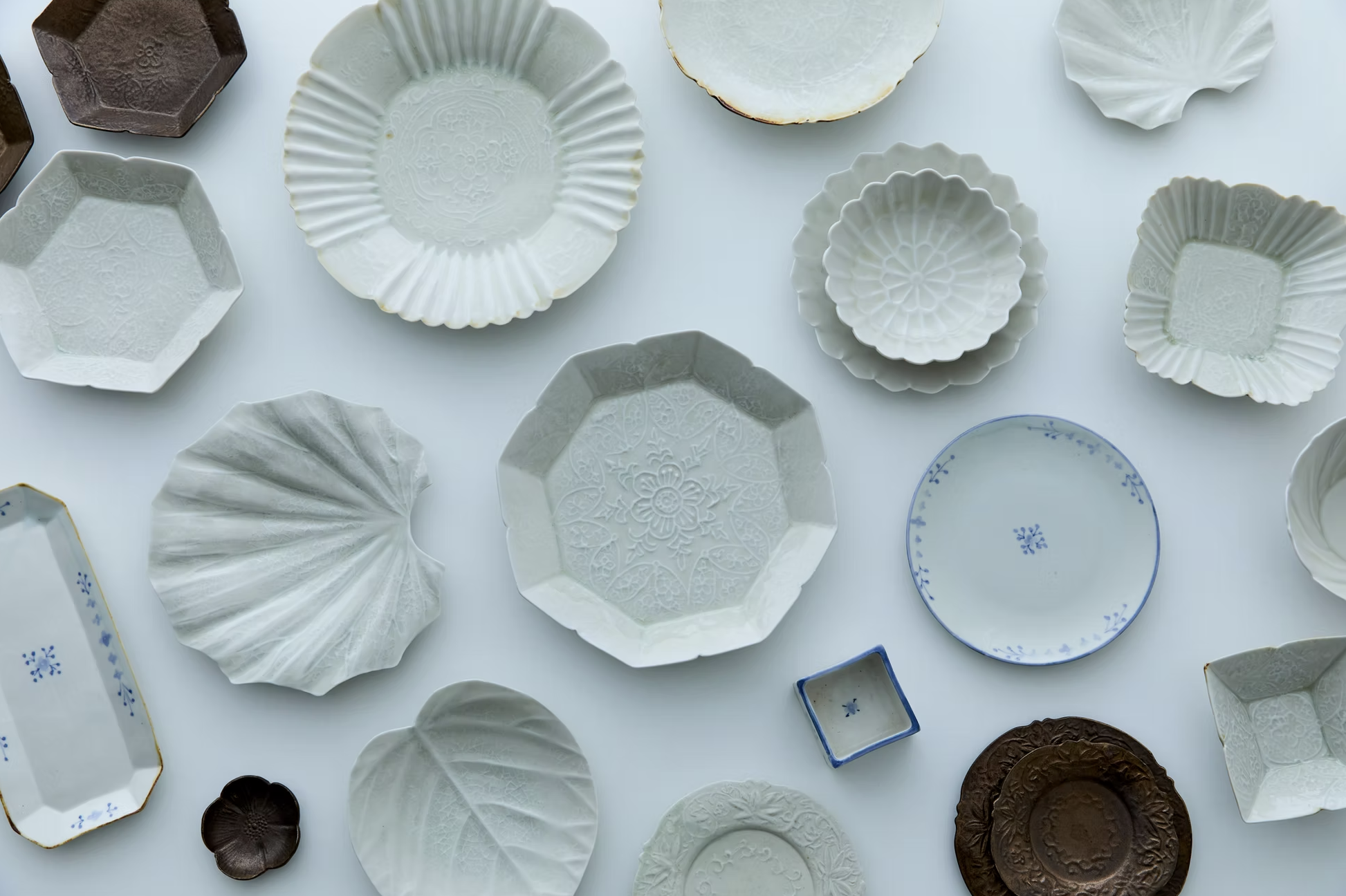
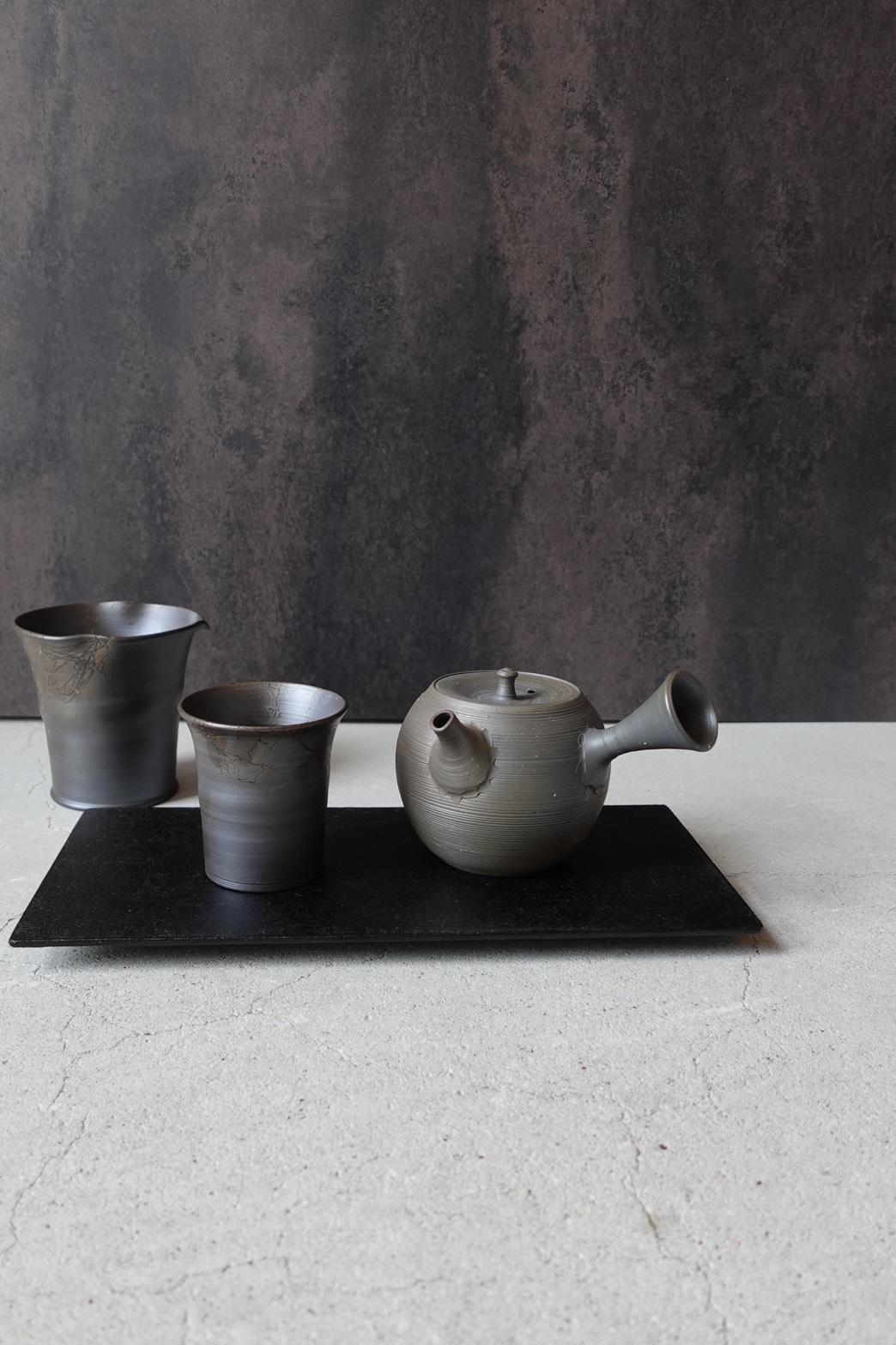
Many of these sit a little smaller than a mug and draw in toward the rim. Some have faces cut into the side. Some carry raised ridges. Some are coated in white slip. Some are fired bare, with no glaze at all. Porcelain is thin and lets the heat go quickly; stoneware is thicker and holds it. Sizes, care & FAQ
Artisan Works

Takemura Yoshinori
Painted Chill Mug
$2,150.00
Japanese Coffee Cups

TATA pottery studio
Bear Mug, Round No.1
$1,690.00
Japanese Coffee Cups

TATA pottery studio
Bear Mug, Round No.2
$1,690.00
Japanese Coffee Cups

Kinooto Kobo
Matte Black Shinogi Free Mug — Aizu
$615.00
Japanese Coffee Cups

Furutani pottery
Vertical Iron-Line Egg Mug — Shigaraki
$799.00
Japanese Coffee Cups

anna terada
Playful Mug, Blue
$1,229.00
Japanese Coffee Cups

Japanese Coffee Cups
Square Coffee Cup — Shigaraki
$768.00
Buying guide
Japanese Coffee Cups Buying Guide
What you will find here
This collection gathers Japanese coffee cups made by artisans across the country: faceted cups and mugs in Hagi glaze, unglazed cups and cups with saucers from Bizen, painted porcelain from Arita, glazed cups from Kyoto and Shigaraki, and small cups and saucers with fruit motifs from Okinawa. For brewing, there are handmade pour over drippers in porcelain from Seto and in Bizen clay. Each piece is listed under the artisan or workshop that made it.
How to choose
| Type | Approx. diameter | Good for |
|---|---|---|
| Cup and saucer | 6 to 10cm | Espresso-style or a short black coffee |
| Coffee cup | 8 to 10cm | A single cup of drip coffee |
| Mug | 8 to 13cm | A long coffee, latte, tea |
| Dripper | 10.5 to 11cm | Brewing pour over straight into a cup |
Sizes in each listing are measured from the actual piece. For the history and use of the saucer, see our guide to the Japanese coffee cup and saucer. If you like a bigger cup, browse Japanese mugs; if you prefer no handle at all, see free cups.
A Japanese pour over cup and dripper
A handmade coffee cup from Japan pairs well with a ceramic dripper. Ceramic holds heat, so warm the dripper and cup with hot water before you brew. Glazed porcelain drippers rinse clean easily; unglazed Bizen is more porous, so rinse it and let it dry fully. Our note on the difference between porcelain and stoneware explains how each clay behaves with heat.
Care
Each listing says whether that cup is microwave-safe and dishwasher-safe. The Hagi and Arita cups here are marked safe for both. Bizen and Okinawan pieces are marked as hand-wash only or limited. See our microwave and dishwasher guide for the reasons.
Questions
What is the difference between a coffee cup and a mug?
A coffee cup is usually lower and smaller, often with a saucer, and made for a single serving of drip coffee. A mug is taller and holds more.
Does the cup change the taste of coffee?
It changes how the coffee feels. A thin porcelain rim feels crisp and lets the coffee cool faster; a thick stoneware rim feels soft and keeps it warm longer.
Do you ship outside Japan?
Yes. Every cup is shipped worldwide from Kyoto.