Hakeme: The Brush-Marked White Slip Technique

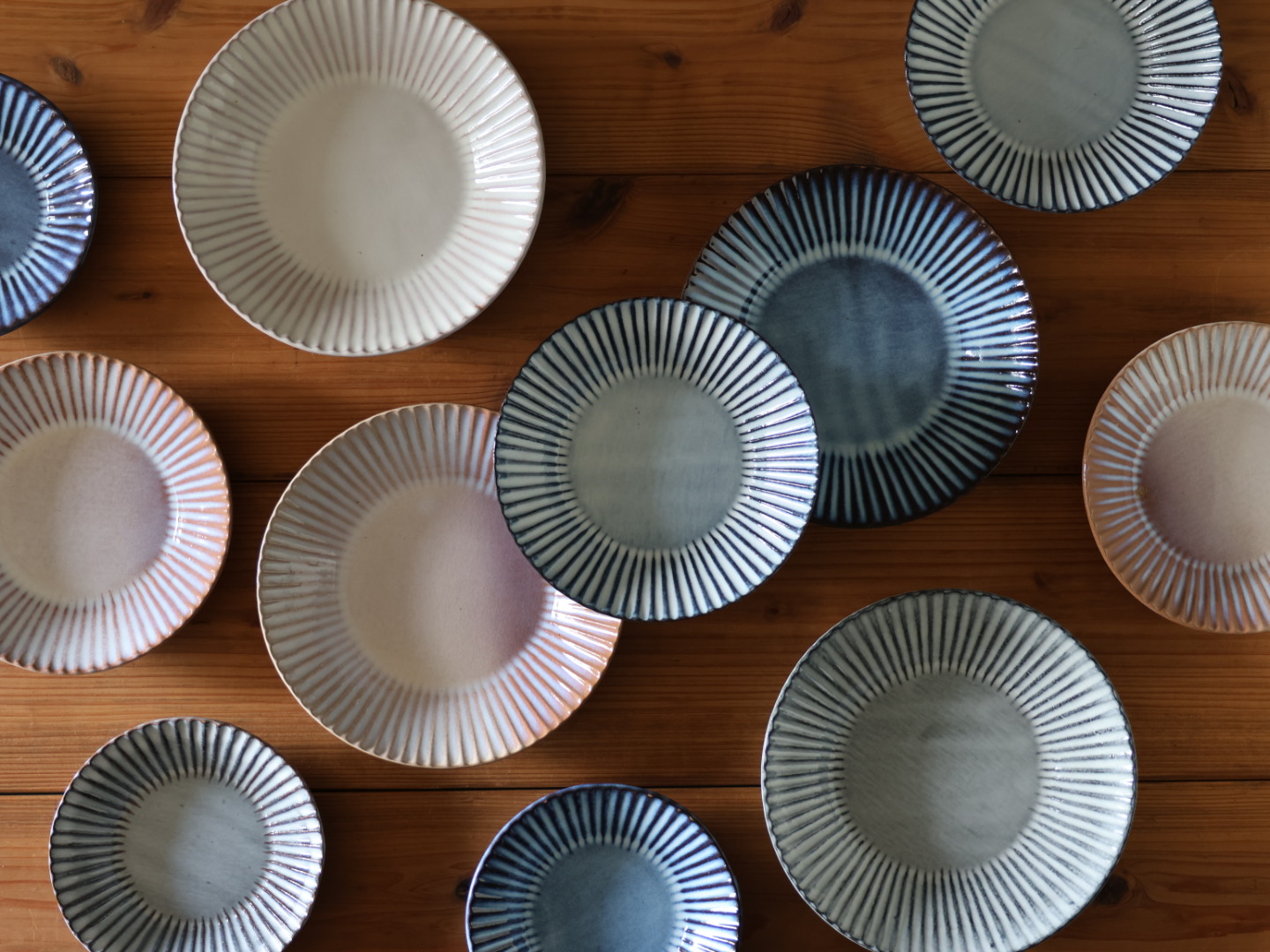
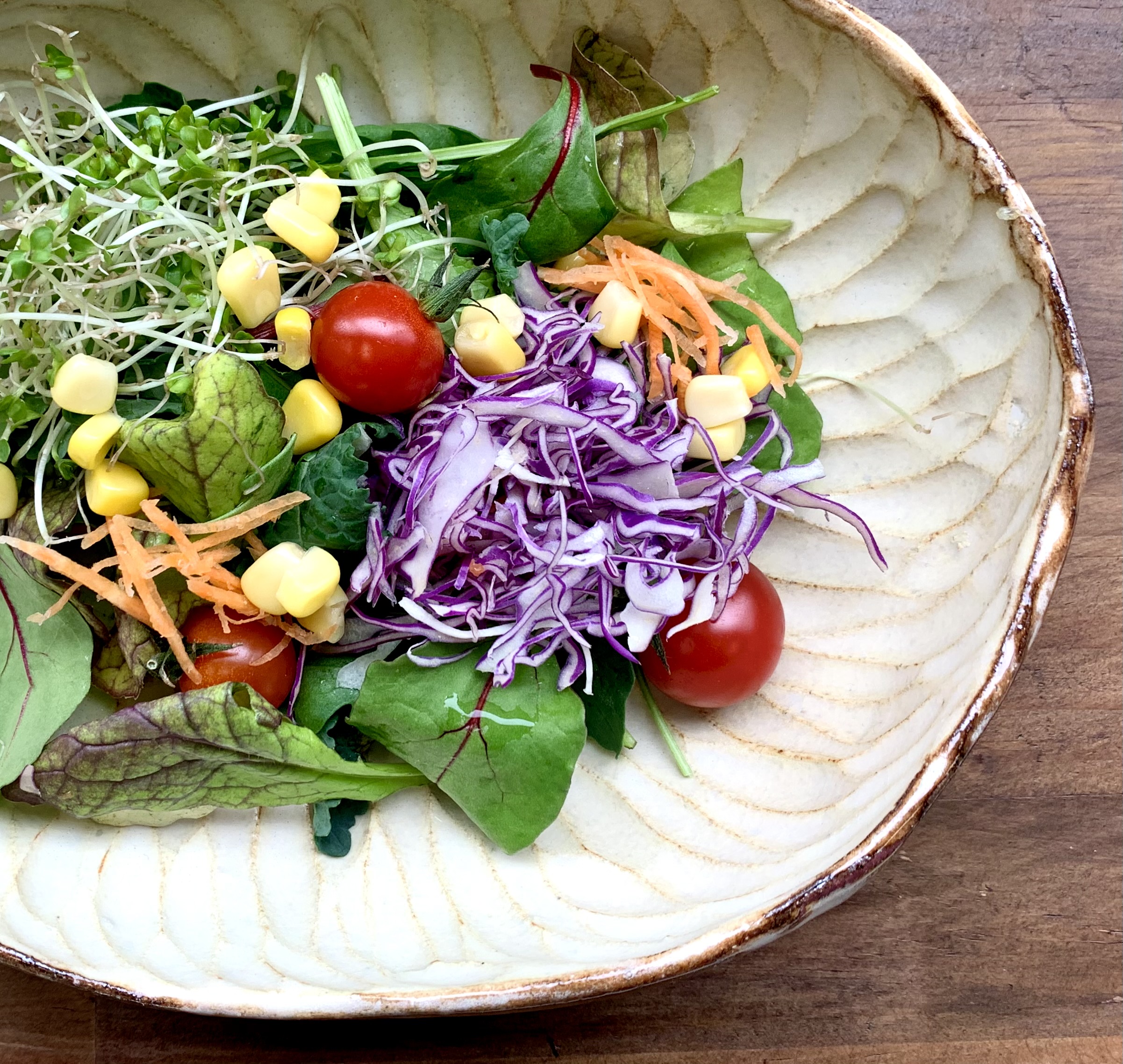
Hakeme is the decorative technique of applying white slip with a coarse brush and leaving the vigorous brush marks as scenery.
A technique of Korean origin, it is often seen on Karatsu ware and folk pottery. Alongside kohiki and mishima, it is one of the white slip decorations.
The movement of the brush becomes the expression of the piece, and each one carries its own generous, handmade rhythm.
The brush touches for only a moment
Slip can only be applied while the piece is leather-hard. On a fully dried body the slip shrinks first and peels away; too wet, and the piece itself collapses.
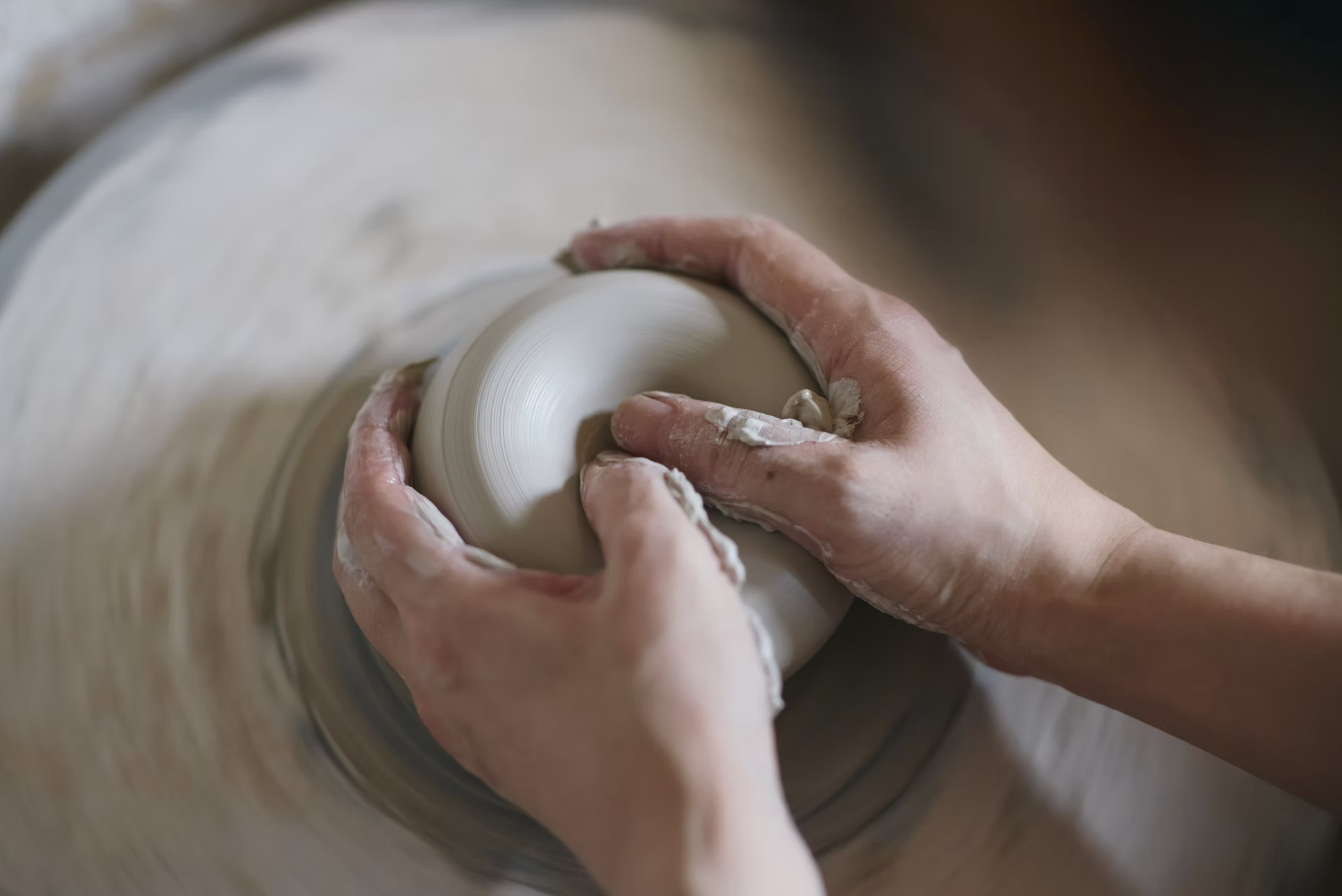
In hakeme, the brush is run across in one motion within that narrow window. Held against a turning wheel, the white band runs concentrically; swept vertically on a still piece, it becomes a straight streak.
The coarseness of the bristles, the amount of slip loaded, the speed of the stroke. Those three decide the density of the white and the spacing of the streaks. There is no second attempt.
Hakeme, kohiki and mishima compared
| Technique | How the slip is applied | How it looks |
|---|---|---|
| Hakeme | Brushed on coarsely, marks left | White streaks run; the body shows through |
| Kohiki | Dipped, or poured over the whole | A soft milky white overall |
| Mishima | Filled into stamped or incised hollows | White inlaid designs surface |
| Icchin | Squeezed from a tube | White lines standing in relief |
It changes with use
Hakeme pieces absorb. The slip layer is less dense than glaze, and through the crazing in the clear glaze at the surface, tea and cooking oils seep in little by little.
Color enters between the white streaks, and the boundary with the red-brown body softens. This change is called keinen bika. Doing medome at the start makes the staining enter evenly.
Related terms and guides
Related terms
- Kohiki Pottery: The White Slip Technique, Explained
- Shirogeshou: How Japanese Potters Make Dark Clay White
- Icchin: Slip Trailing, the Raised Dot Technique
- Keinen Bika: Pottery That Gets Better With Age
- Medome: How to Seal Unglazed Pottery Before First Use
- Japanese Pottery Glossary | Terms, Techniques & Kilns
Read further
- Five Decorating Techniques on Japanese Pottery
- Karatsu Ware: Kyushu's Rough, Tea-Loved Pottery
- Crazing (Kannyu): Cracks in Glaze That Aren't Damage
- How to Care for Japanese Ceramics: A Practical Guide
Read the speed of the brush
The spacing of the white streaks, how the body shows through. A hakeme piece keeps the very speed at which the maker ran the brush.
Browse platesFAQ
How does hakeme differ from kohiki?
Do hakeme pieces change with use?
The brush marks are uneven. Is that a defect?
Shop the related pieces
Japanese Plates
195 pieces See all


Japanese Bowls
75 pieces See all
Ceramic Studio Mochinoki
Red Enamel Flower Small Bowl
$239.00
Japanese Bowls

Teramoto Shiori
Large Bowl — Seto Porcelain
$287.00
Bowls

Furutani pottery
Gosu Blue Line Rice Bowl, Small — Shigaraki
$176.00
Japanese Rice Bowls

Furutani pottery
Iron-Line Rice Bowl, Large — Shigaraki
$192.00
Japanese Rice Bowls
New to Japanese pottery? Start here — its history, how pottery differs from porcelain, the clays and glazes behind each style, and how to care for a piece. → Japanese Pottery: The Complete Guide