Kodai (Foot Ring): The Part Collectors Check First

The kodai is the ring-shaped foot on the underside of a piece. It is a practical device that steadies the piece, and at the same time the point of appreciation where a maker's individuality is most concentrated, in how it is trimmed.
Hence the saying that people who love pottery turn it over. Glaze and painting on the front can be aimed for; the trimming of the foot shows the habits of the hand exactly as they are. So a discerning eye looks at the underside first.
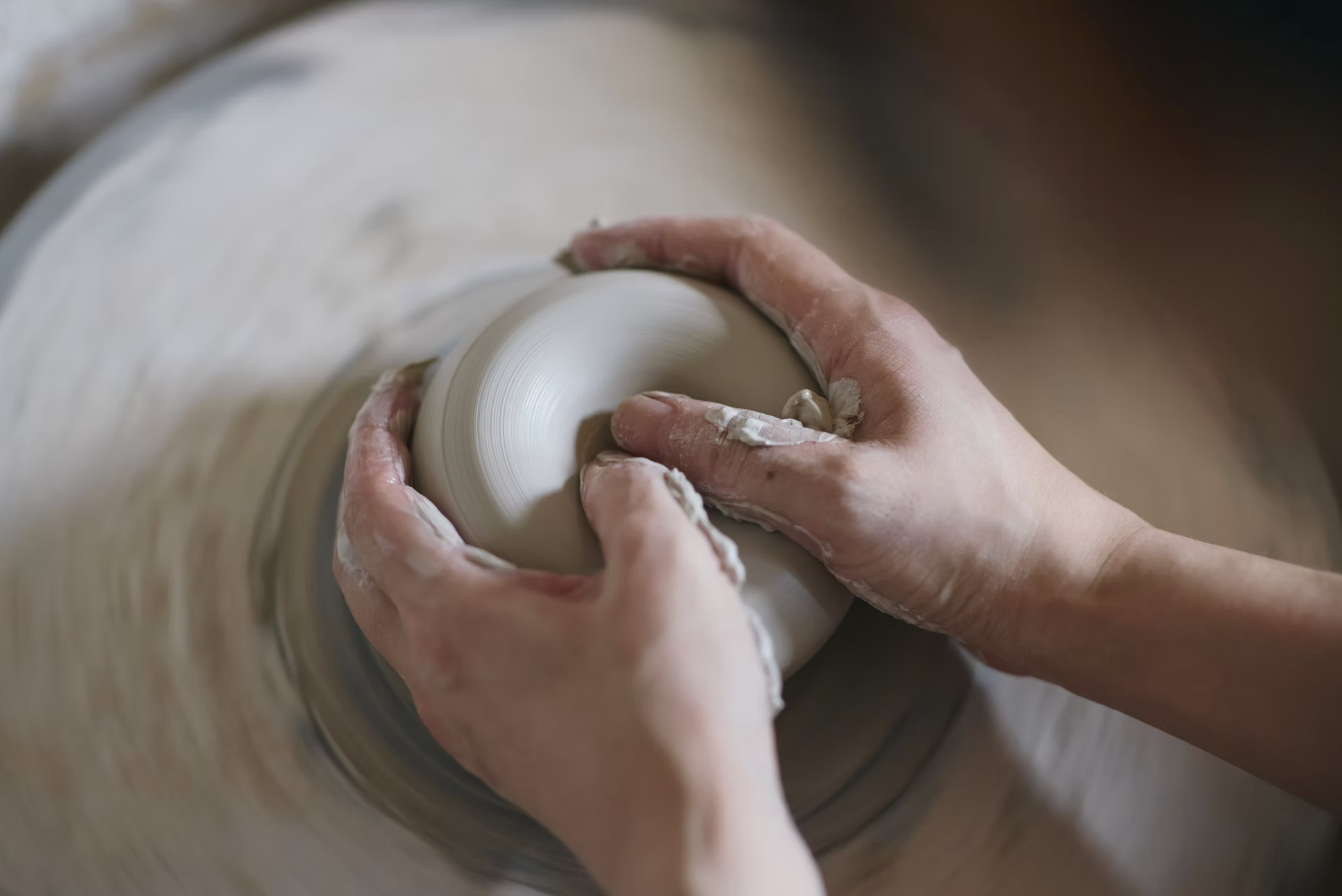
The usual method is to invert a piece thrown on the potter's wheel while leather-hard and trim the foot with a tool. On tebineri pieces it is sometimes pushed out with the fingers.
Three roles of the foot ring
- Ease of holding (heat protection) In Japan, food is eaten with the piece lifted in the hand. Hooking the fingers on the foot keeps the hand from burning even with hot food inside.
- Stability It stops a piece rocking on the table. Because contact is limited to a ring, it stands steady despite slight distortion.
- Aesthetic effect The height of the foot and the beauty of the trimming decide the form and dignity of the whole piece. The same bowl looks composed with a high foot, modern with a low one.
Regional character in the foot
| Region or technique | Character of the foot | How it looks |
|---|---|---|
| Hagi ware | Wari-kodai (cut foot) | Notches cut into part of the foot |
| Bizen, Shigaraki (yakishime) | No glaze applied | Ash scorching and clay texture show as they are |
| Porcelain (Arita, Hasami) | Thin and low | White at the contact face, finely trimmed |
| Raku ware | Cut by hand | Irregular, keeping rib marks |
On unglazed pieces especially, the area around the foot becomes a major part of the keshiki the kiln produced.
What the underside tells you
Looking at the inside of the foot — the small rise at the centre, called tokin — and its surroundings tells you a good deal about how a piece was made.
Spiralling trimming marks mean it was thrown. Finger presses or rib marks mean hand building. A thin, even line running vertically is the seam of a casting mould.
And because the contact face of the foot has been wiped clear of glaze, the color of the body shows there directly. Red-brown or grey means stoneware; white means porcelain. It is the simplest way to tell the difference between stoneware and porcelain.
Related terms and guides
Related terms
- Rokuro: How a Pot Is Thrown on the Wheel
- Tebineri: Hand-Building Pottery Without a Wheel
- Mentori: The Faceted Surfaces of Japanese Pottery
- Shinogi: The Carved Ridges on Japanese Pottery
- Yakishime: Unglazed Pottery Fired to Its Limit
- Japanese Pottery Glossary | Terms, Techniques & Kilns
Read further
- Japanese Bowls Explained: Chawan, Donburi, Matcha Bowl
- Japanese Pottery Sizes: Sun-to-Centimetre Conversion
- How to Choose a Japanese Rice Bowl (Chawan)
- Stoneware vs Porcelain: How to Tell Them Apart
Choose by turning it over
The height of the foot, the trimming marks, the color at the contact face. How a piece was made shows most honestly on the underside.
Browse bowlsFAQ
What roles does the kodai on the underside play?
Is it true that region and technique can be told from the foot?
My piece rocks on its foot. Is it defective?
Shop the related pieces
Japanese Bowls
75 pieces See all
Ceramic Studio Mochinoki
Red Enamel Flower Small Bowl
$239.00
Japanese Bowls

Teramoto Shiori
Large Bowl — Seto Porcelain
$287.00
Bowls

Furutani pottery
Gosu Blue Line Rice Bowl, Small — Shigaraki
$176.00
Japanese Rice Bowls

Furutani pottery
Iron-Line Rice Bowl, Large — Shigaraki
$192.00
Japanese Rice Bowls
New to Japanese pottery? Start here — its history, how pottery differs from porcelain, the clays and glazes behind each style, and how to care for a piece. → Japanese Pottery: The Complete Guide