Sometsuke: Blue and White Porcelain, Explained

Sometsuke is the technique of drawing a design on a white porcelain body with gosu, covering it with a clear glaze, and firing at high temperature. Once fired, the lines drawn in gosu come out a clear indigo, set against the white of the porcelain.
Because the design is sealed beneath the glass layer of the glaze, sometsuke is the leading example of underglaze painting. The surface is smooth, and decades of washing will not rub the drawing away.
It originates in Chinese qinghua blue and white, and in Japan it spread rapidly in the early 17th century as porcelain production began in Arita. Imari, Hasami ware and Tobe still produce it today as the representative expression of the porcelain regions.
How the blue turns blue
Gosu is a mineral pigment based on cobalt, with iron and manganese present as well. Before firing it is a blackish grey, and at the moment it is painted on the body it gives no hint of the indigo to come.
Passing through the main firing at 1,200–1,300°C, the cobalt dissolves into the glassy glaze and only then turns blue. In other words, a sometsuke painter cannot see the color of their own drawing until it comes out of the kiln. They work from the density of the line alone, imagining the blue that will emerge.
Gradation is made with a technique called dami. The outline is drawn with a fine brush, then a thick brush loaded with gosu fills the areas. That single move gives depth to a picture made in one color.
Sometsuke, akae and gosai compared
Porcelain painting divides sharply in character according to whether it goes under or over the glaze.
| Aspect | Sometsuke | Akae and gosai |
|---|---|---|
| Where it is drawn | Under the glaze (underglaze) | Over the glaze (overglaze) |
| Firing | 1,200–1,300°C in one firing | Fixed at 700–800°C after the main firing |
| Color | Indigo alone, worked in gradation | Red, green, yellow, purple, gold and more |
| Feel | Flat; no relief to a fingertip | Enamel sits on top with slight relief |
| Handling | Often dishwasher and microwave safe | Hand washing advised; weak to friction |
Both can appear on one piece. A structure drawn in sometsuke with akae and gold layered over it is called kinrande, known as the luxurious style of ko-Imari.
Hand painted, or transfer printed
Sometsuke-style pieces on the market are both hand painted and transfer printed. The clue for telling them apart is the line.
- The line changes width If the thickness wavers as the brush enters and leaves, it is hand painted. A transfer keeps a uniform width.
- Each piece differs Set several plates of the same design side by side: if the pattern sits slightly differently on each, it is hand painted. Exactly identical positions mean a transfer.
- Unevenness in the fill Density variation and brush marks in the filled areas are proof of a hand.
Neither is superior. A transfer achieves a uniformity and a price nothing else can; a hand produces a waver nothing else can.
Related terms and guides
Related terms
- Gosu: The Cobalt Blue Behind Japanese Sometsuke
- Shita-etsuke: Underglaze Painting and Why It Never Fades
- Uwa-etsuke: How Overglaze Enamel Painting Works
- Akae: The Red Overglaze Enamel of Kutani and Arita
- Suyaki (Bisque Firing): What Happens in the First Fire
- Japanese Pottery Glossary | Terms, Techniques & Kilns
Read further
- Japanese Pottery Patterns: What the Motifs Actually Mean
- Arita Ware: Japan's First Porcelain, 400 Years On
- Hasami Ware: Everyday Japanese Porcelain from Nagasaki
- Kyo Ware and Kiyomizu Ware: Kyoto's Refined Ceramics
- Stoneware vs Porcelain: How to Tell Them Apart
Look at blue and white
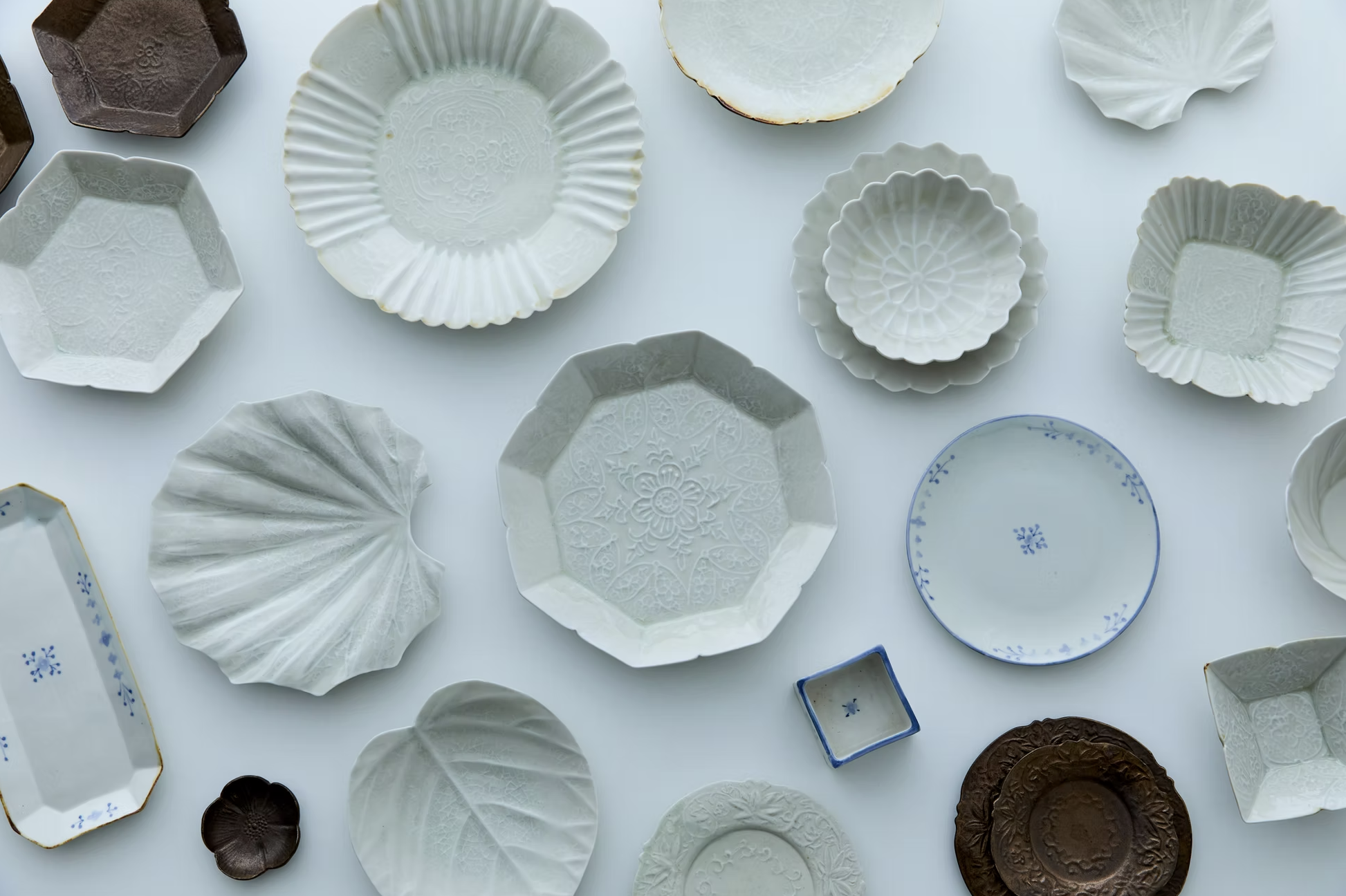
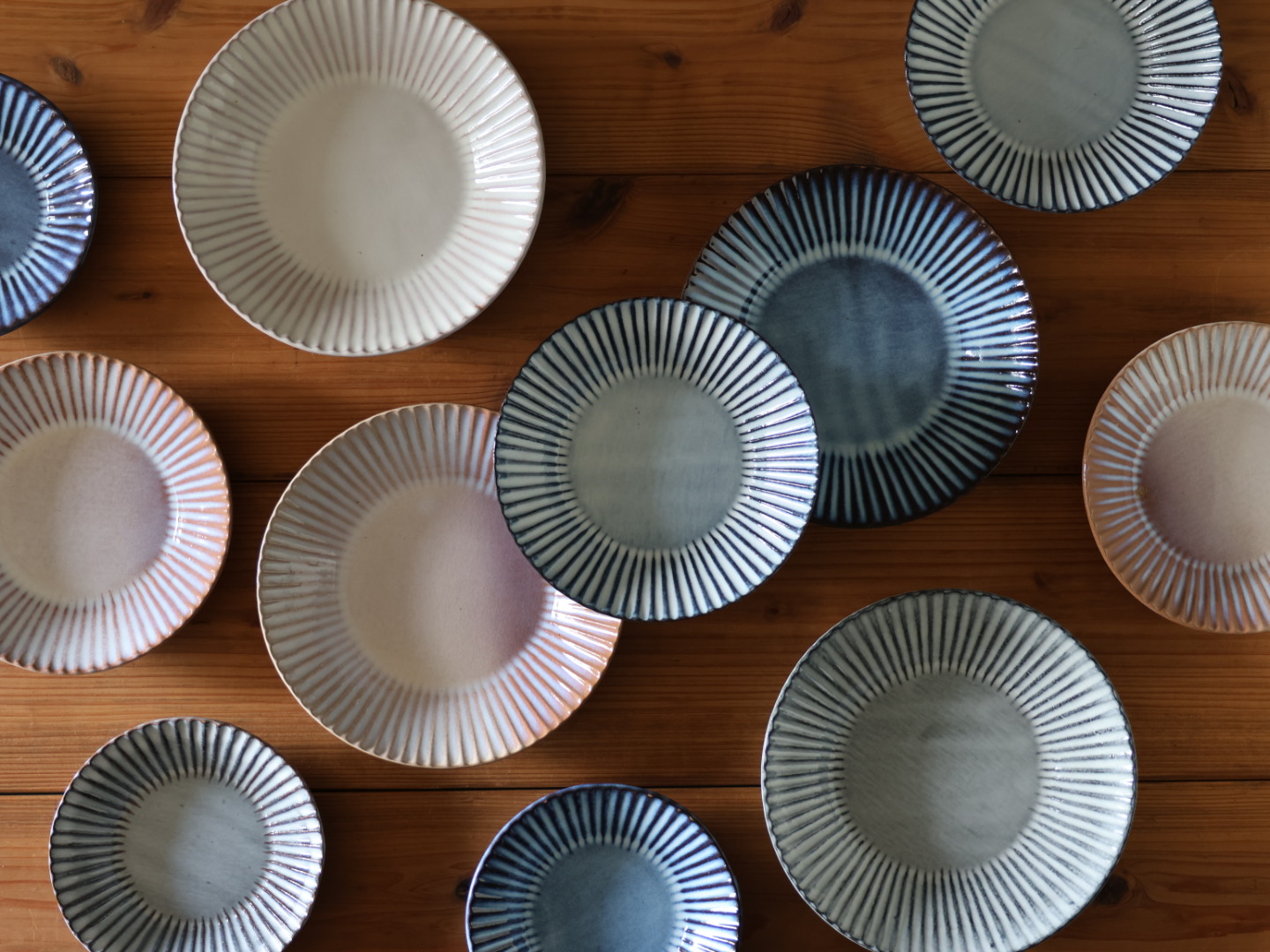
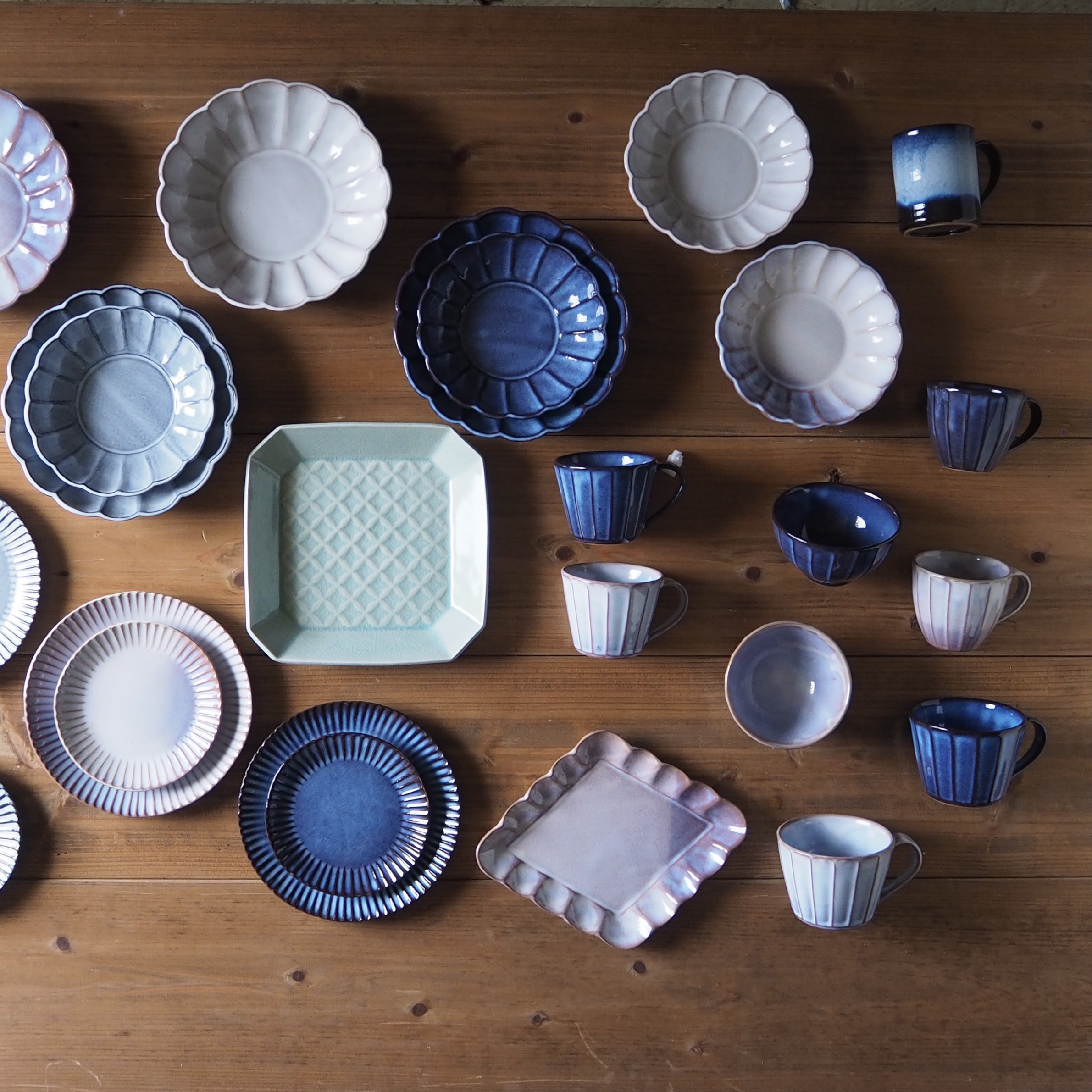
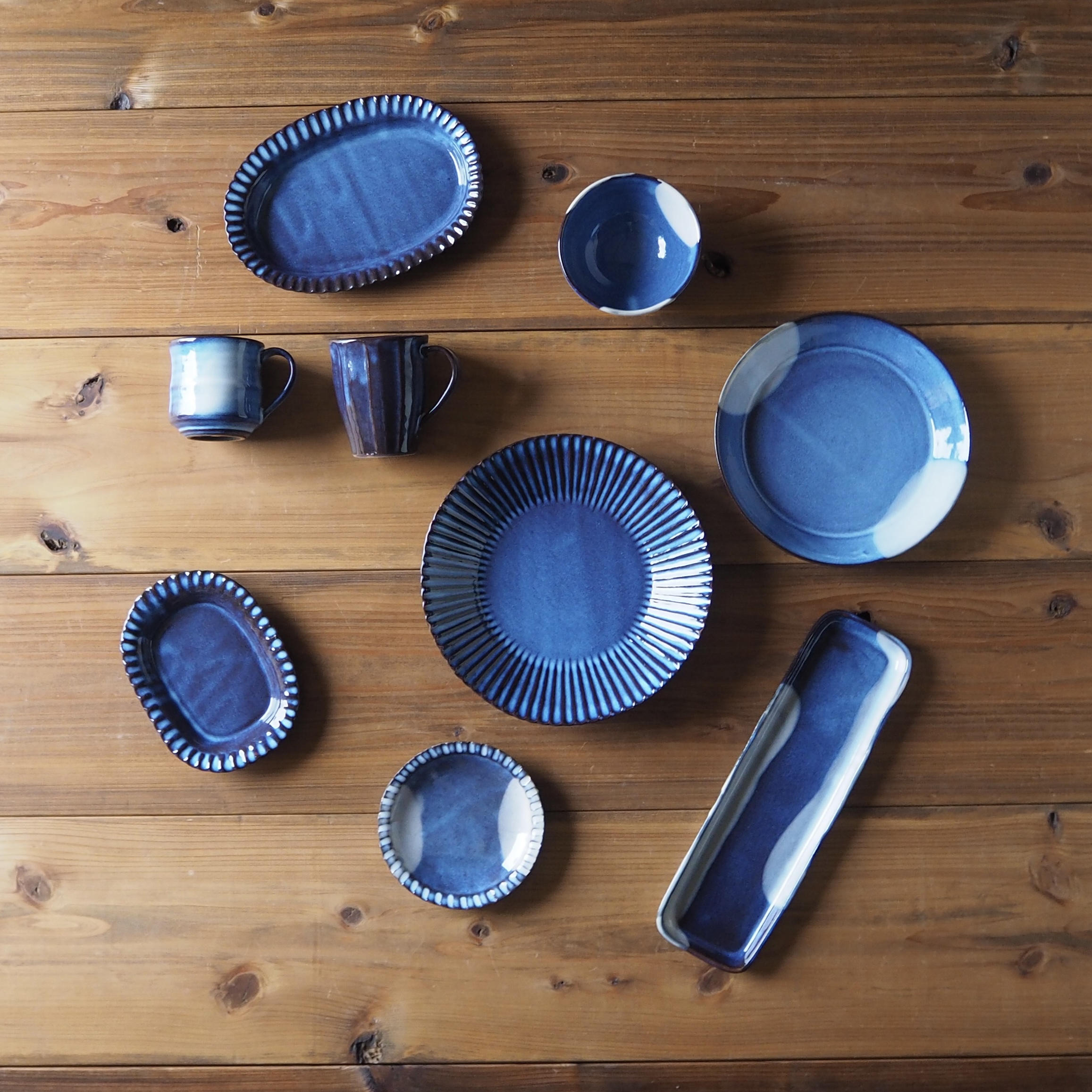
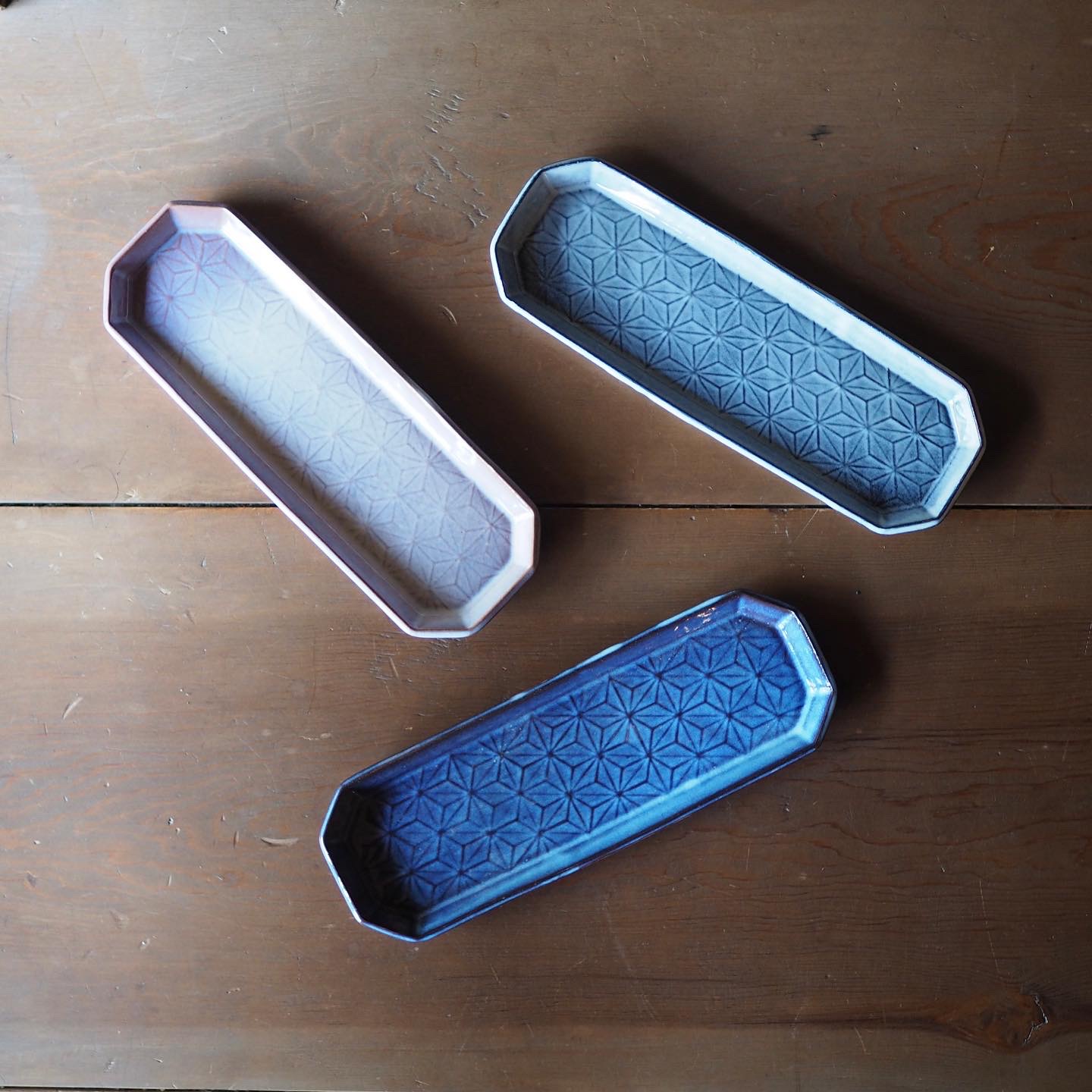
Nokaze introduces painted pottery, sometsuke among it, together with the background of the person who painted it. Compare the waver of the line and the unevenness of the fill in the photographs.
Browse painted ceramicsFAQ
What kind of technique is sometsuke?
What is the difference from overglaze painting such as akae?
Can sometsuke go in the dishwasher?
Shop the related pieces
Japanese Painted Ceramics
42 pieces See all
Higuchi Maki
Squid Plate, 15cm
$383.00
Plates

Komuro Shizuka
Hokkaido Flower Field Large Plate
$796.00
Plates

Higuchi Maki
Grape Free Cup, Blue and Red
$319.00
Japanese Tea Cups (Yunomi)

jiucasca
Sometsuke Floral Vase — Kyoto
$239.00
Japanese Vases
New to Japanese pottery? Start here — its history, how pottery differs from porcelain, the clays and glazes behind each style, and how to care for a piece. → Japanese Pottery: The Complete Guide