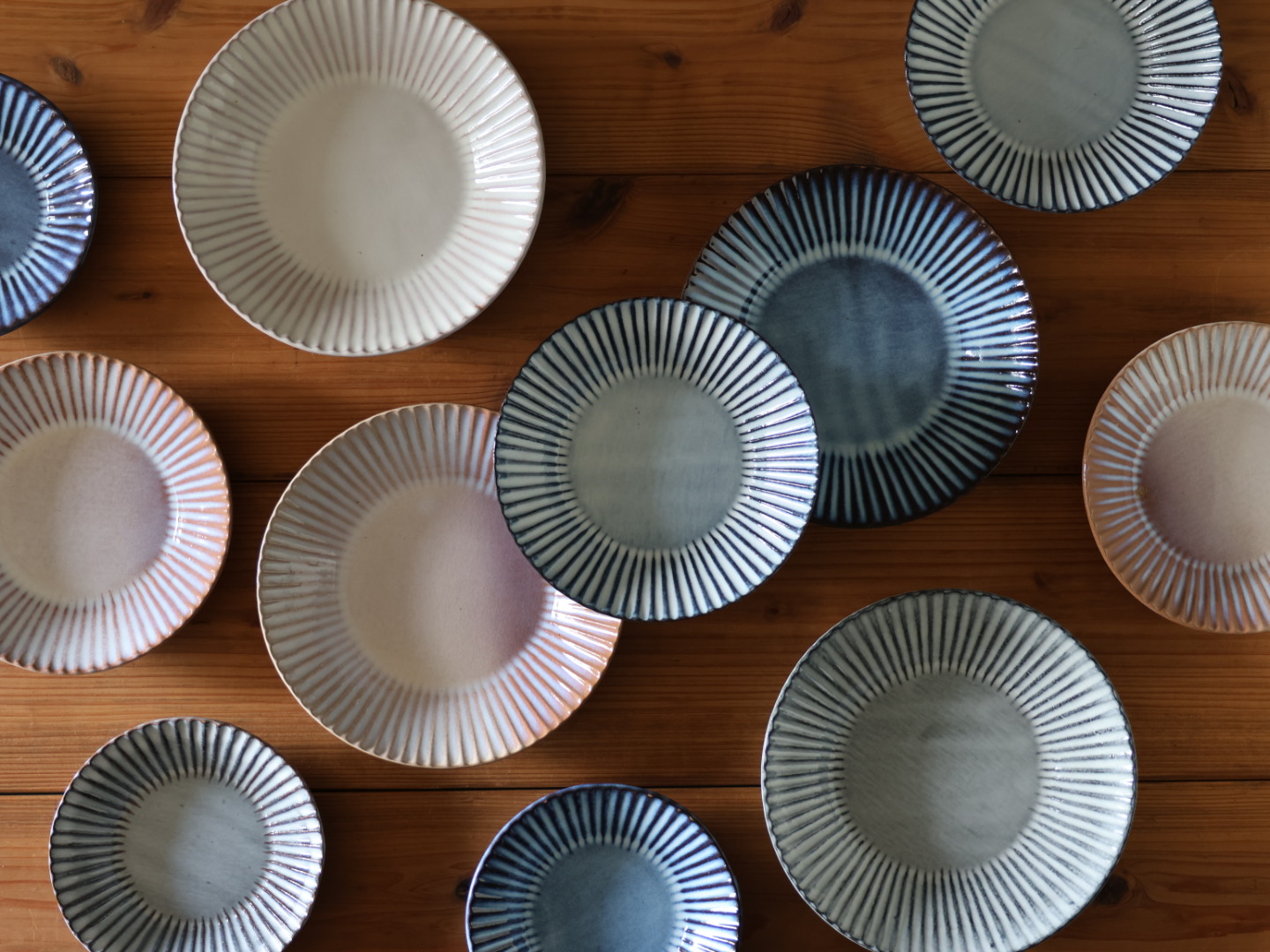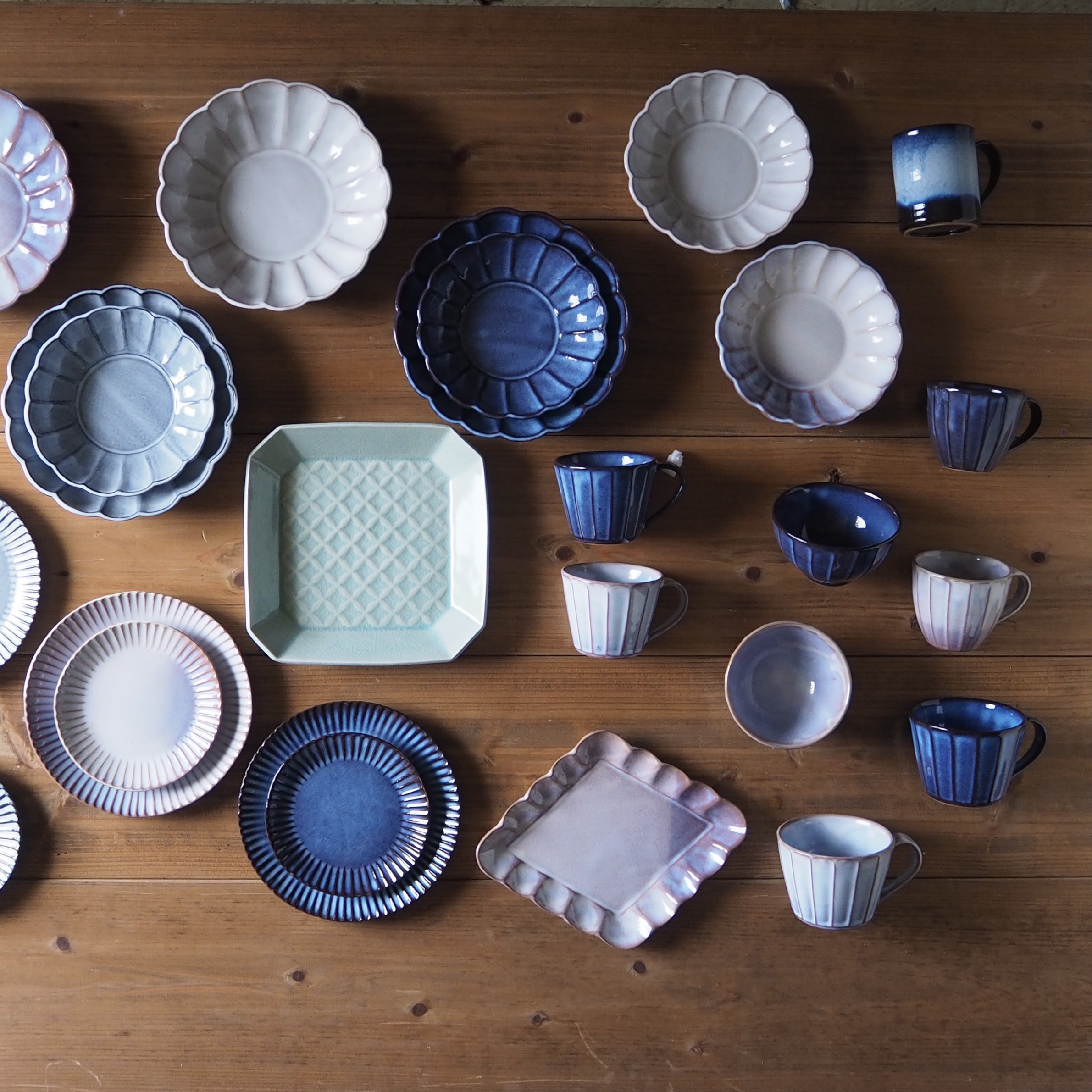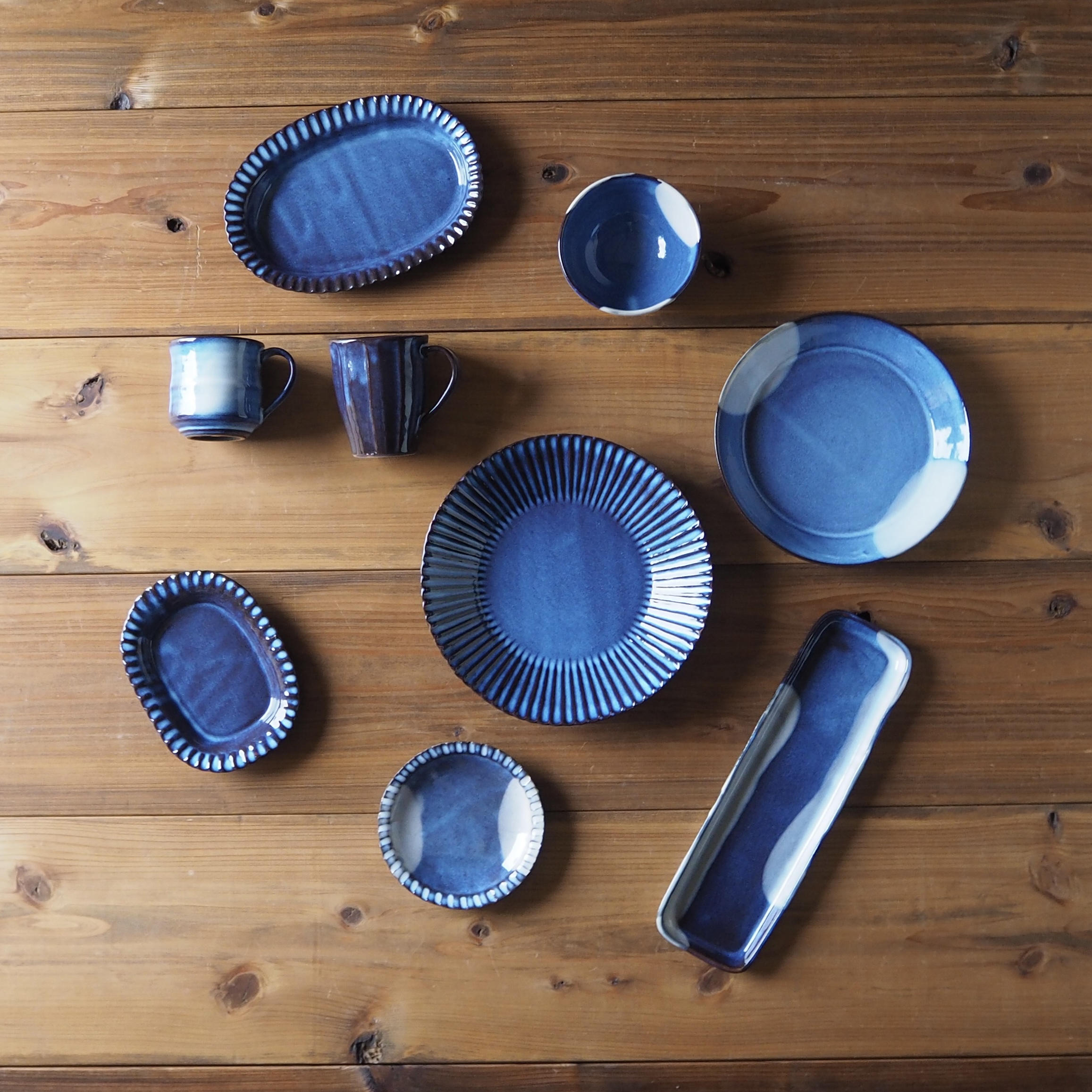
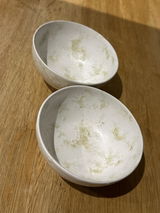

Large Japanese Plates: Choosing Size, Shape and Depth from Seven Sun

Buy one large plate you have really thought about, and the way you build a table changes.
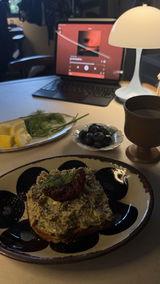
Plates of five or six sun carry a modest main dish or a side. Past seven sun, a plate becomes the piece at the center of the table. Seven sun takes the lead role at a table for one; eight sun and above sit in the middle of a table for several. Which is exactly why these are plates you buy after deciding what will go on them. You start from what you intend to serve, then choose a size and depth to match. That is what makes it hard to decide.
Here we set out how to choose a plate of seven sun or more, divided into three: size, shape and depth.
Size First: "Large" Begins at Seven Sun
Japanese plates are counted in sun. One sun is about 3.03cm.
| Sun | Diameter | What goes on it |
|---|---|---|
| Seven sun | About 21cm | A main course for one. Pasta, curry, grilled fish. The size that comes out most often |
| Eight sun | About 24cm | A one-plate meal. Or food meant to be shared, for two |
| Eight and a half sun | About 26cm | An assortment. Set in the middle of the table |
| Nine sun to one shaku | 27–30cm | Sharing for four. The platter a large dish is built on |
The numbers look close, but there is a large step between seven sun and eight sun. Seven sun is one portion; eight sun is something shared. Which of the two you need decides which shelf you shop from. The full conversion is set out in the sun to cm chart.
For a first plate we recommend seven sun. A main course for one sits in it exactly, and it works as a sharing plate too. It also fits in a cupboard. Past nine sun, where to keep it becomes the problem before anything else, so it is worth finding the space first and choosing afterwards.
Then Shape: Round, Rimmed, Oval, Angular
Even at the same seven sun, what will sit on a plate changes with its shape.
- Round plate (flat, with no raised rim) The whole face is usable. Suits food without liquid. The freest of all for arrangement
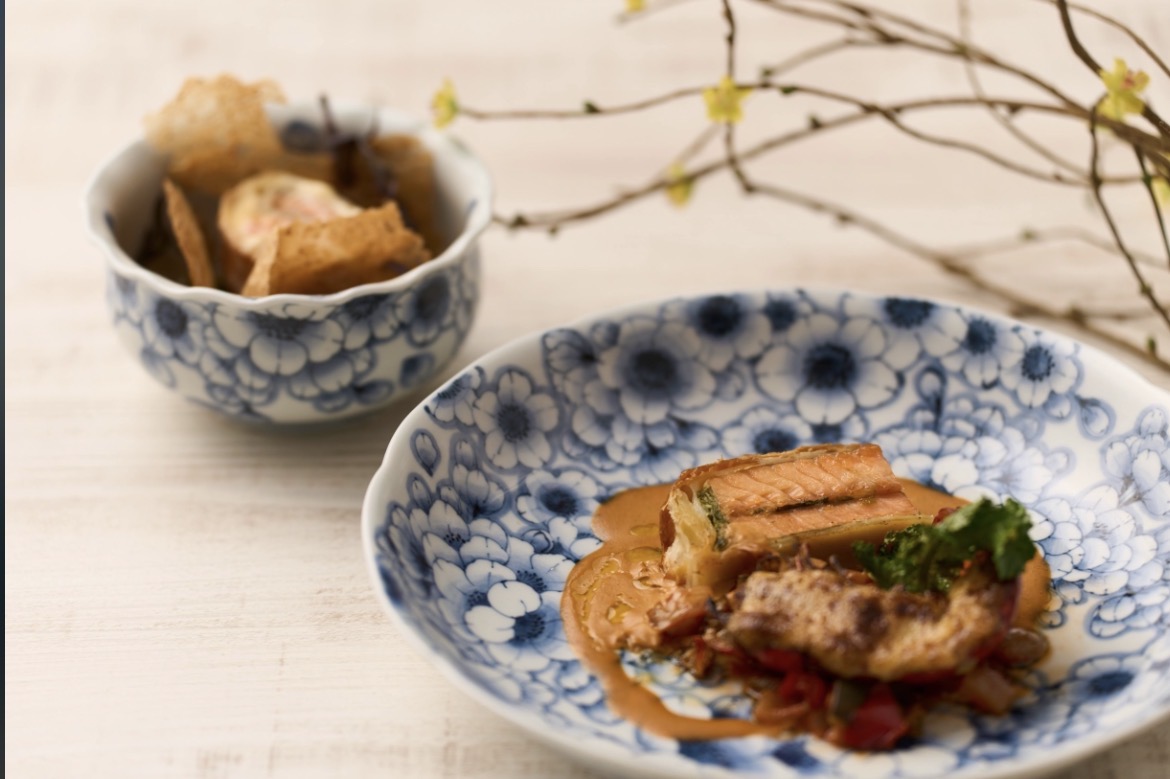
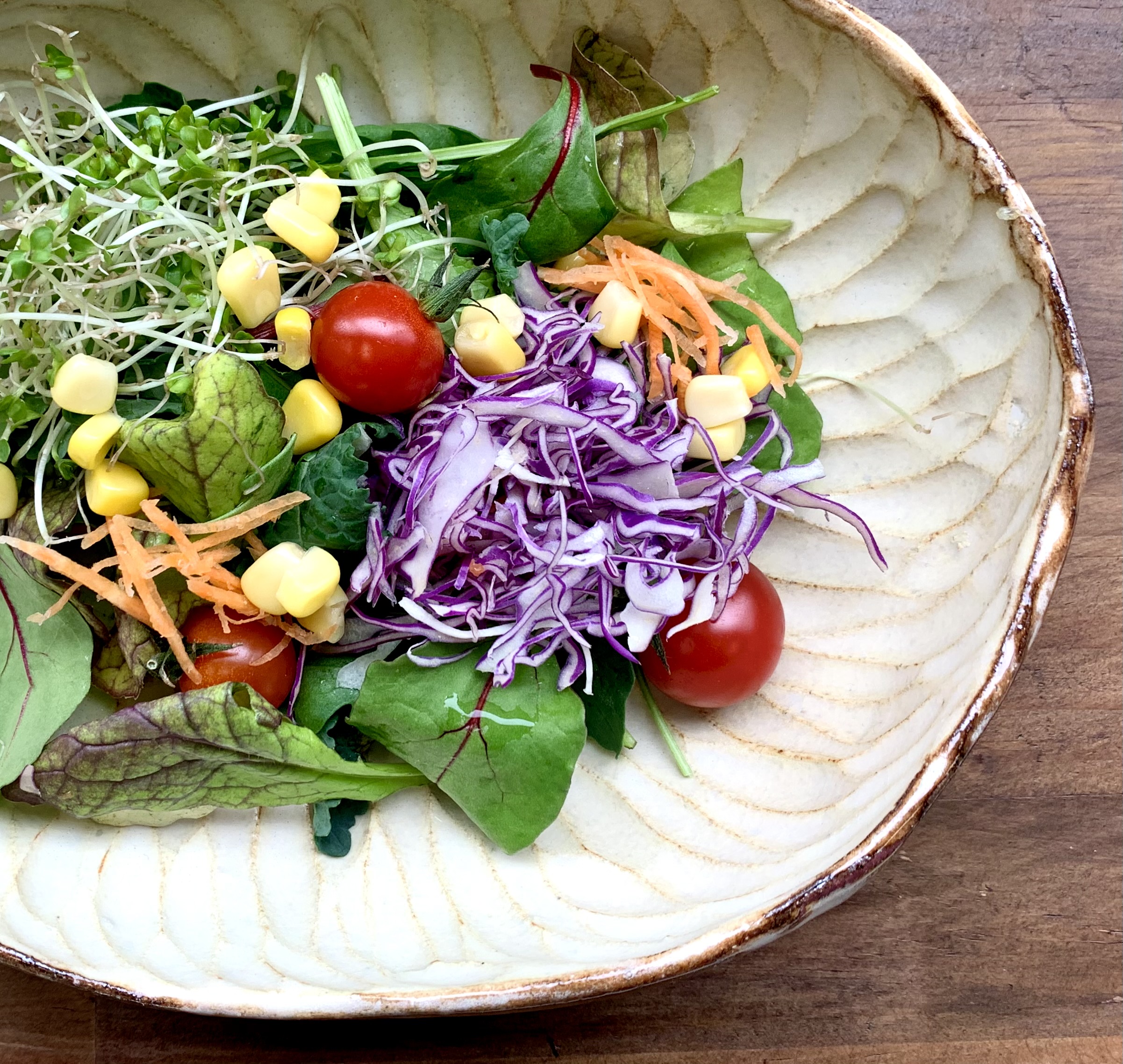
- Rimmed plate A flat frame around the edge. The frame reads as empty space, so even a small amount looks composed. It will take a little liquid too
- Oval Grilled fish, sausages, anything long. It takes up less room than a round plate, which tells when the table is tight
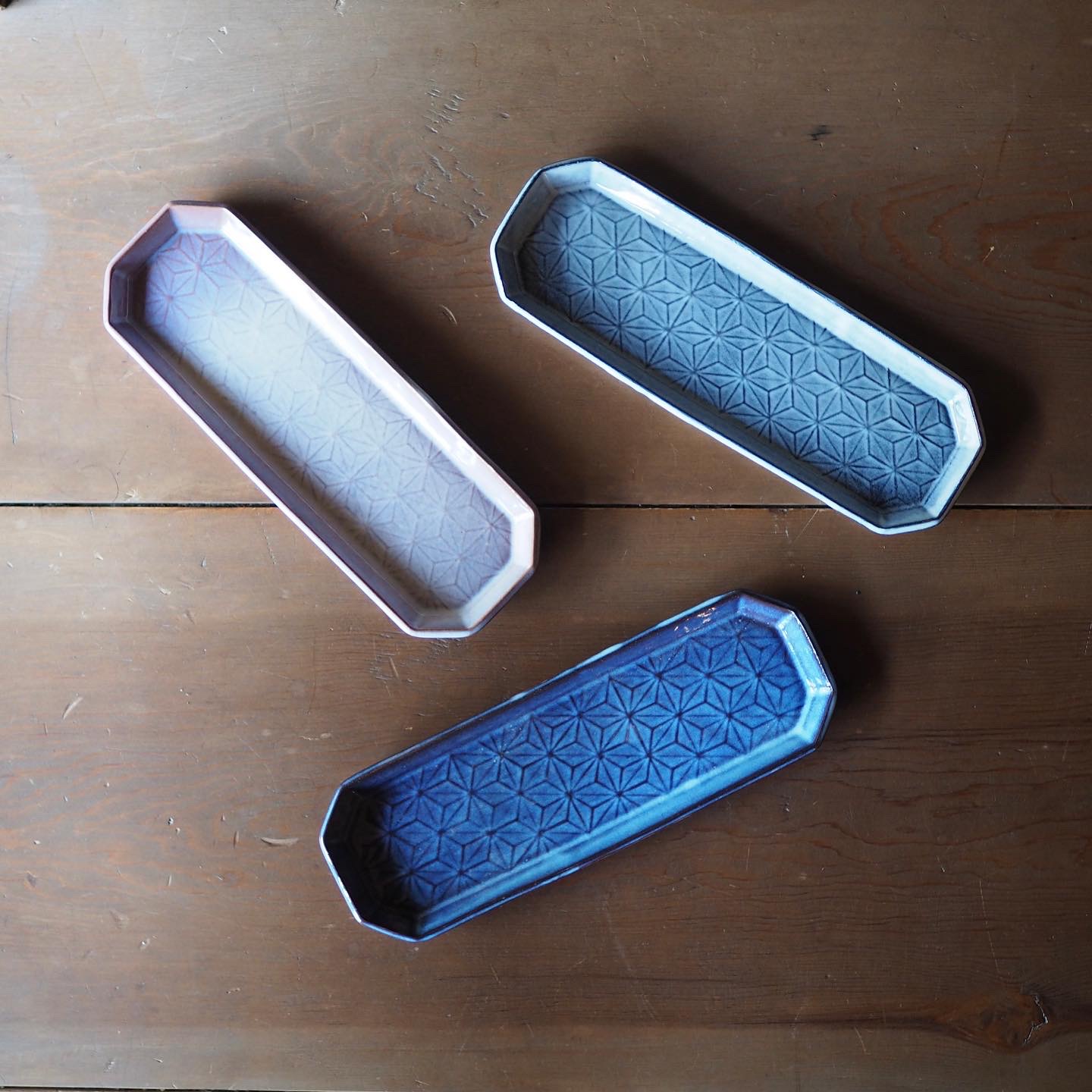
- Square and long plates Sashimi, yakitori, a three-part appetizer. Things look ordered when laid out in a line
For a first plate we recommend the rimmed one. Empty space is designed into it from the start, so even without confidence in your arrangement the food looks like a picture, and the plate is certain to take the lead on the table.

And Depth: Flat Plate, or Shallow Bowl
Once the size is settled, height is the next thing to look at. What kind of food will it be used for? Something like curry or pasta, or a dish with a little liquid? That changes how much height you need.
If the side rises less than 1cm it is a flat plate; 2–4cm makes it a shallow bowl. On a flat plate, food with even a little liquid leaves you watching the edge. A shallow bowl, on the other hand, gets in the way when you arrange sashimi or tempura, which are better flat.
You will want both, but if you are buying one first, make it a shallower rimmed plate. It takes a little liquid and still holds dry food.
After You Buy
The bigger the plate, the more washing and storage become the question. You will often want to stack them. When you do, we recommend laying a cloth between each one. That keeps the pressure off the plate underneath and reduces the risk of breakage.
Whether a piece takes the dishwasher differs from maker to maker. At nokaze we set out microwave and dishwasher suitability carefully, so please take your time choosing.
As for using a piece for the first time, do medome sealing on anything absorbent. Kohiki and unglazed stoneware keep oil stains out if you do medome at the start. For how to do it, please see below.
The smaller plates are covered in the mamezara and small plates article. They are a size that does not weigh down your luggage even when bought while traveling, so do read the two together.
We have gathered how to choose ware in various other articles too, and we hope you will enjoy choosing from many angles.
Related Articles
Choosing a Plate
- Mamezara and Small Plates: Sizes and What to Serve
- Japanese Plates: Which Size and Shape for Which Dish
- Japanese Plate Sizes: Sun to cm Conversion Chart
- Japanese Tableware Complete Guide
- Building a Japanese Dinner Set: What to Buy in What Order
Reading a Piece
- Shinogi: The Carved Ridges on Japanese Pottery
- Kohiki Pottery: The White Slip Technique, Explained
- Japanese Stoneware Care: What Porcelain Never Needs
Plates of Seven Sun and Above
Each is one of a kind, so even in the same shape no two carry the same expression. Do look for the one plate that will give your table its color.
Browse large platesShop the related pieces
Large plates
44 pieces See all
Ryosuke Matsuo
Foliate Oval Plate, Brown No.1
$333.00
Japanese Plates

Furutani pottery
Rust Glaze Foliate Rim Plate, Medium — Shigaraki
$238.00
Plates

Ceramic Studio Mochinoki
Kohiki White Slip Flat Plate, Large
$389.00
Japanese Plates

Bizen Ware Artist Fujiwara Akira
Hikidashi-guro Bamboo Plate — Bizen Ware
$1,441.00
Plates
Japanese Plates
187 pieces See all
Tsuchinowa
Apple Tree Small Plate
$357.00
Plates
Ryosuke Matsuo
Foliate Oval Plate, Brown No.1
$333.00
Japanese Plates

jiucasca
Blue-White Porcelain Foliate Arabesque Plate, Small
$238.00
Plates

Furutani pottery
Rust Glaze Foliate Rim Deep Plate, Small — Shigaraki
$175.00
Plates
New to Japanese pottery? Start here — its history, how pottery differs from porcelain, the clays and glazes behind each style, and how to care for a piece. → Japanese Pottery: The Complete Guide