
Shigaraki Ware Buying Guide: Choose by Artisan and Clay

Say "Shigaraki ware" and many people picture the tanuki (raccoon dog) figures that stand outside shops. But Shigaraki also fires a great deal of everyday tableware: plates, mugs and donabe clay pots.
Shigaraki pottery ranges from soft white kohiki to black plates covered in carving and serving plates in a deep blue glaze. Even with the same Shigaraki clay, every artisan's work looks completely different. So when you buy Shigaraki ware online, choose by the artisan and how the clay is shown, not by the name of the region alone, and you will not go wrong.
This guide uses pieces by five Shigaraki artisans and studios that nokaze carries now to cover what sets each apart, how to choose by type of piece, and how to care for them.
If you would rather see the pieces first, the Shigaraki collection brings together work by Shigaraki artisans.
What Is Shigaraki Ware? A Six Ancient Kilns Town Where the Clay Leads
Shigaraki ware is pottery fired in Shigaraki, Koka City, Shiga Prefecture, and one of the Six Ancient Kilns of Japan that have continued since the medieval period. Shigaraki clay is plastic and stands up well to fire, so large jars and storage pots, and donabe that go straight on the flame, have long been made here.
Shigaraki pottery today ranges widely, from pieces that show the clay's color and grain as they are, to pieces covered in white slip, to pieces shown through the color of the glaze. The history and the character of the clay are covered in Shigaraki ware.
Five Shigaraki Artisans: Telling Them Apart by How the Clay Is Shown
First, here are the five side by side. Paying attention to how each one shows the clay makes choosing easier.
| Artisan | What sets the work apart | How it looks | Best pieces and uses |
|---|---|---|---|
| Furutani pottery | Kohiki: white slip over iron-rich red clay. Also iron-drawn lines and rust glaze | Soft white with fine iron lines or dots | Rice bowls, soup cups, everyday plates |
| Yamamoto Masanori | "Shinogi" carved by hand, one line at a time | White and black. The shadows of the carving make a rhythm | Rim plates, deeper plates, mugs |
| Fujiwara Jun | Deep blue glaze, slip-trailed lines and pointed octagonal outlines | A blue whose depth shifts with the light | Serving plates, tables for gatherings |
| Nakagawa Masayoshi | The "Cork series," with a texture just like real cork | A rough, clay-colored rim around a plain center | Bread, baked sweets, a café-style table |
| Kanefusa Seito | A specialist in donabe and rice-cooking pots | Thick clay in glazes such as amber, tenmoku and shino | Cooking rice, slow-simmered dishes |
Furutani pottery: Soft White Kohiki and Iron Lines
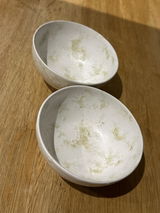
Furutani pottery is a studio founded in Shigaraki in 1970 by Furutani Nobuo. White slip is poured over an iron-rich red clay of the studio's own blend and given two main firings at a low temperature, producing a soft kohiki white. This simple, warm white takes any food and pairs easily with other pottery.
The photo below shows the "vertical iron line" egg mug, with fine tetsue (iron painting) lines drawn freehand one by one with an iron stylus. It is a rounded shape you can wrap your hand around. The same shapes also come in other finishes: "tessan" with scattered iron dots, a rust glaze the brown of weathered metal, and a gray glaze. Every step is done by hand, so the pieces are not too heavy and are easy to hold. The studio's story is in our profile of Furutani pottery.

Yamamoto Masanori: Shinogi Plates Carved One Line at a Time
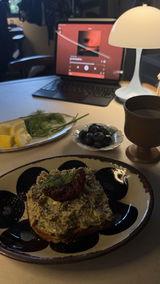
Yamamoto Masanori makes shinogi pottery in a kiln inherited from the artisan's grandfather. Shinogi is a technique of shaving the surface with a spatula or trimming tool to cut a series of ridges. On the black rim plate in the photo, diagonal shinogi is carved around the rim by hand, so the shadows of the carving form a rhythmic pattern.
It is about halfway between a flat plate and a bowl in depth, so it holds soup, curry and saucy dishes. Beyond rim plates, flat plates, rice bowls, mugs and chopstick rests all come in the same shinogi, so it suits anyone who wants to build a table around one artisan. More about the artisan is in our artisan profile of Yamamoto Masanori.

Fujiwara Jun: Bold Serving Plates in Deep Blue
Fujiwara Jun makes pieces in bold shapes you will not forget, while keeping the texture of Shigaraki clay. The signature is a deep blue glaze that catches the light in delicate gradations. The "8 Tongari" in the photo is a plate with eight pointed edges, crossed by lines of icchin (drawing lines by squeezing out slip).
The pieces are made to be "pottery that looks great at a meal with friends," and used for a main dish or as a serving plate, they become the center of the table. On days without food, the plate is just as striking on display.

Nakagawa Masayoshi: The Feel of Clay, Like Cork
Nakagawa Masayoshi worked for a kimono company before turning to pottery, studied at the Shiga Prefectural Shigaraki Ceramic Research Institute, and then trained under Furutani Nobuo, the founder of Furutani pottery. Nakagawa set up independently in Shigaraki in 2005 and runs a combined studio and shop called "Plus Lago."
The signature "Cork series" looks just like real cork, yet has the weight and feel of pottery. The round plate in the photo has a rough, cork-like rim around a plain, clay-colored center. Set out bread or baked sweets on it and the table takes on a café feel.

Kanefusa Seito: Shigaraki on the Flame, Donabe and Rice Pots
Kanefusa Seito specializes in heat-resistant pieces such as donabe and rice-cooking pots, made in Shigaraki. The rice pot in the photo cooks from 1 to 5 go of rice, and is ready after about 15 minutes on the heat and about 15 minutes of steaming. Three holes in the lid release pressure just enough that it rarely boils over, even without an inner lid. It comes in amber, tenmoku, shino, kiseto, ruri and oribe glazes.
A thick donabe warms through slowly, so it works for slow-simmered dishes as well as rice. How to choose one and how to start using it are covered in how to choose a donabe.

Choosing by Type of Piece
After the artisan comes what to buy. For your first Shigaraki ware, start with something you will use every day and you will soon get used to the feel of the clay.
| Type of piece | How to use it | Examples in this guide |
|---|---|---|
| Rice bowls, soup cups, mugs | Pieces you pick up every day. Choose by feel and weight | Furutani pottery's rice bowls and egg mug, Yamamoto Masanori's mugs |
| Side plates, rim plates | Side dishes, bread, curry and soup. The pieces you use most | Yamamoto Masanori's rim plates, Nakagawa Masayoshi's round plate |
| Serving plates, deep bowls | Main dishes, salads and simmered dishes when people gather | Fujiwara Jun's plates, Furutani pottery's octagonal deep bowls |
| Donabe, rice pots | Cooking rice, hot pots, slow-simmered dishes | Kanefusa Seito's rice pot |
How to think about plate sizes is covered in how to choose a plate, and to see Shigaraki plates together, browse our handmade Japanese plates.
Caring for Shigaraki Ware
Most Shigaraki pottery is stoneware, and the clay can absorb water. There are three basics.
- Dip it in water before use Letting the clay take up a little water helps keep food colors and oil from soaking in
- Dry it well after washing Drying it all the way to the foot ring before putting it away prevents mold and odors
- Check each piece about medome Stoneware is often given medome (a sealing treatment) before first use, but some pieces, like Furutani pottery's rust glaze, say "please do not do medome"
With a donabe, avoid heating it empty and sudden temperature changes. Whether a piece can go in the microwave or dishwasher depends on the artisan and the piece, so check the description on each product page. More is covered in stoneware care and medome.
Related Articles and Terms
Getting to Know Shigaraki
- Shigaraki Ware: Why Its Clay Sparkles After 1,200 Years
- Japan's Six Ancient Kilns: All 6 Regions Compared
- Artisan Furutani Pottery | Making Kohiki White an Everyday Piece in Shigaraki
- Artisan Masanori Yamamoto | Carving Only Shinogi, in Shigaraki
Techniques and Use
- Kohiki Pottery: The White Slip Technique, Explained
- Shinogi: The Carved Ridges on Japanese Pottery
- Icchin: Slip Trailing, the Raised Dot Technique
- How to Choose a Donabe | Size, Glaze, First Use and Care
- Japanese Stoneware Care: What Porcelain Never Needs
Browse
- Shigaraki Ware | Handmade Shigaraki Pottery from Japan
- Furutani pottery | Shigaraki Kohiki Bowls, Plates & Cups
- Yamamoto Masanori | Shigaraki Shinogi Carved Plates & Bowls
- Fujiwara Jun | Shigaraki Ware in Fujiwara Blue
- Nakagawa Masayoshi | Shigaraki Plates & Cups
- Kanefusa Seito | Shigaraki Donabe & Rice Pots
Shigaraki Artisans' Pottery for Your Everyday Table
Soft kohiki white, shinogi carved one line at a time, serving plates in deep blue, the cork-like feel of clay, a donabe for the flame. From the same Shigaraki clay come as many different pieces as there are artisans. At nokaze, you can browse Shigaraki artisans' pottery one piece at a time.
See Shigaraki potteryFAQ
What should I buy first in Shigaraki ware?
How does Shigaraki ware differ from artisan to artisan?
Is there anything to watch out for when caring for Shigaraki ware?
Shop the related pieces
Shigaraki
42 pieces See all
Furutani pottery
Gosu Blue Line Rice Bowl, Small — Shigaraki
$174.00
Japanese Rice Bowls

Furutani pottery
Iron-Line Rice Bowl, Large — Shigaraki
$190.00
Japanese Rice Bowls

Furutani pottery
Rust Glaze Foliate Rim Deep Plate, Small — Shigaraki
$174.00
Plates

Furutani pottery
Rough Iron-Line Oval Deep Bowl, Large — Shigaraki
$269.00
Bowls
Japanese Plates
188 pieces See all


New to Japanese pottery? Start here — its history, how pottery differs from porcelain, the clays and glazes behind each style, and how to care for a piece. → Japanese Pottery: The Complete Guide