

Shinogi — Carved Ridges
Cut away, and a facet stands up. That is the whole technique. No glaze pattern, no brushwork — the pattern is made from the form alone.
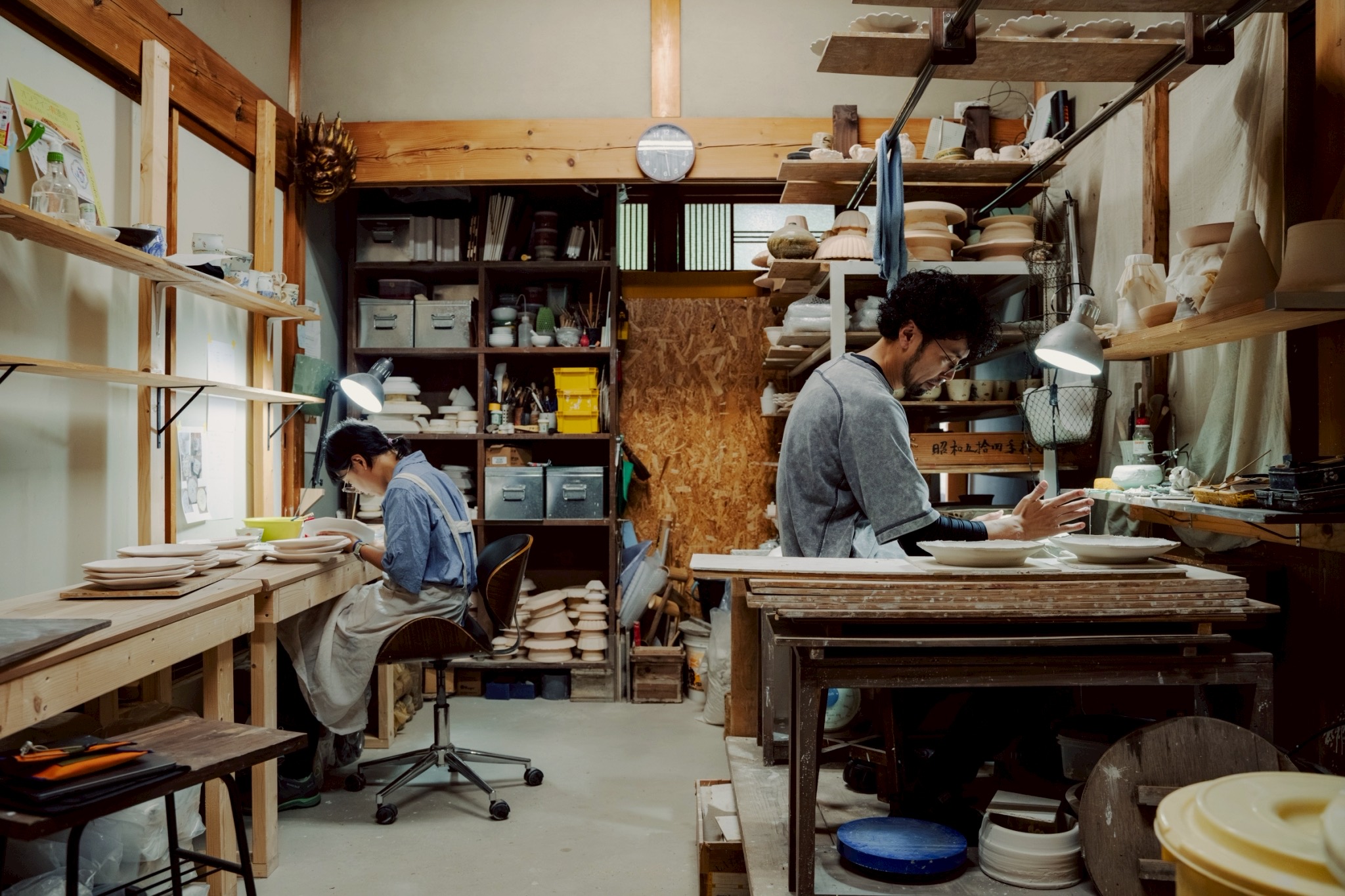
Under light, one side of each ridge brightens and the other falls into shadow. Turn the piece in your hand and the striping changes, which is why a photograph only carries half of it. Run a finger across and the ridges come evenly, one after another, countable in the palm. Most of what is here is the work of Yamamo Masano, who took over his grandfather's kiln in Shigaraki.
Shinogi originally names the ridge that runs between the edge and the spine of a sword blade. The carving is done while the clay is leather-hard: too dry and it chips, too soft and it collapses. The window is only a few minutes wide. Under a white glaze the grooves hold more glaze and read darker while the ridge tops read lighter, so the cut itself becomes the shading. It comes out differently from kohiki, where the white comes from a slip.
Artisan Works

Plates
Shinogi Ceramic Slab Plate, 24cm White — Shigaraki
$1,848.00

Plates
Shinogi Flat Rim Plate, 24cm White — Shigaraki
$1,760.00

Plates
Shinogi Rim Plate, Large White — Shigaraki
$1,760.00

Plates
Shinogi Rim Plate, Small Black — Shigaraki
$733.00

Plates
Shinogi Rim Plate, Medium White — Shigaraki
$1,320.00

Plates
Shinogi Flat Rim Plate, 15cm White — Shigaraki
$733.00

Plates
Shinogi Rim Plate, Small White — Shigaraki
$733.00

Plates
Floral Shinogi Plate, Large White — Shigaraki
$1,760.00

Plates
Shinogi Flat Rim Plate, 12cm White — Shigaraki
$616.00

Plates
Shinogi Rim Plate, Large Black — Shigaraki
$1,760.00

Plates
Shinogi Rope-Pattern Rim Plate, Medium White
$1,349.00
Related Articles
All Articles-

Japanese Pottery Patterns: What the Motifs Actually Mean
-

Kintsugi: How to Repair Pottery With Gold (and Why)
-

Japandi Ceramics: Japanese Pottery in Minimal Interiors
-

Wabi-Sabi at Home: Ceramics for a Calmer Room
-

Pottery Regions of Japan: A Buyer's Map
-

Anagama vs Noborigama: Japanese Wood Kilns Compared


