
Amber Glaze (Ameyu): The Iron Glaze That Fires to Amber, for Everyday Pottery

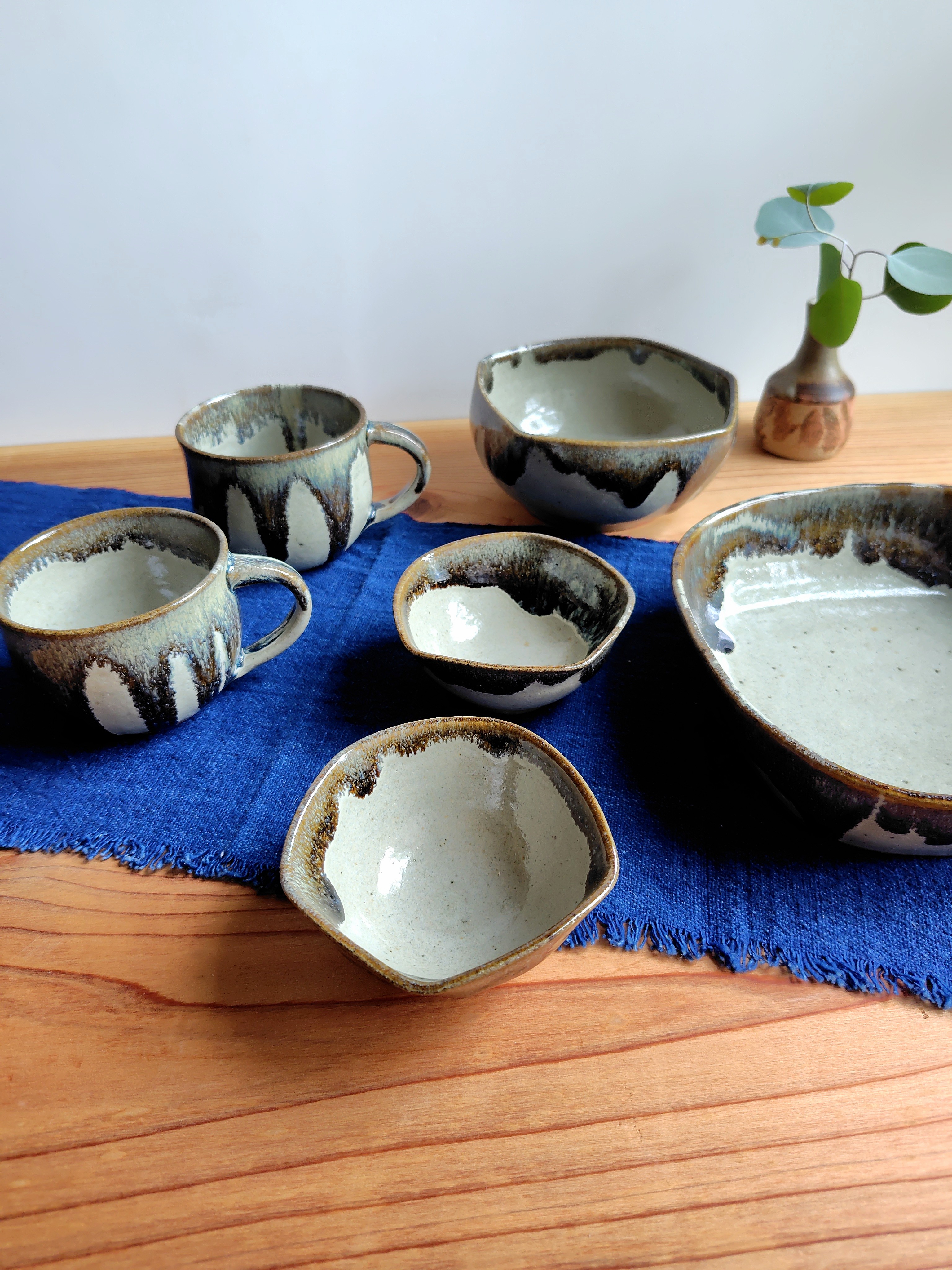
Ameyu (amber glaze) is a glaze containing iron that fires to a clear, candy-like brown. The name comes from its glossy color, which recalls amber-colored hard candy (ame).
The color comes from the iron in the glaze, which makes it one of the glazes colored by iron (iron glazes). With little iron it turns a bright, yellowish amber, and the more iron it has, the darker brown it becomes. Add still more iron and it turns black, close to the color of tenmoku and black glazes.
Because it is translucent, the color is deep where the glaze is thick and lightens at thin spots and edges. On a piece with relief, the glaze pooled in the grooves is dark and the raised parts are pale, so the form itself becomes a pattern of light and dark.
The full range of glazes is covered in the types of Japanese glazes. This article looks only at ameyu, the glaze that iron turns brown.
How Amber Glaze Looks
| What to look at | What amber glaze does |
|---|---|
| Color | From bright amber to deep dark brown. It changes with the amount of iron and the firing |
| Gloss | Glassy and lustrous. When light hits it, the surface shines softly |
| Light and dark | Dark where the glaze is thick, lighter at rims and edges. Carving or relief brings out a pattern |
| Related glazes | Black glaze and tenmoku, which have more iron. The same iron glaze, in a different depth of color |
Arabesques Drawn on Amber Glaze: Kondo Aya's Pottery

Kondo Aya, who works in Kasama, Ibaraki Prefecture, is an artisan who has made amber glaze a signature color. After graduating from university and working as a civil servant, Kondo was moved by the way of life of a craftsperson met while traveling and turned to pottery. After working at a pottery in Mashiko, Tochigi Prefecture, and serving as an assistant to the potter Kurihara Setsuo, Kondo built a kiln in Kasama in 2001.
Kondo's amber glaze, mixed in the studio, is marked by a deep gloss and a soft amber color. Amber is also said to be a color long loved in Kasama ware, which has fired everyday pieces such as storage jars and grinding bowls. Vegetables and white rice look all the brighter on it.
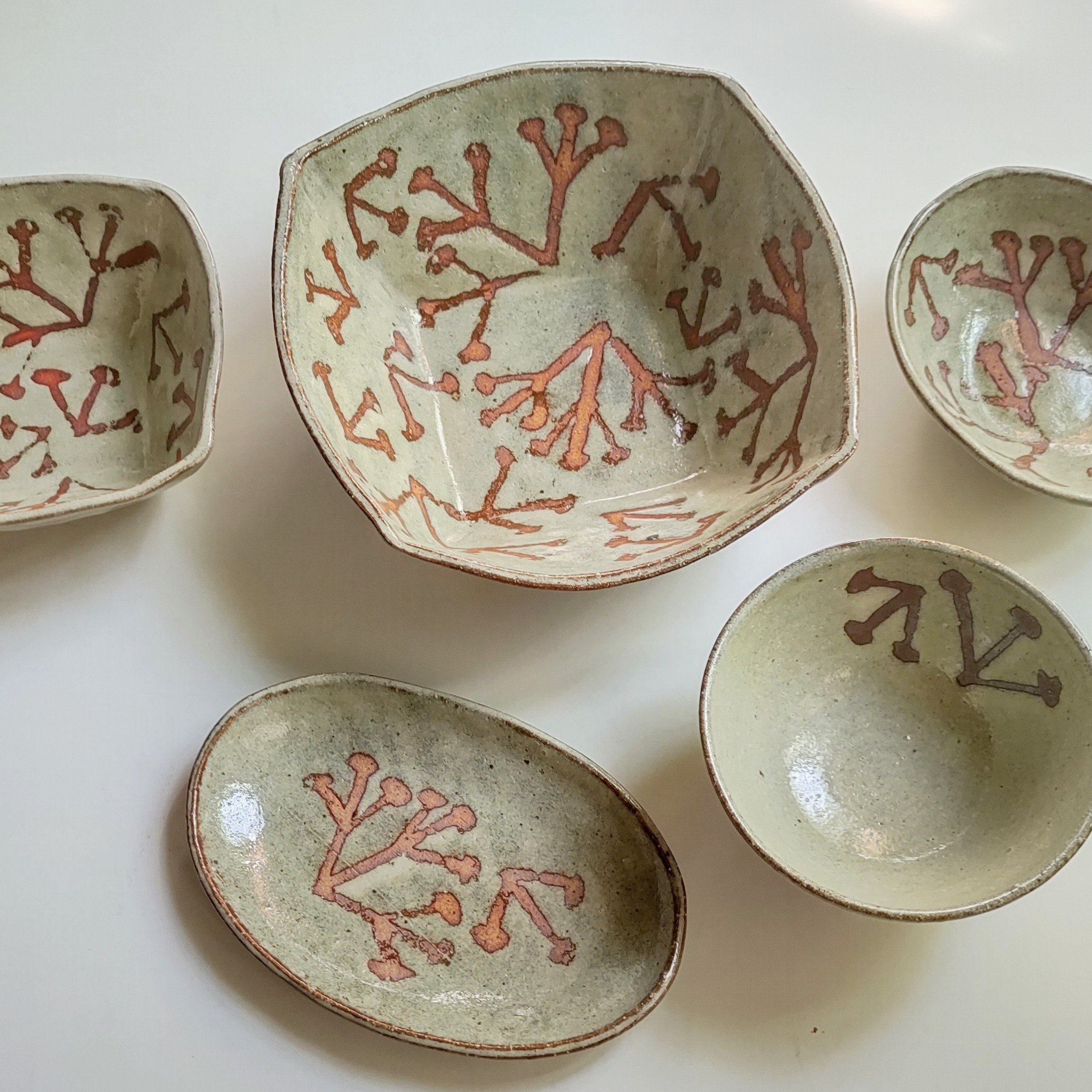
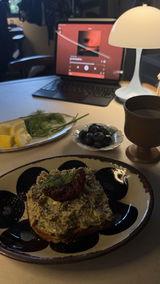
On these amber-glazed pieces, Kondo draws arabesque scrolls with icchin (drawing lines by squeezing slip or glaze from a dropper), and this is the most distinctive feature of the work. Amber glaze pools and darkens along the edges of the raised lines, while the tops of the lines catch the light, so the scrolls stand out in relief. Arabesque, modeled on vines that keep growing and connecting, is a pattern found in crafts all over the world, and it is a motif Kondo, a longtime traveler, has held dear. The octagonal plate in the photo at the top also has scrolls running around the rim.
There is also a "patchwork" series in which amber glaze is applied side by side with the green of Oribe glaze as an accent color, so even with the same amber glaze, each piece has a different face. nokaze plans to introduce Kondo Aya's pottery in the future.
An Everyday Glaze, Even on Donabe: Kanefusa Seito

The photo shows the "Ame" rice pot by Kanefusa Seito of Shigaraki. It is a thick donabe glazed in amber, and cooks from 1 to 5 go of rice. Rice is ready after about 15 minutes on the heat and about 15 minutes of steaming, and three holes in the lid release pressure just enough that it rarely boils over, even without an inner lid.
Amber glaze is also a glaze long used widely on everyday pottery, on donabe like this, large bowls and mingei pieces. Brown blends with the browned edges of grilled food and the color of simmered dishes, so it is easy to place on any table. How to choose brown pottery in general is covered in brown Japanese pottery, and how to choose a donabe in the article on donabe.
How to Choose and Use Amber-Glazed Pottery
- Choose by how light and dark appear The more carving or relief a piece has, the clearer the shades of amber. On plain pieces, enjoy the gloss and depth of color
- Think about the color of the food White rice, green vegetables and white-fleshed sashimi stand out sharply on amber. For brown food, choose a lighter amber
- Pair it with other pottery Set beside white pottery or kohiki, it brings a sharper look to the table
Amber glaze is glassy, so stains do not soak into the surface easily, and many pieces are easy to look after. If the body is stoneware, though, unglazed parts such as the foot ring absorb water. Whether a piece can go in the microwave or dishwasher, and cautions about heating a donabe empty or sudden temperature changes, vary from piece to piece, so check the description on each product page. The basics of care are covered in stoneware care.

Related Articles and Terms
Understanding Glazes
- Tenmoku: The Black Tea Bowl Where Iron Glaze Flows
- Ash Glaze (Haiyu): The Origin of High-Fired Japanese Glazes
- Japanese Pottery Glazes: The Main Types Explained
- Brown Japanese Pottery: Unglazed, Rust and Amber Glazes Compared
Pottery and Use
- Icchin: Slip Trailing, the Raised Dot Technique
- Kasama Ware: Japan's Most Free-Spirited Pottery Town
- How to Choose a Donabe | Size, Glaze, First Use and Care
- Shigaraki Ware: Why Its Clay Sparkles After 1,200 Years
- Japanese Stoneware Care: What Porcelain Never Needs
See Amber-Toned Pottery
Deep amber pooling along arabesque lines, a donabe in glossy amber. Amber glaze is an everyday glaze that blends with the colors of food. In our collection of brown pottery, you can browse amber-glazed and other brown pieces one by one.
See brown potteryFAQ
What kind of glaze is ameyu (amber glaze)?
How is amber glaze different from tenmoku and black glaze?
What food suits amber-glazed pottery?
Shop the related pieces
Brown Japanese Tableware
94 pieces See all
yoshida pottery
Ball-Footed Coffee Cup, Brown
$435.00
Japanese Coffee Cups

Furutani pottery
Rust Glaze Foliate Rim Deep Plate, Small — Shigaraki
$174.00
Plates

Kawasumi Tomokazu
Woodgrain Yunomi Teacup — Kasama
$182.00
Mugs

jiucasca
Bronze Glaze Foliate Arabesque Mamezara Tiny Plate
$222.00
Plates


New to Japanese pottery? Start here — its history, how pottery differs from porcelain, the clays and glazes behind each style, and how to care for a piece. → Japanese Pottery: The Complete Guide