
What to Give Someone Who Has Everything: A Piece That Gets Used

The person who has everything is not short of things. They are short of things they would notice. Another candle, another bottle, another gadget: each one arrives, gets a polite thank-you, and is used up or put away within the month.
What they rarely own is something made by one particular person, that nobody else has, and that they reach for every single day. A handmade cup meets all three. It is not used up, it does not sit on a shelf, and it comes with a name.
This guide sets out how to choose that piece: the three tests worth applying, three artisans whose work passes them, and how to decide between a mug and a teacup.
Every piece in our handmade Japanese pottery gifts collection is made by a named artisan in Japan, and no two are exactly alike.
Why the Usual Gifts Miss
Gifts for someone who has everything tend to fall into three groups. What separates them is what is left a month later.
| Kind of gift | A month later | Why |
|---|---|---|
| Consumables (candles, wine, sweets) | Gone | Enjoyable, but nothing is left to remind them of you |
| Decorative objects | On a shelf, or in a drawer | It has to suit their taste and their space, and someone who has everything has both settled |
| A handmade cup for daily use | Used every morning | It earns its place by being used, so habit matters more than taste |
The third works because it does not compete with what they already own. They have mugs, of course. But they do not have this one, and nobody else does either.
Three Tests for a Gift They Don't Already Have
- It gets used every day A cup is picked up morning after morning. A gift that is used daily is remembered daily.
- Nobody else has the same one Glaze and fire never come out exactly the same way twice. Even the person who has everything can own something that exists only once.
- It comes with a name and a place "Kawai Taichi made it, in Kameoka, Kyoto." That sentence is what they will repeat when a guest asks about it.
The three pieces below each pass all three tests, in different ways.
Three Artisans, Three Cups Nobody Else Owns
Kawai Taichi, Kyoto: A Glaze That Cracks Like Ice

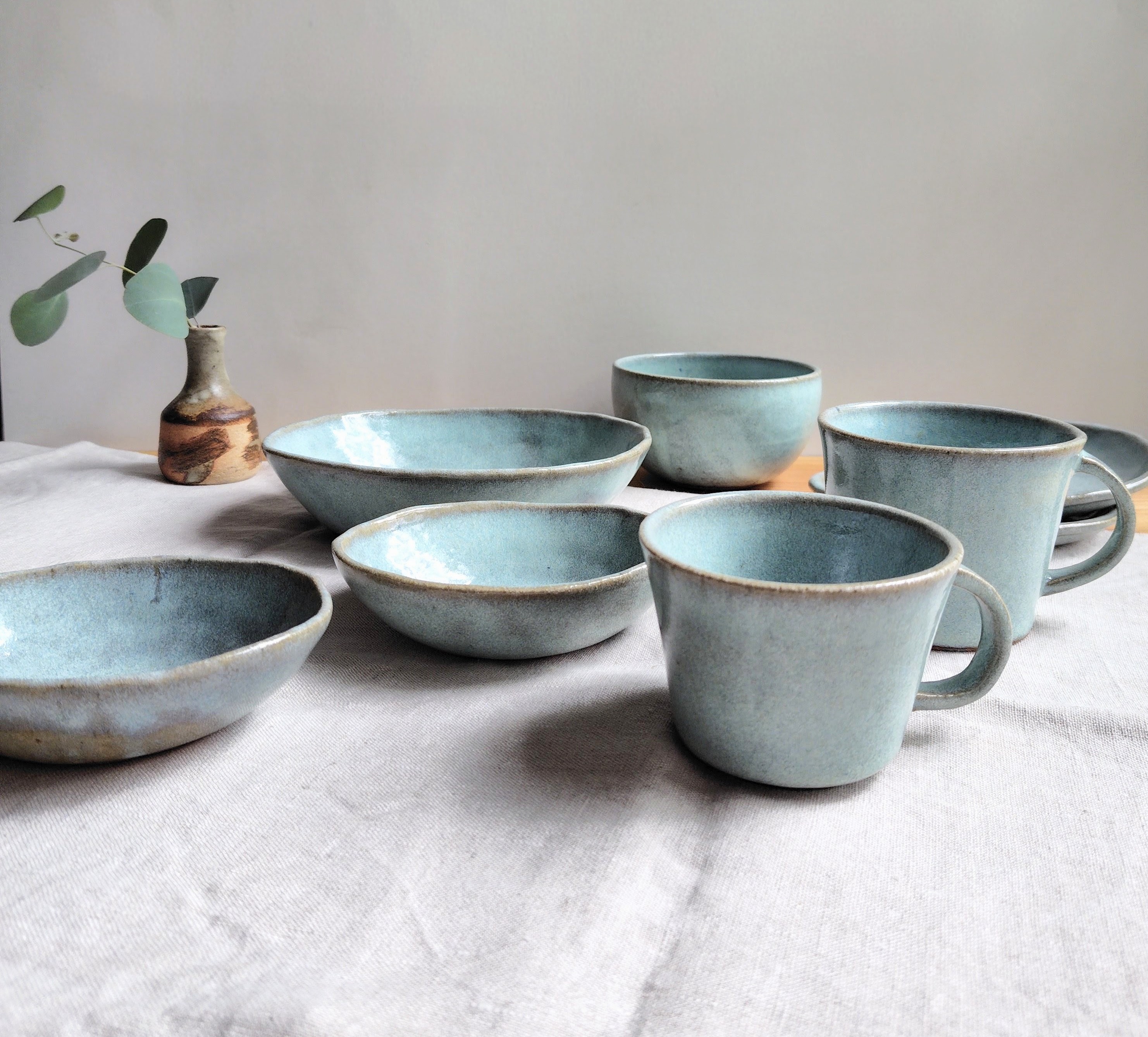
Kawai Taichi works in Kameoka, Kyoto Prefecture, at the studio Tobo Hakuhyo, using a glaze called hyoretsu kannyu: ice-crackle glaze. The surface splits into fine lines that look like a sheet of ice that has just cracked. The kurage (jellyfish) glaze comes in a grayish pale purple that deepens toward the rim.
The shape is kept simple. Kawai Taichi aims for pieces that are easy to use and beautiful at the same time, and the pattern left by clay and glaze is different on every one. The crackle is not damage. With use, it slowly grows, and the way the lines show changes. Why that happens is explained in our article on crazing, and more pieces with this surface are in crackle glaze pottery.
Yamada Yutaro, Tokoname: A Teacup Marked by Seaweed

Yamada Yutaro was born in 1982 in Tokoname, Aichi Prefecture, a town long known for its teapots, into a family pottery business. After studying architecture and briefly working outside the craft, Yamada Yutaro came back to clay, completed the Tokoname Tou no Mori Ceramic Art Institute in 2017, and set up independently as a teapot and tea-utensil artisan.
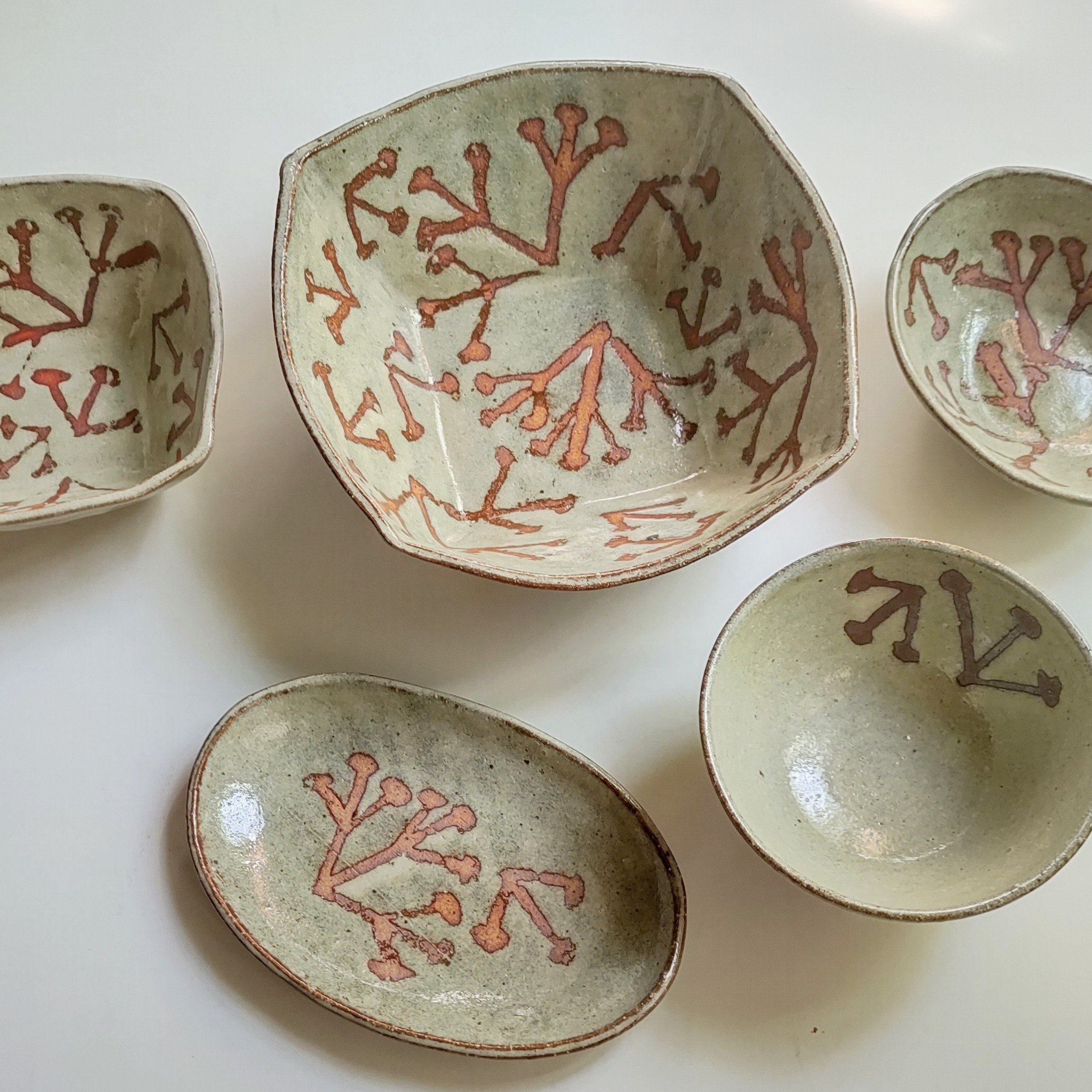
This yunomi teacup uses mogake: seaweed is wrapped around the piece before it goes into the kiln, and the firing leaves its lines on the clay. The seaweed never falls the same way twice, so no two cups carry the same pattern. It is also light and thin in the hand, which matters for something held every day. More cups without handles are in handmade Japanese teacups, and the rest of this work is in the Yamada Yutaro collection.
Kawasumi Tomokazu, Kasama: Clay That Looks Like Wood

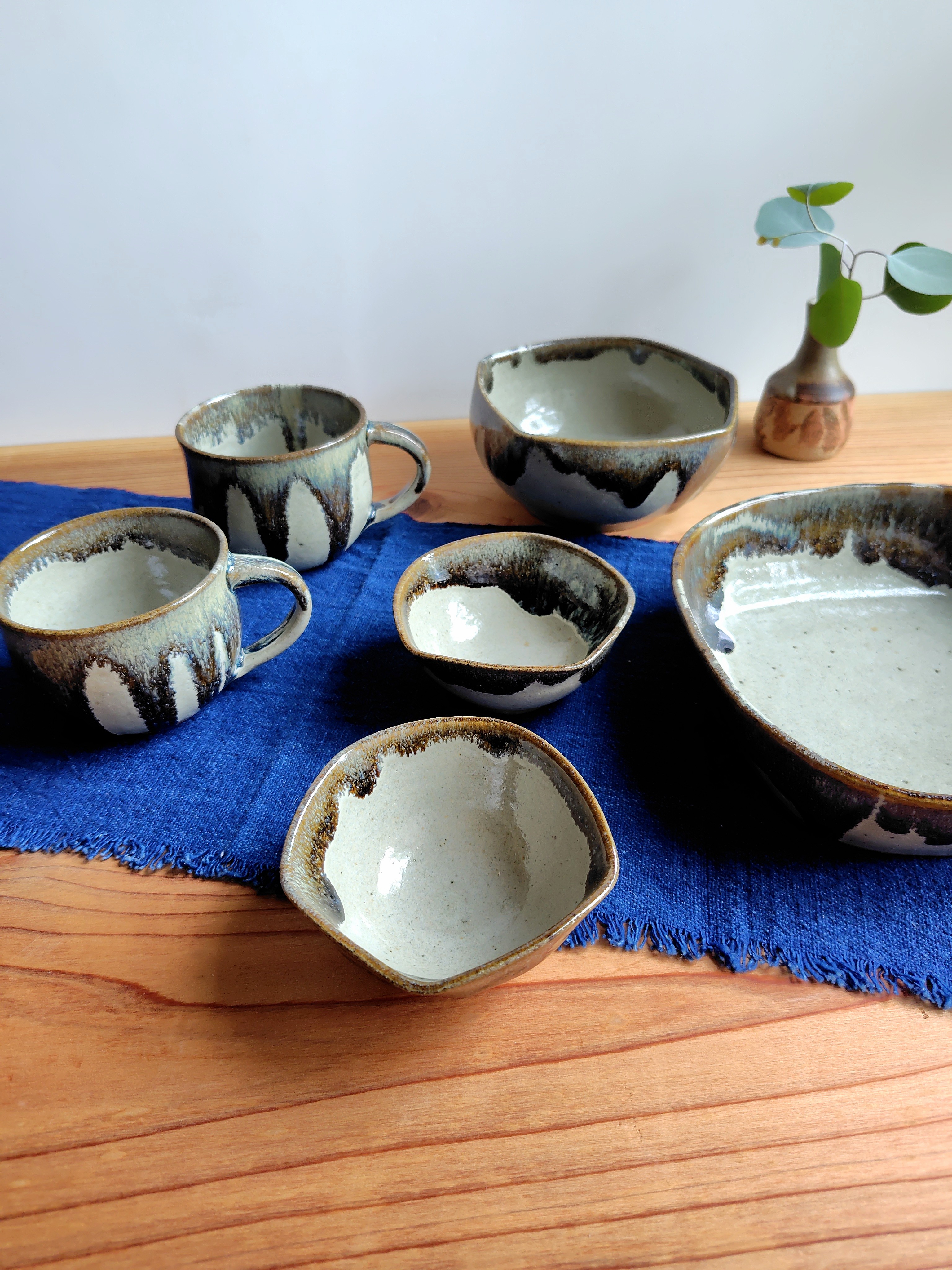
In Kasama, Ibaraki Prefecture, Kawasumi Tomokazu carves the clay one cup at a time to raise a texture like the growth rings of a tree. It looks like wood; pick it up and it has the weight of pottery. That gap is the point, and it is the kind of detail people notice the first time they hold it. The grain comes out differently on every cup.
Kawasumi Tomokazu hopes the work keeps people company in special time alone and in moments spent with loved ones. This cup is meant for sencha or hojicha. Read more about the town in our guide to Kasama ware, or see the Kawasumi Tomokazu collection.
Mug or Teacup? Choose by How They Drink
You do not need to know their taste in design. You need to know what they drink in the morning.
| Their habit | Choose | Why |
|---|---|---|
| Coffee, or tea with milk | A mug with a handle | Holds a full cup and stays comfortable to carry when hot |
| Green tea, sencha or hojicha | A yunomi teacup without a handle | Sized for Japanese tea, with the warmth coming straight to the hands |
| You are not sure | A mug | Almost everyone drinks something hot in the morning |
| Two people share the house | Two different pieces by the same artisan | They match on the table, and each person ends up with their own |
For a coffee drinker, start with handmade Japanese mugs. What a handmade mug changes is covered in our guide to Japanese ceramic mugs. For a tea drinker, the guide to choosing a yunomi helps you find one that fits the hand.
What to Tell Them When You Give It
The story is half the gift, so pass it on. A short card is enough.
- Who made it The artisan's name, and the town where it was made
- What makes it one of a kind The crackle, the seaweed lines, the carved grain
- How to care for it Whether it can go in the microwave or dishwasher differs from piece to piece, and each product page lists it
Care is usually simple. Our guide to microwave and dishwasher use collects artisans' own answers, and stoneware care covers the rest. Wrapping and delivery are explained on our gift page.
When the Occasion Is More Specific
This guide is about the person, not the occasion. If you are giving for a particular event, these go further.
- The basics Why handmade pottery works as a gift, in our guide to Japanese pottery gifts
- A wedding A pair, or one piece they share, in Japanese wedding gifts
- A new home What lands well, in housewarming gifts
- Year-end in Japan The custom of giving at the end of the year, in oseibo
Related Reading
The pieces in this guide
- Crazing (Kannyu): Cracks in Glaze That Aren't Damage
- Mogake: The Red Seaweed Lines of Tokoname Pottery
- Kasama Ware: Japan's Most Free-Spirited Pottery Town
Choosing a cup
Gifts
- Japanese Pottery Gifts: Ceramics That Grow More Beautiful with Every Use
- Japanese Housewarming Gifts: What Lands Well, and What to Avoid
- Japanese Pottery Christmas Gifts: One-of-a-Kind Artisan Pieces for Every Day
Shop
- Japanese Pottery Gift | Handmade Ceramic Gifts from Japan
- Japanese Mugs | Handmade Ceramic Mugs from Japanese Potters
- Japanese Teacups | Handmade Yunomi and Soba Choko
Give the One Nobody Else Has
Mugs, teacups, sake cups and small plates, each made by hand by a named artisan in Japan. The glaze, the fire and the clay make every piece a little different from the next, so the one you choose is the only one of its kind.
Shop Japanese Pottery GiftsFAQ
What do you give someone who has everything?
Is a mug or a teacup the better gift?
Can handmade Japanese pottery go in the microwave or dishwasher?
Shop the related pieces
For Gifts
43 pieces See all
Utsuwa no Yukue
Pine Ash Glaze Compact Mug
$252.00
Japanese Coffee Cups

Furutani pottery
Rust Glaze Foliate Rim Deep Plate, Small — Shigaraki
$174.00
Plates

Furutani pottery
Gosu Blue Line Rice Bowl, Small — Shigaraki
$174.00
Japanese Rice Bowls

Furutani pottery
Iron-Line Rice Bowl, Large — Shigaraki
$190.00
Japanese Rice Bowls
Japanese Mugs
73 pieces See all
Utsuwa no Yukue
Pine Ash Glaze Compact Mug
$252.00
Japanese Coffee Cups

jiucasca
Ash-Blue Glaze Coffee Cup — Kyoto
$364.00
Japanese Coffee Cups

yoshida pottery
Ball-Footed Coffee Cup, Brown
$435.00
Japanese Coffee Cups

Kawasumi Tomokazu
Woodgrain Yunomi Teacup — Kasama
$182.00
Mugs
New to Japanese pottery? Start here — its history, how pottery differs from porcelain, the clays and glazes behind each style, and how to care for a piece. → Japanese Pottery: The Complete Guide