
Ginsai: Silver Fired onto Pottery, Darkening With Time

Ginsai (silver decoration) is a decoration in which a paint containing silver is applied over the glaze of a piece that has already had its main firing, then fired on again at a low temperature. It is one form of uwa-etsuke (overglaze painting): painted in gold it is kinsai, painted in silver it is ginsai.
The process is almost the same as kinsai. The difference shows after firing. Gold keeps its color for decades, but silver, as it meets the air, yellows, passes through brown and settles into black. To choose a ginsai piece is to choose that change along with it.
A similar word is gintsugi. That is a repair: a broken piece is joined with urushi lacquer and finished with silver powder, and it never goes into a kiln. Ginsai is a decoration fired on in the kiln. They darken for the same reason, but they are made and mended in entirely different ways.
Ginsai, hakkinsai and gintsugi
When you see silver on a piece, this is how to tell what it is.
| Name | What it is | Over time |
|---|---|---|
| Ginsai | Silver fired on over the glaze as decoration | Darkens little by little, and its mood changes |
| Hakkinsai | Platinum fired on over the glaze as decoration | Does not change color. Stays a slightly grayish silver |
| Gintsugi | A repair that joins cracks or chips with urushi and dusts them with silver powder | Darkens, just like ginsai |
When a piece calls for a silver that never changes, platinum (hakkin) is used instead of silver. Platinum does not bond with sulfur, so it does not tarnish. If something is silver-colored and does not darken, it is safe to assume it is most likely hakkinsai.
Why silver darkens and changes its mood
Silver bonds with the traces of sulfur in the air and forms a film of silver sulfide on its surface. While the film is thin it has a yellow cast, and as it thickens it moves from brown to black. It is the same thing that happens when a silver spoon or a piece of silver jewelry tarnishes.
How fast it changes depends on where the piece lives.
- Time in the air Pieces left out progress faster
- Foods with sulfur Sulfur-rich foods such as hard-boiled egg yolk darken it faster where they touch
- Moisture It progresses more easily when water is left on it
But this is not all bad. Some see silver that has settled into black as having gained depth. Japanese even has a word for it, ibushi-gin, smoked silver, and more than a few people prefer silver that has sunk to silver that shines.
Firing silver onto a piece
Ginsai uses liquid silver, silver dissolved into a liquid. It is applied with a brush, fired on in a kiln at about 750 to 800°C, and then the surface is polished with fine sand or the like until the calm color of silver appears.
Fired-on silver is a very thin film sitting on top of the glaze. If you scrub hard because it has darkened, the silver itself wears away along with the tarnish. Rather than making it shine again, enjoy the color as it settles. That is the way to live with a ginsai piece for a long time.
Silver-looking pieces that are not ginsai
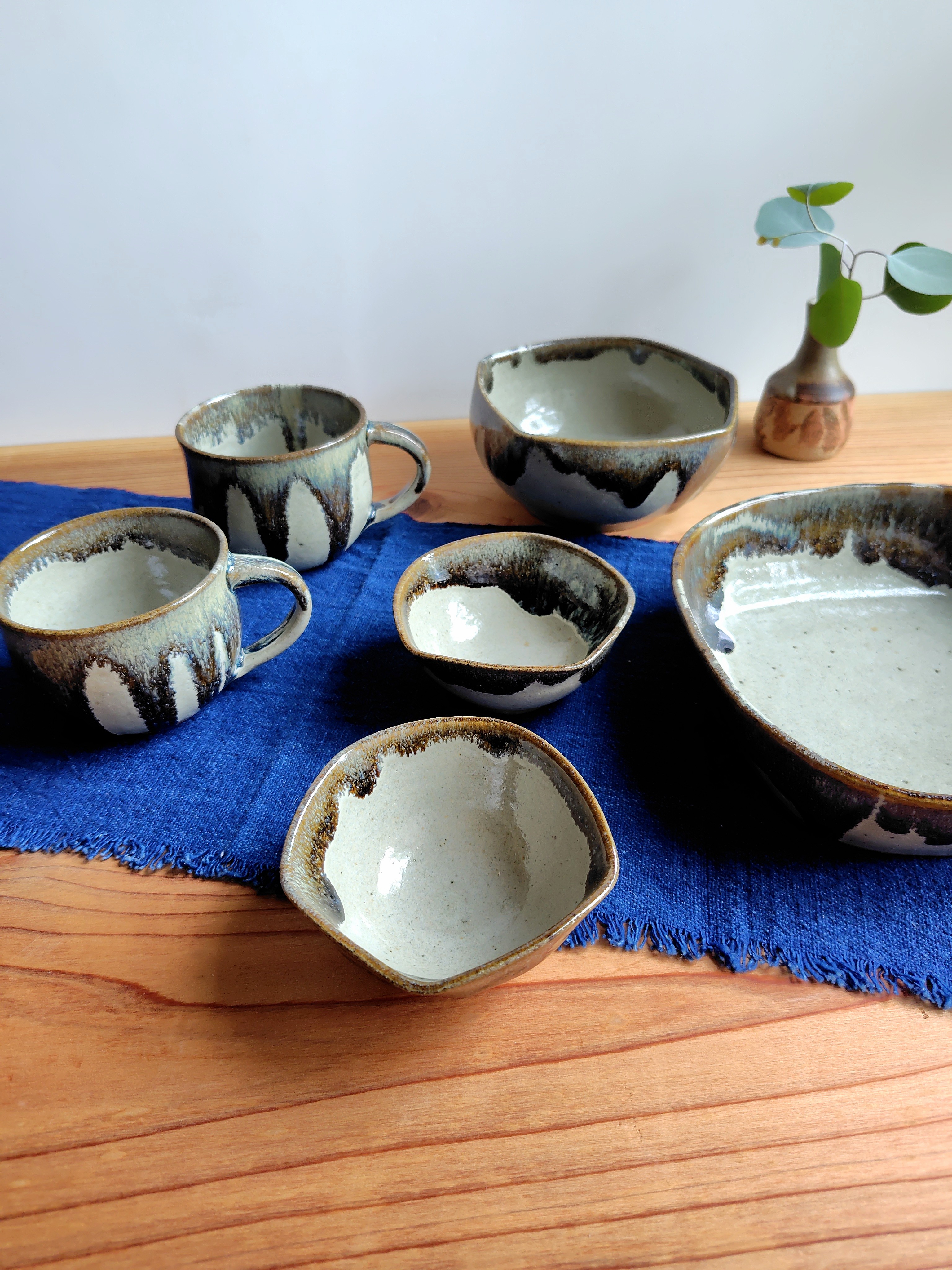
Some pieces have patches of silver or gold mottled over a black or brown ground. Most of them are not ginsai but pieces fired with a glaze high in metal to give a metallic texture.

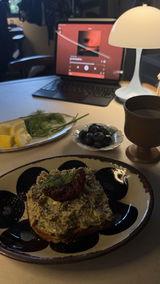
The photo shows a round-rim plate from the Kurogane (black-gold) series by Hirai Shu of Kyoto. The texture of old iron is expressed not by painting on silver or gold but with a glaze of his own. Where ginsai shines only inside the area painted with a brush, metallic color from a glaze spreads and bleeds across the whole piece.
Using ginsai pieces
- Do not use the microwave Silver is a metal, so it sparks and damages both the silver and the piece
- Avoid the dishwasher Hot jets of water and strong detergent wear the silver film thin
- No abrasives or metal scourers Wash by hand with a soft sponge and mild detergent
- Dry it right after washing Water left on it speeds up tarnishing
- Keep it away from air when stored Putting it in a bag or otherwise limiting its contact with air slows the change
Everyday care is covered in caring for Japanese ceramics.
Related articles and terms
Techniques painted over the glaze
- Kinsai: Gold Fired Over the Glaze in Japanese Ceramics
- Uwa-etsuke: How Overglaze Enamel Painting Works
- Kinrande: Gold Fired Over Red Overglaze Enamel
Silver and time
- Gintsugi: Silver Kintsugi, and Why the Silver Turns Black
- Kintsugi: How to Repair Pottery With Gold (and Why)
- Keinen Bika: Pottery That Gets Better With Age
- How to Care for Japanese Ceramics: A Practical Guide
Read its counterpart, kinsai
The counterpart to ginsai, in the same overglaze family, is kinsai, which uses gold that never changes color with time. Gold and silver, what stays and what changes. Read the two side by side and you begin to see how the metal on a piece is chosen.
Read about kinsaiFAQ
Why has my ginsai piece turned black?
What is the difference between ginsai and gintsugi?
Can ginsai pieces go in the microwave or dishwasher?
Shop the related pieces
Hirai Shu
2 pieces See all

Black Japanese Tableware
59 pieces See all
TAGAWA AKI
四神皿 白虎
$1,536.00
Japanese Plates

Bizen Ware Artist Fujiwara Akira
Hikidashi-guro Skull Sake Cup — Bizen Ware
$5,585.00
Japanese Sake Ware

Bizen Ware Artist Fujiwara Akira
Hikidashi-guro Bamboo Plate — Bizen Ware
$5,585.00
Plates

Yamamoto Masanori
Shinogi Rim Plate, Large Black — Shigaraki
$1,844.00
Plates
New to Japanese pottery? Start here — its history, how pottery differs from porcelain, the clays and glazes behind each style, and how to care for a piece. → Japanese Pottery: The Complete Guide