
Hakuji (White Porcelain): Clear Glaze Over a Pure White Body

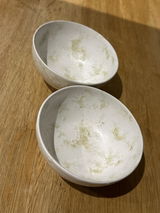
Hakuji (white porcelain) is a white porcelain body covered in a clear glaze and fired at a high temperature. It carries no painting or color, and shows the whiteness of the body itself.
Porcelain is made from a white clay of crushed porcelain stone and fired hard at around 1,300°C. The clay vitrifies almost like glass, so it absorbs almost no water, is strong even when thin, and lets light through faintly at the rim. Cover this white body with a clear glaze, and you have hakuji.
In Japan, porcelain began to be made in Arita, Saga Prefecture, in the early seventeenth century, and white porcelain spread from there. Today it is made by many regions and artisans, including Arita, Mino in Gifu Prefecture and Kyoto.
The nature of porcelain itself is covered in porcelain, and how it differs from stoneware in stoneware vs. porcelain. This article is about white porcelain in particular.
Hakuji and Other White Pottery
There are several kinds of white pottery besides hakuji. It is easiest to tell them apart by whether the body is porcelain or stoneware, and whether the white comes from the clay or the glaze.
| White pottery | Where the white comes from |
|---|---|
| Hakuji | A white porcelain body under a clear glaze. The white of the body shows through as a clean, clear white |
| Seihakuji | White porcelain with a glaze containing a little iron, so pale blue pools in carved grooves |
| Kohiki | Stoneware of brown clay coated in white slip. A soft white whose color develops with use |
| White-glazed stoneware | Stoneware clay under a white glaze. Many have a low sheen, such as white matte |
Shadow Carved Into White: Fujimura Kasumi's Hakuji
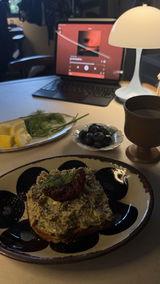
Fujimura Kasumi, who works in Tajimi, Gifu Prefecture, makes pure white pottery with the idea that it should "suit any kind of food." The photo below shows a 7-sun hand-carved plate: the rim is cut like petals, and lines carved outward from the center cast soft shadows across the white. Precisely because white porcelain has no painting or color, every carved line becomes part of its face as it catches the light.

In the same white porcelain, Fujimura also makes vases with vertical carving (at the back right of the photo at the top) and chopstick rests. With a single branch or wildflower in the vase, shadows fall across the white and the color and shape of the flower stand out. "Stay close to people's daily lives, and be used freely and often" is the wish shared by all of Fujimura's pieces.
White Porcelain With Raised Patterns: Jiucasca, Maeda Asami's Pottery
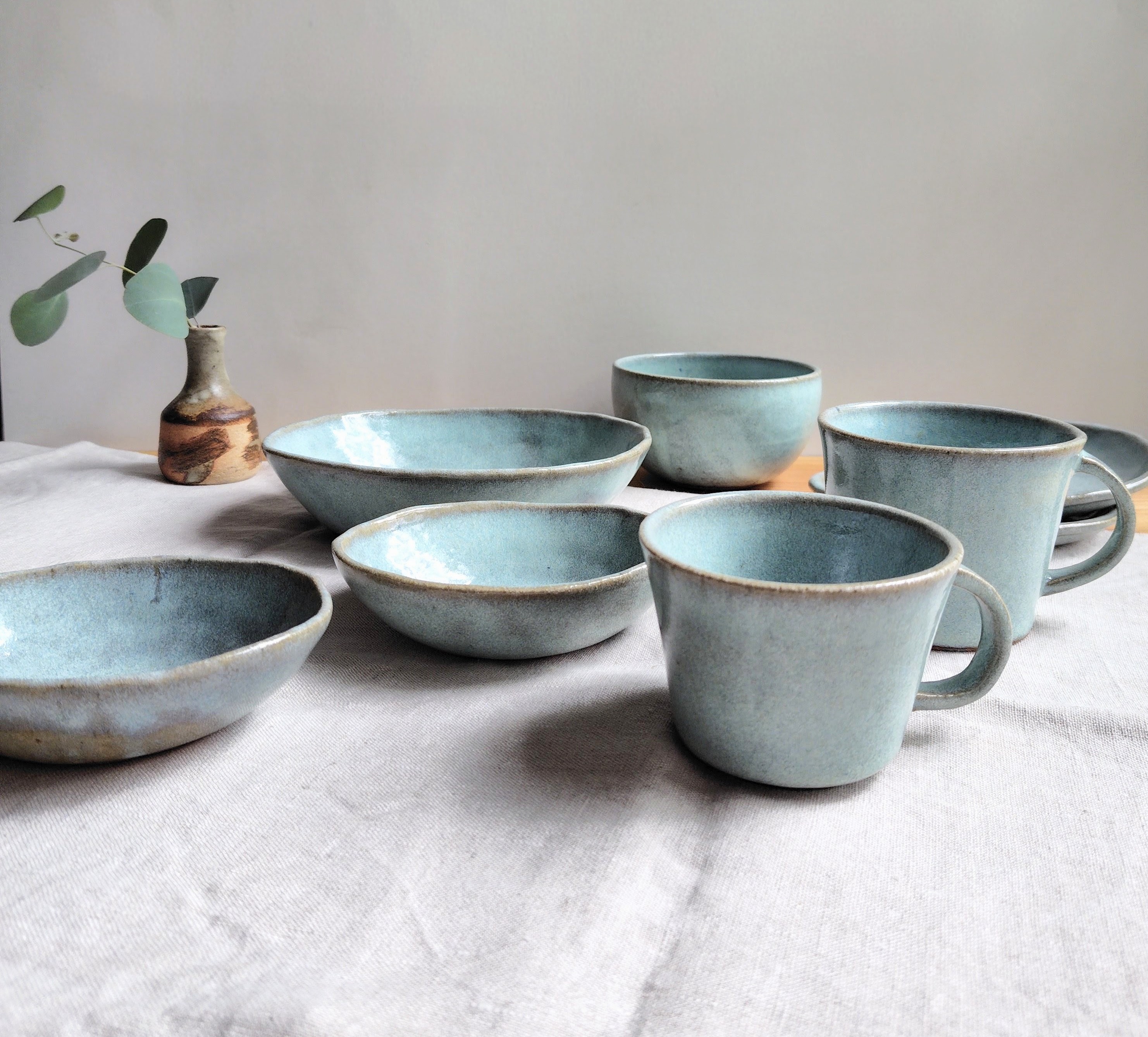
In Kyoto, Maeda Asami also works with a porcelain body. Maeda raises patterns with icchin (drawing lines by squeezing slip from a dropper) and relief, finishing pieces as fresh, translucent white porcelain. On seihakuji plates with a bluish glaze, pale blue pools in the valleys of the pattern, so the relief itself becomes light and shade. The technique and the artisan's story are covered in our artisan profile of Maeda Asami.

Choosing and Using Hakuji
- To show off the color of food The white of hakuji shows the green of vegetables, the red of tomatoes and the browning of grilled food most honestly. For a first piece, a 5- to 7-sun plate that comes out often is easy to use
- If plain white feels too simple Choose hakuji with carving or relief, and light and shadow give it a face even on days without food
- Pairing with other pottery Hakuji sits easily beside patterned pieces and earthy stoneware. It brings the whole table together
Hakuji absorbs almost no water, so care is simple: wash and dry. Wash carved or raised grooves with a soft sponge. Whether a piece can go in the microwave or dishwasher depends on the piece, so check the description on each product page. Care for Japanese pottery in general is covered in caring for Japanese ceramics.
Related Articles and Terms
Getting to Know White Pottery
- Japanese Porcelain: Made from Stone, Not Clay
- Seihakuji: White Porcelain Where Blue Pools in the Carving
- Kohiki Pottery: The White Slip Technique, Explained
- Stoneware vs Porcelain: How to Tell Them Apart
Regions and Artisans
- Arita Ware: Japan's First Porcelain, 400 Years On
- Mino Ware Guide: Oribe, Shino and Japan's Biggest Kiln
- Artisan Maeda Asami | Japanese Porcelain Patterned in Relief, Not Paint
White Pottery for Your Everyday Table
White porcelain with carved shadows, porcelain with raised patterns, the soft white of kohiki. The same white changes greatly with the body and the glaze. In our collection of white pottery, you can browse hakuji and other white pieces one at a time.
See white potteryFAQ
What is hakuji?
How is hakuji different from kohiki?
Is there anything to watch out for when caring for hakuji?
Shop the related pieces
White Japanese Tableware
135 pieces See all
Ryosuke Matsuo
Foliate Oval Plate, Brown No.1
$1,173.00
Plates

jiucasca
Ash-Blue Glaze Coffee Cup — Kyoto
$1,413.00
Japanese Coffee Cups

jiucasca
Blue-White Porcelain Foliate Arabesque Plate, Small
$922.00
Plates

Furutani pottery
Iron-Line Rice Bowl, Large — Shigaraki
$738.00
Japanese Rice Bowls


New to Japanese pottery? Start here — its history, how pottery differs from porcelain, the clays and glazes behind each style, and how to care for a piece. → Japanese Pottery: The Complete Guide