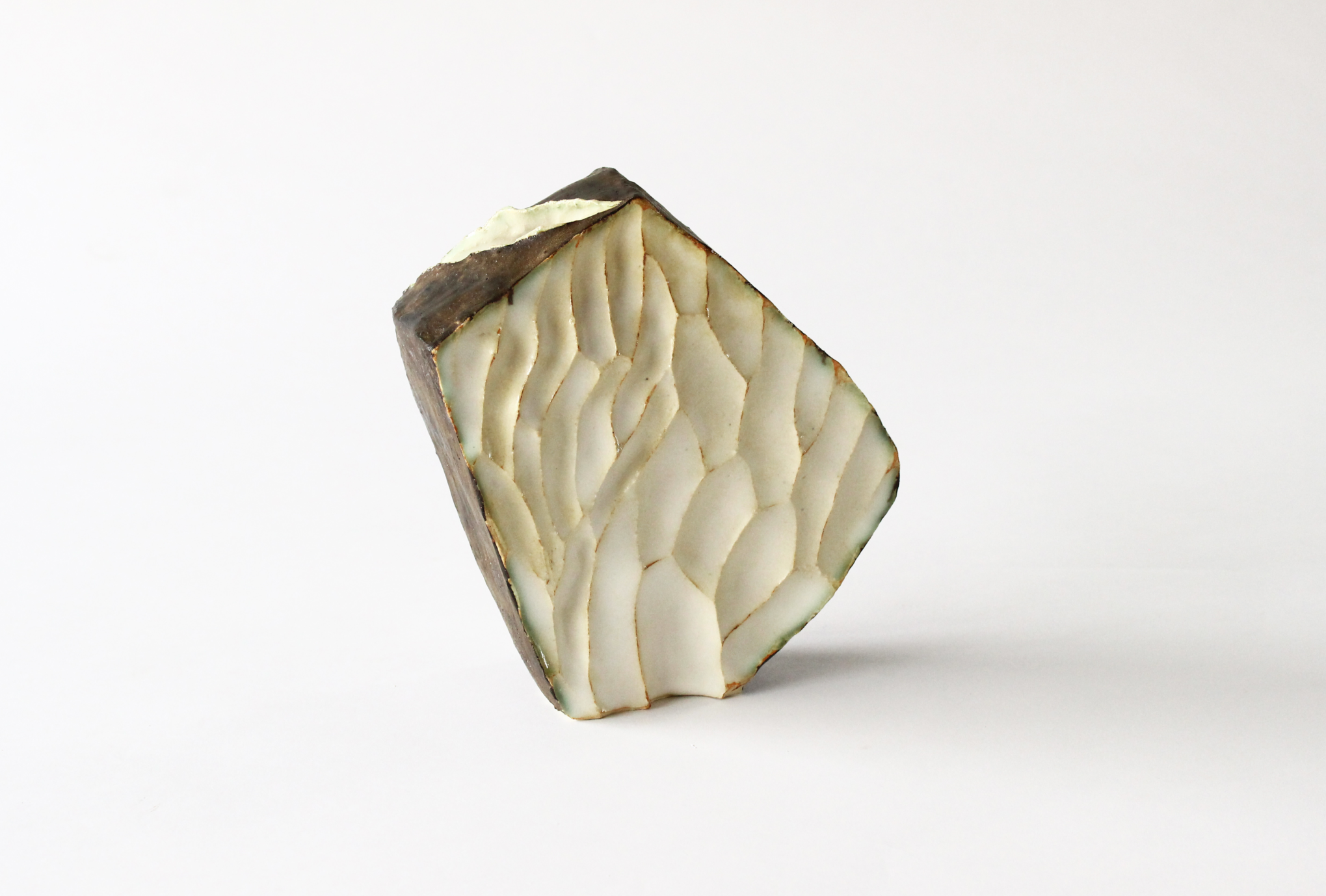
Suyaki (Bisque Firing): What Happens in the First Fire

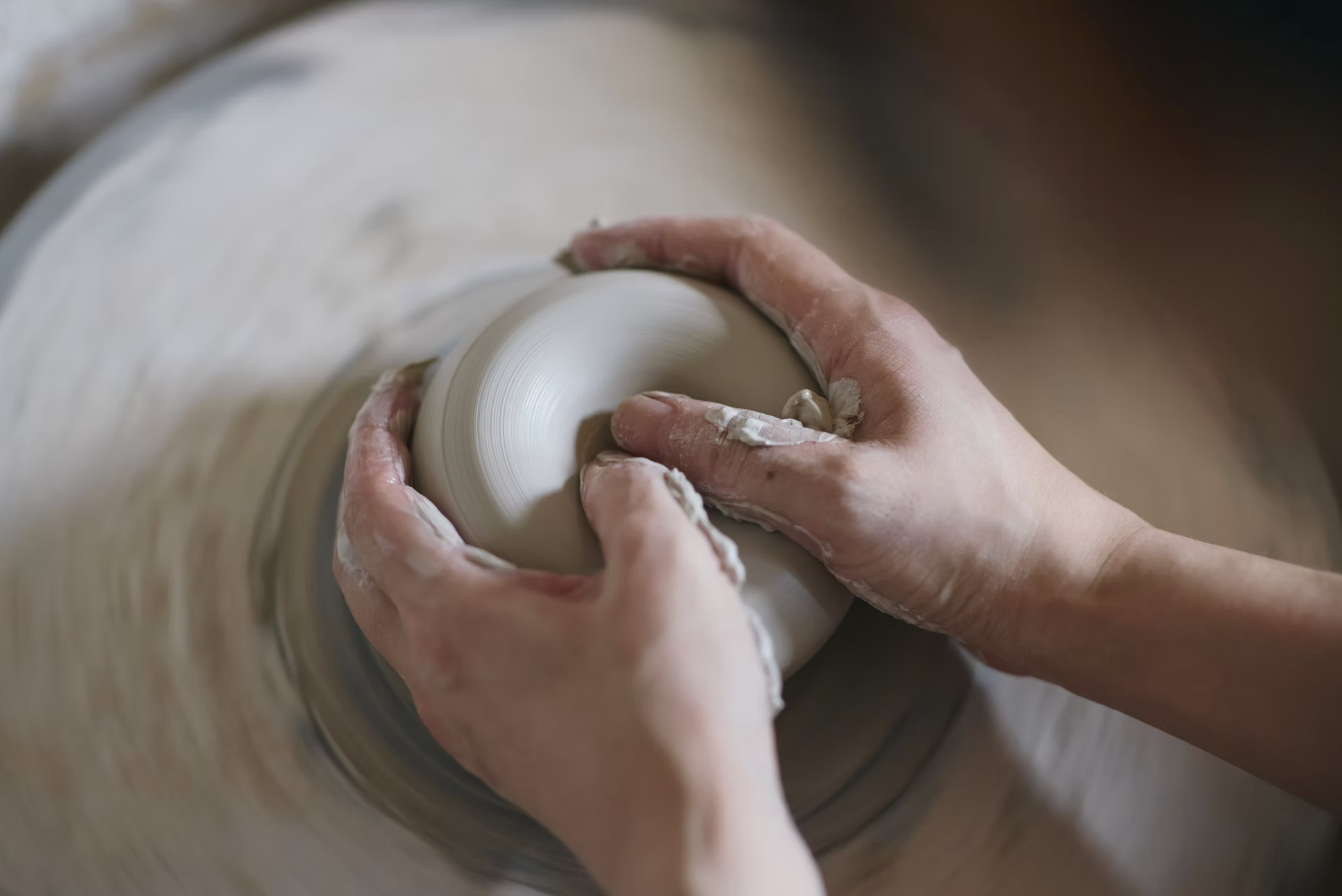
Suyaki is the first firing, in which a formed piece is hardened at low temperature — around 800°C — before any glaze is applied.
Firing turns it into a porous, sturdy body: harder to break and easier to handle. It also makes glaze and pigment take better, so it is an indispensable stage before painting and glazing.
After this comes the main firing, glazed and fired at 1,200–1,300°C. A single piece passes through fire at least twice before it is finished.
Why the temperature is low
Clay that has only been dried will collapse if it meets water. Bisque firing raises the strength one stage from that state.
700–800°C is the minimum line at which the chemically bound water in clay is driven off and the material can never return to clay. Above that temperature the clay sets irreversibly and will not break in the hand.
But it is not fired hard. Deliberately left porous, the body absorbs the water in glaze so that the glaze adheres evenly. Fired hard first, it would absorb nothing and the glaze would simply run off.
Bisque firing against the main firing
| Aspect | Bisque firing | Main firing |
|---|---|---|
| Temperature | About 700–800°C | About 1,200–1,300°C |
| Purpose | Preparation for glazing | Finishing the work |
| Result | Porous; absorbs water | Vitrified body and glassy glaze |
| Strength | Enough to handle | Enough for practical use |
| Work between | Underglaze painting happens | Glazed, then fired |
What happens after the bisque
On a bisque-fired body, underglaze painting comes first. The porous surface drinks pigment like washi paper, so a line once laid cannot be erased.
Then glazing: dipping, pouring, spraying. The body absorbs the water in the glaze and a layer of glaze remains on the surface. Then the main firing. Of the eleven stages set out in our article on forming methods, bisque firing is the sixth.
Note that yakishime takes no glaze, so the bisque is sometimes skipped and the piece fired only once.
Related terms and guides
Related terms
- Shita-etsuke: Underglaze Painting and Why It Never Fades
- Uwa-etsuke: How Overglaze Enamel Painting Works
- Yakishime: Unglazed Pottery Fired to Its Limit
- Ara-neri: The Rough Wedging That Comes First
- Rokuro: How a Pot Is Thrown on the Wheel
- Japanese Pottery Glossary | Terms, Techniques & Kilns
Read further
- How Japanese Pottery Is Shaped: Five Forming Methods
- Japanese Pottery Glazes: The Main Types Explained
- Anagama vs Noborigama: Japanese Wood Kilns Compared
- Japanese Pottery Patterns: What the Motifs Actually Mean
Look at pottery that passed through fire twice
Bisque, glaze, main firing. That many stages lie behind a single plate. Nokaze introduces pottery together with the background of its makers.
Browse new arrivalsFAQ
What is the difference between bisque firing and the main firing?
Are there pieces used as bisque, without further firing?
Is the bisque firing ever skipped?
Shop the related pieces


New to Japanese pottery? Start here — its history, how pottery differs from porcelain, the clays and glazes behind each style, and how to care for a piece. → Japanese Pottery: The Complete Guide