
Artisan Kawasumi Tomokazu | The Look of Time in Kasama Clay

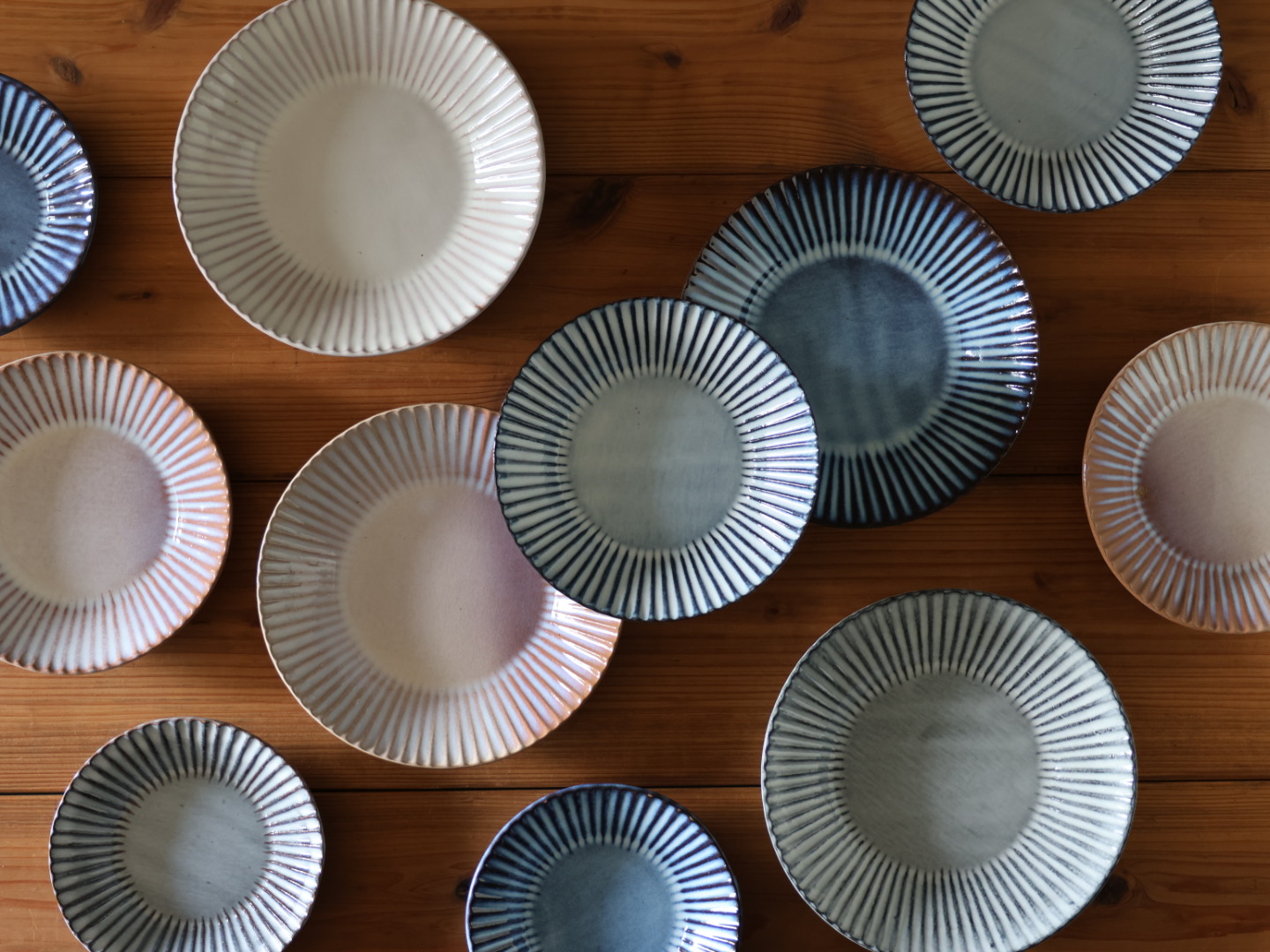
Seen from across the room, the pieces by Kawasumi Tomokazu look like metal or wood rather than pottery.
The sheen of antique metal. The rings of a tree. Torn bark. Zebra stripes. And a blue that looks like a galaxy sunk into the surface. All of it is made of clay.
What Kawasumi wants to express in clay is a texture that seems to have lived through a long time. Each series wears a completely different face, but this one idea runs beneath them all. Here, alongside the artisan's own words, we go through five series, starting from what each one is and how it is made.
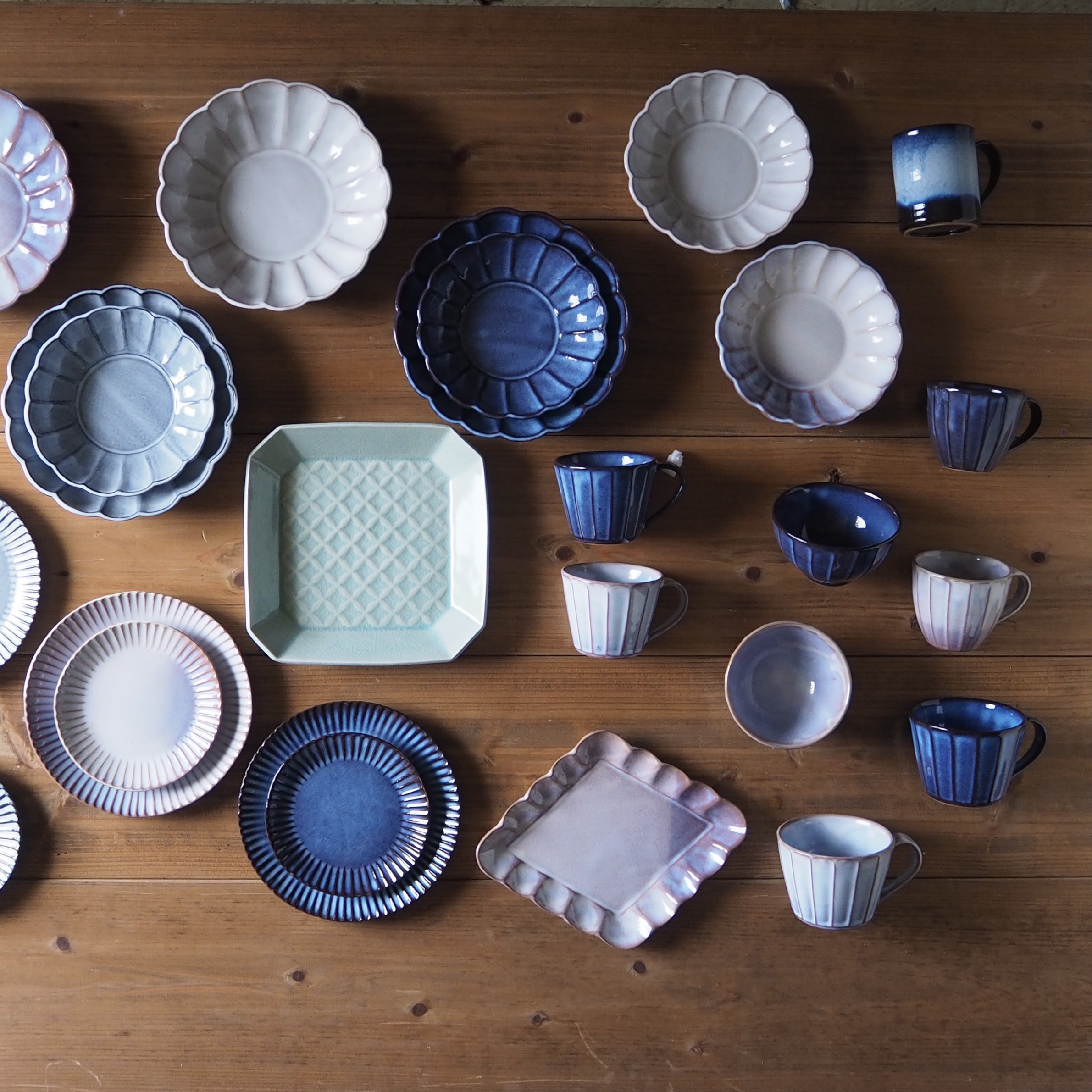
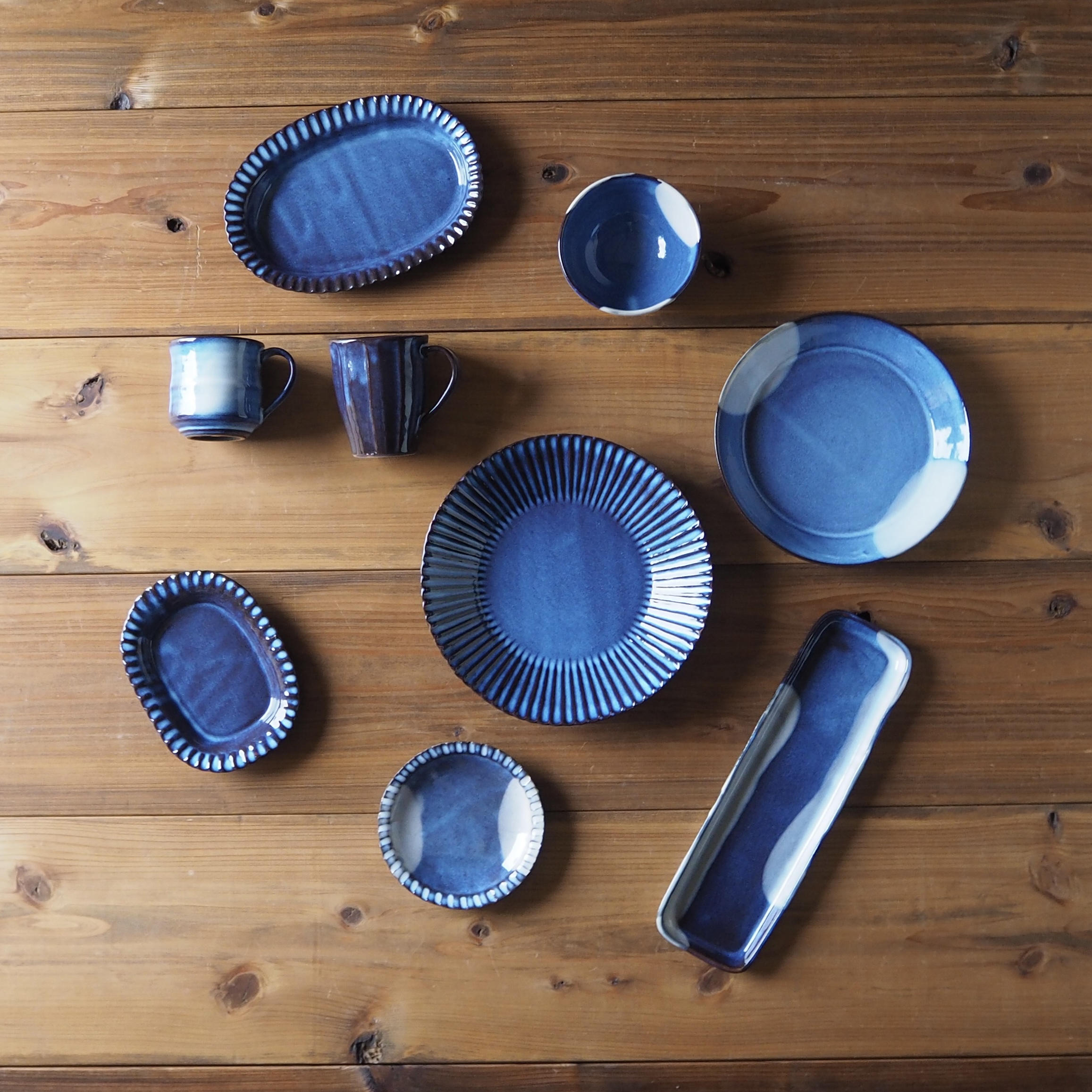
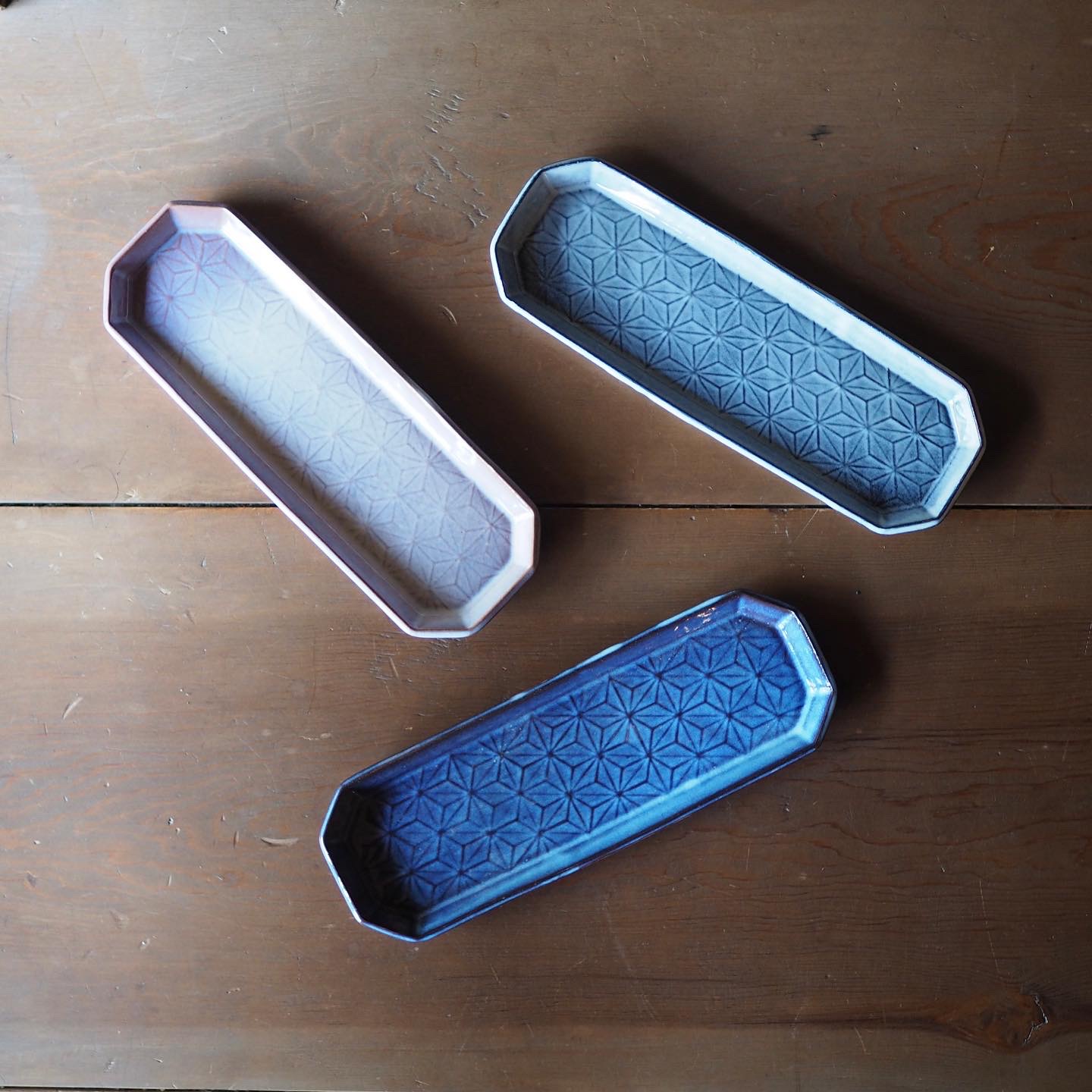
Kawasumi's work is gathered in one collection. Each series has a completely different character, so start by comparing them side by side.
The day a painter's dream ended, and clay began
Kawasumi first set out to become a painter.
I always loved drawing, and until about my third year of junior high I wanted to be a painter. But in my first year of high school I hit a wall. It felt as if everything I loved had disappeared. I couldn't put my hand to anything. I didn't want to study, I didn't want to go to club activities.
Then the art club teacher at the time told me, if flat work isn't working, try three dimensions. That was how it started. It felt like I had found something I loved, and from there I decided to become a potter.
— Kawasumi Tomokazu
A teenager who felt that everything worth loving had gone touched clay, and found something to love again. From the flat to the three-dimensional. Turning to clay with a painter's eye still lives on in the work today. The gradations of color, the way cracks and carving are shown on the surface: the thinking is closer to composing a picture than to making tableware.
Carrying on the intent of those who came before, in Kasama
The studio is in the city of Kasama, Ibaraki Prefecture. In Kawasumi's own words:
"Carrying on the intent of those who came before, I make the pottery I love, aiming at work that can move and inspire many people."
That one short line holds the character of Kasama as a pottery region. Kasama ware has no fixed style that says "this is Kasama ware." It is a region with a history going back to the Edo period, yet it never bound its artisans to a style, and as a result it drew in artisans of every kind.
So in Kasama, "carrying on" and "making it new" are not in conflict. What is carried on is technique and attitude, not appearance. That is why five series this different can all still stand as Kasama work.
Bringing the passage of time into form and color
The atmosphere I want to express is something antique. I love things that make you feel the passage of time, so I take antique-looking shapes, gradations of color and the way color changes, and work them into my style.
— Kawasumi Tomokazu
Rusted metal, wood dried and split, weathered rock. Expressions that decades or centuries carve into things, Kawasumi transfers onto clay in the flame of the kiln. Newly made, and yet somehow nostalgic. That strange presence is what the five series share. Here they are side by side first.
| Series | How it looks | The core of how it is made |
|---|---|---|
| Antique | Rusted metal, aged bronze | A metallic glaze, developed independently, applied in a single color |
| Wood | Tree rings in a log, dried cracks | Carving down into the surface of the clay |
| Rock Bark / Sand Bark | Torn bark, rock face | The cracking technique. Rock Bark uses black clay |
| Zebra | Black and white, like a zebra | Scorching the clay with a burner until it breaks up |
| Phantom | Blue or green against black, wavering like a nebula in space | A glaze perfected over many years |
Antique | Metal born out of clay
What Kawasumi has pursued independently in Kasama is a metallic glaze. Pieces with a single color of glaze are what the artisan calls the Antique series. Over a dark brown ground, a bronze-like sheen travels across the surface depending on the angle of the light. Plenty of people take it for cast metal until they pick it up.
But it is light in the hand, and warm as clay against the lip. It looks like metal and it is clay. That is the strongest thing about Kawasumi Tomokazu's work.
The flower vases show it best. On a slim form that recalls an industrial component, a "screw" sits proud of the surface like a rusted bolt. A roughly fired base holds the texture of the earth as it is, while a deep bronze glaze runs around the neck. Inorganic crossing organic, it stands closer to an object than to tableware.
The sheen comes from iron in the glaze, which changes character with the state of the flame inside the kiln and surfaces as a metallic light.
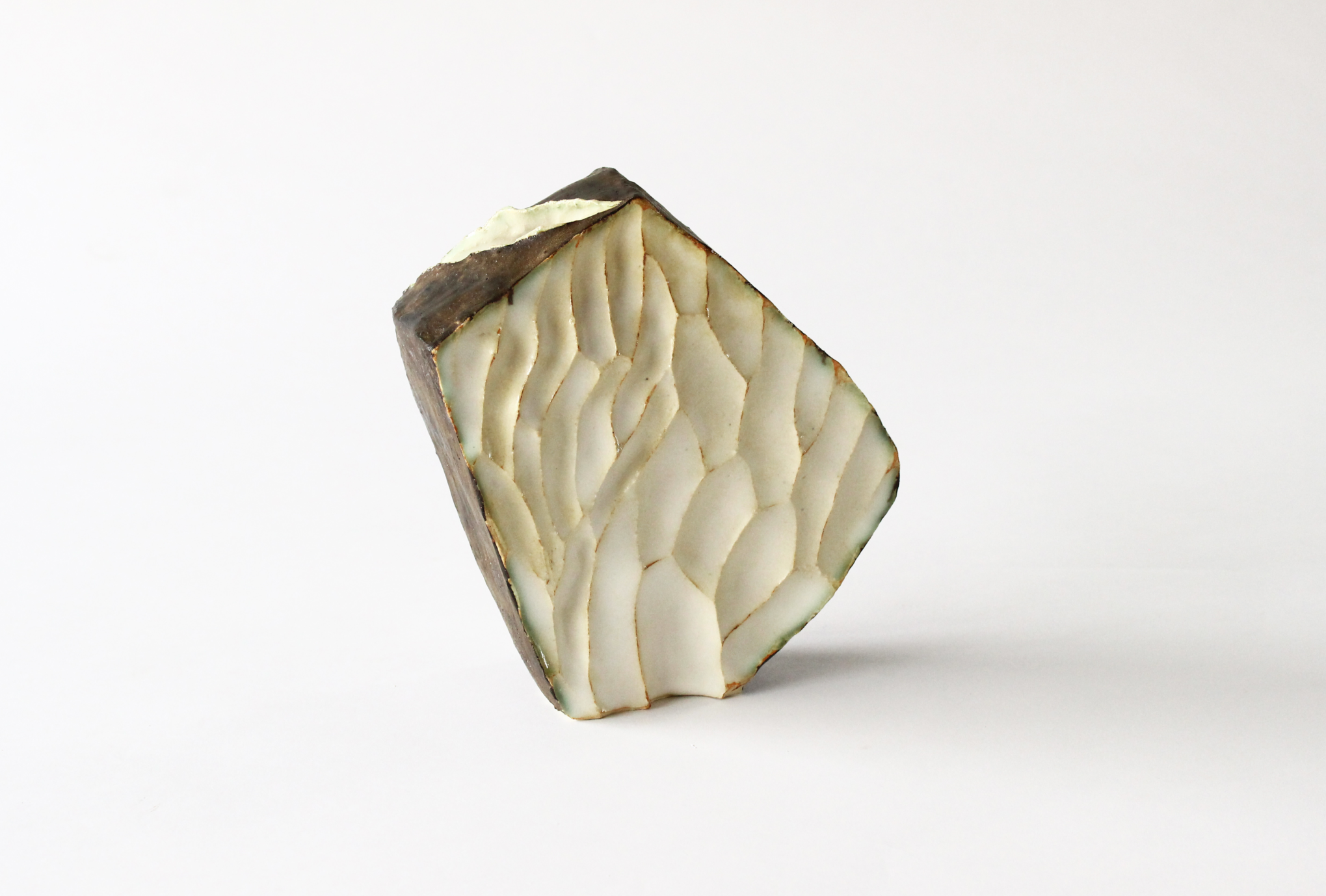
Wood | Work carved like a cut log
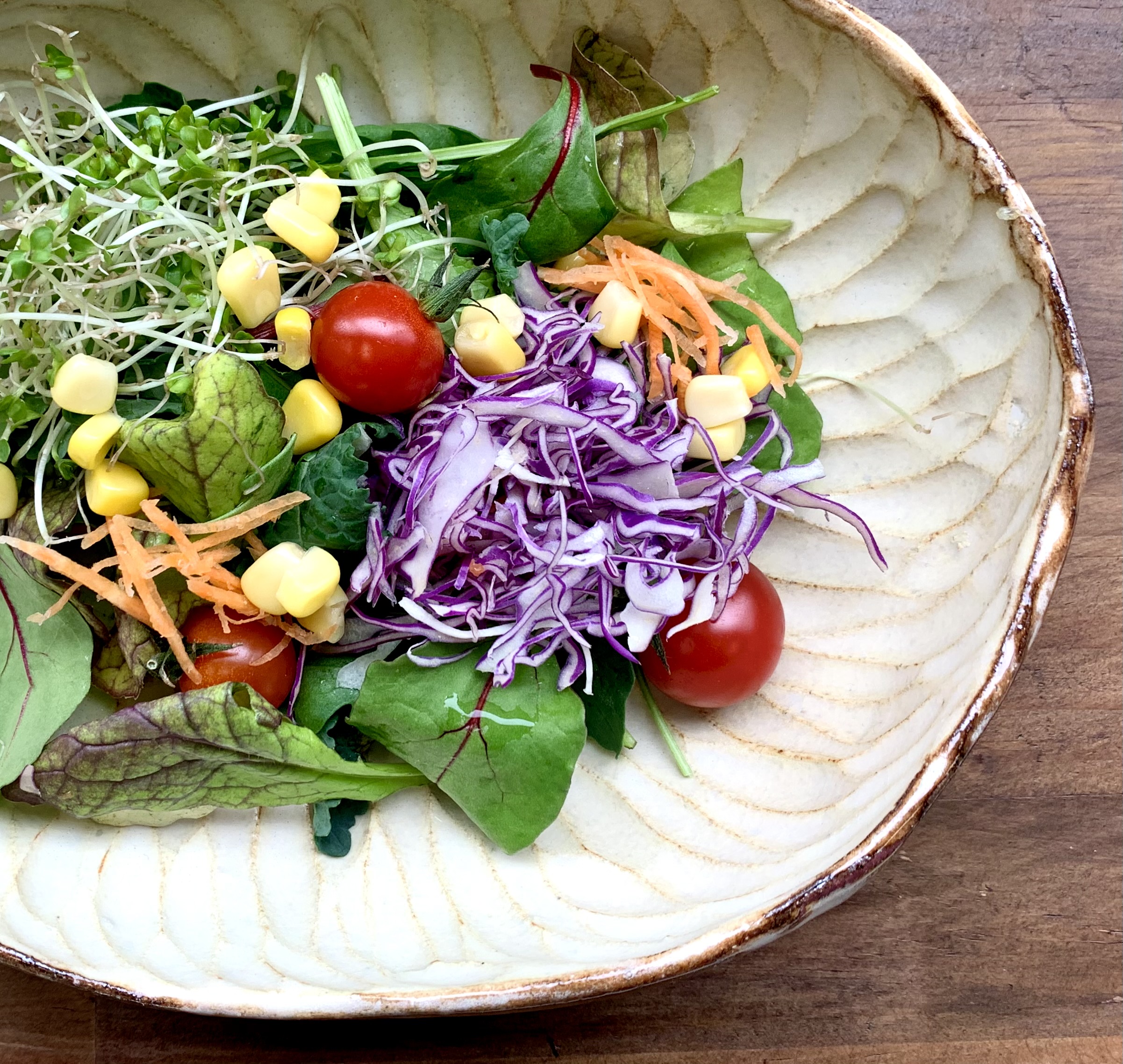
As the name says, what is carved is the cross-section of a log cut through.
Concentric circles run outward from the center, layer on layer. Short radial lines cut across them. The rings of a tree, and the cracks that open as it dries. All of it carved into clay.
The rim is a straight vertical wall, and the glaze sits there more richly. The carving in the center sinks into matte, and the standing rim catches the light. Two expressions living in a single piece.
The rings are different on every piece. Even among the same "wood plate (large)," no two share the same spacing of circles or the same run of cracks. It looks nothing like clay, and yet it varies from piece to piece the way wood does. That is what makes choosing one interesting.
As a way of making pattern by carving, it is close in spirit to shinogi, but where shinogi raises ridges, this carves the surface down.

Rock Bark / Sand Bark | A name meaning "the bark of a rock"
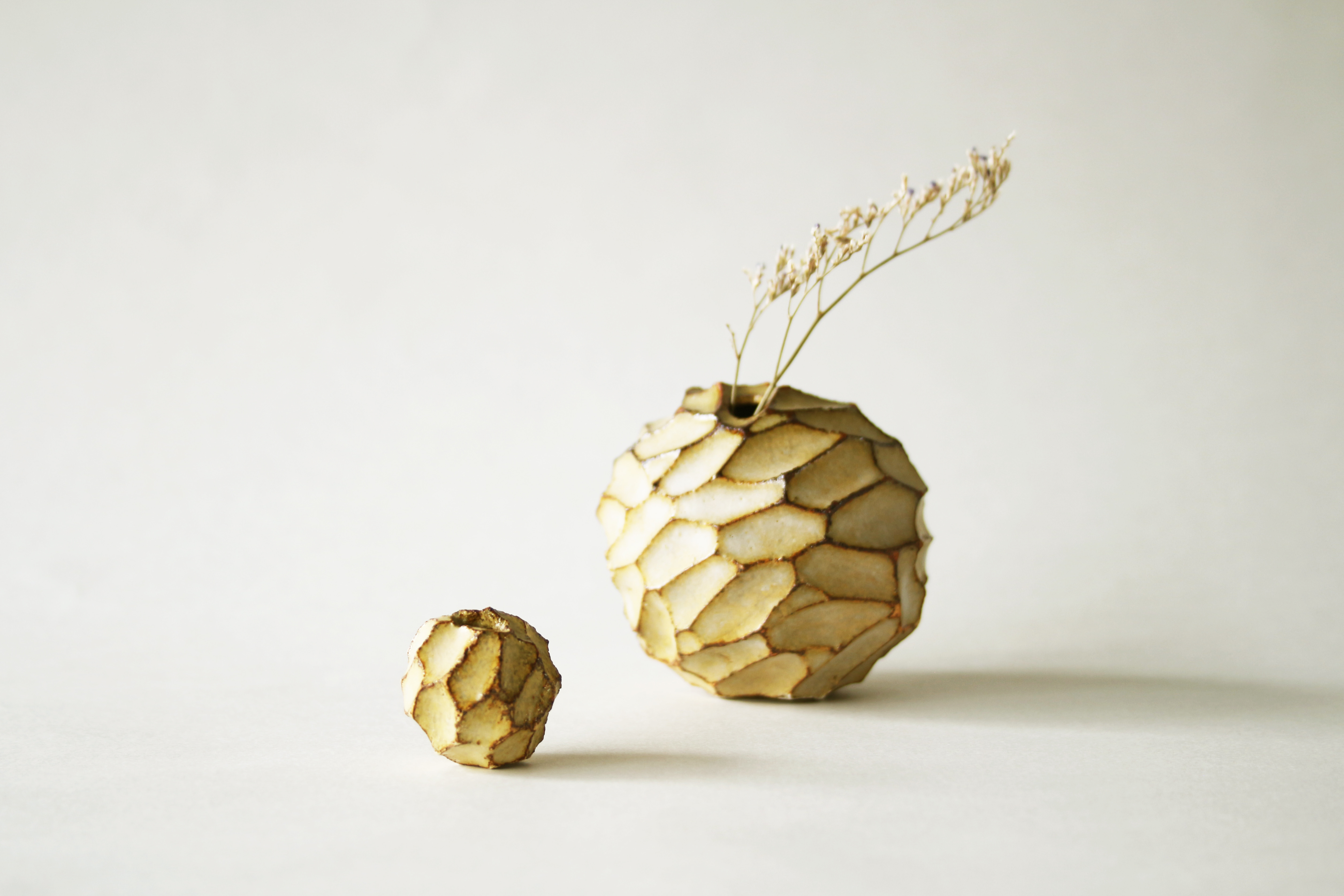
This series is made with the cracking technique. Kawasumi explains the name like this.
The crackle-patterned pieces made with this black clay are called Rock Bark, and they express a rocky texture. Rock, as in stone, and bark, the slightly cracked texture of tree bark. I pictured a style that combines the two, so I named the series Rock Bark: the bark of a rock.
— Kawasumi Tomokazu
- Rock Bark Black clay, with the cracks of bark laid over a rock-like texture. "The bark of a rock"
- Sand Bark The color of the raw Kasama clay body itself, likened to the earth. "Torn bark in the color of the earth"
Both let the color of the clay speak, so the result is plain and warm to the touch, the opposite pole from the metallic Antique.
A mug shows it clearly. The cracks running across the ground fall in a completely different shape on every single piece. They cannot be aimed at the same place twice. How fast the clay dries and how the pressure falls are different every time.

Zebra | Work whose black and white contrast recalls a zebra
This is the most unusual of the five in the way it is made.
After a pattern is worked into the clay, it is scorched with a burner. The clay expands and the surface breaks away of its own accord. A white glaze goes over that, pooling in the broken texture and producing a contrast of black and white.
Because that black and white resembles the markings of a zebra, the series was named ZEBRA (ZB).
How the flame is applied, and how much breaks away where, cannot be fully controlled. So this is the series where the largest part of the result is beyond even the artisan's reading. It is the series where "one of a kind" applies most literally.

Phantom | Work built on the image of a galaxy sunk in blue
There is an ideal blue that Kawasumi researched over many years and finally brought to completion. Phantom is the series that uses it.
The way blue and black weave together feels like looking down into a nebula or a galaxy. The blue shifts in depth across the piece and changes with the angle and the light. There is a green and black combination too, closer to the color of a deep forest.
Quiet, and impossible to look away from. It brings the feeling that space itself slipped onto the everyday table for a moment.

Why every piece is different
"One of a kind" is a phrase used loosely, but with Kawasumi, the reason the differences arise is clear for each series.
| Series | Where the difference comes from |
|---|---|
| Antique | Position in the kiln, how the temperature rises, how the flame circulates. Some come out closer to bronze, others sink toward black |
| Wood | The carving is done by hand. The spacing of the rings and the run of the cracks differ on every piece |
| Rock Bark / Sand Bark | The cracks do not fall where you aim them. How the clay dries and how the pressure falls decide it |
| Zebra | The scorch-and-break step is open to chance by its nature. Even the artisan cannot read it |
| Phantom | The blue shifts in depth across the piece. Even the same glaze pools differently |
The forms, and living with them
The range of forms is another mark of this artisan.
| Form | Character | Where it works |
|---|---|---|
| Plates | Carved with rings, or with a standing rim. Large and small | A main dish, side plates, bread |
| Shallow bowls | Shallow, with throwing lines left in. The rim stands | Dishes with sauce, salads |
| Mugs | The cracked texture. Light in the hand | The first cup of the morning |
| Flower vases | Slim forms in the metallic glaze. Some are pierced | A single stem, a branch |
| Furidashi | A tea utensil for small sweets | Sencha gatherings, konpeito sugar |
Making everyday pieces, Kawasumi's hand still reaches as far as tea utensils. The range of forms is also evidence of how much pottery a person has looked at.
The look of it can suggest something difficult to handle. In fact the opposite is true.
| Item | Suitable |
|---|---|
| Microwave | Yes |
| Dishwasher | Yes |
| Oven | With conditions. Avoid sudden changes in temperature |
These are pieces for everyday use. The glaze covers them fully, so no medome is needed either. The basics of care are covered in caring for Japanese ceramics.
What to serve changes with the series. Antique and Phantom are dark, so white and bright things show up well on them: white fish, tofu, egg, cream-based pasta. Brown dishes such as simmered food can sink into the surface. Sand Bark is the color of the clay, so it takes both Japanese and Western cooking.
For drinking, the color inside a guinomi reflects into the sake. A flower vase suits a single stem, with just one branch in it.
Pottery as proof of having lived
For me, pottery is something like proof that I lived. I make it because there is something fascinating about being able to communicate with people from other eras, and because it lets me make use of who I am. I think of it as a tool for life.
— Kawasumi Tomokazu
Fired clay lasts for centuries unless it breaks. A piece that captured the passage of time goes on to gather the time still to come. Someday, someone not yet met will pick it up and think about the person who made it. That, it seems, is what Kawasumi means by "communicating with people from other eras." The piece that comes to your table today is the start of that long conversation.
Every piece by Kawasumi is one of a kind. The same form may come back in stock, but the identical piece will never sit on the shelf twice. If something catches you, deciding then is the right call. Compare them in the Kawasumi Tomokazu collection.
Related articles and terms
The region
- Kasama Ware: Japan's Most Free-Spirited Pottery Town
- Mashiko Pottery: Where Japanese Folk Craft Still Lives
- Japanese Pottery Glazes: The Main Types Explained
Technique and terms
- Shinogi: The Carved Ridges on Japanese Pottery
- Kodai (Foot Ring): The Part Collectors Check First
- Medome: How to Seal Unglazed Pottery Before First Use
Choosing by form
- Japanese Plates | Handmade Ceramic Plates from Japan
- Japanese Mugs | Handmade Ceramic Mugs from Japanese Potters
- Japanese Ceramic Vase | Handmade Flower Vases from Japan
- Japanese Sake Set | Ochoko, Guinomi Cups & Tokkuri
See the work of Kawasumi Tomokazu
It looks like metal, and in the hand it is clay. The rings, the cracks, the zebra stripes, the depth of the blue: every piece differs. Find yours among the five series. Sent from Kasama, just as it is.
See Kawasumi Tomokazu's piecesThis article was put together from a video interview with Kawasumi Tomokazu.
Interview and editing: nokaze editorial team
FAQ
Can Kawasumi Tomokazu's pieces go in the microwave or dishwasher?
How is the metallic sheen produced?
If I buy several pieces, will they look coherent together on the table?
Shop the related pieces
Kawasumi Tomokazu
11 pieces See allKasama
11 pieces See all
Kawasumi Tomokazu
Woodgrain Yunomi Teacup — Kasama
$716.00
Mugs

Kawasumi Tomokazu
White Glaze Free Cup No.16 — Kasama
$716.00
Mugs

Kawasumi Tomokazu
Woodgrain Flat Plate, 24cm No.2 — Kasama
$1,928.00
Plates

Kawasumi Tomokazu
Woodgrain Flat Plate, 24cm No.3 — Kasama
$1,928.00
Plates
New to Japanese pottery? Start here — its history, how pottery differs from porcelain, the clays and glazes behind each style, and how to care for a piece. → Japanese Pottery: The Complete Guide