



Tokoname
Tokoname is where most of Japan's teapots have come from. Its iron-rich clay rounds off the astringency of green tea, so what you pour actually tastes different.
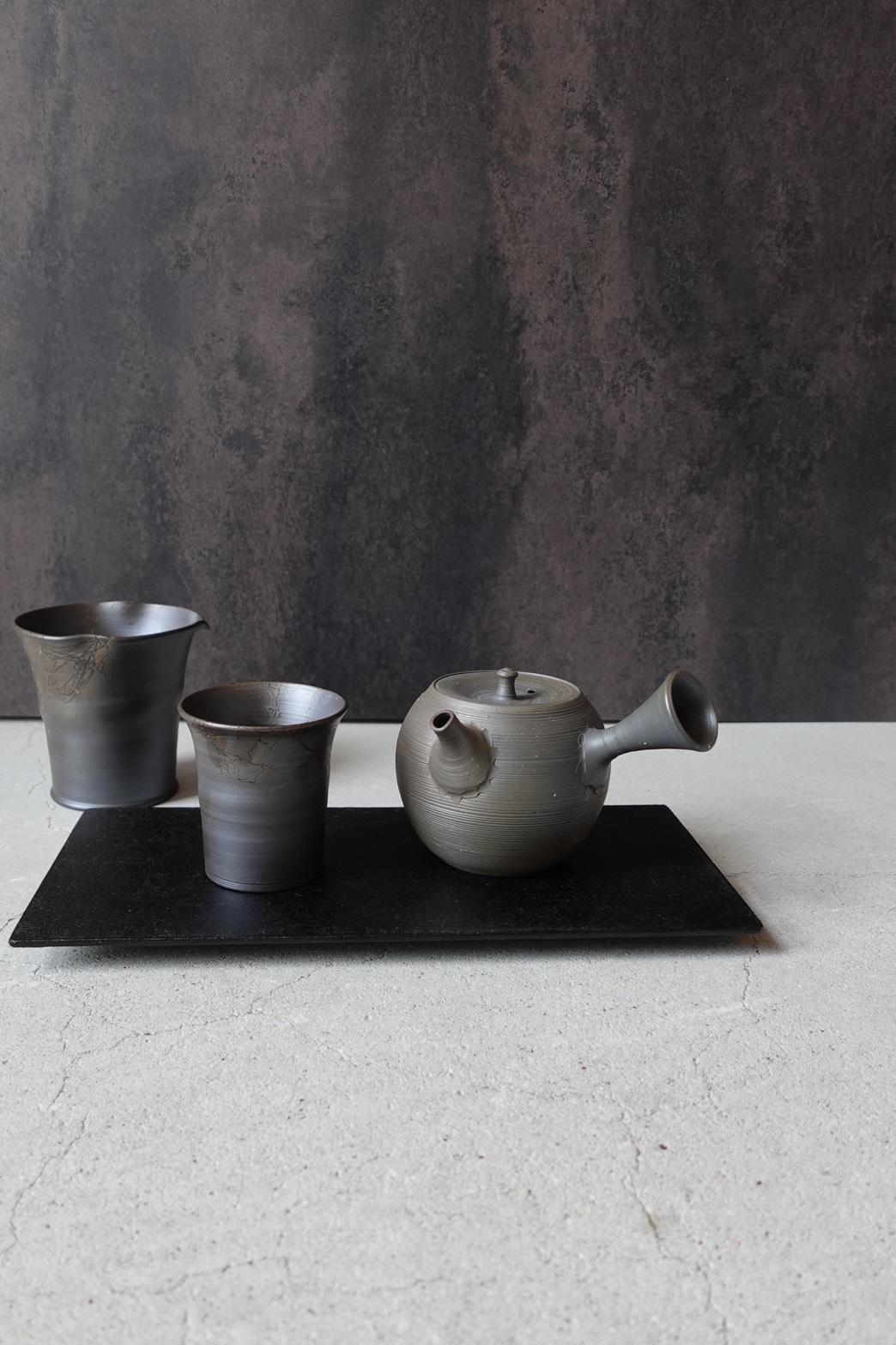
What sits here is the work of a maker born and raised in the teapot town. You notice the lightness the moment you lift one, then the fineness of the strainer. On the mogake pieces, seaweed is wrapped around the body before firing, and only where it touched does the color change, leaving greenish lines and mottling. What happened inside the kiln is the surface pattern. The cups and the vases come from the same clay and the same firing.
Tokoname is one of Japan's Six Ancient Kilns and has been firing since the Heian period. Shudei teapots suit green tea because the iron in the clay reacts gently with the tannin. There is no glaze, so the inside gains sheen with use and the outside settles under the oil of your hands. Give one teapot one kind of tea and the flavor builds. On choosing one, see Tokoname kyusu and kyusu, houhin and dobin.
Pickup Items

Yamada Yutaro
Mogake Vase, Sand — Tokoname
$319.00
Japanese Vases

Yamada Yutaro
Mogake Vase, Round Black — Tokoname
$319.00
Japanese Vases

Yamada Yutaro
Hammered Texture Vase — Tokoname
$319.00
Japanese Vases

Yamada Yutaro
Mogake Vase, Amber — Tokoname
$319.00
Japanese Vases

Yamada Yutaro
Mogake Japanese Teacup — Tokoname Ware
$239.00
Japanese Tea Cups (Yunomi)

Yamada Yutaro
Mogake Yunomi Teacup, Vermilion No.1 — Tokoname
$239.00
Japanese Tea Cups (Yunomi)

Yamada Yutaro
Mogake Yunomi Teacup, Vermilion No.2 — Tokoname
$239.00
Japanese Tea Cups (Yunomi)
Related Articles
All Articles-

壺屋yachimun通:沖繩的陶器街區
-

走訪伊部|在備前的陶器之鄉度過一天
-

京都近郊的陶藝小鎮|信樂、丹波、伊賀一日遊
-

Hasami Pottery Festival 2027 | Usually April 29 to May 5: Parking, Shuttle Buses and Avoiding the Crowds
-

Kasama Himatsuri 2027 | Kasama's Golden Week Pottery Fair: Dates, Parking, Shuttles and Avoiding the Crowds
-

Otani Ware Kiln Festival 2026 | November 14-15: Dates, 6 Kilns, Walking from the Station


