
Black Japanese Tableware Guide: Black Glaze, Hikidashi-guro and Lacquer for Food That Stands Out

Black is the color that makes food stand out most on the table. White rice, green leafy vegetables, a red tomato: set on black, every color looks a step sharper.
But black Japanese tableware is made black in many different ways. Pieces turned black by a glaze rich in iron, pieces pulled from the kiln and cooled fast, glazes with a metallic sheen, and wood coated in lacquer. Even in black, the gloss, the feel and the food it suits all change.
This guide sorts black tableware into six types by where the black comes from, and uses pieces by artisans nokaze carries now to cover how each looks, how it pairs with food, how to choose by type of piece, and how care differs.
If you would like to see the pieces first, start with the Black Japanese Tableware collection, which gathers black glazes, black Bizen and black lacquer.
Six Types of Black Tableware, by Where the Black Comes From
The black in tableware falls into three broad groups: black from glaze, black from firing and black from material. Black from glaze is the glassy coating on the surface coming out black; black from firing is the clay itself turning black through the flame or the way it is cooled in the kiln; black from material is a finish such as lacquer.
| Type | Where the black comes from | How it looks | Who it suits |
|---|---|---|---|
| Black glaze, tenmoku | A glaze rich in iron comes out black or blackish brown | From glossy black to matte black | Anyone who wants a classic black for every day |
| Hikidashi-guro | The piece is pulled from the kiln mid-firing and cooled fast to turn black | Deep black with a dull sheen and scorched marks | Anyone who enjoys the presence of a one-of-a-kind piece |
| Inbe-de black Bizen | Iron-rich clay is applied to the surface before firing | A black clay surface with no glaze | Anyone who loves the texture of yakishime |
| Metallic black | A glaze using manganese or similar gives a metal-like sheen | A gradation from black to bronze | Anyone who wants to match Western food or a modern table |
| White and black split glaze | White glaze inside, black glaze outside | White where the food sits, black outside | Anyone new to black who still cares how food colors look |
| Lacquer black | Black lacquer applied over wood | A soft, deep black. Light | Anyone who wants a black that is light and hard to break |
When choosing, start by deciding whether you want a glossy black or a matte black. Glossy black makes food look vivid; matte black makes it look calm.
Black Glaze and Tenmoku: The Most Familiar Black, Made With Iron-Rich Glaze
Most black tableware is made black with a glaze rich in iron. Iron changes color with the amount: a little gives yellow or blue-green, more gives amber, and more still gives black. The details are in the iron glaze article.
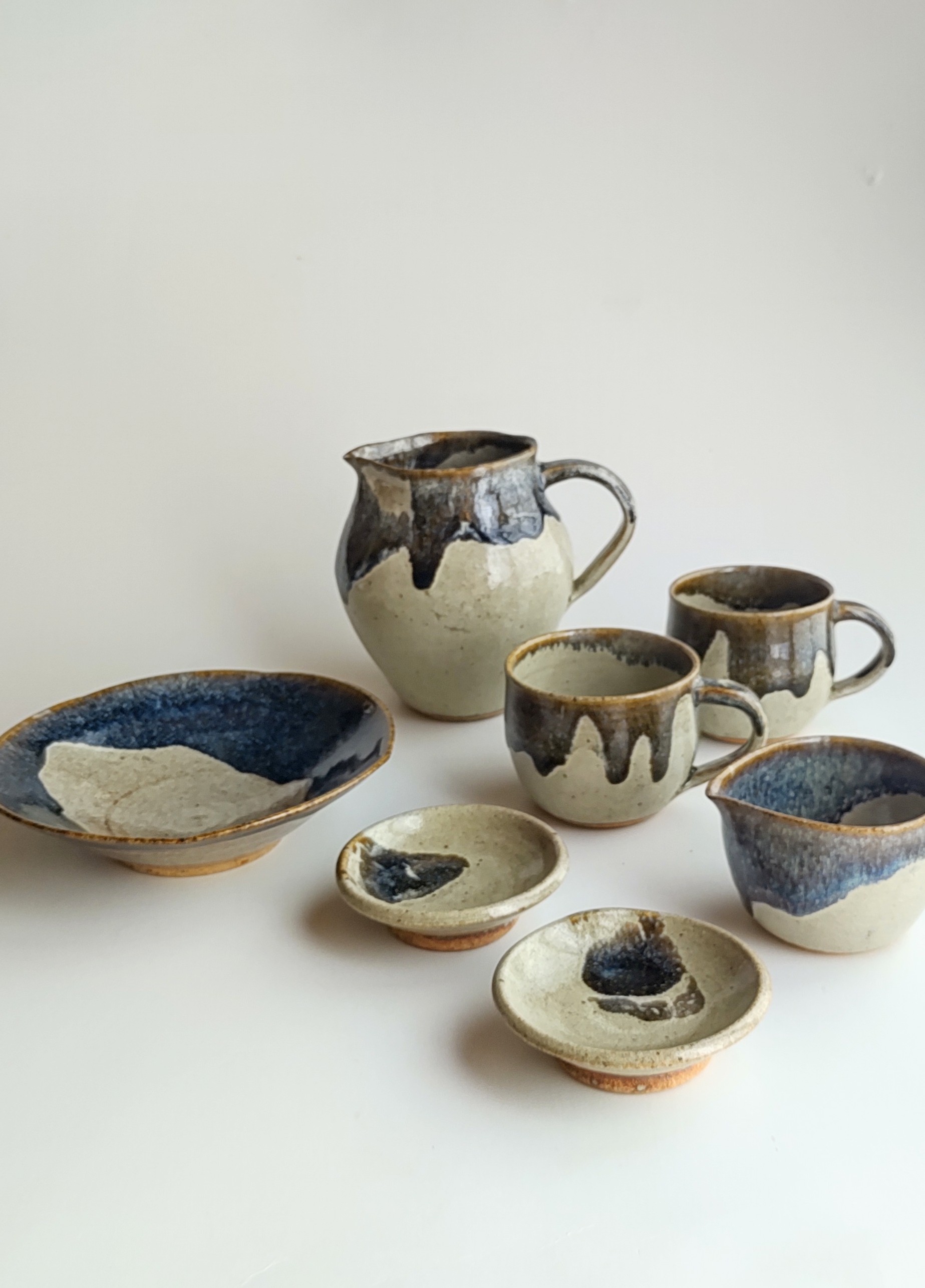
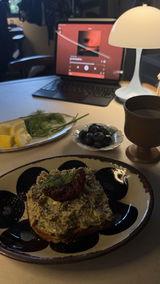
Hino Takeshi of Suirin Kiln, wanting a different character from a standard black glaze, applies black glaze over a coarse clay. The surface is not smooth but slightly rough and matte, and the color looks a little grayer than other blacks. The black glaze bowl in the photo at the top and the flat plate below are made with the same idea.

The matte black pieces by Sato Akane of Kinooto Kobo, an Aizu-Hongo ware studio, carry shinogi carving over the black to add light and shadow. Kitagawa Yuichi's cylinder mug in kiln-transformed black glaze in Kyoto is worth a look for the shifts in color that come from the flowing black glaze. Black glaze is also used on tools that go over the flame every day, such as the Tenmoku rice donabe by Kanefusa Seito in Shigaraki. Where the name tenmoku comes from is in the tenmoku article.

Hikidashi-guro: Pulled From the Kiln and Cooled Fast
Hikidashi-guro is a technique where a piece is pulled from the kiln mid-firing and cooled quickly so it turns black. Fujiwara Akira in Bizen pulls work out of a kiln that reaches a peak of 1200°C, turning it black through rapid cooling and strong reduction. The technique is covered in detail in the hikidashi-guro article.
As the black Bizen hikidashi guinomi in the photo shows, the black of hikidashi-guro is never even. The dull sheen, the scorched-looking patches and the warping are different every time, so even pieces with the same name are never alike. It suits pieces you hold and look at, such as sake ware, tea bowls and bud vases.

Inbe-de Black Bizen: Iron-Rich Clay Applied Before Firing
Fujiwara Akira's black Bizen has a second kind of black. It is the Inbe-de technique, where iron-rich clay is applied to the surface and fired to turn black. With no glaze, the clay surface stays visible even in black. What firing without glaze does to a piece is covered in the yakishime article. The artisan's story is in the artisan article on Fujiwara Akira.
Metallic Black: Manganese Glaze and the Texture of Old Iron
Some pieces show a bronze or brass-like gleam within the black. The manganese pieces by nakamurakenoshigoto, who works in Nanjo, Okinawa, are known for a gradation of bronze and black and a matte, metal-like texture. Hirai Shu's Kurogane series in Kyoto expresses the texture of old iron with an original glaze, yet the pieces are light in the hand and smooth on the surface. Glazes that give a metallic sheen without using metal are covered in the metallic glaze article.

White and Black Split Glaze: White Where the Food Sits, Black Outside
If black tableware is new to you, one way to start is with a piece that is white inside and black outside. Shiro to Kuro no Awai, a series by Ichirun Tobo in Miyazaki, splits the glaze between a soft titanium glaze inside and a calm black glaze outside.
The inside, where the food sits, is white, so even dark simmered dishes look the same as ever, while the black outside gives the table definition. The bowl in the photo is an easy size for a main dish for one, such as pasta, curry, simmered dishes or salad. The studio's story is in the article on Ichirun Tobo.

Lacquer Black: Light Wooden Pieces That Are Hard to Break
It is not pottery, but black lacquerware is another black to choose for the table. Chono Hideki's trays from Hiroshima are made by laying washi paper over wood and coating it with lacquer, so you can enjoy the texture of the washi and still wash them in water. How to handle wood and lacquerware is covered in the wood and lacquerware article.

Black Tableware and Food
- White rice, tofu, white fish White food has the sharpest outline on black
- Leafy greens, tomatoes, tamagoyaki Green, red and yellow food looks more vivid against black
- Fried food, grilled fish Brown food looks less heavy on matte or grayish black than on glossy black
- Bread, cheese, cake Flat black plates suit Western food and sweets too
How to Choose by Type of Piece
| Type of piece | Black that suits it | What to look for |
|---|---|---|
| Plates | Matte black glaze, lacquer black | The wider the flat surface, the more food colors stand out |
| Bowls | White and black split glaze, black glaze | For dishes with liquid, check the color inside too |
| Mugs and cups | Black glaze, shinogi black, metallic black | The shape of the handle and the feel of the rim on your lips |
| Sake ware and tea bowls | Hikidashi-guro, Inbe-de black Bizen | Each piece looks different, so choose one by one |
To see more blacks by type of piece, the Black Japanese Tableware collection lets you compare plates, bowls, mugs and sake ware side by side.
Caring for Black Tableware: Matte Black and Glossy Black
Compared with other colors, black tableware shows water spots and films of oil more easily. After washing, wipe it dry with a cloth and let it dry fully before putting it away, and the black will stay beautiful longer. Matte or rough blacks can look whitish if oil is left on them, so wash them with a soft sponge.
Black stoneware can absorb water, so dipping it in water before use makes it harder for food colors and oil to soak in. Whether a piece can go in the microwave or dishwasher differs from piece to piece, so check the description on each product page. Keep lacquerware out of the microwave and dishwasher. Daily care is covered in stoneware care, and how to tell whether a piece is microwave or dishwasher safe is in how to tell microwave, dishwasher and oven safe pottery.
Related Articles and Terms
Glazes and Techniques That Make Black
- Tetsuyu (Iron Glaze): How Iron and Flame Color Japanese Pottery
- Tenmoku: The Black Tea Bowl Where Iron Glaze Flows
- Hikidashi-guro: Pulled Red-Hot From the Kiln, Turned Black
- Metallic Glaze: A Metal Sheen Made Without Metal
Choosing Tableware by Color
- Brown Japanese Pottery: Unglazed, Rust and Amber Glazes Compared
- Blue Japanese Tableware: Sometsuke, Gosu, Celadon and Ruri Glaze
Artisans Who Make Black Tableware
- Artisan Fujiwara Akira: Pulling Bizen From the Kiln to Make It Black
- Ichirun Tobo: Reading Glaze as Landscape in Miyazaki
One Black Piece for Your Table
Matte black glaze, black pulled from the kiln, metallic black, white-inside split glaze, lacquer black. Even in black, the piece you choose changes the look of the table a great deal. In the Black Japanese Tableware collection, you can see each artisan's black, piece by piece.
See black tablewareFAQ
What kind of food suits black tableware?
What is hikidashi-guro?
Is there anything to watch out for when caring for black tableware?
Shop the related pieces
Black Japanese Tableware
59 pieces See all
TAGAWA AKI
四神皿 白虎
$1,536.00
Japanese Plates

Bizen Ware Artist Fujiwara Akira
Hikidashi-guro Skull Sake Cup — Bizen Ware
$5,585.00
Japanese Sake Ware

Bizen Ware Artist Fujiwara Akira
Hikidashi-guro Bamboo Plate — Bizen Ware
$5,585.00
Plates

Yamamoto Masanori
Shinogi Rim Plate, Large Black — Shigaraki
$1,844.00
Plates
Japanese Plates
188 pieces See all


New to Japanese pottery? Start here — its history, how pottery differs from porcelain, the clays and glazes behind each style, and how to care for a piece. → Japanese Pottery: The Complete Guide