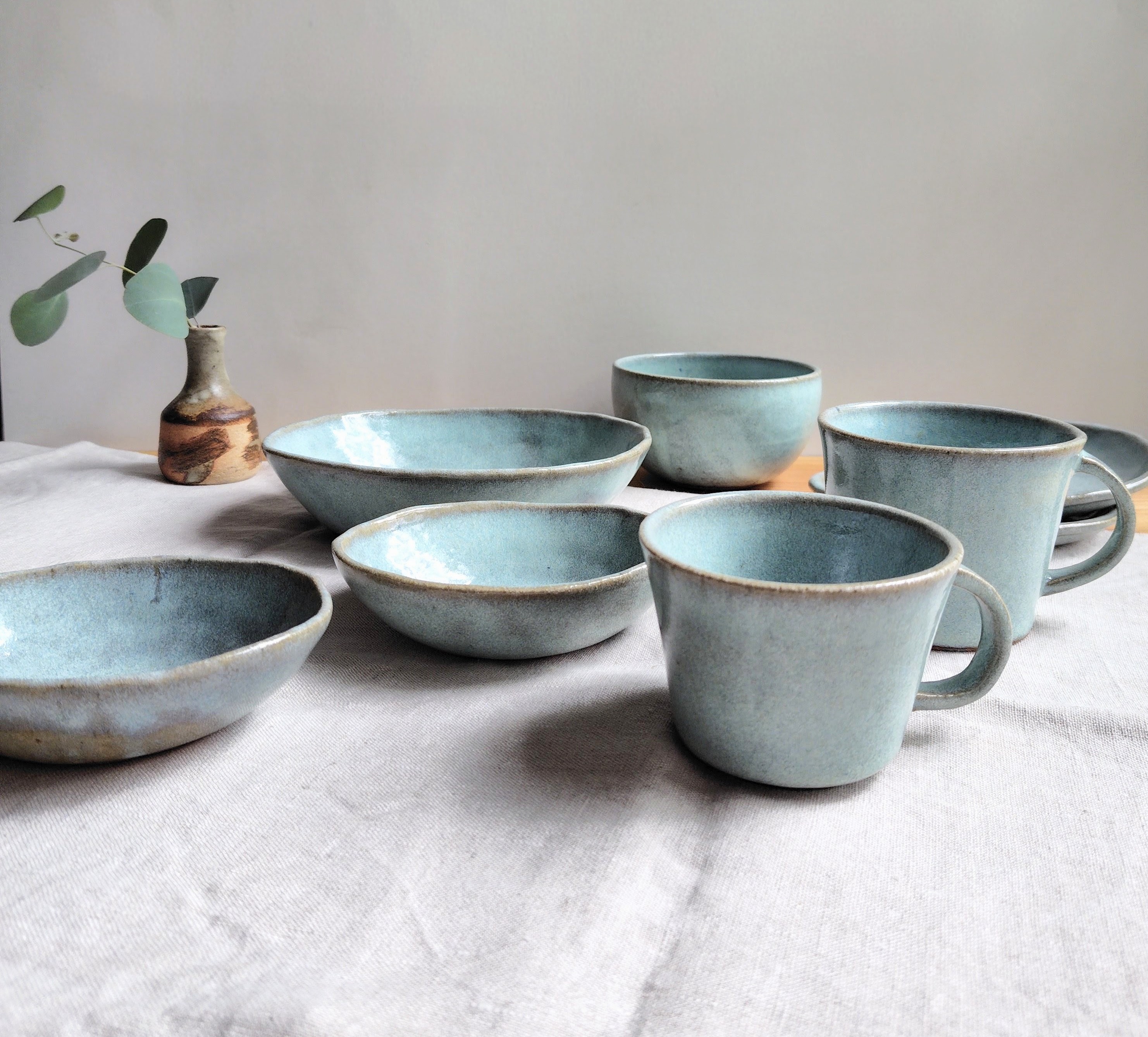
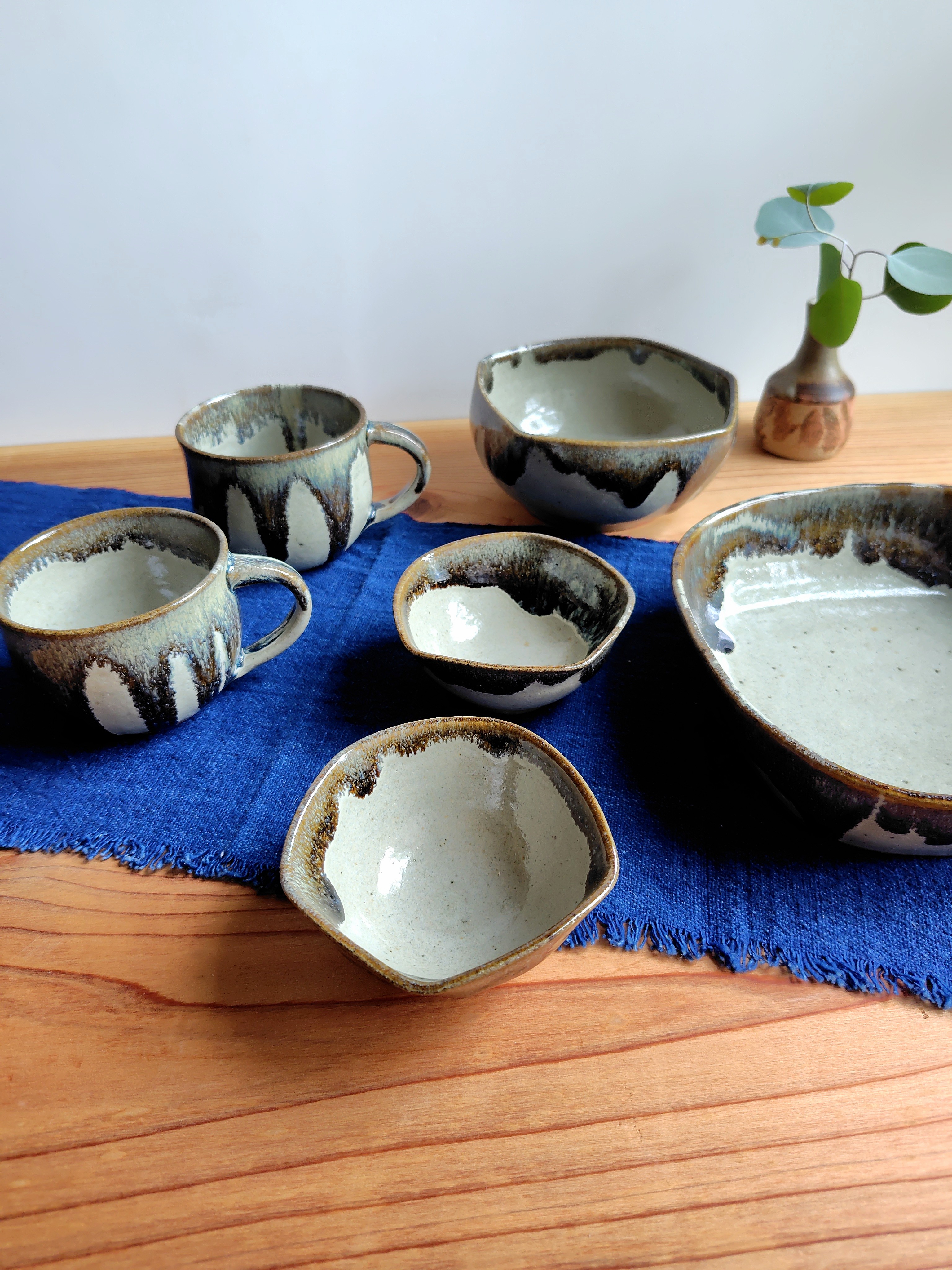
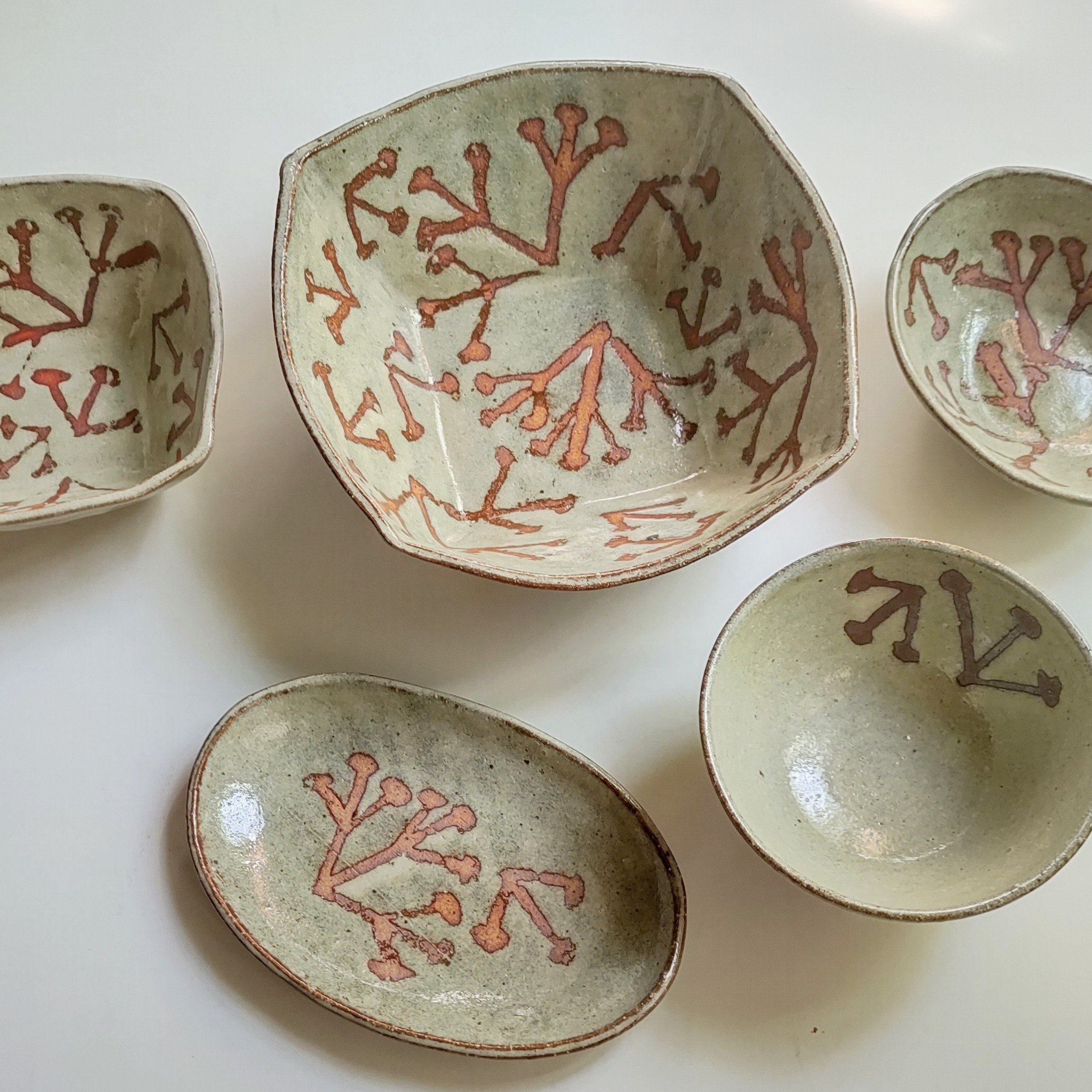
Artisan Shoen Kiln | Ten Days of Fire, Bizen for Every Day

At Shoen kiln, a Bizen ware workshop, loading the kiln takes four days, and firing it takes ten.
The kiln is a noborigama, a climbing kiln. Split red pine is fed in again and again, the inside brought up to 1,200°C, and the pieces fired slowly for ten days. Keeping to the original way of firing Bizen ware, while continuing to offer pieces at prices meant for everyday use: that is the work of this kiln.
Shoen kiln was founded in 1971 in Bizen, Okayama Prefecture. Everything from shaping to firing to selling is done in-house.
nokaze carries pieces by Buyo Masako of Shoen kiln.
Four days to load, ten days to fire: what makes Shoen kiln
Bizen ware is fired hard without any glaze. Color and pattern alike are decided by clay, flame and ash alone. That is why the way the kiln is fired becomes the face of every piece.
We use a climbing kiln and take great care over the firing, spending four days loading the kiln and ten days firing to finish the pieces.
For the firing, we feed in split red pine and raise the inside of the kiln to a high 1,200 degrees, firing slowly for ten days. Ash that falls on the pieces during the firing creates natural patterns by chance, bringing out rustic colors and textures.
— Shoen kiln
Pine ash that settles on the pieces in the kiln melts in the heat into yellow specks. That is goma (sesame). Where the flame does not strike directly and the piece is buried in embers, the surface turns gray or bluish: sangiri. Wrap a piece in straw before firing and only the marks of the straw stay red: hidasuki. None of these patterns are drawn by hand.
Soak it in water, then begin
Bizen ware fired hard and long in a climbing kiln does not let water through, even without glaze.
Bizen ware fired in a climbing kiln is fired so hard that it does not leak. The more you use it, the smoother its rough surface becomes and the deeper its color, until it fits your hand.
If you soak it in water before use, the expression of the piece changes, and you can see the charm of the clay itself.
— Shoen kiln
Bizen clay that has taken in water deepens by a shade and settles into a moist, quiet look. Dip a piece in water just before serving and it comes to the table with that look, and food smells and colors are less likely to soak in. It is a textbook example of pottery that changes the more you use it.
Everyday pieces made from a woman's point of view
Shoen kiln does not make only tea utensils and large vases. A surprising number of its pieces are things used every day in the kitchen and at the table.
Staying true to the original firing of Bizen ware, we have offered pieces at reasonable prices for everyday use since my grandfather's generation.
My mother, a potter at Shoen kiln, worked for many years making all kinds of handmade tableware for everyday use from the traditional craft of Bizen ware, seen from a woman's point of view.
— Shoen kiln
Lay out the pieces named and the range of the kiln becomes clear.
- Small pieces Hina dolls, beckoning cats, frogs, owls, mini cats, mini zodiac animals
- Tools for the kitchen and table Coffee drippers, bread boxes, water pitchers, rice containers, lidded pots, handled bowls, garlic pots, flat plates, petal plates
- Things for the home Lanterns, incense holders, coffee-bean-shaped spoon rests, flower vases
Pieces in a classic-modern style, true to the traditional firing yet particular about color and design. There are even things rarely seen in Bizen ware, such as bread boxes and garlic pots.

Lucky charms, and flasks for shochu
Shoen kiln still makes the old Bizen classics as well.
Among the traditional Bizen ware we make are ornaments such as lucky zodiac animals and the Seven Gods of Fortune, as well as Shoen originals: large tokkuri flasks known for making cheap shochu taste better, rakkyo-shaped tokkuri, and shochu servers.
— Shoen kiln
It has long been said that sake tastes mellower from a Bizen flask, that the hard-fired surface of the clay softens its edge. How to choose sake ware is covered in ochoko, guinomi and sakazuki compared.
Firing colors that appear only a few times per kiln
Apart from everyday ware, there are pieces only a kiln like this can offer.
We also have rare pieces showing goma and sangiri, the beautiful fired colors true to Bizen ware, of which only a few come out of each firing. And there is kinsai Bizen, gold Bizen that came out of the kiln by chance forty years ago. Its gold still shines as it did, and only what remains is left.
We handle both today's Bizen and Bizen ware of old, and we would be glad if you took an interest in pieces that only a kiln, rather than an individual artist, can offer.
— Shoen kiln
In a climbing kiln, the way the flame strikes and the ash settles differs with each position. Even fired on the same day in the same kiln, only a few pieces per firing come out with the finest colors. That is why the better the fired color, the fewer there are.
Caring for Bizen ware
Dip it in water before use, wash it soon after use and dry it well. Those are the basics of Bizen ware. With no glaze, the clay breathes, so stacking pieces while still wet can leave smells behind. More in caring for stoneware and medome.
What comes next for Shoen kiln
The fire of a climbing kiln kept since the grandfather's generation. Everyday pieces broadened by a mother who saw them through a woman's eyes. Shoen kiln holds more than half a century of accumulated time.
What Shoen kiln offers today is both the Bizen of now and the Bizen of old. Pieces for the everyday table, firing colors that appear only a few times per kiln, and kinsai Bizen born in the kiln forty years ago. What a kiln, rather than an individual artist, has handed down is all here.
Dip it in water, serve on it, wash it, dry it. Through that repetition the rough surface slowly turns smooth, and the color deepens. Pieces made by ten days of flame go on growing, slowly, a second time, in the life of the person who uses them.

Related articles
About Bizen
- Bizen Ware: Pottery With No Glaze at All
- Bizen Pottery History: 1,200 Years from Sueki to the Tea Bowl
- Japan's Six Ancient Kilns: All 6 Regions Compared
- Bizen Pottery Festival 2026 | A Town of the Six Ancient Kilns
How firing and the kiln work
- Yakishime: Unglazed Pottery Fired to Its Limit
- Noborigama: The Climbing Kiln, Chamber by Chamber
- Hidasuki: The Red Straw Marks on Bizen Pottery
- Shizen-yu: Natural Ash Glaze Explained
Go and look
- Buyo Masako
- Bizen Pottery | Unglazed Japanese Stoneware from Okayama
- Japanese Tea Set | Teapots, Yunomi Cups & Matcha Bowls
Pieces from Shoen kiln
From teacups to bowls, square plates and pots, a full range of pieces for daily life. Fired for ten days in a climbing kiln, each one carries its own color, even in the same shape.
See the piecesThis article was put together from the answers Shoen kiln, a Bizen ware workshop, gave to our questions.
Interview and editing: nokaze editorial team
FAQ
What kind of kiln is Shoen kiln?
What should I do before using Bizen ware?
Can Shoen kiln pieces go in the microwave or dishwasher?
Shop the related pieces
BUYO MASAKO
10 pieces See all


Bizen
78 pieces See all
Bizen Ware Artist Fujiwara Akira
Hikidashi-guro Skull Sake Cup — Bizen Ware
$5,585.00
Japanese Sake Ware

Bizen Ware Artist Fujiwara Akira
Hikidashi-guro Bamboo Plate — Bizen Ware
$5,585.00
Plates

Shimizu Yayoi
Hidasuki Small Round Plate, Arcs — Bizen Ware
$369.00
Plates

Shimizu Yayoi
Hidasuki Small Round Plate, Stroke — Bizen Ware
$369.00
Plates
New to Japanese pottery? Start here — its history, how pottery differs from porcelain, the clays and glazes behind each style, and how to care for a piece. → Japanese Pottery: The Complete Guide