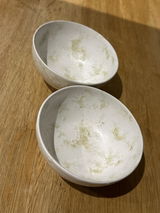

Japanese Ceramic Platters for Entertaining

When friends come for dinner, one large platter can do more for the table than a full set of matching plates. Put it in the middle, heap it with food, and everyone reaches for it. Conversation starts around it. People pass it, take a little more, and the meal feels generous before anyone has taken a bite.
In Japan, a large shared plate is called an ozara, and a platter heaped with food for a gathering is a moriawase, an assortment arranged for everyone to share. Japanese cooks think carefully about the plate as well as the food: its shape, its color, how much space is left around the edge. A handmade platter is chosen to make the food look its best, and it becomes the centerpiece of the table.
This guide is about choosing and using a Japanese ceramic platter for entertaining: what size for how many guests, which shape suits which food, how glaze color changes a spread, how to arrange an assortment, and how to care for a piece this size. For a general guide to large plates for everyday meals, see our guide to large Japanese plates. Here we focus on the platter in the middle of a table full of guests.
Looking for one now? Our platters collection brings together large handmade plates and shallow dishes for sharing from artisans across Japan.
What Makes a Good Platter for Guests
Not every large plate works well for entertaining. A good party platter does four things.
- It holds enough It should take a full assortment for the whole table without food piling over the rim.
- It shows the food A flat or gently raised surface lets everyone see what is on offer from across the table.
- It is easy to reach from all sides Guests should be able to take food with chopsticks, tongs or a fork from wherever they sit, without lifting the platter.
- It can be carried full A loaded stoneware platter is heavy. A shape you can grip with two hands, and a weight you can manage when it is full, matter more than you might think.
What Size for How Many Guests
Japanese plates are often measured in sun, an old unit of about 3 cm. Our guide to Japanese plate sizes has a full conversion chart. For entertaining, start from the number of people and the role the platter will play.
| Guests | Size | How to use it |
|---|---|---|
| 2 to 3 | 8 sun, about 24 cm | One shared main dish, or a small assortment of appetizers |
| 4 | 8.5 to 9 sun, about 26 to 27 cm | The centerpiece of the meal. A main course or a full assortment |
| 5 to 6 | 9 sun to 1 shaku, about 27 to 30 cm | A large assortment, or one platter of the main dish with smaller dishes around it |
| 8 or more | Two platters | Two medium platters at each end of the table, rather than one huge one |
The last row is worth remembering. For a long table or a large group, two platters of the same food, one at each end, work better than a single very large platter that nobody at the far end can reach. They are also easier to lift, wash and store.
Measure your table, too. A platter should leave room around it for everyone's own plates, glasses and serving dishes. On a small round table, an oval platter takes less space than a round one of the same length.
Choosing the Shape
Shape decides what you can put on a platter and how it looks. Japanese artisans make large plates in many shapes, and each has its natural uses.

| Shape | Character | Best for |
|---|---|---|
| Round | Open and generous. Food can be heaped in the center | Salads, roast vegetables, fried chicken, a mixed assortment |
| Oval | Long but soft. Fits a narrow table | A whole fish, a roast, skewers, sliced meat |
| Rectangular | Orderly. Food laid out in rows looks neat | Sushi, sashimi, yakitori, cheese and charcuterie |
| Square or octagonal | Strong and graphic. Corners frame the food | Appetizer assortments, desserts, a centerpiece arrangement |
| Shallow bowl | A low wall holds sauces and dressings | Simmered dishes, pasta, dressed salads, anything with liquid |
If you are buying your first platter for entertaining, an oval or a rimmed round platter is the most flexible. Both handle dry food and a little sauce, and both look good on any table. For sushi and sashimi, a long rectangular plate is the classic choice; our guide to sushi plates goes into detail, and our article on square and oblong plates explains why straight edges work so well at the table.
Flat or with a lip?
Turn the platter sideways before you buy. A completely flat platter is beautiful for sushi, cheese and dry food, but sauces will run to the edge. A platter whose surface rises gently toward the rim, or a shallow bowl, keeps dressings and juices in place. If you serve a lot of dishes with sauce, look for a raised edge of at least a centimeter or two.
Choosing the Glaze Color
The color of the platter is the background to everything you put on it. Japanese cooks choose plates by asking which colors will make the food look most appetizing.

| Glaze | Makes these look good | Feeling |
|---|---|---|
| White or cream | Almost everything, especially colorful salads and fruit | Clean, bright, versatile |
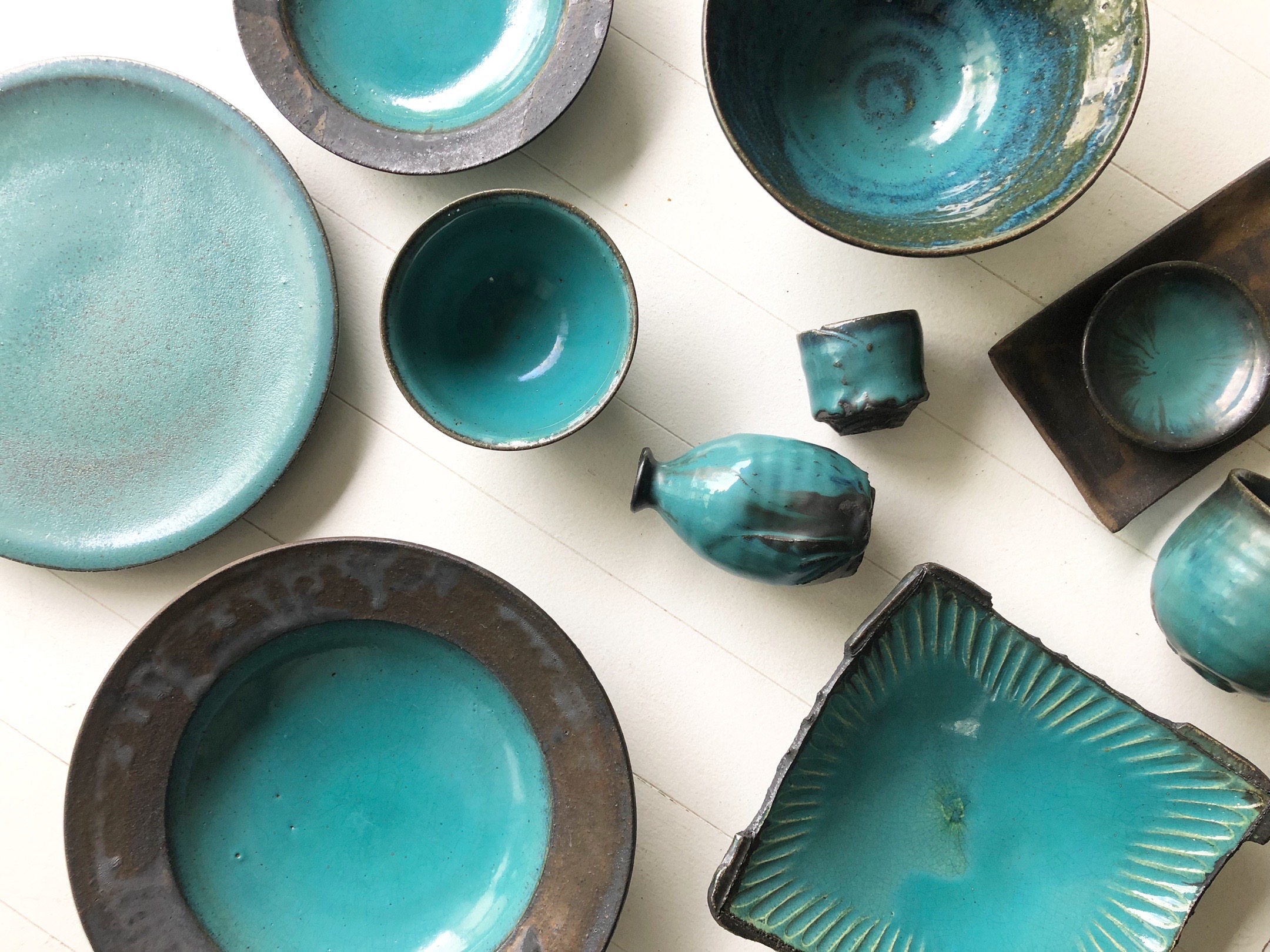
| Black or dark brown | Sashimi, sushi, white cheese, fried food, cakes with powdered sugar | Dramatic, elegant, modern |
| Blue and white | Grilled fish, tempura, simple brown food | Fresh, classic, festive |
| Celadon and soft green | White fish, tofu, pale vegetables | Cool, quiet, seasonal |
| Unglazed clay | Grilled meat, rustic bread, roast vegetables | Warm, earthy, rustic |
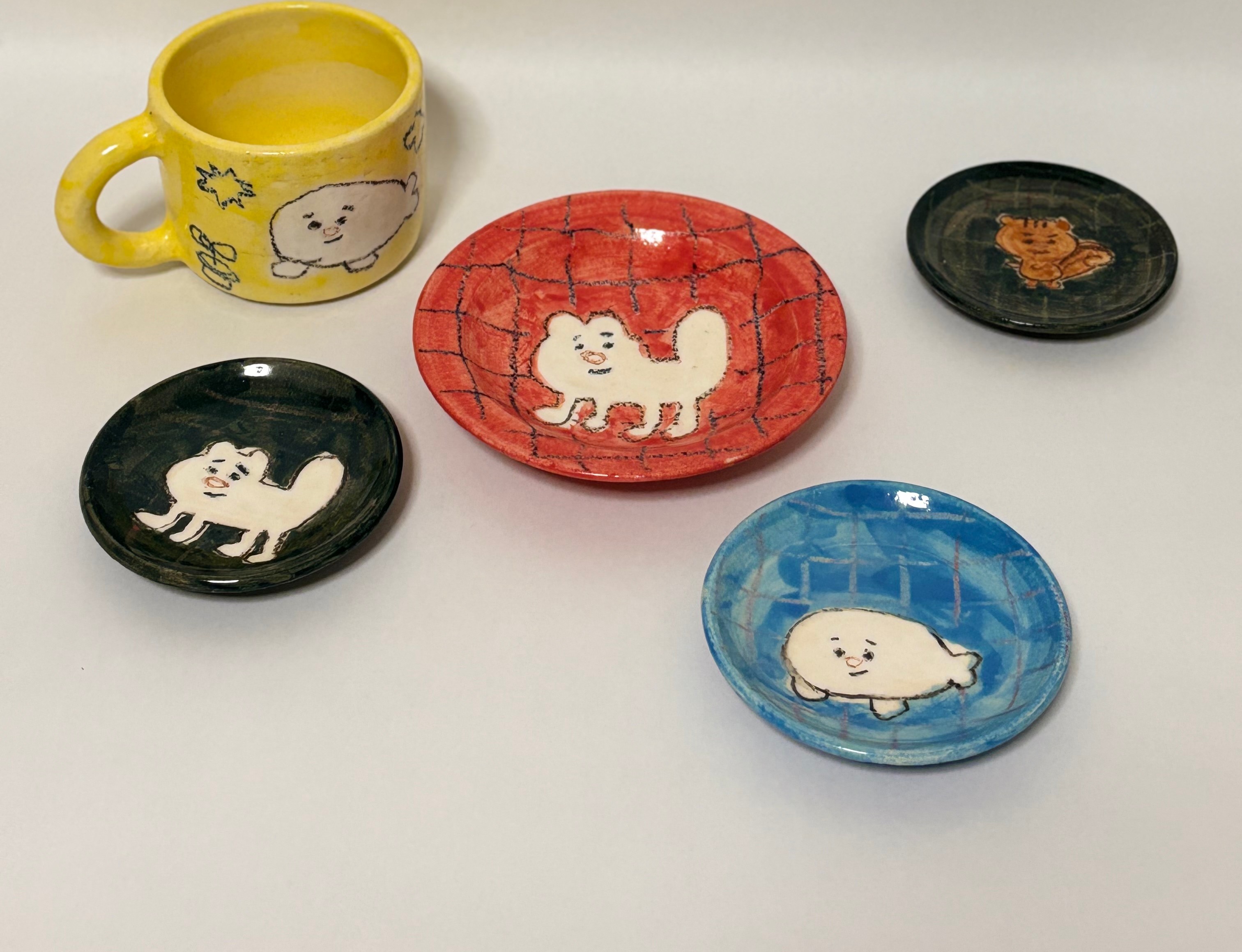
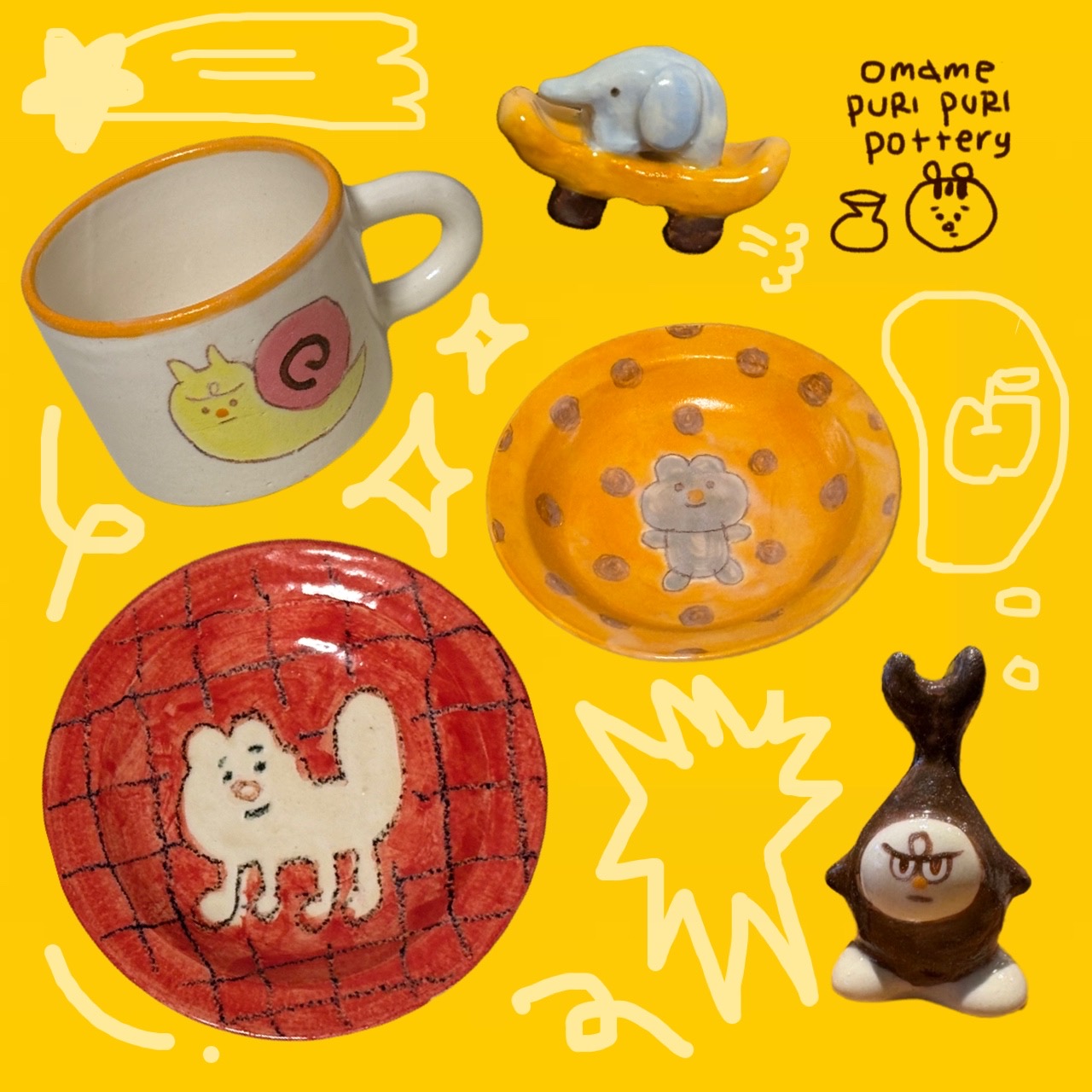
A painted platter works differently. When the decoration runs around the rim, food goes in the plain center and the painting frames it. When the whole surface is painted, use it for simple food that does not hide the picture, such as a few onigiri, sliced fruit or cookies, or let it rest on the table between courses as a piece of art.
How to Arrange a Shared Platter
Japanese food arrangement, or moritsuke, follows a few principles that work for any cuisine.
- Leave the rim empty Keep food off the outer edge of the platter. A clear margin frames the food and makes even a modest amount look generous. As a rough guide, cover about two-thirds of the surface.
- Build height in the center Heap food higher in the middle and lower toward the edges. A flat spread looks scattered; a gentle mound looks abundant.
- Use odd numbers Three, five or seven of each item looks more natural than an even row. This is one of the oldest rules in Japanese arrangement.
- Group by item In a moriawase, each food has its own place. Keep items together in clusters rather than mixing everything.
- Think about color Put contrasting colors next to each other: green beside red, white beside dark. A single garnish leaf can lift a brown dish.
- Arrange for the person farthest away Put items that are easy to pick up at the edge, and anything that needs a serving spoon nearer the center, with the spoon laid on the platter.
Finally, step back before you carry it out. Look at the platter from where a guest will sit, not from above. If one side looks empty, turn the platter or move a cluster of food. If everything looks the same color, add a garnish or a few slices of something bright. A minute spent here is what makes guests notice the dish, and the platter, as soon as it reaches the table.
Platters with small plates
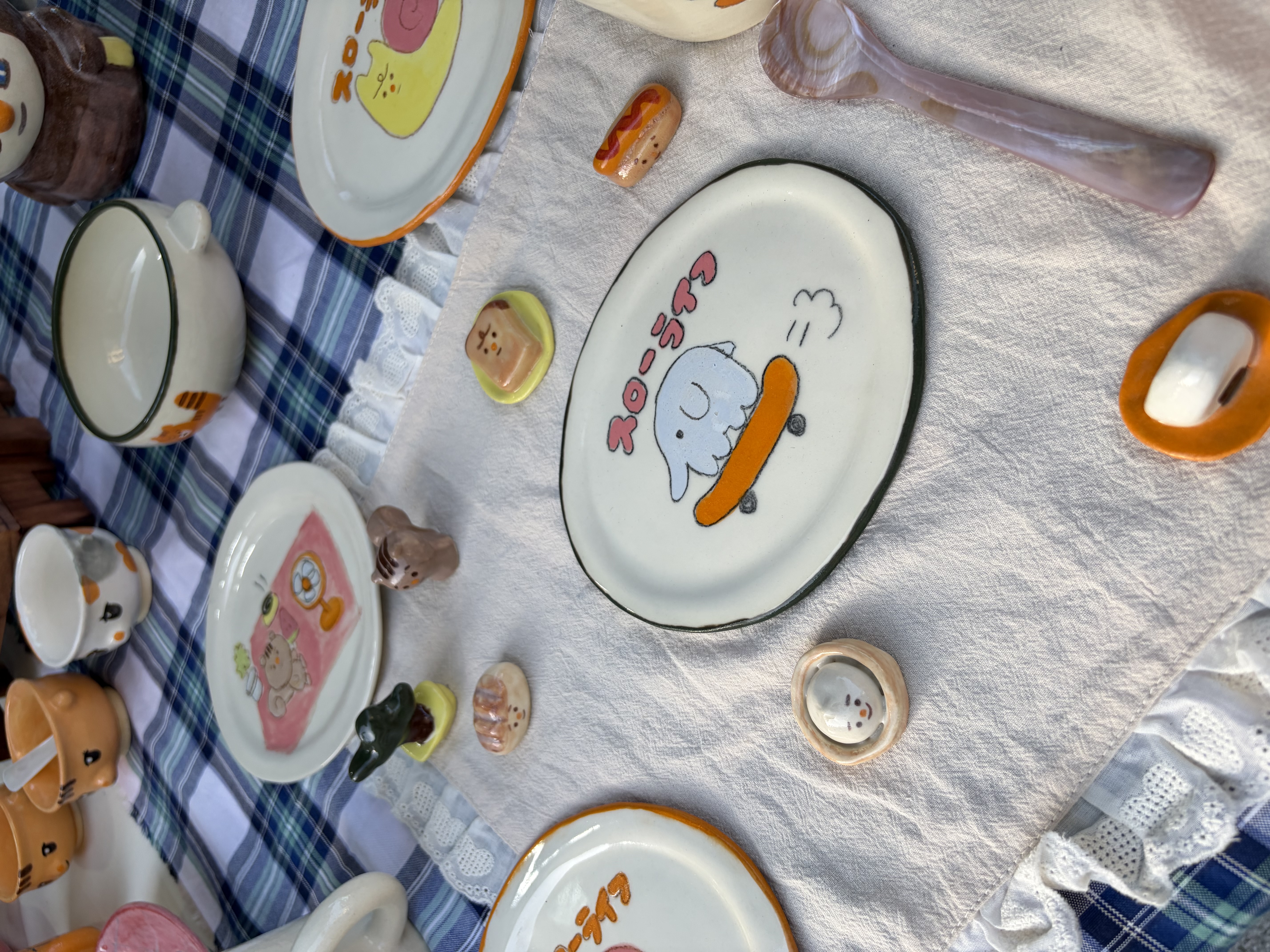
In Japan, a shared platter almost always comes with a small plate for each person, called a torizara. Guests take a little at a time from the platter onto their own plate. This keeps the platter looking tidy all evening and lets people try everything. Plates of about four to five sun, or 12 to 15 cm, are the usual size. Our guide to small plates and mamezara covers the sizes. Mixing small plates from different artisans around one platter is a very Japanese way to set a table.

What to Serve: Ideas by Occasion
| Occasion | What to serve | Platter to use |
|---|---|---|
| Drinks before dinner | Edamame, pickles, cheese, cured meat, rice crackers | Rectangular, dark glaze |
| Japanese dinner | Sashimi, sushi rolls, karaage fried chicken, tamagoyaki | Long rectangular or oval |
| Family-style main course | A roast, whole grilled fish, braised meat with vegetables | Large oval or round with a raised edge |
| Salad and sides | Seasonal salads, grilled vegetables, dressed greens | Shallow bowl, white or celadon |
| Dessert and tea | Fruit, wagashi sweets, cookies, cake slices | Square, octagonal or painted |
For a holiday meal, one large platter as the centerpiece and two or three smaller dishes around it is often more striking than many plates of the same size. You will find large plates and shallow dishes for every one of these occasions in our platters collection.
Hot and cold food
Stoneware holds temperature well. To keep a hot dish warm longer, rinse the platter in hot tap water and dry it just before serving. For sashimi or a cold salad on a summer evening, chill the platter in the refrigerator for an hour. Avoid sudden extremes: do not move a platter straight from a cold refrigerator into a hot oven, or pour boiling liquid onto a cold plate. Whether a piece can go in the oven or microwave depends on the artisan, so check the product description; our guide to microwave and dishwasher use explains what to look for.
Using a Tray With Your Platter
A wooden or lacquer tray under a platter makes it easier and safer to carry from the kitchen, and it adds another layer of color and texture to the table. Trays are also a simple way to serve drinks and small plates around the main platter. Our guide to Japanese trays explains the types.

Caring for a Large Platter
A platter is the largest and often the most treasured piece in a collection of tableware. A little care keeps it in use for decades.
- Before first use If the platter is unglazed or has a porous, matte or crackled surface, soak it in water for a while before the first use, so oil and sauce are less likely to soak in. Our glossary entry on medome explains how.
- Before every use For unglazed or porous pieces, rinse with water and wipe before putting food on. A damp surface resists stains.
- Wash soon after Do not leave food standing on the platter overnight. Wash with a soft sponge and mild detergent.
- Check the dishwasher Many large platters will not fit a dishwasher rack, and handmade pieces are often better washed by hand.
- Dry completely Let the platter dry fully, including the foot ring, before you put it away.
- Store it safely Keep platters on a low shelf, flat or standing in a plate rack, with a cloth or felt between pieces if you stack them.
Unglazed platters such as yakishime darken and soften with use. Many collectors see this as the best part of owning one, as a platter used for years takes on a quiet depth that a new one does not have.
Platters at Nokaze
Our platters come from artisans across Japan, and almost every one is one of a kind. You will find a carbonized, unglazed square dish by Ishikawa Hironobu, an oval platter painted with grapes and blue leaves by Higuchi Maki, and painted and carved platters by Komuro Shizuka, as well as octagonal plates and deep dishes from Shigaraki. Browse the larger everyday plates in our large plates collection as well.
Related Articles
Choosing Plates
- Large Japanese Plates: Choosing Size, Shape and Depth from Seven Sun
- Japanese Plates: Which Size and Shape for Which Dish
- Japanese Plate Sizes: Sun to cm Conversion Chart
- Square and Oblong Plates: Why Straight Edges Work at the Table
Setting the Table
- Japanese Sushi Plates: What to Use for Sushi at Home
- Mamezara and Small Plates: Sizes and What to Serve
- Ichiju Sansai: Japanese Tableware for One Soup and Three Dishes
- Japanese Trays: Obon, Zen and How to Use Them
Find the Platter for Your Next Gathering
Handmade Japanese platters, chosen in Kyoto and shipped worldwide, packed one by one.
Shop plattersFAQ
What size platter do I need for four guests?
What is the best shape of platter for sushi?
How do I arrange food on a Japanese platter?
Shop the related pieces
Platters
26 pieces See all


Large plates
50 pieces See all


New to Japanese pottery? Start here — its history, how pottery differs from porcelain, the clays and glazes behind each style, and how to care for a piece. → Japanese Pottery: The Complete Guide