


Dates confirmedHokkaido & Tohoku
Mori no Miyako Craft Fair
A craft fair that colours Sendai's autumn. Makers come from across Japan for two days of pottery and woodwork.

Visit a Pottery Fair. Discover Something New.
Japanese Pottery Fairs
POTTERY FAIRS OF JAPAN
You can search for pottery markets held across Japan using a map, calendar, or list. We've compiled event dates, locations, and links to official websites all in one place. Let's start your journey to discover new pottery here.
A craft fair that colours Sendai's autumn. Makers come from across Japan for two days of pottery and woodwork.
Artists gather at the Ceramic Cultural Park for Shigaraki's most art-focused market, from tableware to sculpture.
Makers line the lawn at Yatsugatake Nature and Culture Park for the autumn harvest market, set against the turning leaves.
Ten days at Azuma Sports Park. Tents fill with wares from kilns across Japan.
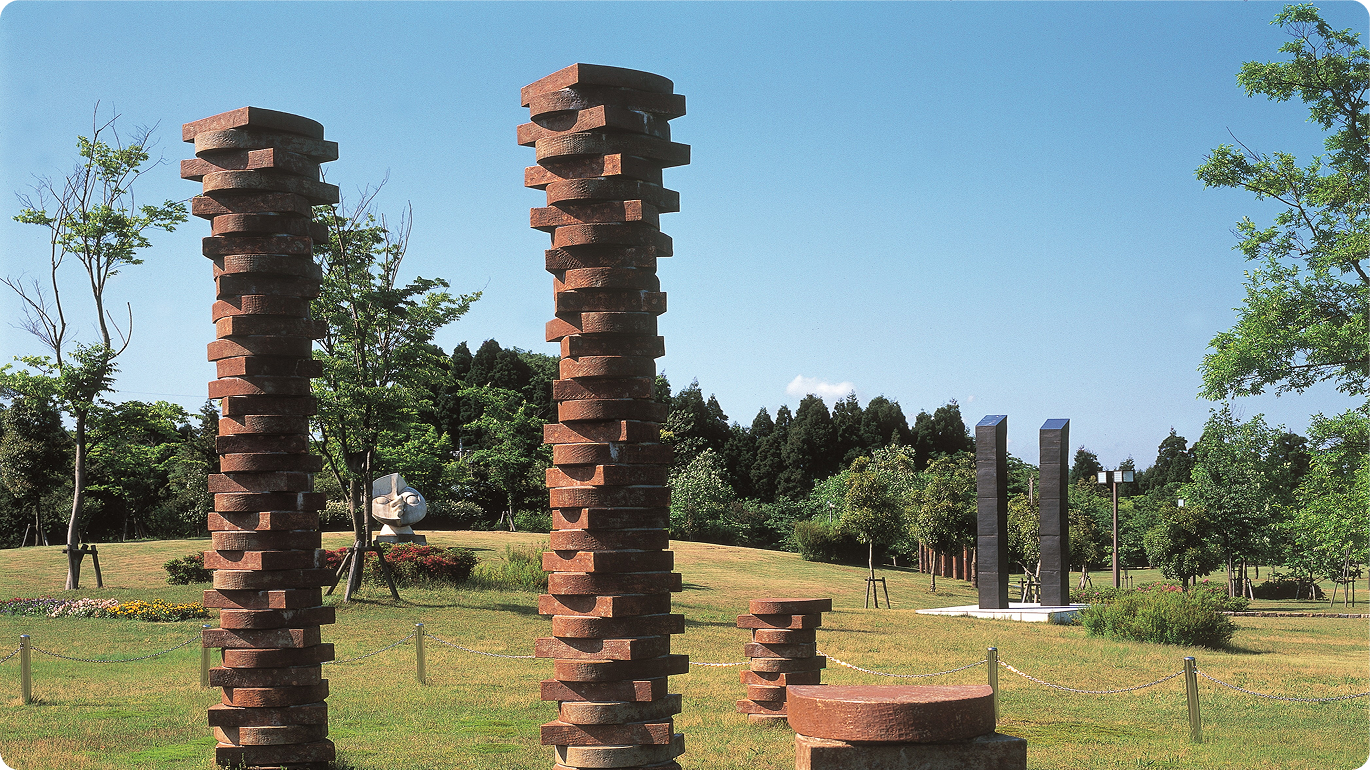
Smaller and quieter than the spring festival. Talk with the makers as you choose a piece with a natural ash glaze.
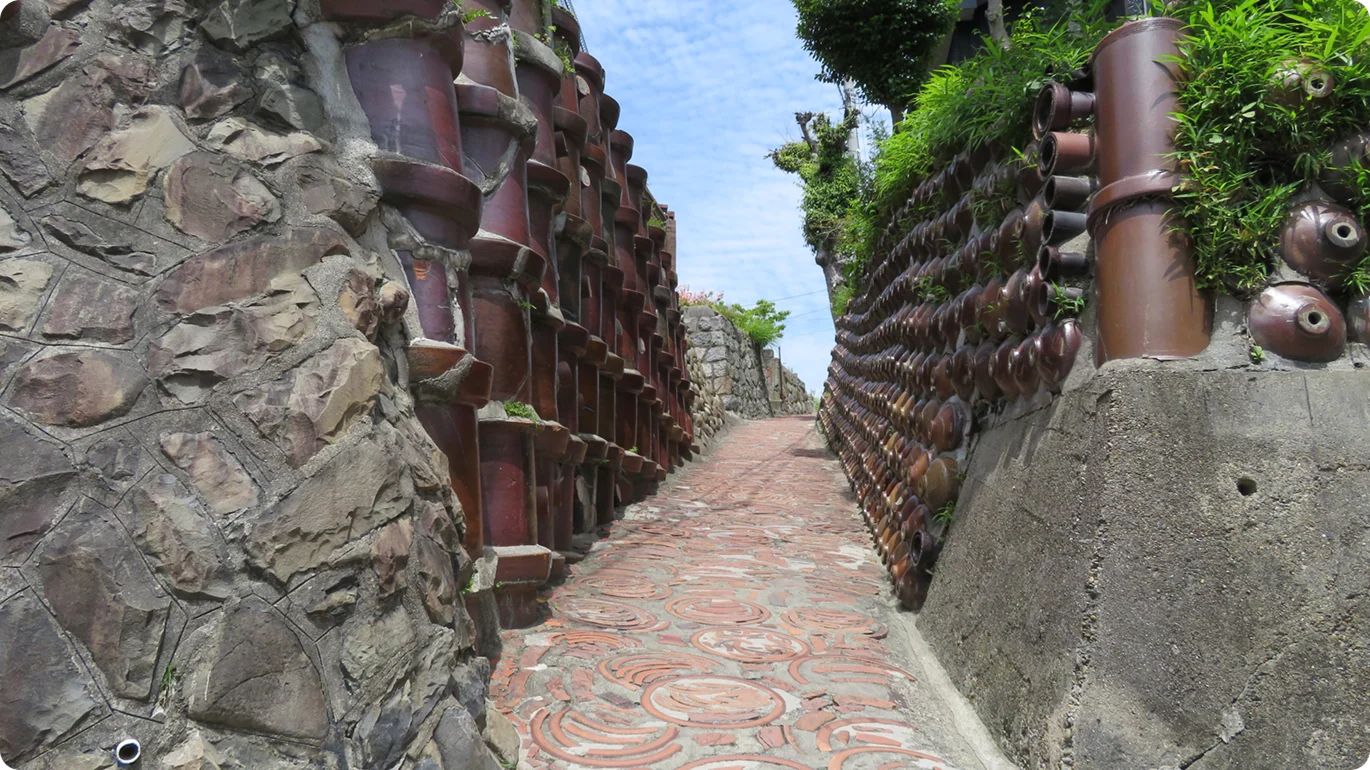
Tokoname is known for its shudei red-clay teapots. The 60th edition spans three venues, with fireworks on the opening day.
Click on the map to see the pottery fair schedule for that area.
You can find the annual ceramics markets on the calendar. Click on a month to view details for each market.
You can search for upcoming pottery fairs near you by region, season, production area, and more.
90 pottery fairs
One of the largest ceramics fairs in Kyushu. Kilns from across Japan gather, so you can compare regions side by side.
A large-scale sale gathering pottery from kilns across Japan. It runs for 10 days, so you can come on a weekday and avoid the crowds.
A market inside Hakata Station where you can meet Arita, Mikawachi and Hasami ware. About 1,000 kinds of small plates are on show.
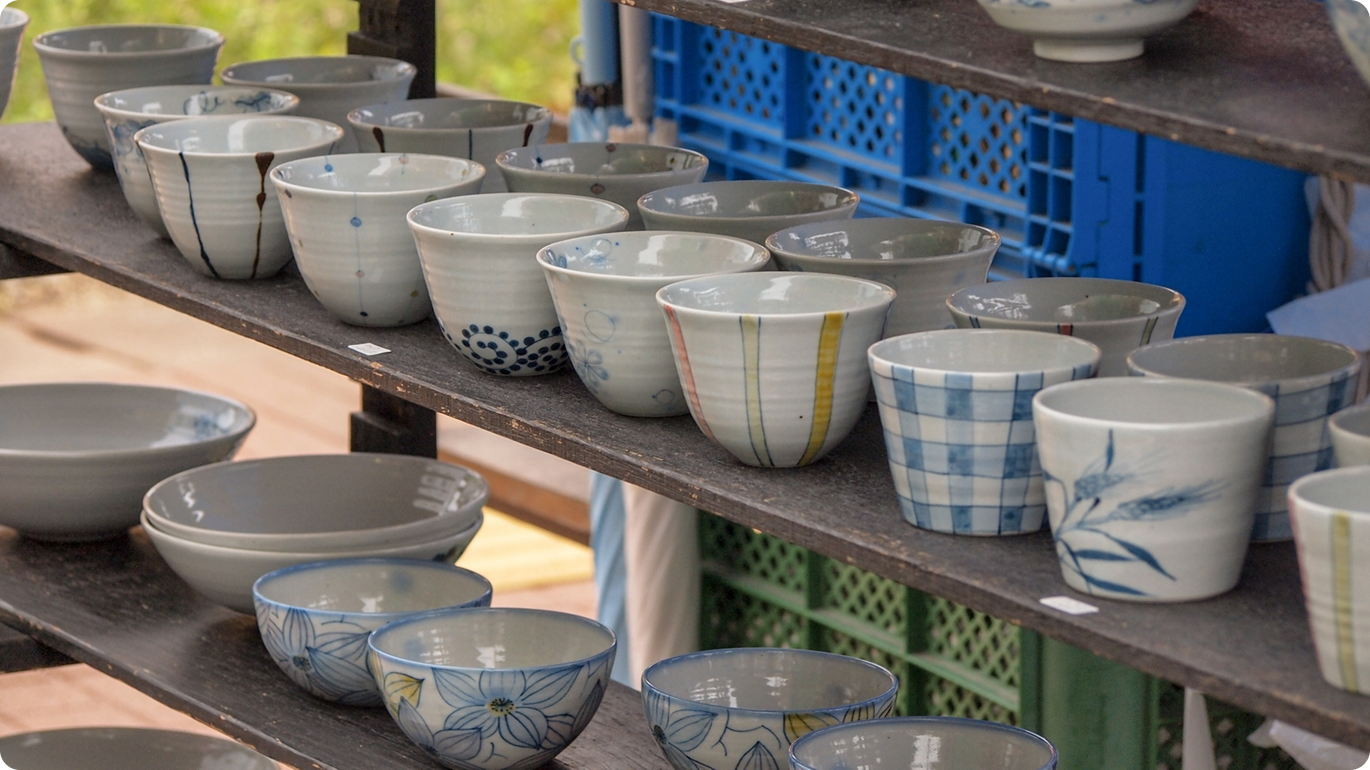
One of Japan's largest pottery fairs, with bargain stalls lining both banks of the Seto River. The 95th edition closes out summer in Seto.
One of Japan's largest fairs, gathering kilns from across the country at Kitakyushu Messe. It runs six days, so you can pick your date.
A craft market set in the town of Takaoka bronzeware and lacquerware. The whole townscape is the venue, from Yamachosuji to Kanayamachi.
A nine-day pottery fair at Kitakami Tenshochi Park. Compare wares from kilns across Japan in one place.
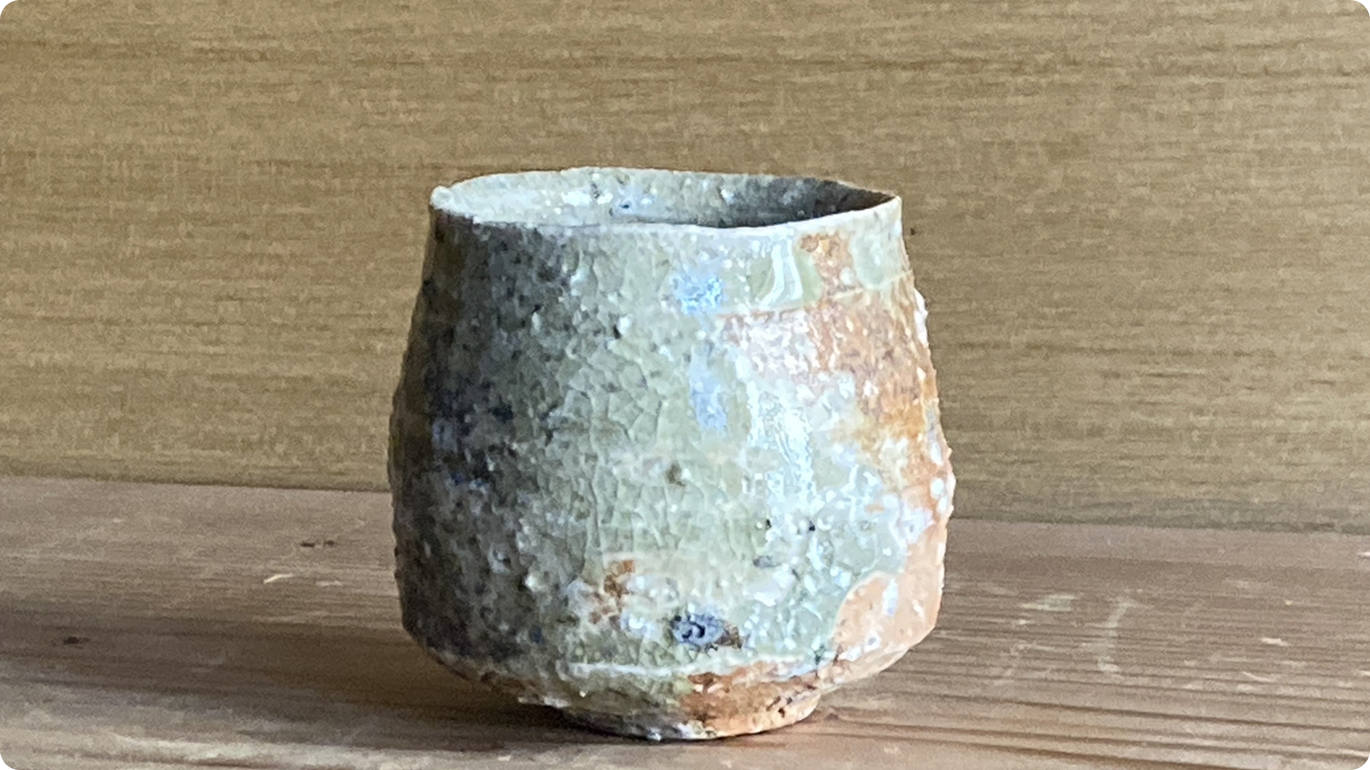
Iga clay is highly heat-resistant, making this donabe country. The 44th edition brings the kilns together at a sports park.
A craft fair that colours Sendai's autumn. Makers come from across Japan for two days of pottery and woodwork.
Artists gather at the Ceramic Cultural Park for Shigaraki's most art-focused market, from tableware to sculpture.
Makers line the lawn at Yatsugatake Nature and Culture Park for the autumn harvest market, set against the turning leaves.
Ten days at Azuma Sports Park. Tents fill with wares from kilns across Japan.
Smaller and quieter than the spring festival. Talk with the makers as you choose a piece with a natural ash glaze.
Tokoname is known for its shudei red-clay teapots. The 60th edition spans three venues, with fireworks on the opening day.
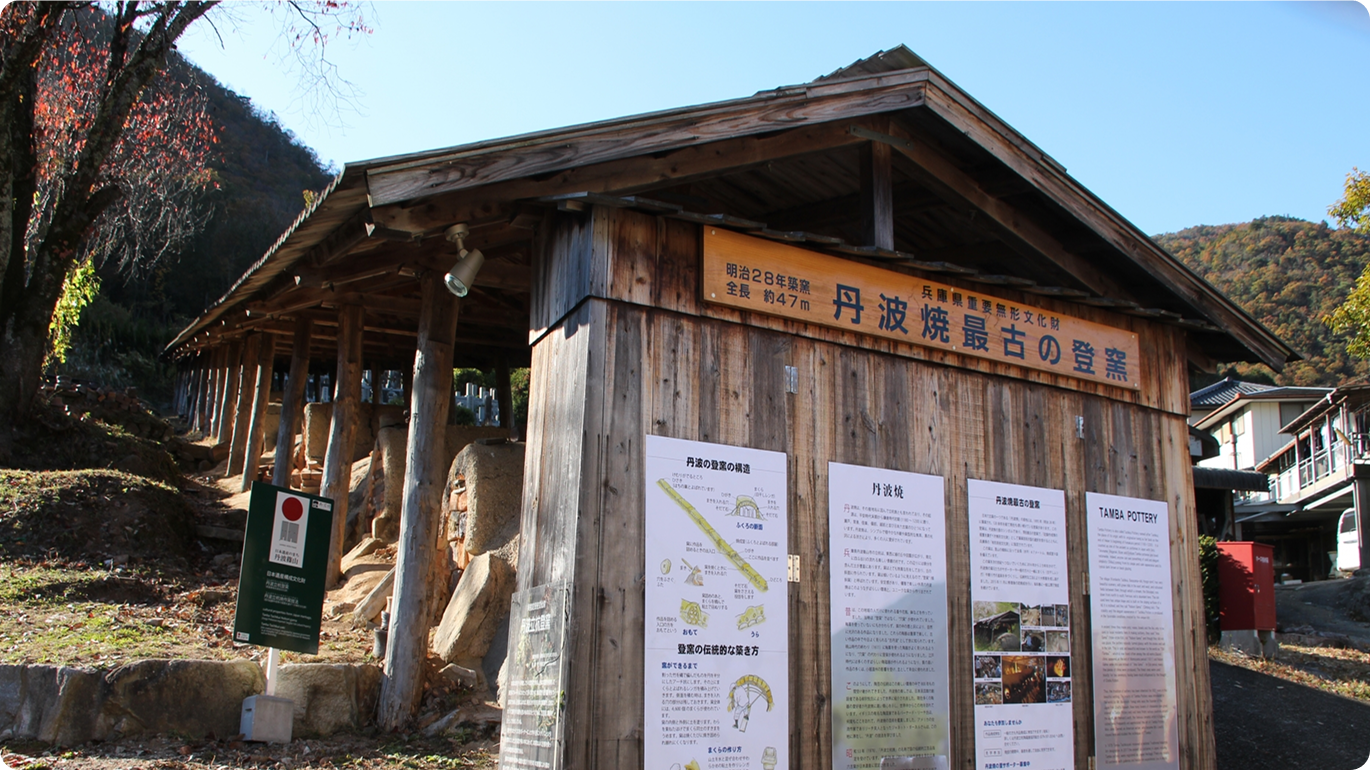
A ten-day walk around the kilns, billed as an autumn tour of the village. Come on a weekday and you can talk without waiting.
A market of crafts and music on the Art Tower Mito plaza. 10:00-17:00, held rain or shine.
An outdoor market held twice a year in the grounds of Shizuoka Gokoku Shrine. The 33rd edition, with makers set up under the trees.
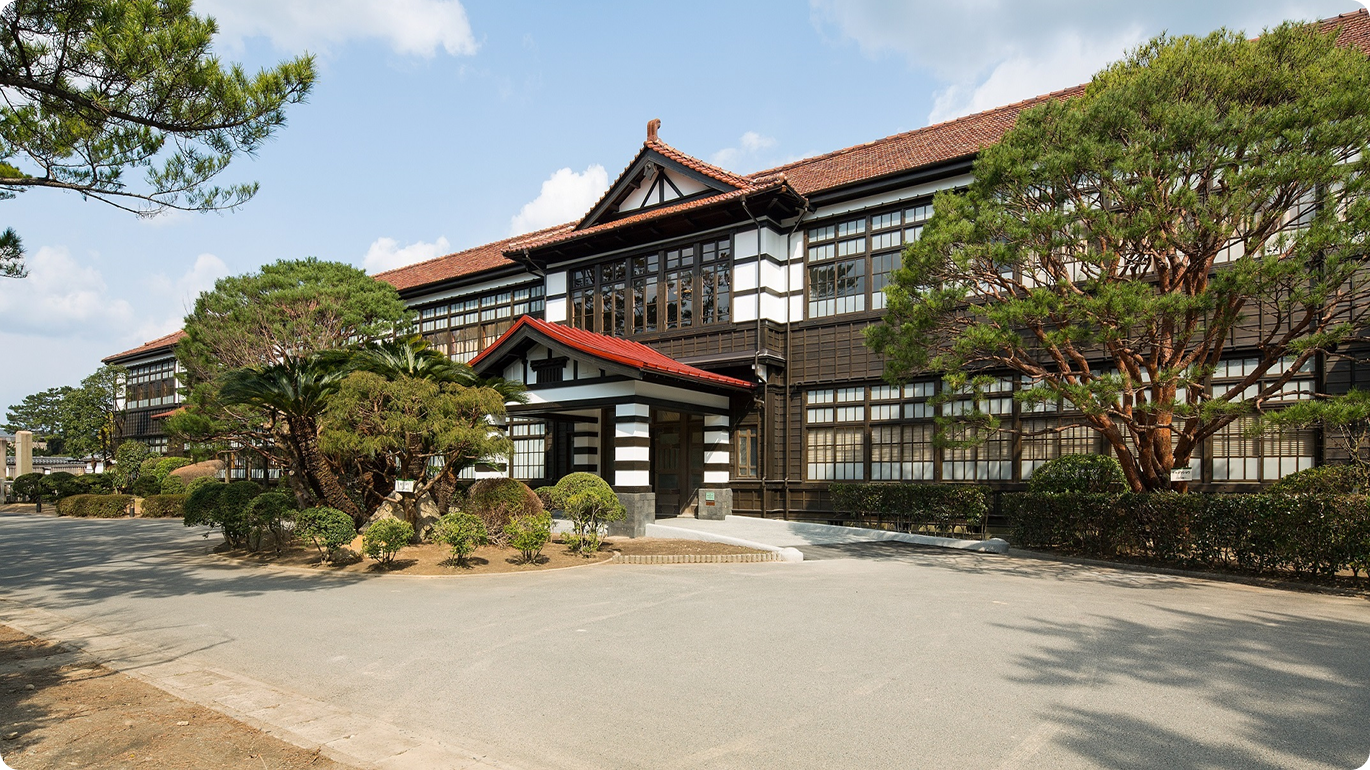
An autumn fixture hosted by the Hagi Chamber of Commerce, with Hagi ware kilns and dealers lining Tamachi shopping street.
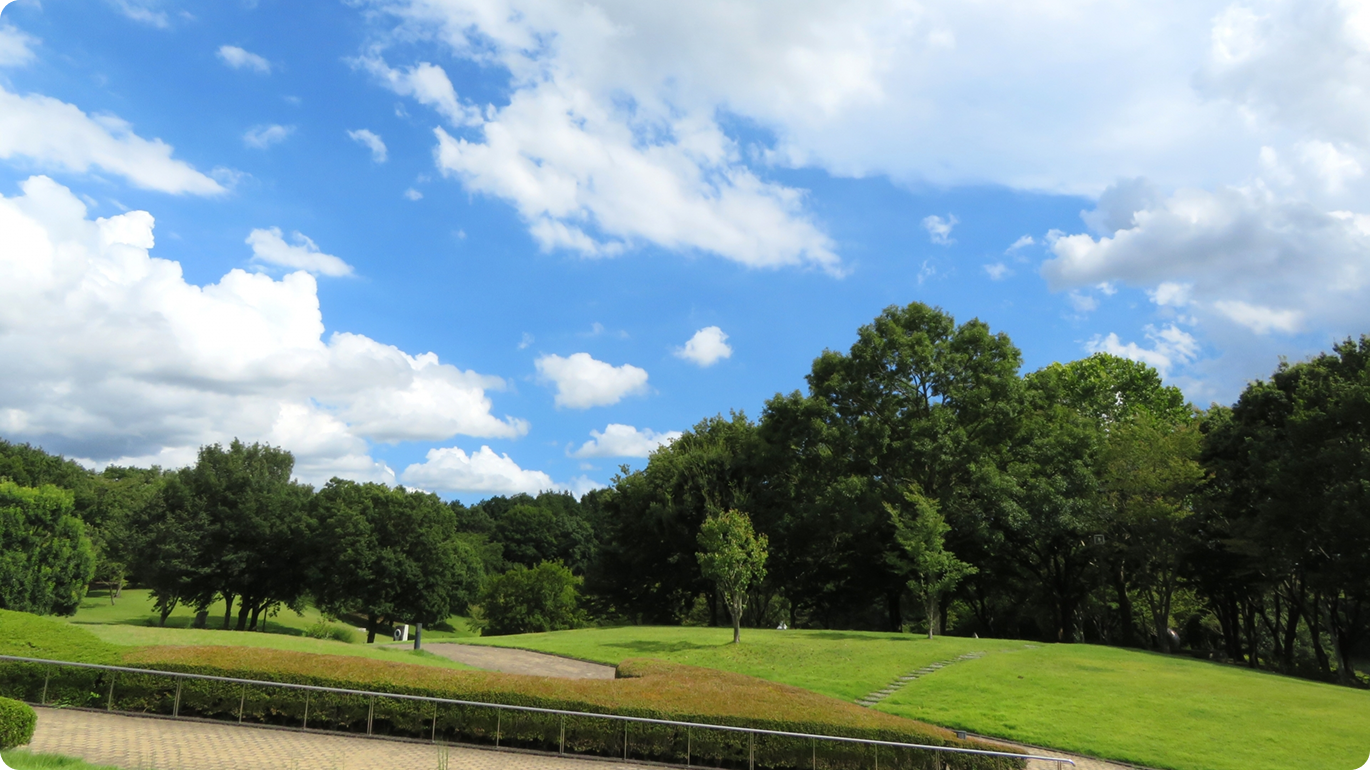
An autumn market at Kasama Geijutsu no Mori Park. The 15th edition is calmer than Himatsuri, so you can take your time.
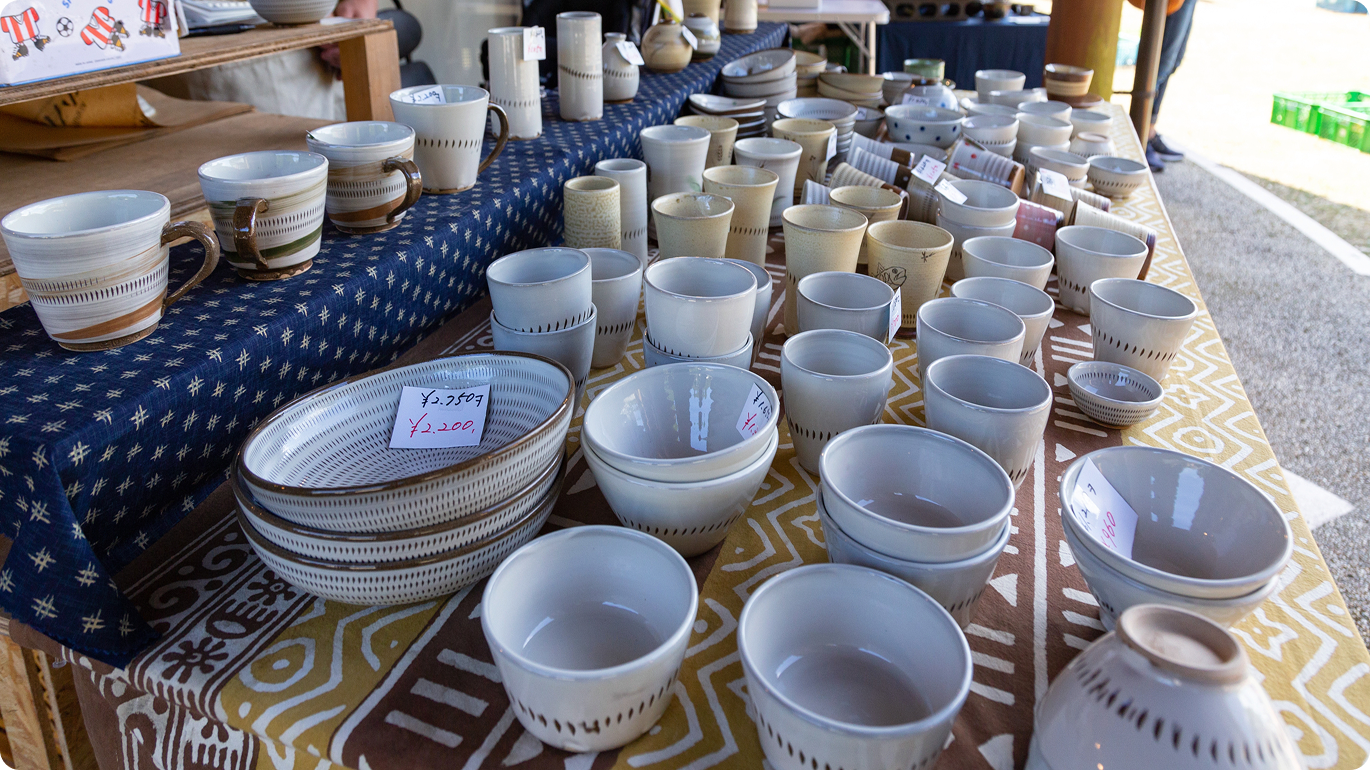
Koishiwara, home of tobikanna and hakeme. Kilns across the village open for the folk pottery festival, 9:00-17:00.
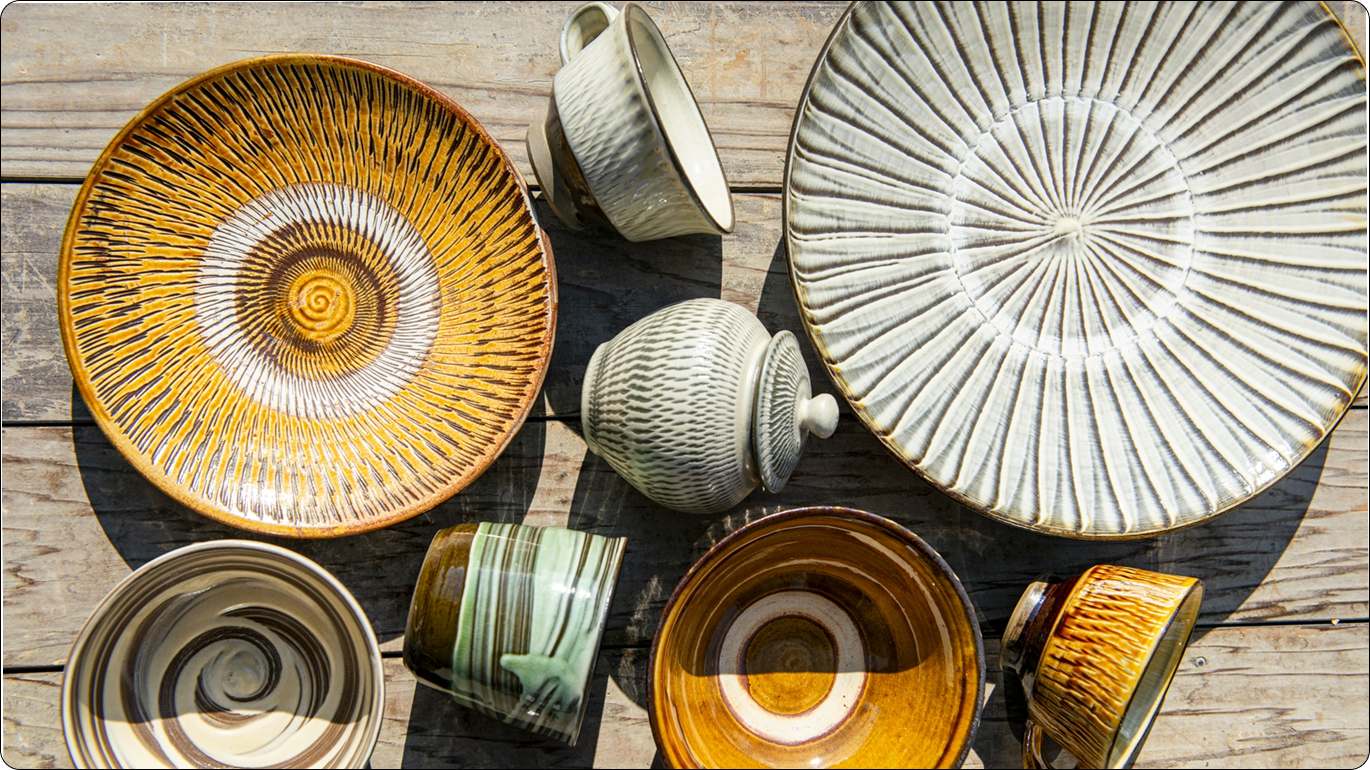
In a valley where water-powered hammers still sound, all ten kilns open their doors. Tobikanna-marked pieces at kiln prices.
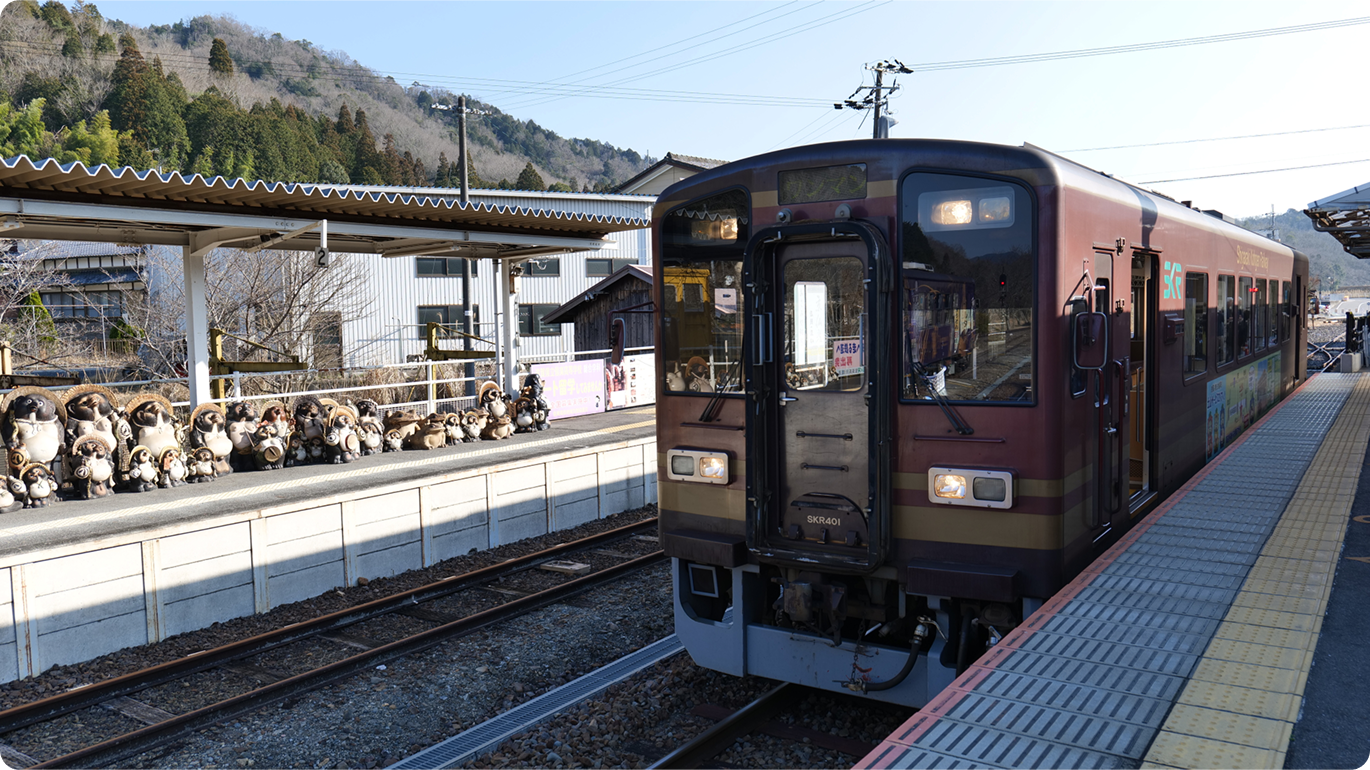
Nine days with the whole town of Shigaraki as the venue. Not just tanuki figures: earthy tableware takes the lead.
Tajimi is the hub of Mino ware. Across the wholesale centre and several other venues, this market spans the widest price range.
Held on the grand lawn of Tama Chuo Park. A craft market of real size that you can reach by train from central Tokyo.
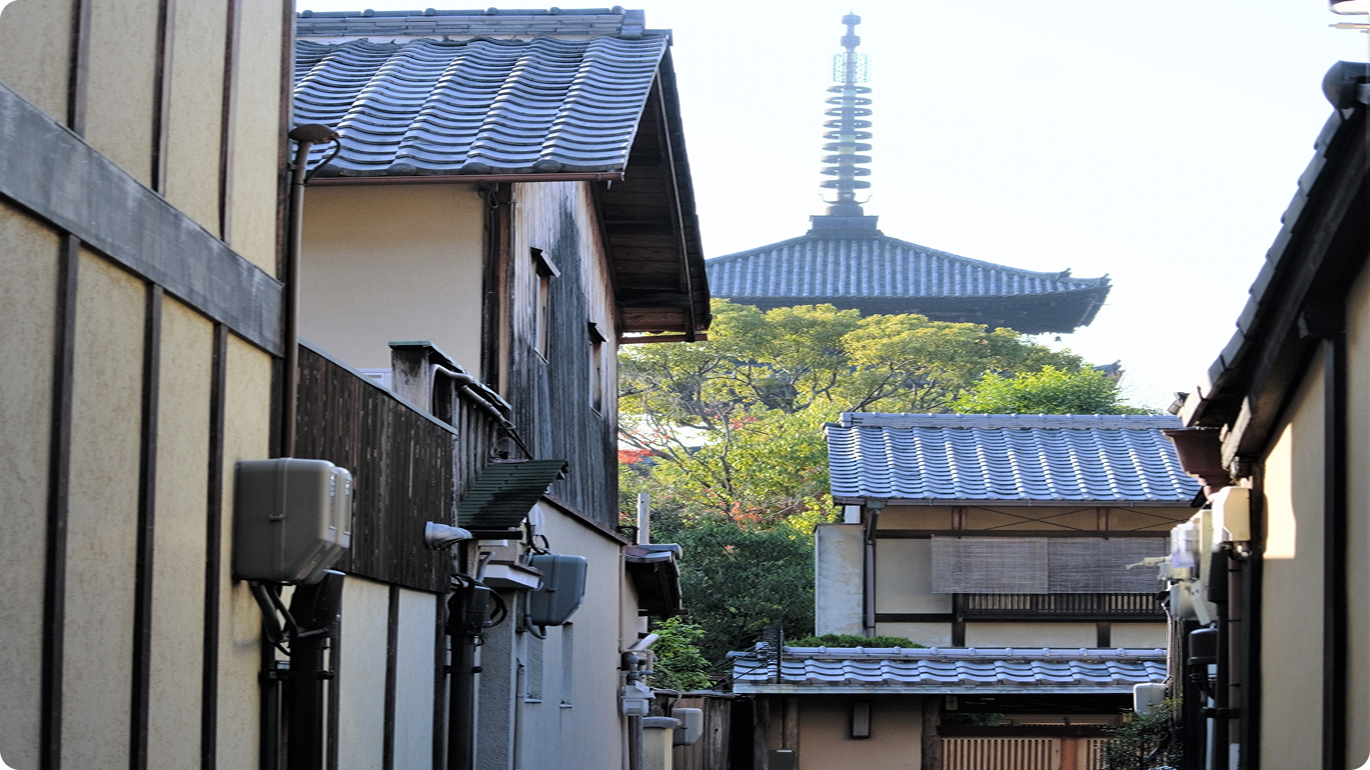
The kilns and studios of the Kiyomizu-yaki district open together. See the fine brushwork of Kyo ware up close.
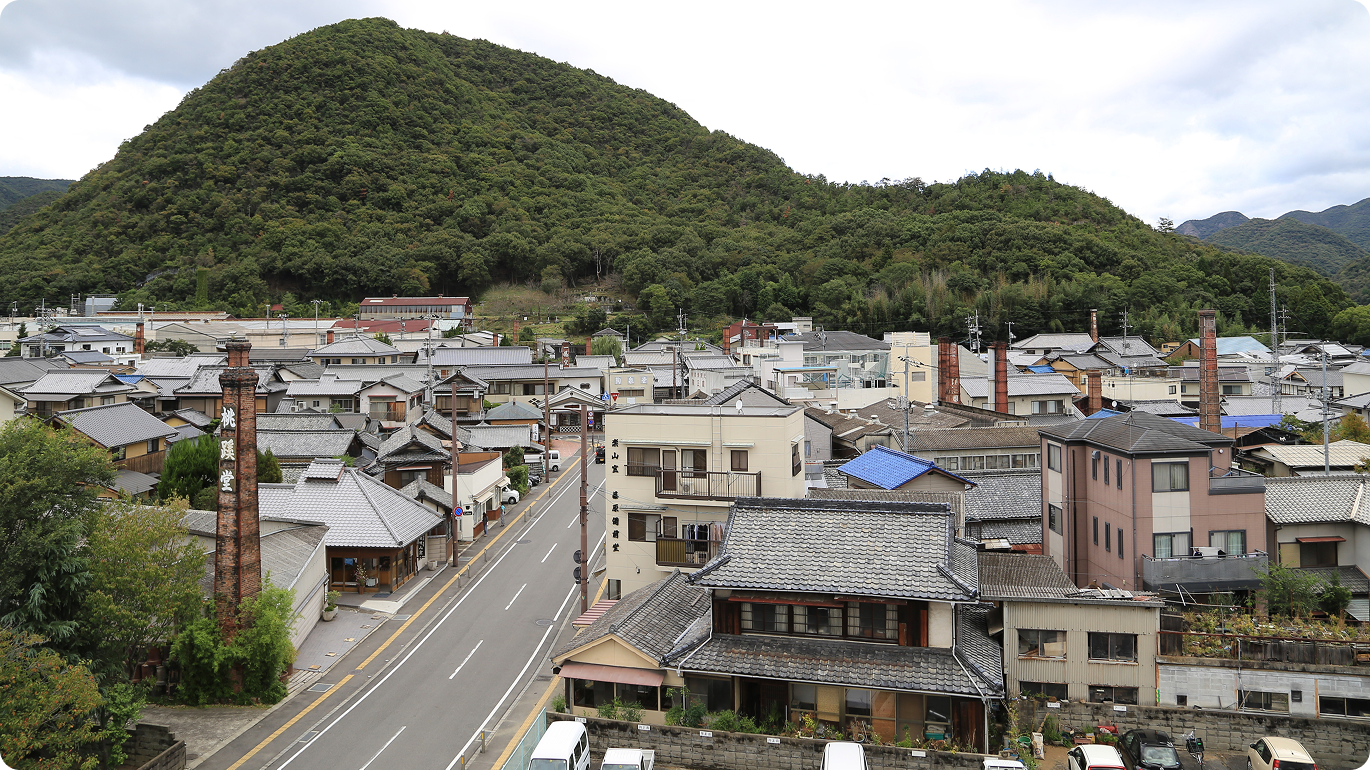
Bizen uses no glaze at all. The 42nd edition opens the kilns around Imbe Station all at once.
See the five colours of Kutani gathered at the Ceramic Village. Two days, 9:00-16:00.
A market of makers from Kochi. Pottery, woodwork and textiles at a scale you can browse piece by piece.
Agano ware, one of the Enshu Seven Kilns. The kilns open for autumn, showing the quiet glazes of tea ceramics.
Cafes and galleries around Oiso serve as the venues. Browse pottery as you stroll the town.
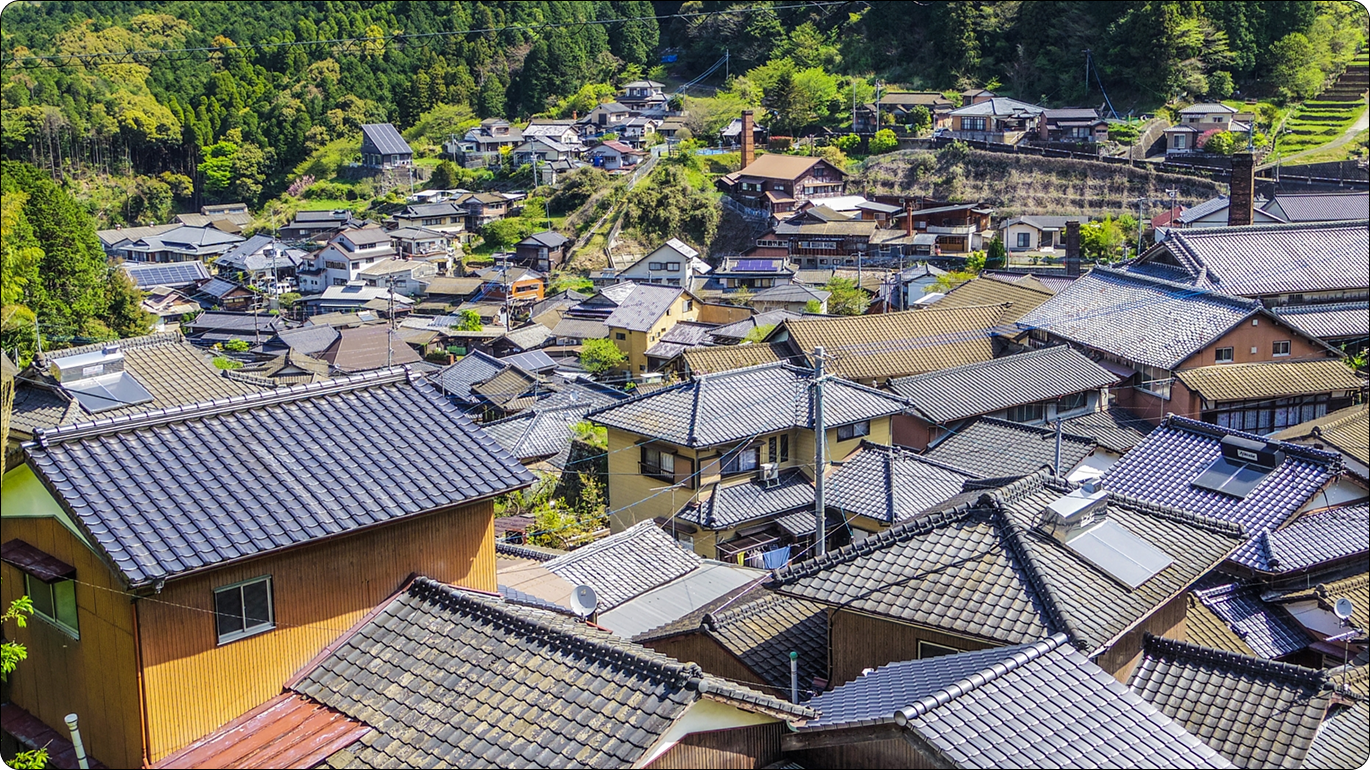
Two days in Nakaoyama, where the old chimneys still stand, bringing kilns and customers together. Quieter than the spring festival.
An artists' market staged in a garden. The number of exhibitors is kept small so each maker's world comes through.
Led by Toki's certified traditional craftspeople, with demonstrations, an art exhibition and kiln stalls.
About 50 shops and 700 tents. From studio pieces to everyday ware, few markets match it for scale and range.
A festival where antiques and studio pieces mingle. The '26 AUTUMN edition expands to four days.
A special venue at Kasama Craft Hills. Somewhere between a pottery fair and a craft fair, leaning towards daily life.
A craft fair in the woods along the Isuzu River, close to Ise Grand Shrine. Easy to combine with a walk down the approach.
Makers from across Japan gather at Tokorozawa Aviation Memorial Park. Two days of craft, art, food and farming.
Otani ware from Tokushima, known for its huge jars. A kiln festival of big pieces thrown on a reclining wheel, alongside daily ware.
A juried craft market in Sakai. The 16th edition: two dense days with only the makers who made the cut.
Bold cobalt lines on Tobe's white porcelain. An autumn market of kilns, centred on ware for everyday use.
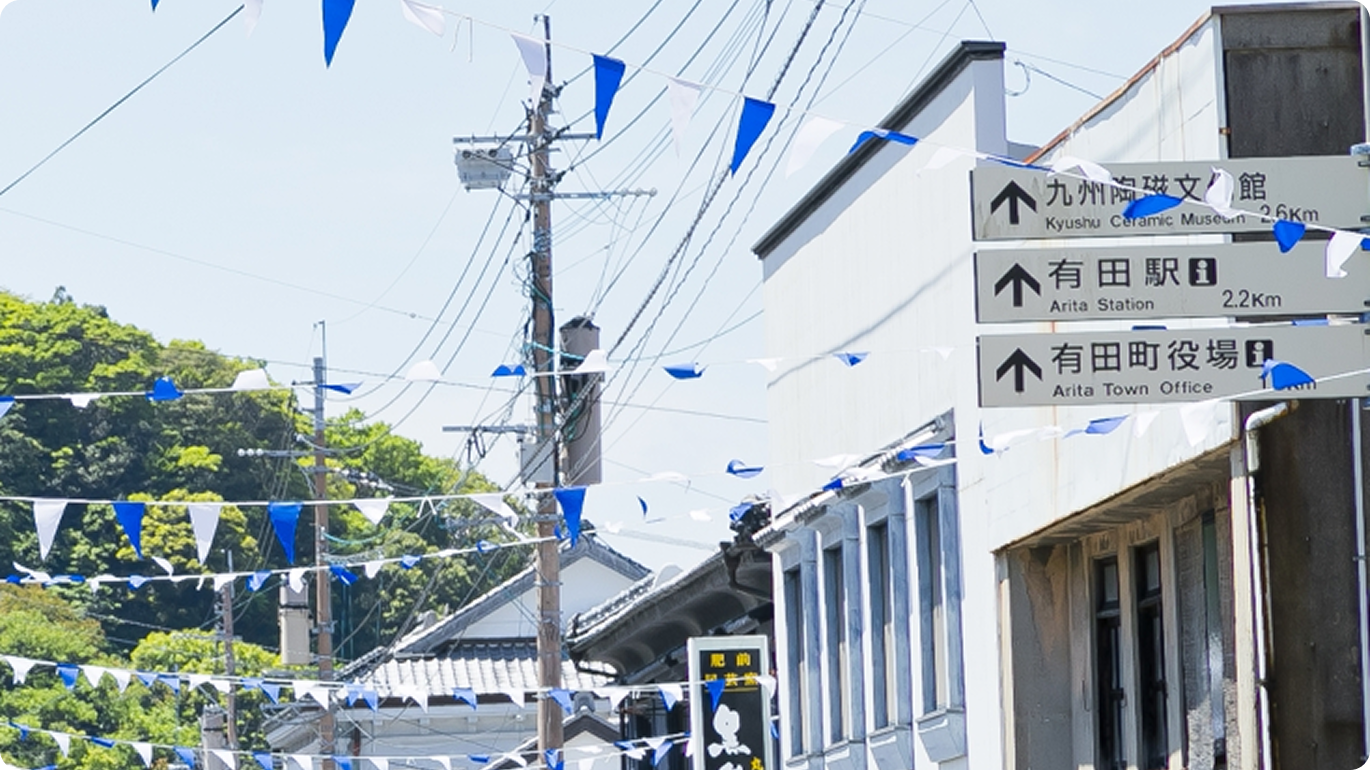
Calmer than the spring fair. The 22nd edition gives you five days to work through Arita's kilns at your own pace.
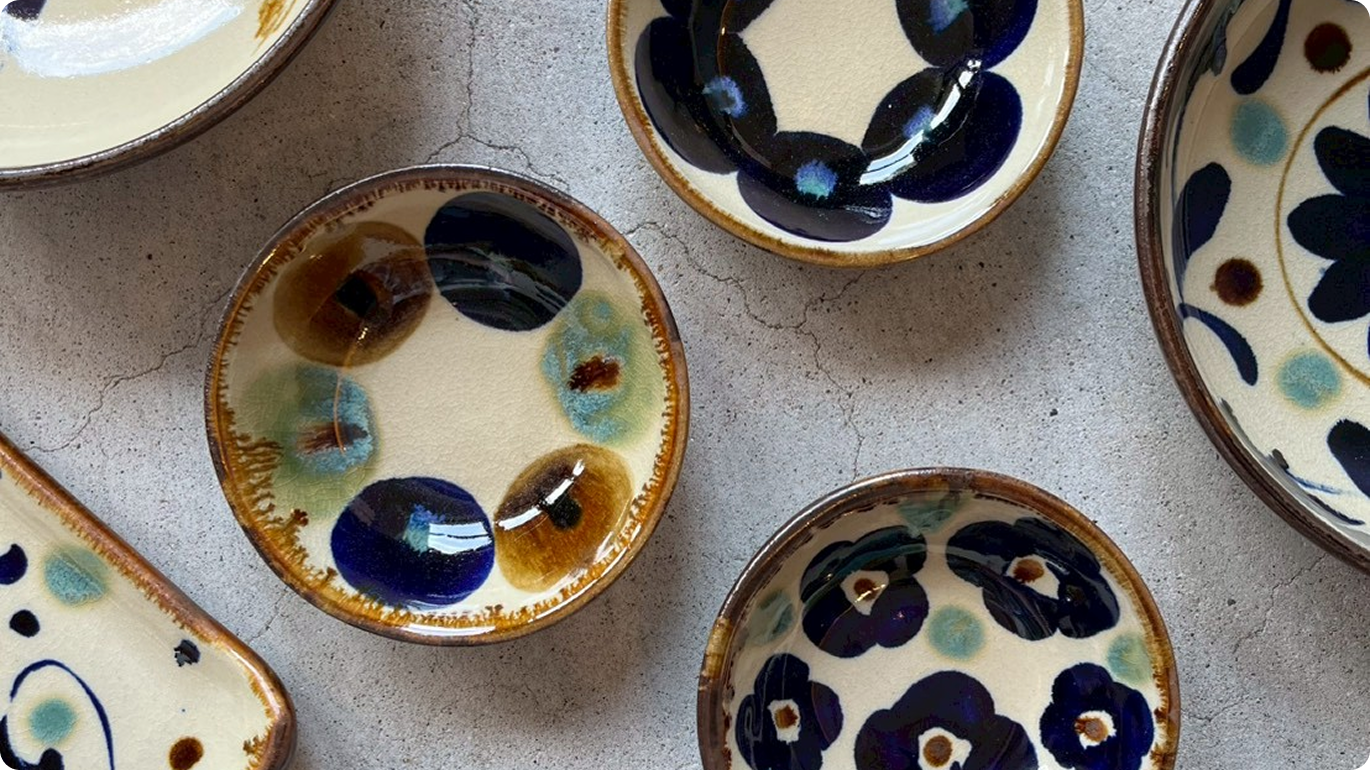
Held along Tsuboya Yachimun Street in Naha. Three days of Okinawan clay and glaze, in its 47th edition.
A handmade festival at Pacifico Yokohama. One-of-a-kind pieces span pottery, homeware and food.
A market of handwork by the Shonan coast. Opening hours differ across the two days, so check before you go.
A comprehensive tableware show at Tokyo Dome City, bringing together kilns and artists from across Japan.
A nine-day winter sale at Oyama Sogo Park. Compare wares from kilns across Japan in one place.
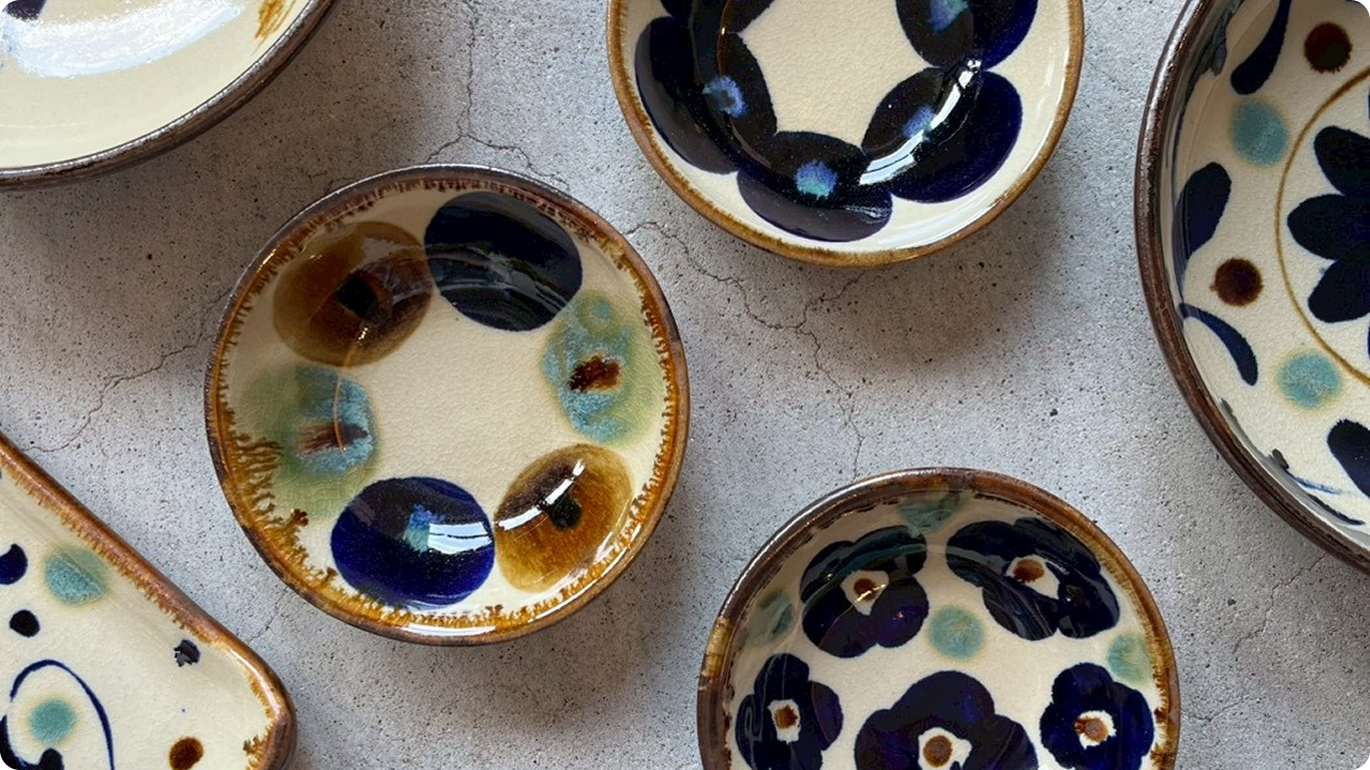
The 34th edition, gathering the studios of Yomitan. See the work of the Yachimun village makers all at once.
One of the largest pottery fairs in Kansai, at Expo '70 Commemorative Park. Tents fill with wares from kilns across Japan.
Held at Ceramic Park MINO, this is the largest craft fair in the area.
An annual March fair at Marine Messe Fukuoka Hall A. The 27th edition, 10:00-17:00.
Kilns from across Okinawa gather at a resort in Onna. The 31st edition is indoors, so rain is no problem.
Tsugaru Kanayama ware, unglazed and wood-fired. The spring fair runs long, making it easy to fit into a trip.
A small craft market in Saitama. The makers are close at hand, so you can choose while you talk.
The spring edition on the Art Tower Mito plaza. Many Kasama makers take part, bringing the air of the kiln town with them.
The spring edition at Shizuoka Gokoku Shrine. The exhibitors change from autumn, so some people come to both.
A festival honouring Toshiro, the founding potter. Market stalls and kiln bargain sales spread across Seto.
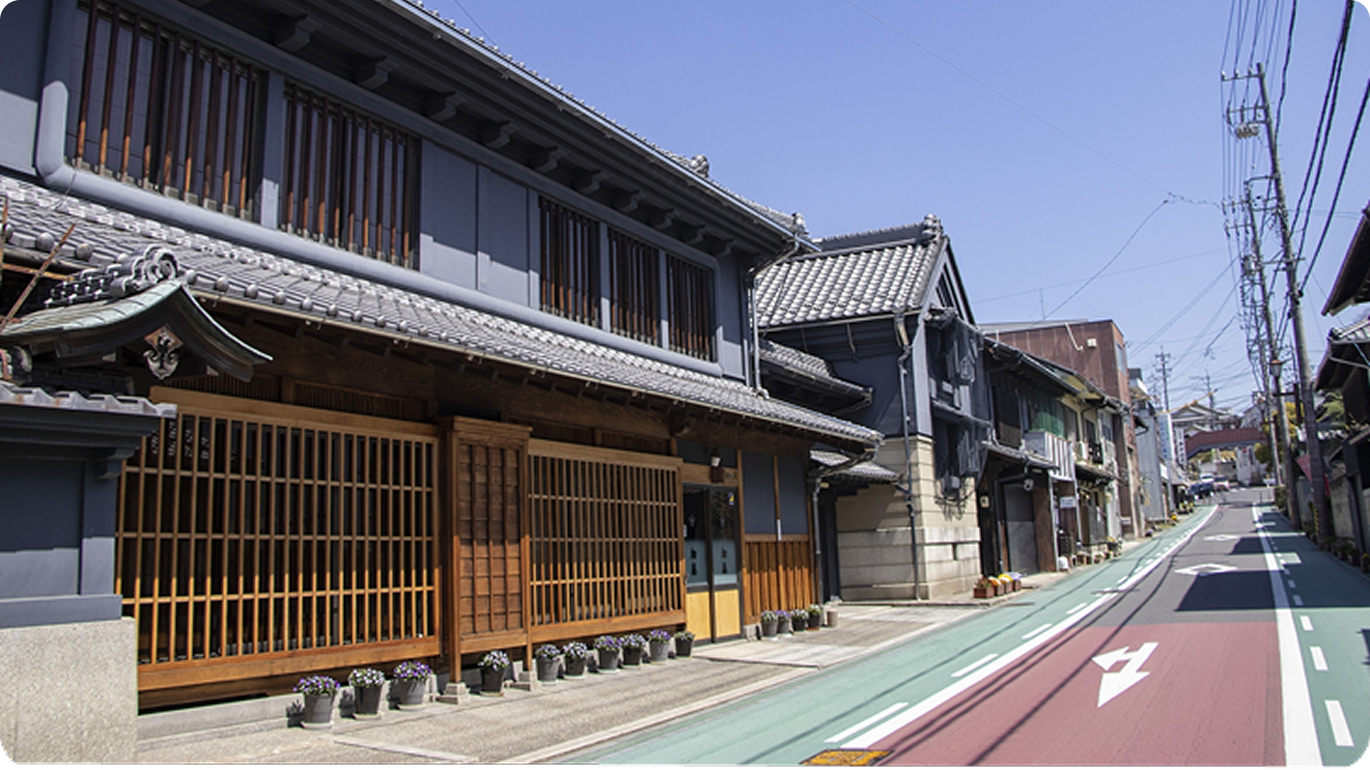
Tajimi in spring. The venue gathers Mino ware wholesalers, so prices lean towards buying in quantity.
Tobe's kilns turn out in force for the spring market. White porcelain with bold cobalt lines, at kiln prices.
The Agano no Sato community hall and nine kilns serve as venues, with a kiln-hopping stamp rally.
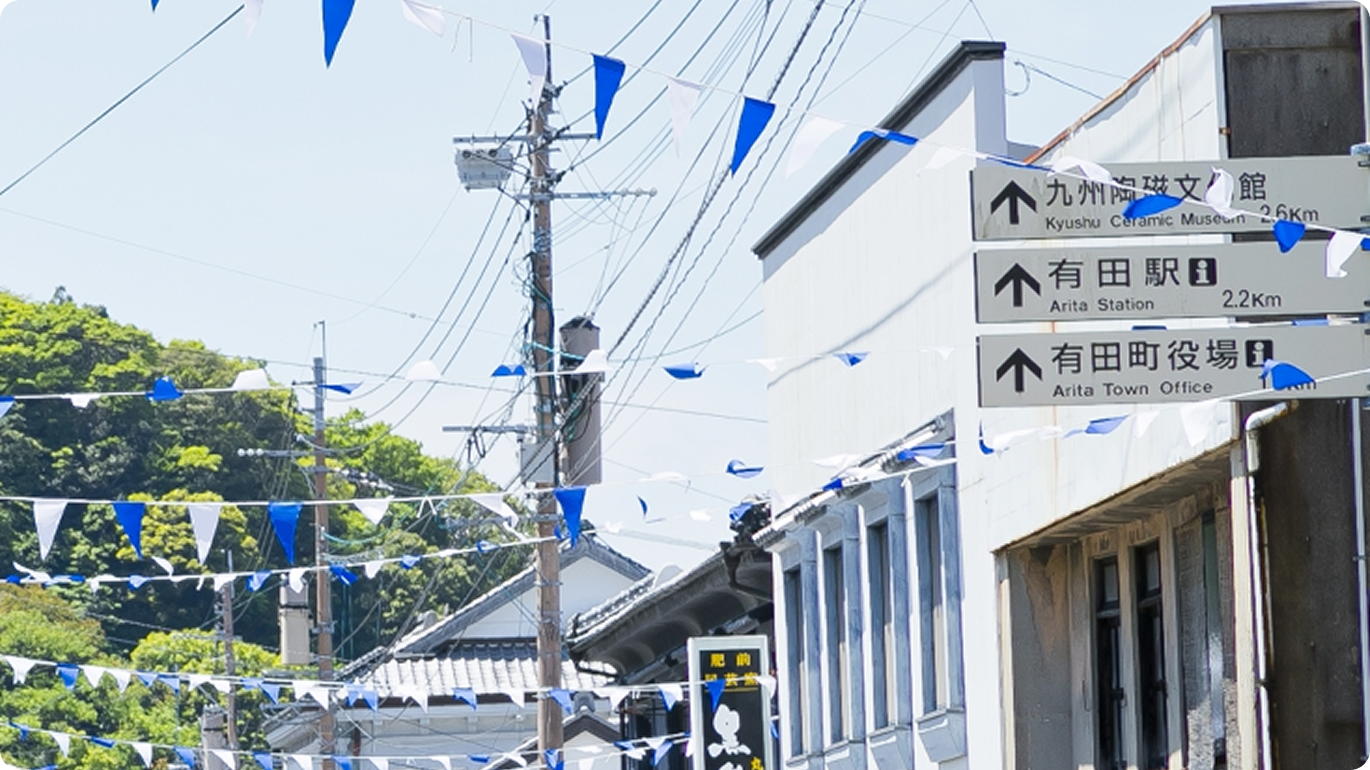
Japan's largest pottery fair, drawing about a million visitors. The venue stretches roughly 4 km from Arita Station to Kami-Arita Station.
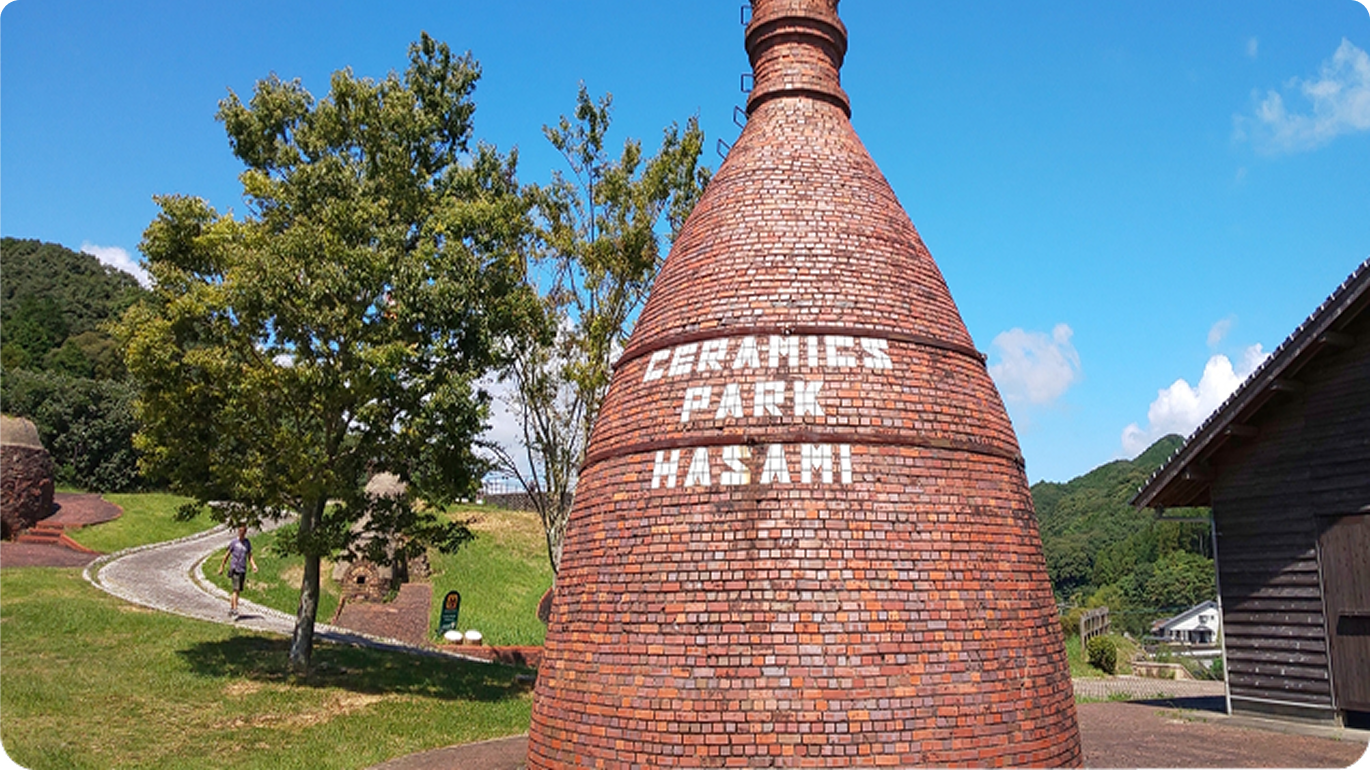
The 68th edition at Yakimono Park. Seven days to choose Hasami ware made for everyday use.
Central Karatsu is the venue. In this home of tea ceramics, events pairing food with vessels also feature.
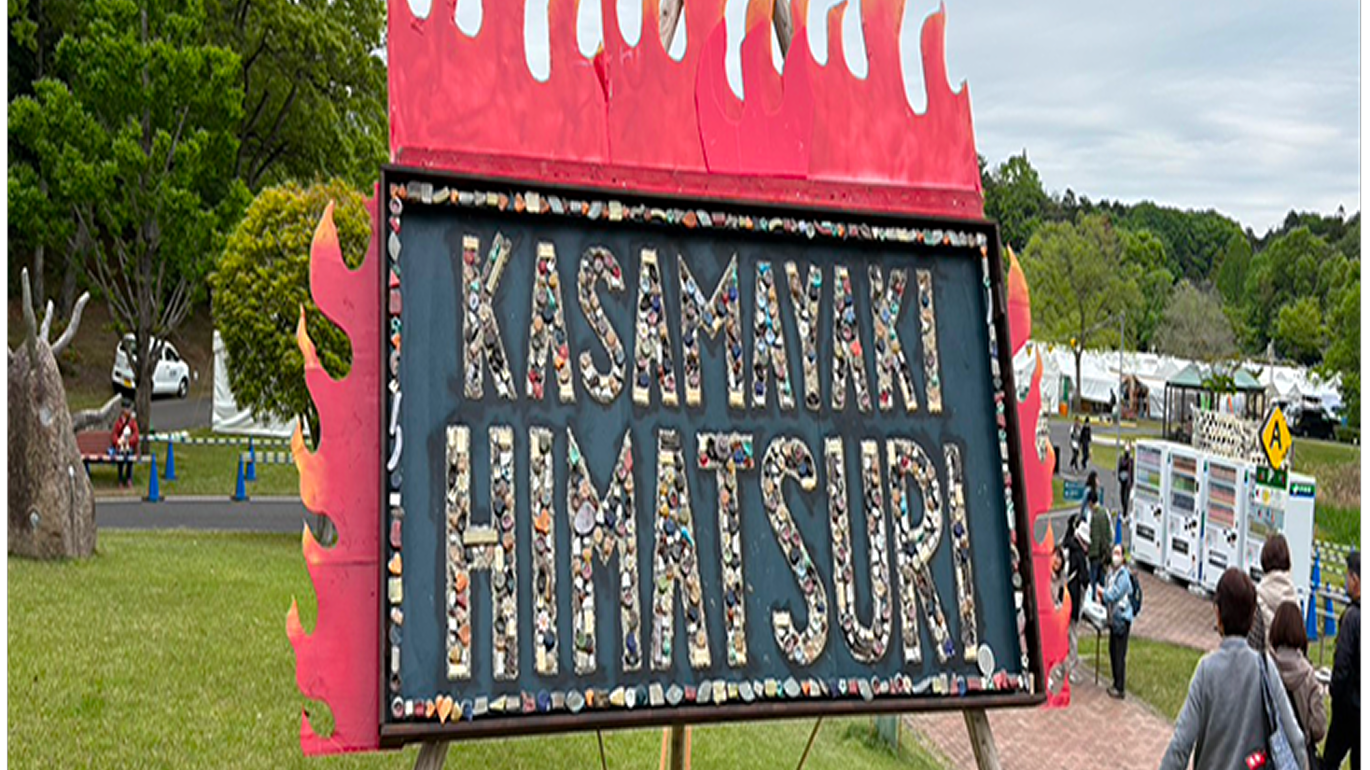
More than 200 booths at Kasama Geijutsu no Mori Park. Admission is 500 yen a day, free for under-18s.
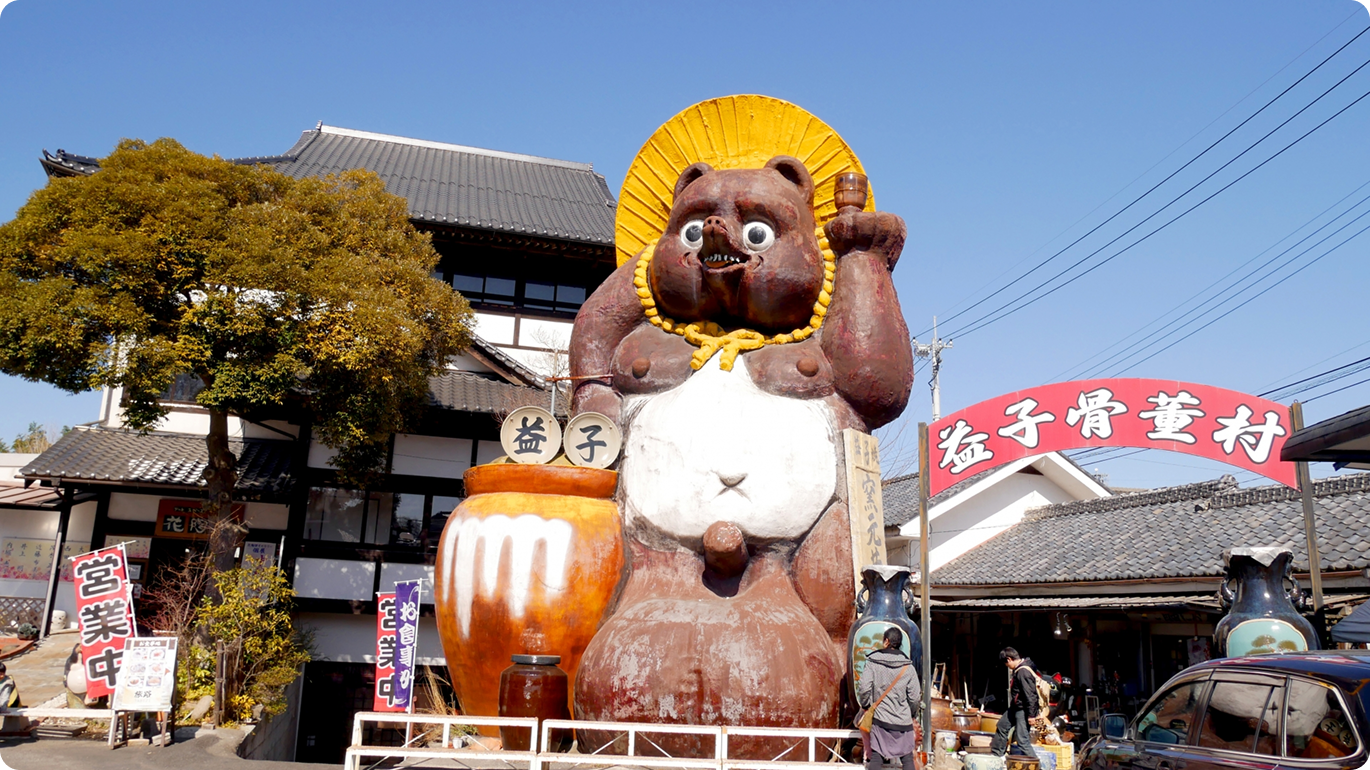
Mashiko over Golden Week, with about 700 tents. Studio pieces and everyday ware sit side by side.
Hagi over Golden Week. The city's kilns and dealers gather for the largest Hagi ware fair of the year.
Mikawachi captivated Europe under the name Hirado ware. The kiln studios of the Sarayama district open their doors.
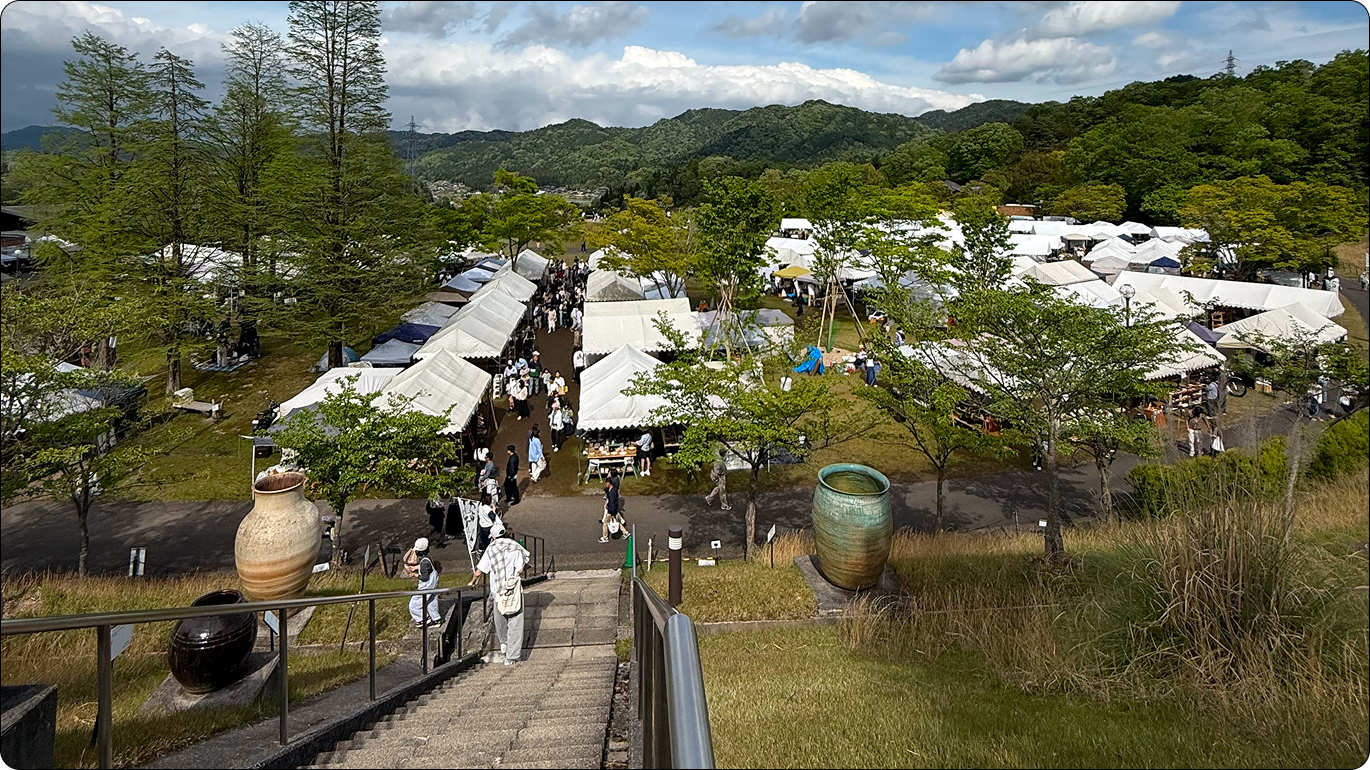
A market of Shigaraki's independent artists only. For those after one-of-a-kind work rather than kiln production lines.
About 180,000 visitors every May 3-5. Some 50 companies set up stalls at Kutani's largest chawan festival.
One of western Japan's largest markets, at Oribe Hills. Toki's kilns and trading houses exhibit together.
The spring folk pottery festival. Koishiwara's kilns open together, offering tobikanna-marked pieces at kiln prices.
A walk around the kilns of Seto's Akazu district, where Oribe, Shino and other old Seto techniques live on.
Banko ware, known for purple-clay teapots and heatproof donabe. A spring market gathering the kilns at Yokkaichi Dome.
A craft fair set against Kurashiki's white-walled streets. Two days of pottery, woodwork and metalwork.
The spring edition gathering Toki's certified traditional craftspeople. Hear about Shino, Oribe and Ki-Seto techniques first-hand.
Sanjo, a town of metalwork. A market unlike any other, where blades and smithing tools sit alongside tableware.
A small market staged at Mishima Rakujuen Garden. Walk the garden as you visit the makers.
The spring flea market. One of Tokyo's largest, where antiques and studio pieces mingle.
The original Japanese craft fair. Makers from across the country gather at Agata no Mori Park.
Echizen's largest pottery fair. The 44th edition draws tens of thousands to the Ceramic Village over two spring days.
An art and craft fair in Chiba. Exhibitors are selected, so the standard stays high.
Obori Soma ware kilns gather at Tougei no Mori Obori, showing blue crackle, double-walled pieces and the running-horse motif.
Aizu Hongo ware, made here for 400 years. The market opens at 4:00, an early-summer ritual for bargain hunters.
The early-summer edition at Pacifico Yokohama. A large indoor handmade festival on a par with the autumn one.
Aomori's craft fair at Moya Hills. Local makers take part, including Tsugaru Kanayama ware.
The summer market at Yatsugatake Nature and Culture Park. The altitude keeps the venue comfortable even in summer.
About 260 stalls in front of Ebetsu City Hall. A summer fixture in Hokkaido, drawing makers from inside and outside the prefecture.
One of Japan's largest, with 3,000 exhibitors at Tokyo Big Sight. Plenty of genres beyond pottery.
About 200 kilns and artists from across Japan at Yume Messe Miyagi. A summer fixture in Sendai.
A summer fixture with about 400 stalls along Gojo-dori. The kilns of Kyo ware and Kiyomizu ware gather here.
No pottery fairs match your filters. Try changing them.
Here are five tips to help you enjoy a pottery fair. By preparing beforehand, you can make your experience even more enjoyable.
nokaze is an online platform where artists from across Japan can directly sell their work. We deliver these pieces along with the stories behind their creation. We hope you enjoy discovering a unique piece just for you.
Discover new artists


