

Japanese Plates
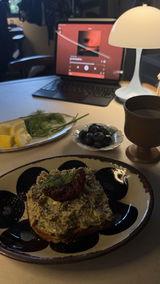
A plate is the thing you look at longest. These Japanese plates sit under the meal while you eat, and they are still there when the food is gone. Each is made one at a time by an artisan, so no two carry quite the same expression.
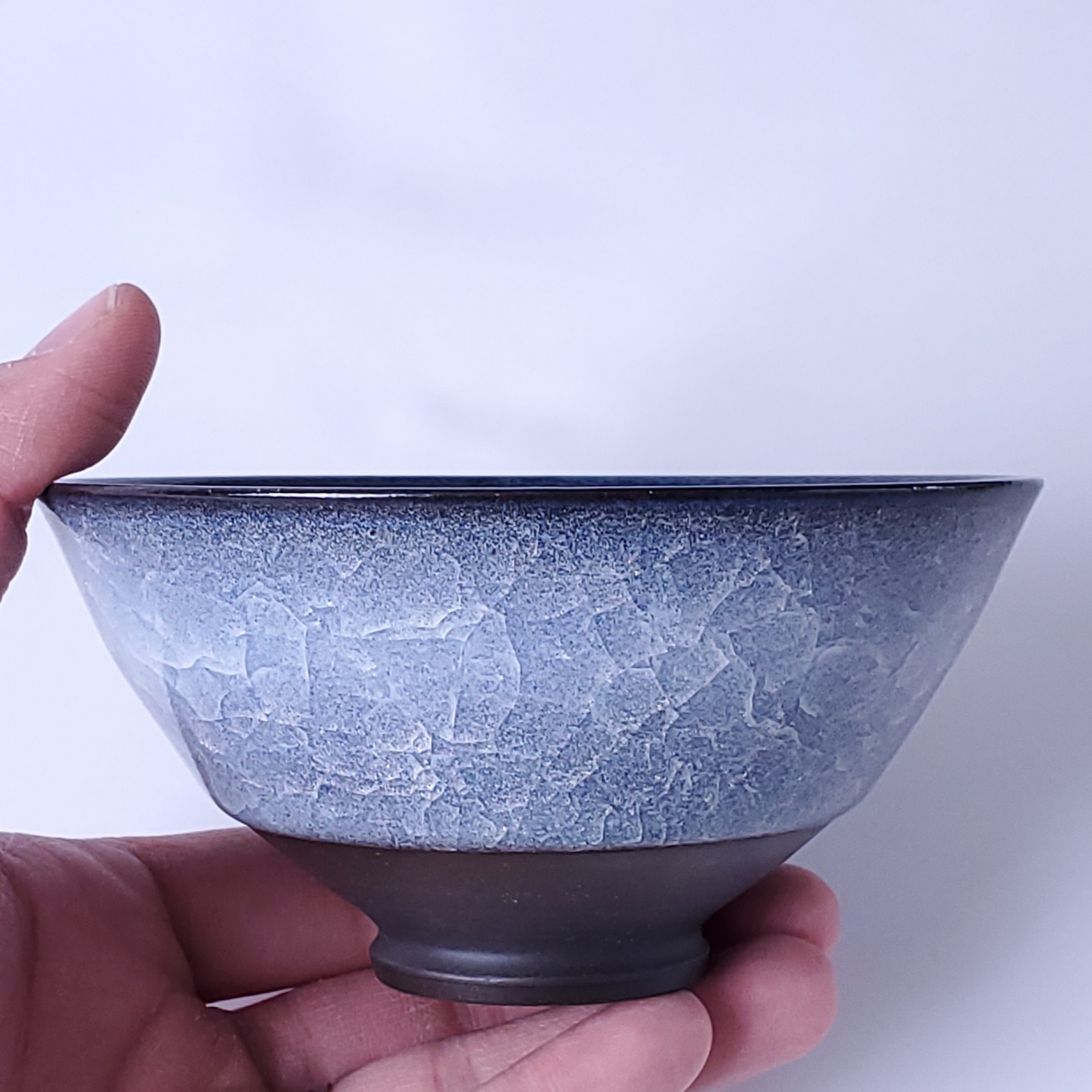
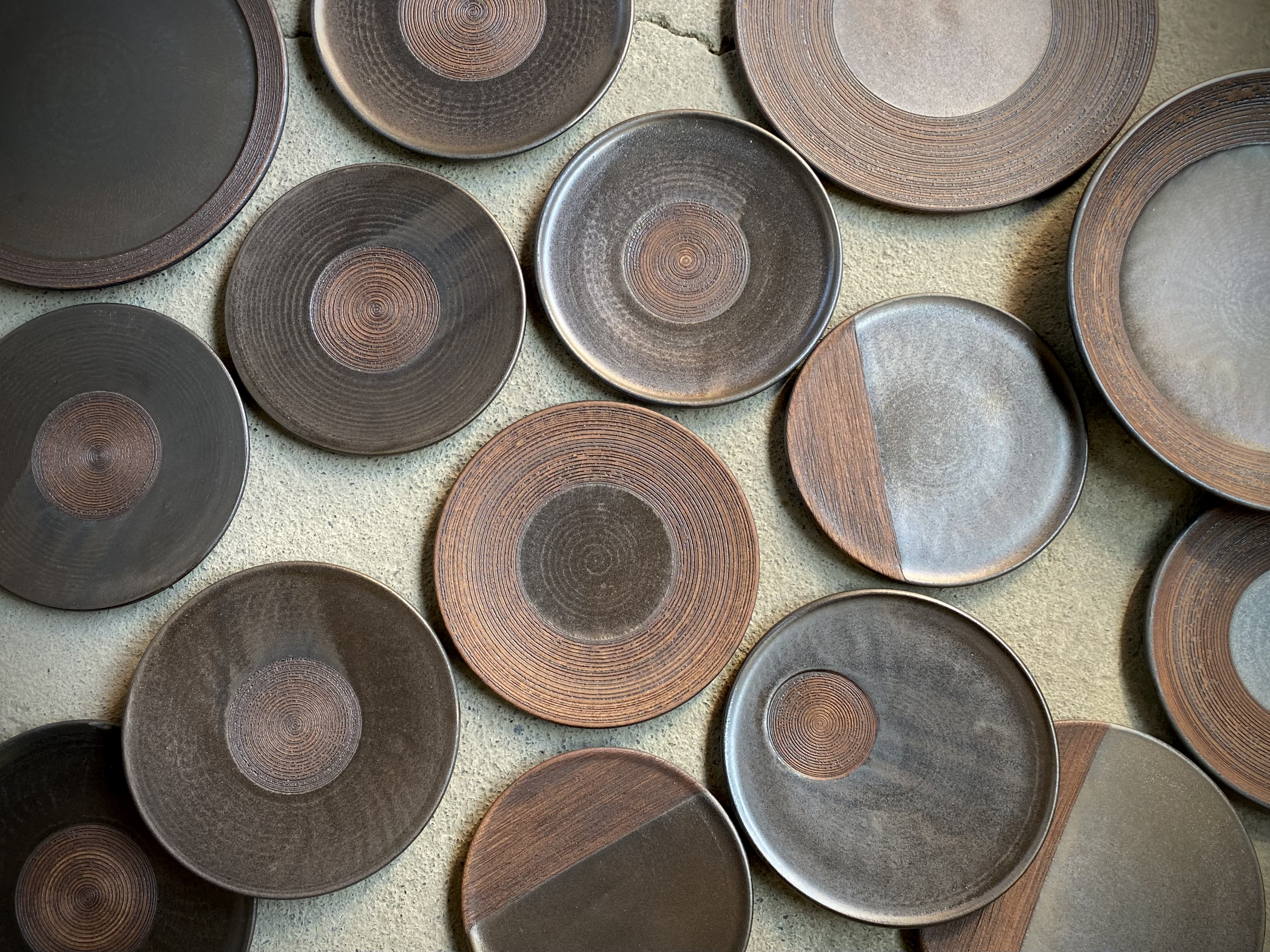
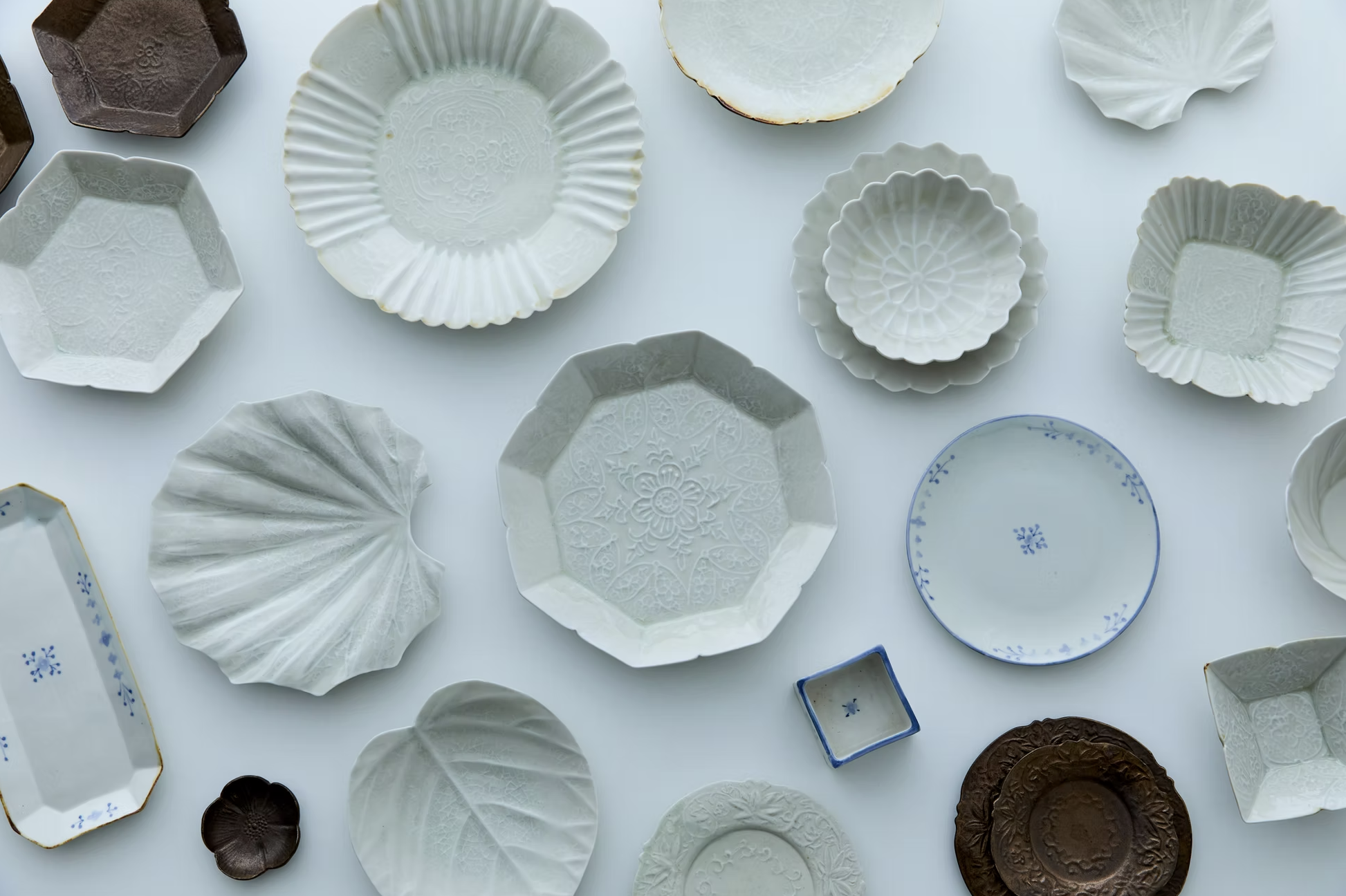
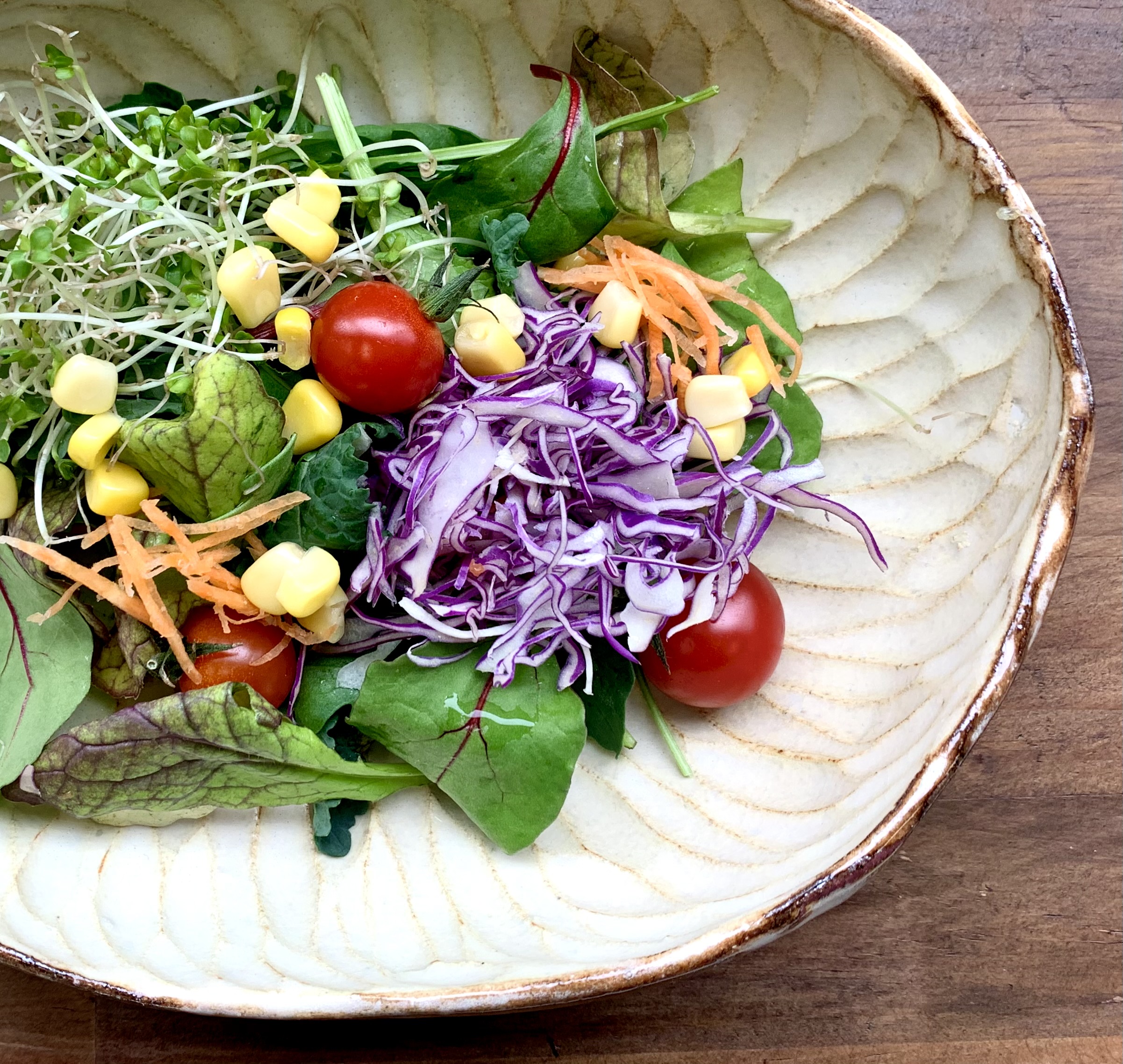
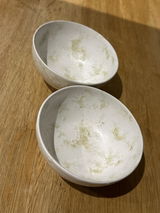
Look closely and you will see how each was made. Shinogi ridges cut while the clay was still soft. Rims opened like petals. White slip brushed over dark clay. Pale celadon pooled in the low spots. Dark, unglazed surfaces from Bizen. Putting a few side by side is what makes a table worth looking at. Sizes, care & FAQ


Artisan Works

Fujimura Kasumi
Hand-Carved Plate, 15cm White
¥4,400
Plates

Fujimura Kasumi
Bronze Glaze Cutlery Rest, 7cm
¥1,430
Plates

Fujimura Kasumi
White Porcelain Cutlery Rest, 5.5cm
¥880
Plates

Fujimura Kasumi
White Porcelain Cutlery Rest, 7cm
¥1,430
Plates

Furutani pottery
Rough Iron-Line Bread Plate, Small — Shigaraki
¥2,530
Plates

Fujiwara Jun
Pedestal Plate, 21cm — Shigaraki
¥7,700
Plates

Fujiwara Jun
Flat Plate, 18cm Blue — Shigaraki
¥5,500
Plates

Fujiwara Jun
Eight-Point Slip-Trailed Mamezara Tiny Plate — Shigaraki
¥2,750
Plates

Fujiwara Jun
Eight-Point Icchin Slip-Trailed Plate, Blue No.1
¥4,950
Plates

Chono Hideki
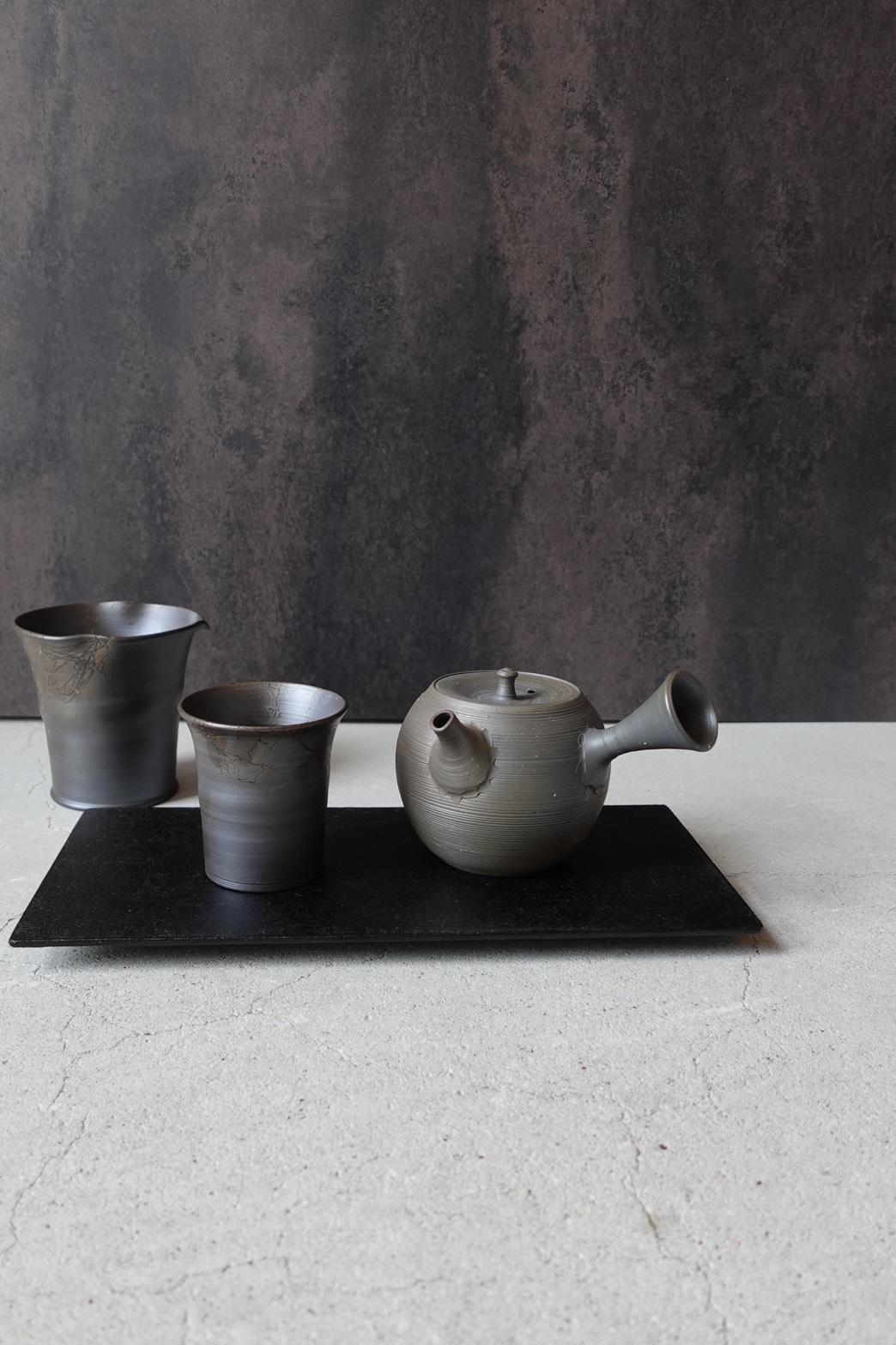
Washi-Layered Lacquer Rectangular Tea Tray, Large Black
¥14,300
Plates

Chono Hideki
Washi-Layered Lacquer Octagonal Tea Tray, Large Black
¥16,500
Plates

Chono Hideki
Washi-Layered Lacquer Long Tray, Plover
¥13,200
Plates
Buying guide
Japanese Plates Buying Guide
What you will find here
The collection brings together Japanese pottery plates from many regions. There are stoneware plates from Shigaraki with iron speckles and rust-brown glaze, carved and lobed plates from Mino and Kyoto, porcelain rim plates from Arita, flat plates from Seto, unglazed plates from Bizen, and bright, brush-painted yachimun from Okinawa. A few pieces are glass or lacquer-finished. Each handmade Japanese plate is listed under the name of the artisan or workshop that made it.
How to choose a size
Japanese plates are often named by sun, an old unit of about 3cm. A 7-sun plate is roughly 21cm across. The sizes in each listing are measured from the actual piece, so they can run a little over or under the round number.
| Size | Approx. diameter | Good for |
|---|---|---|
| 3 sun (mamezara) | 9cm | Soy sauce, pickles, a single sweet |
| 5 sun | 15cm | Side dishes, cake, bread |
| 6 sun | 18cm | Toast, a small main, salad |
| 7 sun | 21cm | A main course for one |
| 8 sun | 24cm | Pasta, curry, a plate to share |
For the full conversion, see our Japanese pottery size guide. If you are not sure where to start, how to choose a Japanese plate walks through shape and rim. You can also browse only small plates or large plates.
Porcelain, stoneware or unglazed
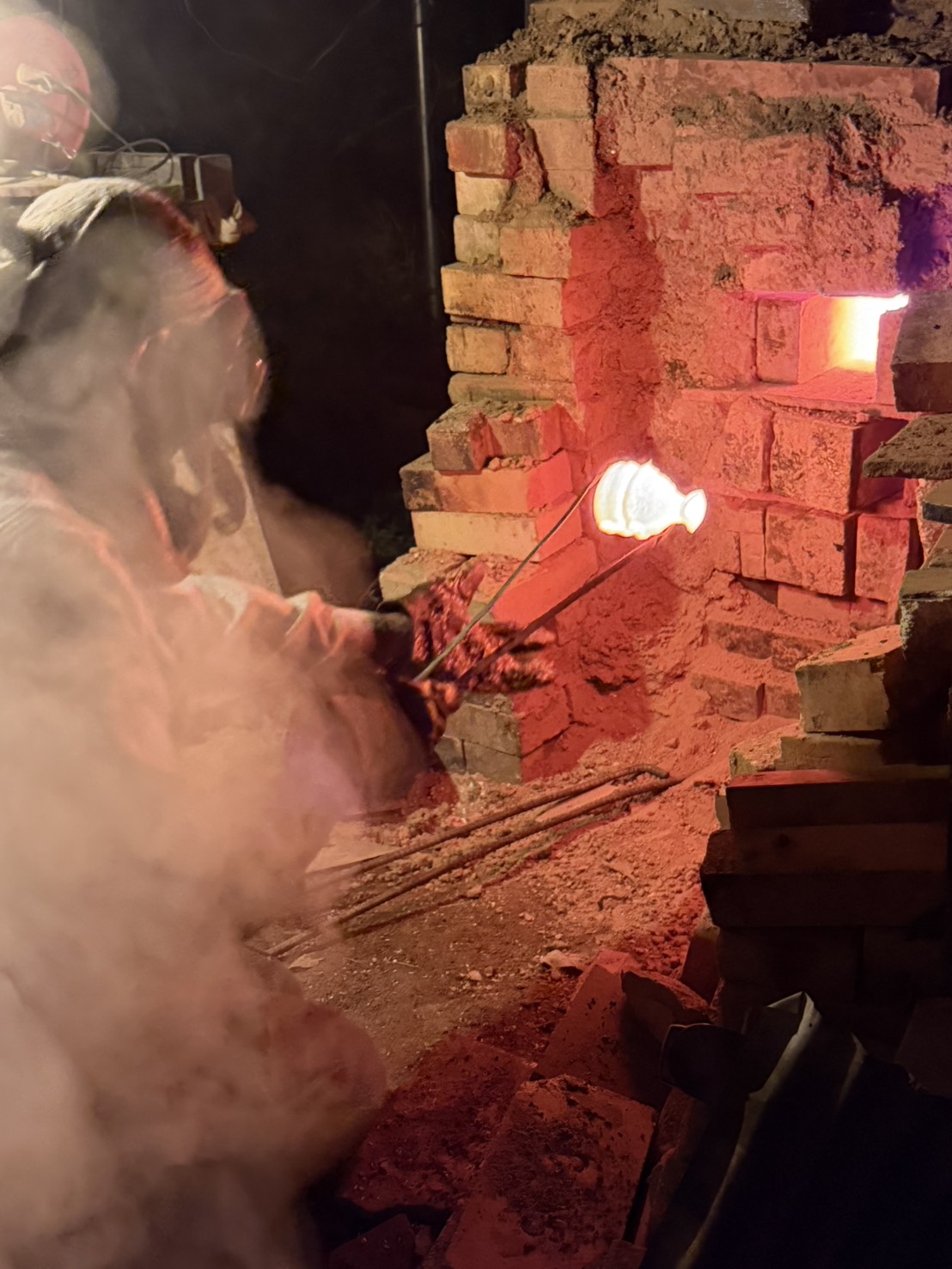
Porcelain is hard, thin and smooth, and the color of the food stands out against it. Stoneware is heavier and warmer to the touch, and its glaze often changes with use. Unglazed, high-fired pieces such as Bizen show the marks of the kiln itself. The ridged surfaces you see on many artisan Japanese plates are shinogi, carved into half-dry clay one line at a time.
Care
Each listing says whether that plate is microwave-safe and dishwasher-safe, and the answer differs from piece to piece. Many glazed plates from Shigaraki, Kyoto and Arita are marked safe for both. Unglazed, lacquer-finished and glass plates are marked for hand washing. When in doubt, wash by hand and let the plate dry fully before you stack it. Our microwave and dishwasher guide explains why.
Questions
Are these Japanese ceramic plates safe for everyday use?
Yes. They are made to be eaten from. Check each listing for microwave and dishwasher notes, since glazes and clays differ.
What does sun mean in a plate size?
Sun is a traditional Japanese unit of about 3cm. A 5-sun plate is about 15cm across and an 8-sun plate about 24cm.
Do you ship outside Japan?
Yes. Every order is shipped worldwide from Kyoto.