Tetsuyu (Iron Glaze): How Iron and Flame Color Japanese Pottery

Tetsuyu (iron glaze) is the general name for glazes colored by iron. Yellow, amber, brown, black and even blue-green: many of the colors you see on Japanese pottery actually come from iron.
Iron is in clay and in plant ash, which makes it the most familiar coloring material in pottery. Even with the same iron, the color changes greatly with the amount of iron in the glaze and the state of the flame in the kiln. Amber glaze, tenmoku, rust glaze and celadon all belong to this family of iron glazes.
The full range of glazes, from ash and iron to feldspar and copper, is covered in Japanese pottery glazes. This article maps out the iron glazes among them.
The Amount of Iron and the Flame Change the Color
Two things mainly decide the color of an iron glaze. One is the amount of iron: with little, the color is pale, and the more there is, the deeper and darker it gets. The other is the state of the flame: oxidation firing, with plenty of oxygen, gives yellows and browns, while reduction firing, with the oxygen cut back, gives blues and blue-greens.
| Iron and firing | Color | Typical glaze |
|---|---|---|
| A little, reduction | Pale blue, blue-green | Celadon (seiji) |
| A little, oxidation | Yellow, pale brown | Kiseto |
| Somewhat more | Amber, brown | Amber glaze (ameyu) |
| A lot | Black, dark brown | Black glaze, tenmoku |
| Even more | Rust brown like weathered metal, with little sheen | Rust glaze (sabiyu) |
This is only a rough guide; the actual color also depends on the glaze's other ingredients, the clay and the kiln temperature. Even within one glaze, thick areas are darker and thin areas and edges are lighter, so light and shade appear within a single piece.
Comparing Within One Studio: Kanefusa Seito's Donabe
Kanefusa Seito's rice pots from Shigaraki show the range of iron glazes clearly. The studio fires the same donabe shape in several glazes, and three of them, amber, kiseto and tenmoku, are iron glazes.
Kiseto is a low-iron glaze fired in an oxidizing flame, from yellow to an olive-tinged brown. It darkens where the glaze pools and mottles where it runs.

Amber has somewhat more iron, a glossy reddish brown. Where the glaze thins, on the lugs and the rim of the lid, it turns lighter.

Tenmoku is high in iron, a deep black. The same donabe changes this much just with the amount of iron. The rice pots cook from 1 to 5 go of rice and are ready after about 15 minutes on the heat and about 15 minutes of steaming. How to choose one is covered in how to choose a donabe.

Iron Glazes by Artisan
Furutani pottery: Rust Glaze Like Weathered Metal
The rust-colored plate at the front of the photo below is a lobed plate in Furutani pottery's "rust glaze," from Shigaraki. It is a high-iron glaze that fires to an antique rust color with a low-sheen surface. It is basically matte, but well-fired areas such as the rim and the underside turn greenish with a little gloss. Because of fine crazing, the plates have a water-sealing treatment, and the studio asks that you avoid medome such as simmering them in rice water. The studio's story is in our profile of Furutani pottery.

Suzuki Takashi: "Seiji" Made in a Reducing Flame
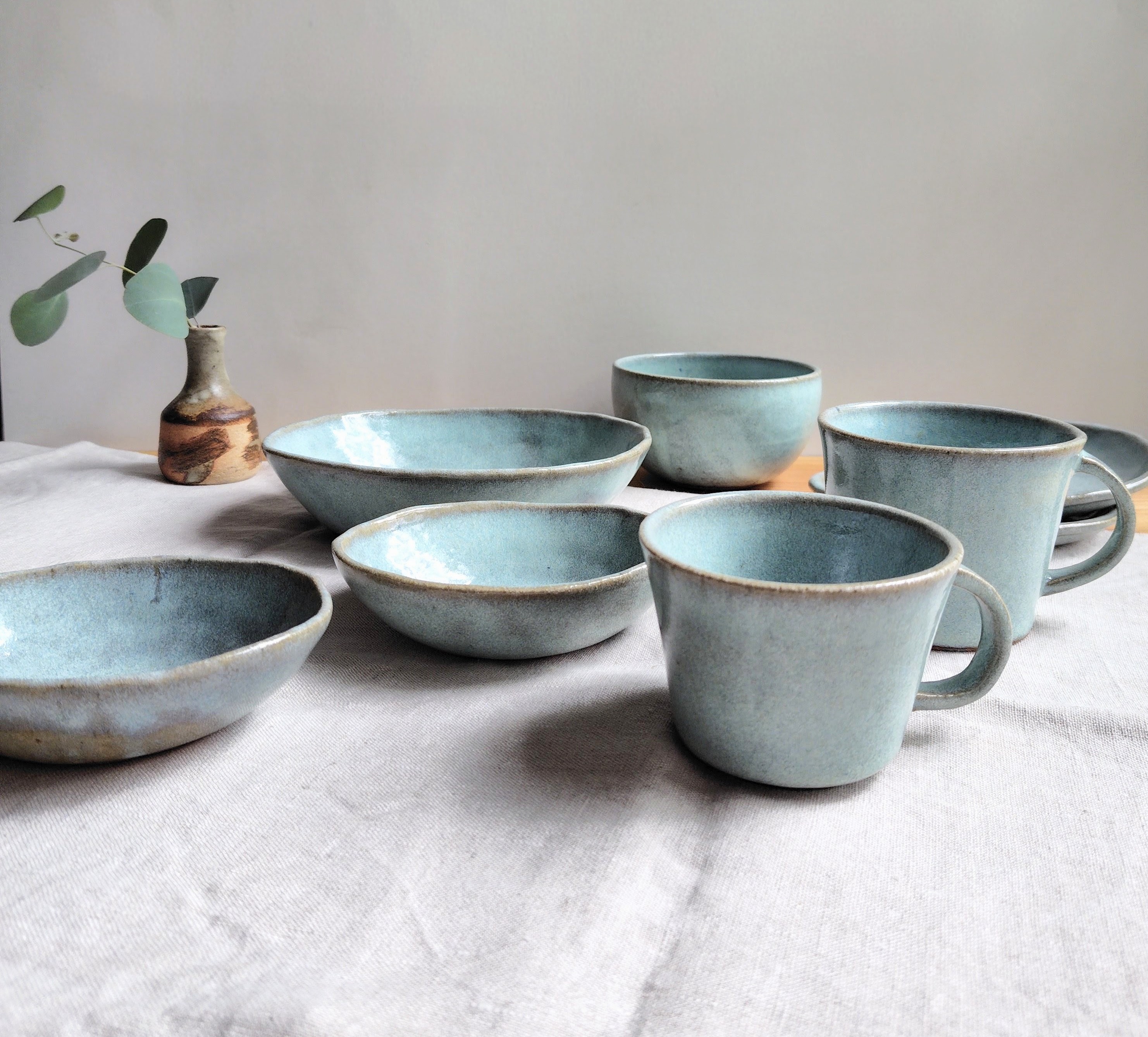
Suzuki Takashi's "seiji" from Odawara is pottery in which the trace of iron in the glaze turns blue-green in a reducing flame. Iron that would turn brown or black becomes blue just through the state of the flame. Crazing runs across the surface, and its color settles in little by little with use. The artisan's story is in our artisan profile of Suzuki Takashi.

Kitagawa Yuichi: Flowing Black Glaze
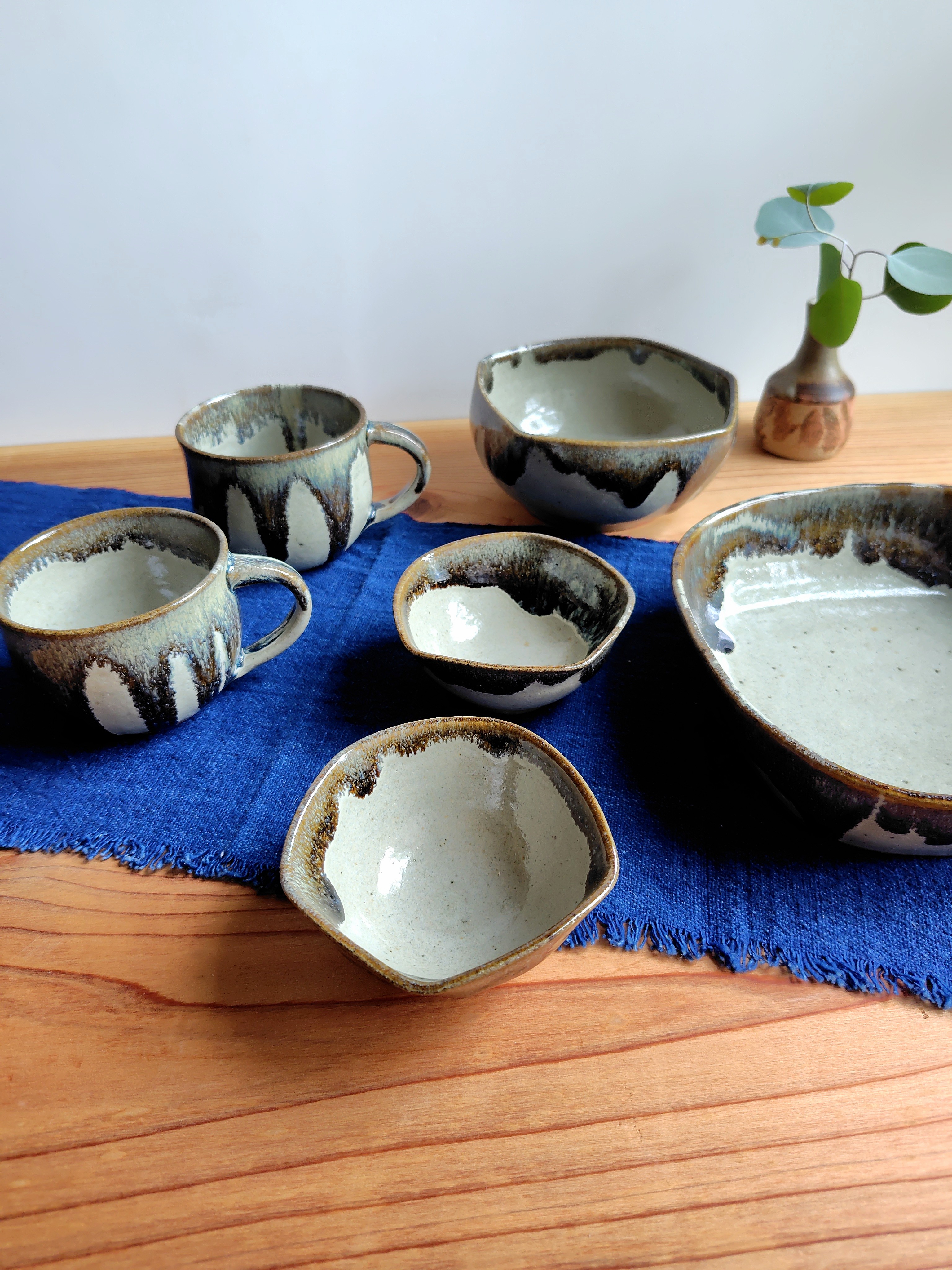
The highlight of Kyoto artisan Kitagawa Yuichi's black-glazed lobed mug is the shifting color created as the black glaze flows. On a form with a rim cut like petals, bands of light and dark black overlap.

Iron Glaze vs. Iron Painting
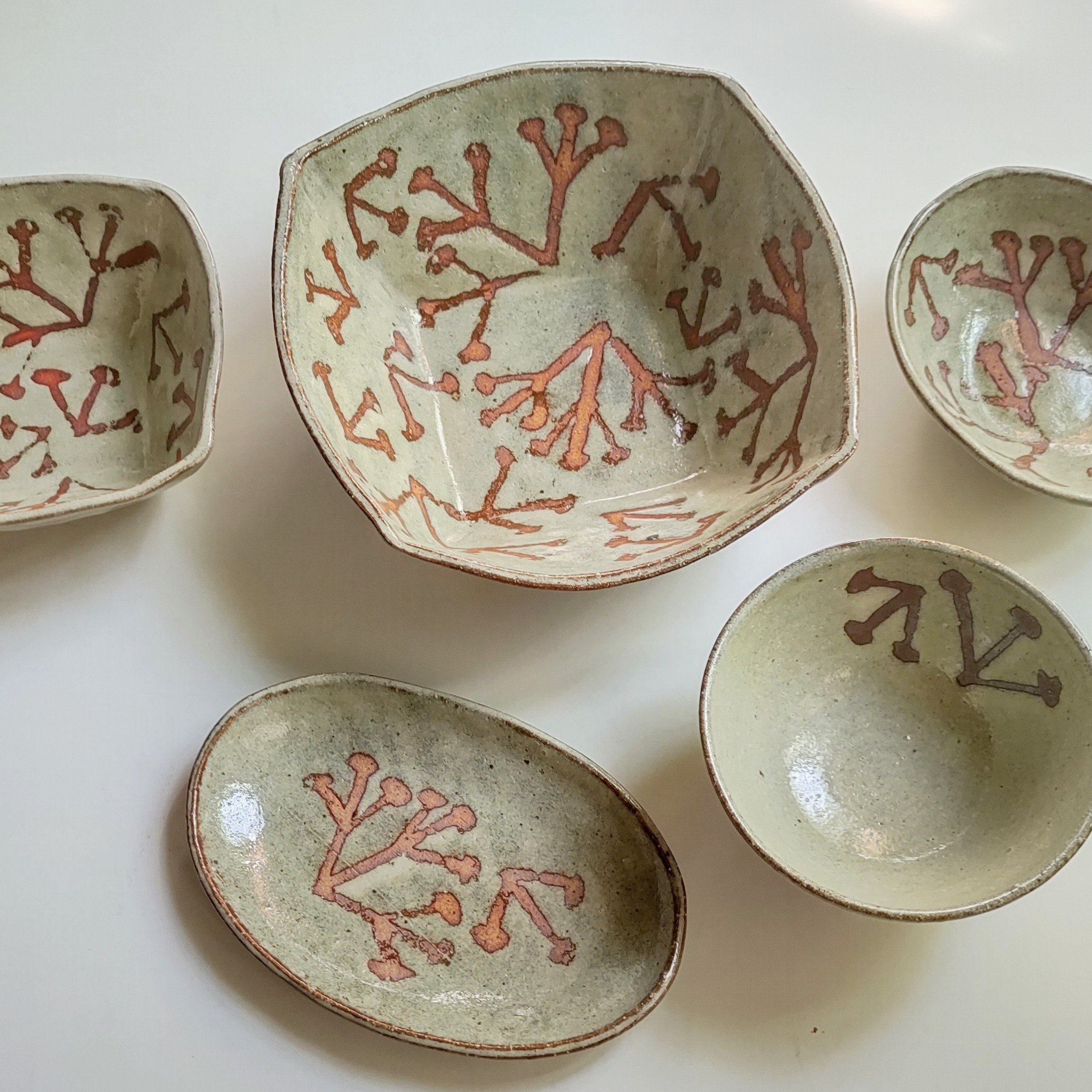
Iron is not only mixed into glaze; it is also used as a paint. Drawing lines or patterns in iron on the body before glazing is tetsue (iron painting). Remember iron glaze covers a piece as a surface, iron painting draws it in lines, and they are easy to tell apart.
Choosing and Using Iron-Glazed Pottery
- Choose by the color of food The lighter kiseto and amber suit dressed vegetables and simmered dishes, black and tenmoku set off white rice and tofu, and celadon flatters white fish and greens
- Choose by light and shade The more carving or relief a piece has, the clearer the contrast between the dark and light tones of an iron glaze
- Match iron glazes together Yellow, brown and black are colors born of the same iron, so they sit together on a table without looking scattered
Iron-glazed pieces are often stoneware, and the clay can absorb water. Dip them in water before use, and dry them well after washing. Whether a piece needs medome, and whether it can go in the microwave or dishwasher, varies from piece to piece, so check the description on each product page. Everyday care is covered in stoneware care.
Related Articles and Terms
The Iron Glaze Family
- Amber Glaze (Ameyu): The Iron Glaze That Fires to Amber, for Everyday Pottery
- Tenmoku: The Black Tea Bowl Where Iron Glaze Flows
- Sabiyu Rust Glaze: Iron Brown Like Weathered Metal
- Celadon (Seiji): The Blue-Green Glaze of Iron and Fire
- Ki-Seto: The Yellow Glaze With Green Bleeding Through
Glazes and Choosing by Color
- Japanese Pottery Glazes: The Main Types Explained
- Tetsue: Iron Painting Under the Glaze That Fires Brown
- Brown Japanese Pottery: Unglazed, Rust and Amber Glazes Compared
- How to Choose a Donabe | Size, Glaze, First Use and Care
Colors Born of Iron, for Your Table
The yellow of kiseto, the reddish brown of amber, the black of tenmoku, the rust of rust glaze, the blue-green of seiji. All are the same iron, transformed by its amount and the flame. In our collection of brown pottery, you can browse iron-glazed pieces and other earth-toned pottery one at a time.
See brown potteryFAQ
What is tetsuyu (iron glaze)?
Why does the same iron produce different colors?
What is the difference between iron glaze and iron painting?
Shop the related pieces
Brown Japanese Tableware
94 pieces See all
yoshida pottery
Ball-Footed Coffee Cup, Brown
$435.00
Japanese Coffee Cups

Furutani pottery
Rust Glaze Foliate Rim Deep Plate, Small — Shigaraki
$174.00
Plates

Kawasumi Tomokazu
Woodgrain Yunomi Teacup — Kasama
$182.00
Mugs

jiucasca
Bronze Glaze Foliate Arabesque Mamezara Tiny Plate
$222.00
Plates
Black Japanese Tableware
59 pieces See all
TAGAWA AKI
四神皿 白虎
$395.00
Japanese Plates

Bizen Ware Artist Fujiwara Akira
Hikidashi-guro Skull Sake Cup — Bizen Ware
$1,437.00
Japanese Sake Ware

Bizen Ware Artist Fujiwara Akira
Hikidashi-guro Bamboo Plate — Bizen Ware
$1,437.00
Plates

Yamamoto Masanori
Shinogi Rim Plate, Large Black — Shigaraki
$474.00
Plates
New to Japanese pottery? Start here — its history, how pottery differs from porcelain, the clays and glazes behind each style, and how to care for a piece. → Japanese Pottery: The Complete Guide