
Why Hagi Ware Changes Color With Use

Buy a piece of Hagi ware and, sooner or later, someone will tell you that it changes color as you use it. A milky white tea cup turns faintly pink, then honey, then a soft amber. Fine lines appear in the glaze where there were none. For some people this is the whole reason to own Hagi. For others, the first brown line in a new cup is a moment of worry: is it stained, is it cracked, did I do something wrong?
This guide answers the practical questions. Why the change happens, which parts of a piece change and which do not, how the glaze color and what you drink decide what you will see, how to steer the change, and how to tell a healthy patina from mold, odor or real damage. For the history of Hagi, its kiln families and the tea bowl tradition, see our Hagi ware guide. This article stays with the piece on your table.
Looking at pieces now? Our Hagi ware collection brings together cups, rice bowls, serving bowls and plates from the Hagi kiln we work with.
The Short Answer: Soft Clay, a Crackled Glaze and Time
Three things work together in Hagi ware, and you need all three for the change to happen.
- A soft, porous body Hagi clay is fired at a relatively low temperature for stoneware, so the body stays slightly open. It can take in water, tea and oils in a way that dense, high-fired stoneware and porcelain cannot.
- A crackled glaze Most Hagi glazes carry crazing, a network of fine cracks in the glaze layer that forms as the piece cools after firing. Those cracks are the doors through which liquid reaches the clay.
- Repeated use Each time you pour something in, a tiny amount travels through the crazing into the body. Over weeks and months, the color of what you drink builds up in the clay and shows through the glaze.
That is the whole mechanism. Nothing is wrong with the piece, and nothing is being added to the surface. The color is underneath the glaze, in the clay itself, which is why it cannot simply be wiped away. In Japan the change has a name, Hagi no nanabake, the "seven transformations of Hagi." The number is a figure of speech. It means a piece keeps changing for as long as it is used.
What Changes, and What Doesn't
Not every part of a Hagi piece changes at the same speed. Knowing where to look makes the first few months much less confusing.
| Where | What you usually see | Why |
|---|---|---|
| Crazing lines | The first change. Fine lines darken and become visible, often within weeks | Liquid sits in the cracks and colors the clay right beneath them |
| Inside, at the liquid line | A soft band of color where tea or coffee usually sits | That area is wet the longest at each use |
| Rim | Gradual warming of the color, sometimes uneven | Glaze is often thinner at the rim, and lips and hands touch it every day |
| Foot ring | Bare clay darkens and smooths with handling and washing | The foot is usually unglazed, so it absorbs directly |
| Outer walls | Slowest to change, mostly through the crazing | Less contact with liquid |
What does not change is the shape, the strength of the piece or the glaze surface itself. Crazing can slowly become more visible, and a few new lines may appear, but the glaze stays smooth to the touch. If something feels rough, sharp or raised, that is not part of the patina. We come back to that below.

The Glaze Color Decides How Much You See
The same tea poured into two Hagi cups can look completely different a year later, simply because of the glaze. If you are choosing a piece and care about the change, the glaze color is the first thing to decide.
White Hagi glaze (shiro-hagi)
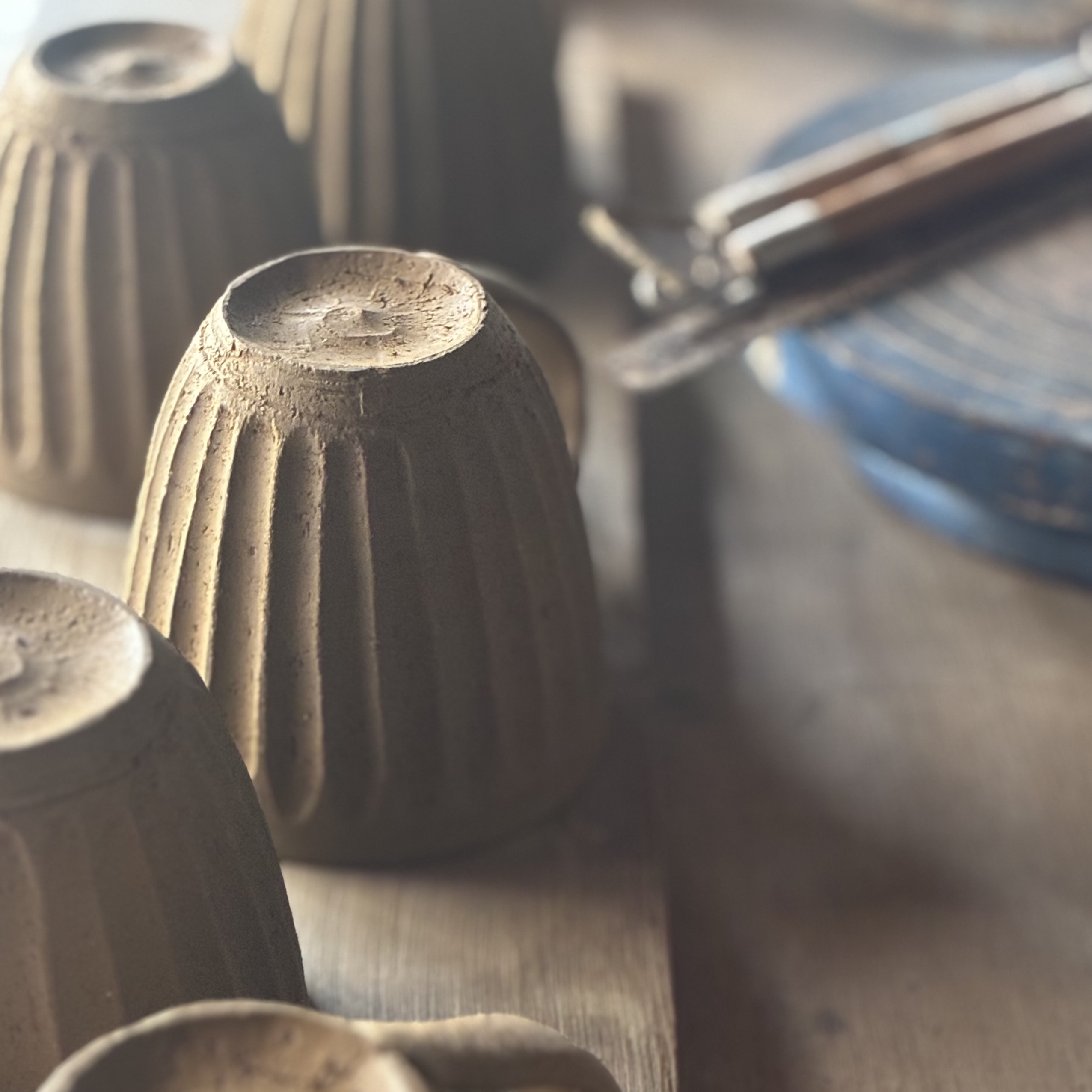
The classic Hagi look: a thick, soft white glaze over pale clay. This is where the change is most visible. Tea shows as warm pink and honey tones, coffee as a deeper brown, and the crazing lines read clearly against the white. If you want to watch a piece transform, start here. On carved shinogi pieces, the white glaze thins over each ridge and pools in the grooves. Those thinner ridges tend to color first.
Blue Hagi glaze (ao-hagi)
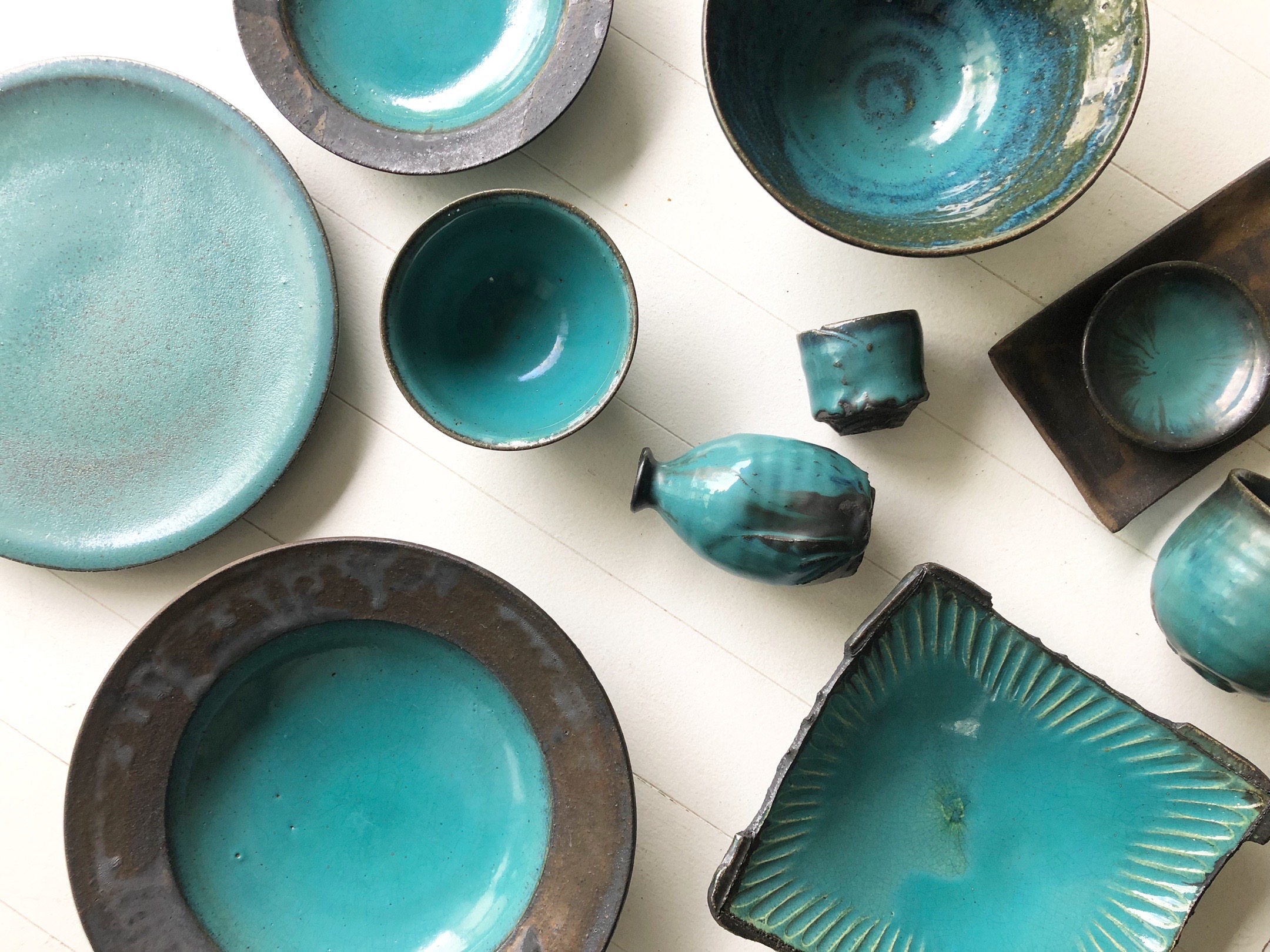
A blue glaze that pools deep where it is thick and fades toward white at the rim. The change is quieter on blue. You see it mostly at the paler rim and along the crazing, while the deep blue areas hide much of the color underneath. Blue is a good choice if you love Hagi but would rather the piece stay close to how it looked on the first day.

Gray and kohiki-murasaki
Gray glazes sit between the two. The color shift is visible but muted, and the darkening crazing gives the surface a fine, map-like texture. Kohiki-murasaki is a white slip with a pale purple blush that comes and goes across the piece. On it, the change shows mostly where the slip is thin, which adds another layer to an already varied surface.

You can see the full range of glazes side by side in our Hagi ware collection. Each listing shows the same piece from several angles, which is the best way to judge how thick the glaze is at the rim.
What You Put in It Matters
The clay takes on the color of what it holds most often. Two cups from the same kiln, used by two different people, will drift apart within a year. As a rough guide:
| Used for | What tends to happen |
|---|---|
| Green tea, sencha | Slow, gentle warming. Pale yellow to honey over many months |
| Matcha | Soft green-gray in the crazing at first, warming to brown with time |
| Hojicha, black tea | Faster and warmer. Clear amber in the crazing within weeks of daily use |
| Coffee | The fastest and darkest change. Brown lines early, then an overall deeper tone |
| Sake | Subtle, often a pale golden cast. Many people love a Hagi sake cup for this reason |
| Soy sauce, oily dishes | Can leave darker, patchier marks than drinks, because oil spreads further into the clay |
| Water only | Very little color change. The crazing may still become slightly more visible |
None of these is right or wrong. Many people keep one Hagi cup for one drink, so the piece develops a single, even color. If you plan to use a Hagi bowl or plate for food, choose a glaze that suits patchier change, such as gray or blue, or simply enjoy the marks as a record of meals.

How to Steer the Change
You cannot freeze a Hagi piece in its first-day state, but you can influence how evenly and how quickly it changes.
Before first use
Many Hagi potters recommend soaking a new piece in clean water before the first use, from a few hours to overnight. A body that is already full of water takes up color more slowly and more evenly at the first pour, so you are less likely to get one sharp ring on day one. Let it dry completely afterward. If you want to read about this step in general, our guides to medome and stoneware care cover it in more detail.
If you want the change to come sooner
- Use it every day A Hagi cup on a shelf does not change. Daily tea is the most reliable way to build color.
- Stick to one drink The color builds faster and more evenly when the same liquid goes into the piece each time.
- Warm drinks Warm tea tends to color the clay faster than cold drinks.
If you want it to stay pale longer
- Choose blue or gray The glaze itself does most of the work of hiding change.
- Rinse soon after use Do not leave coffee or tea standing in the piece for hours.
- Wet it before pouring A quick rinse with water just before use fills the surface pores so less color is drawn in.
- Keep oily food out Use the piece for drinks or dry snacks rather than dressed dishes.
Washing and Drying
Because the clay holds water, drying matters more with Hagi than with almost any other pottery.
- Wash gently Warm water and a soft sponge are usually enough for cups. If you use dish soap, use a little and rinse well, so no scent is left in the clay.
- Do not soak overnight in soapy water The porous body can take in the detergent along with the water.
- Dry upside down, then right side up Let the piece drain upside down, then turn it over so air reaches the foot ring. Give it longer than you would a porcelain cup, a full day if you can.
- Store dry and with air Put pieces away only when completely dry, and avoid closed, damp cupboards.
Microwave and dishwasher use depends on the individual piece. Some Hagi kilns make their everyday pieces to handle both. The Shokozan pieces by Matsuura Takaharu, for example, can go in the microwave and the dishwasher. Even then, gentle hand washing keeps the patina developing more evenly. Our guide to microwave and dishwasher use explains how to check a piece.
Patina or Problem? How to Tell
Most worries about Hagi ware turn out to be the patina doing exactly what it should. A few things are not part of it.
| What you see | Usually means | What to do |
|---|---|---|
| Brown or pink lines in the glaze | Normal patina in the crazing | Nothing. Keep using it |
| Dark dots or fuzzy gray spots, musty smell | Mold, from storing the piece before it was fully dry | Wash, then boil or soak in hot water and dry thoroughly in an airy place |
| Smell of old tea or coffee | Residue held in the clay | Rinse, soak in hot water, dry fully. Use the piece for one drink |
| Damp patch under the piece | Moisture passing through the porous body, common in new pieces | Set it on a cloth or saucer. It usually lessens as the clay fills with use |
| A line you can feel, or see from both sides | A crack in the body, not crazing | Stop using it for hot liquids and ask the shop or a repair specialist |
Avoid bleach and strong cleaning products. They can travel into the clay along with the water, and they will lift some of the color you have built up. A simple test for a real crack: crazing sits only in the glaze, so the surface still feels smooth when you run a fingernail across it. A crack in the body catches the nail and often shows on the outside and the inside in the same place.
Choosing a Hagi Piece With the Change in Mind
If the change is part of why you want Hagi ware, choose the form by how often you will use it.
| Piece | How fast it changes | Good for |
|---|---|---|
| Tea cup or yunomi | Fastest. Daily warm drinks | Watching the change month by month |
| Mug | Fast, especially with coffee | A strong, warm color in a year or two |
| Rice bowl | Moderate. Mostly at the rim and foot | A piece that ages quietly |
| Serving bowl or plate | Slow and patchy, led by food | People who enjoy marks of meals over years |
A good first piece is a tea cup in white Hagi glaze. It changes the fastest, and you will see the whole process in your own hands. Our tea ware collection includes Hagi cups alongside teapots and cups from other regions, if you want to build a small tea set around one piece. For what to look for in a tea cup, see our guide to the yunomi.

Hagi Ware at Nokaze
Our Hagi pieces come from Shokozan, the kiln of Matsuura Takaharu in the Oi district of Hagi. Matsuura works in white, blue, gray and kohiki-murasaki glazes on carved shinogi, faceted and lobed forms made for the everyday table. Each piece is one of a small batch, and the glaze comes out of the kiln a little differently every time. You will find mugs, cups, rice bowls, serving bowls and plates in our Hagi ware collection.
Related Articles
Hagi and Crazing
- Hagi Ware: The Tea Bowl That Changes Colour as You Use It
- Crazing (Kannyu): Cracks in Glaze That Aren't Damage
- Bizen vs Hagi: Two Opposite Ideas of Wabi-Sabi
- Artisan Shokozan | Hagi Ware Shaped by Hand, Down to the Rim
Living With Pottery
- Pottery That 'Grows': How Ceramics Change With Use
- Japanese Stoneware Care: What Porcelain Never Needs
- Yunomi: How to Choose a Japanese Tea Cup
Choose the Piece You Will Change
Hagi cups, bowls and plates from Shokozan, chosen in Kyoto and shipped to your door, packed one by one.
Shop Hagi wareFAQ
Is the color change in Hagi ware a stain?
Should I soak Hagi ware before using it?
Can I slow down the color change in Hagi ware?
Shop the related pieces
Hagi
27 pieces See all
Hagi Kiln Shokouzan
Chrysanthemum Bowl, Large, Gray
¥5,500
Bowls

Hagi Kiln Shokouzan
Chrysanthemum Bowl, Large, Kohiki Purple
¥5,500
Bowls

Hagi Kiln Shokouzan
Foliate Plate, 18cm, Gray
¥2,420
Plates

Hagi Kiln Shokouzan
Shinogi Donburi Bowl, Medium, Gray
¥2,970
Japanese Rice Bowls
Japanese Teaware
40 pieces See all


New to Japanese pottery? Start here — its history, how pottery differs from porcelain, the clays and glazes behind each style, and how to care for a piece. → Japanese Pottery: The Complete Guide