
Pottery Clay vs Porcelain Clay: How Clay Shapes a Piece

Two pieces may both be "Japanese pottery," but start from a different clay and you end up with a different piece. Color, thickness, weight and how much care it needs are almost all decided by the clay.
The clays of Japanese ceramics divide broadly into tōdo, pottery clay, and jido, porcelain clay. Pottery clay is dug out of the ground; porcelain clay is white stone crushed to powder. Here is what that difference means when you buy a piece.
The differences seen from the finished piece are covered in stoneware and porcelain. This article is about the material that comes before them.
The difference between pottery clay and porcelain clay
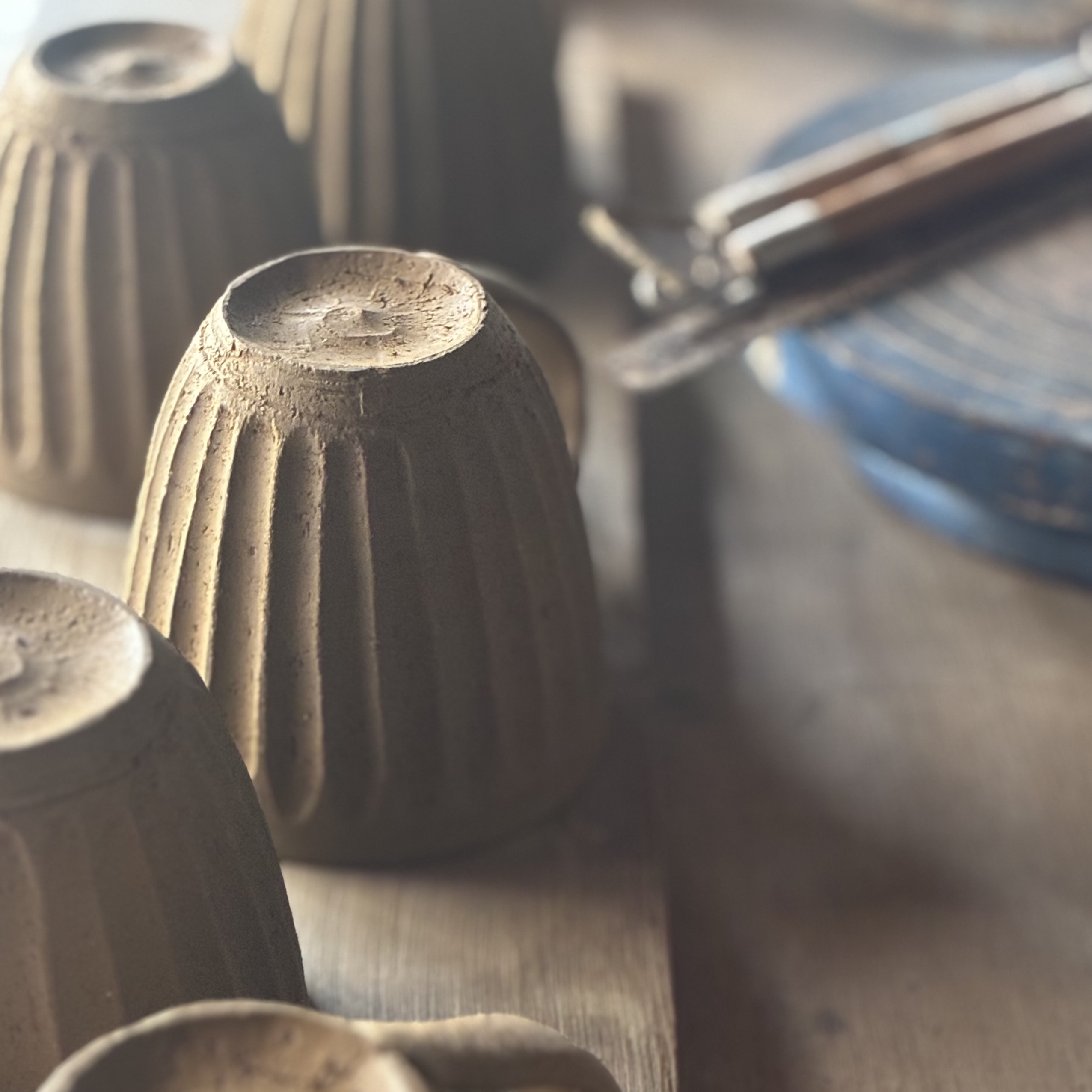
Pottery clay comes straight from nature. Wet, it bends freely, and when you let go it remembers its shape. It is a very easy clay to work. This property is called plasticity.
Porcelain clay is not like that. Its raw material, pottery stone, has almost no stickiness, so kaolin and other materials have to be blended in to make the porcelain clay plastic. Even then it is less plastic than pottery clay, so making work with it takes skill.
| What to look at | Pottery clay | Porcelain clay |
|---|---|---|
| Source | Clay dug from the ground | Pottery stone crushed and blended |
| Plasticity | High. Suits hand-building too | Low. Throwing it thin takes skill |
| Firing temperature | 1,100–1,250°C | Around 1,300°C |
| Fired color | Reddish brown, gray, brown | White or bluish white |
| Thickness | Tends to be thick | Can be made thin |
Iron decides the fired color
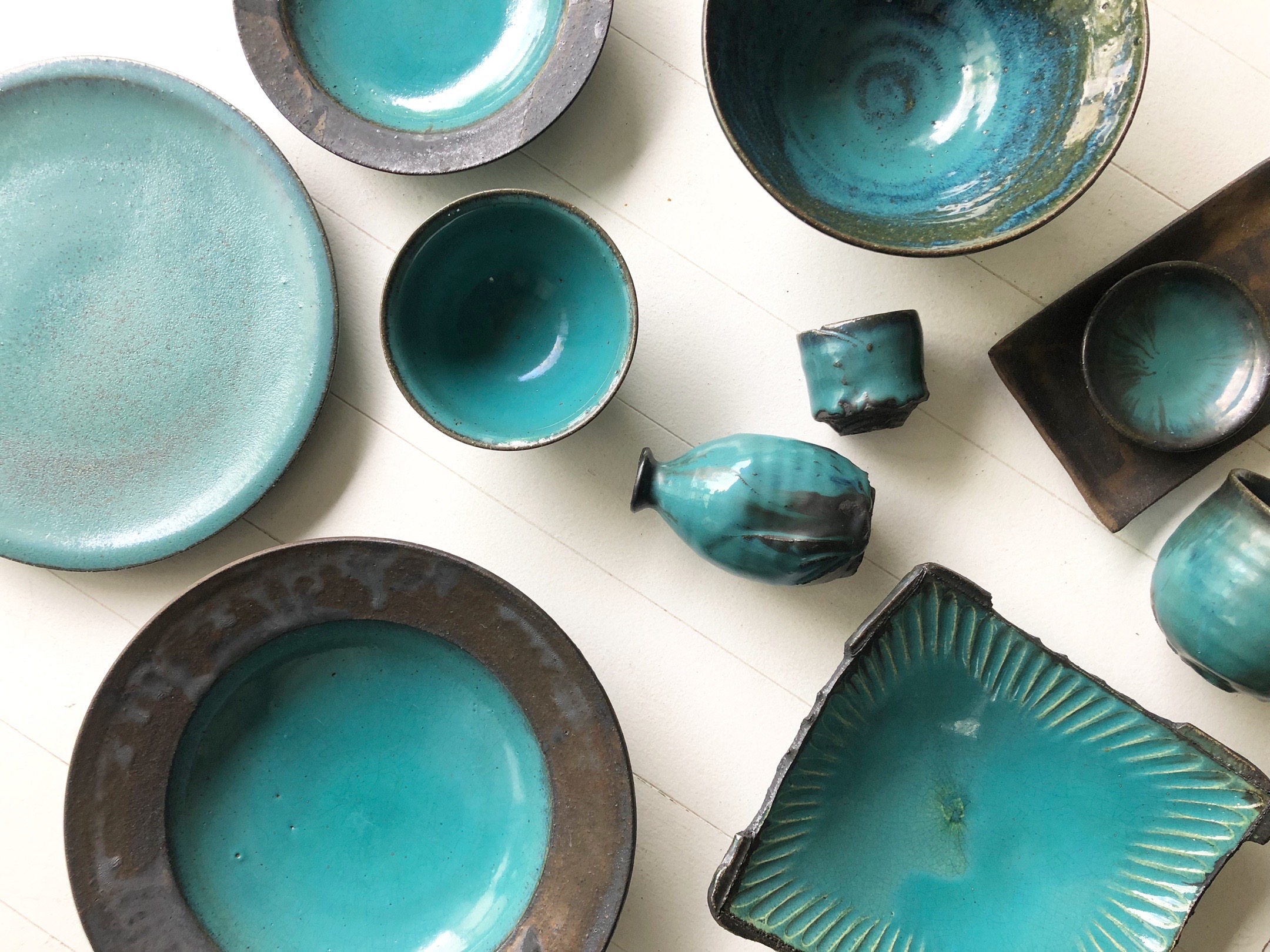
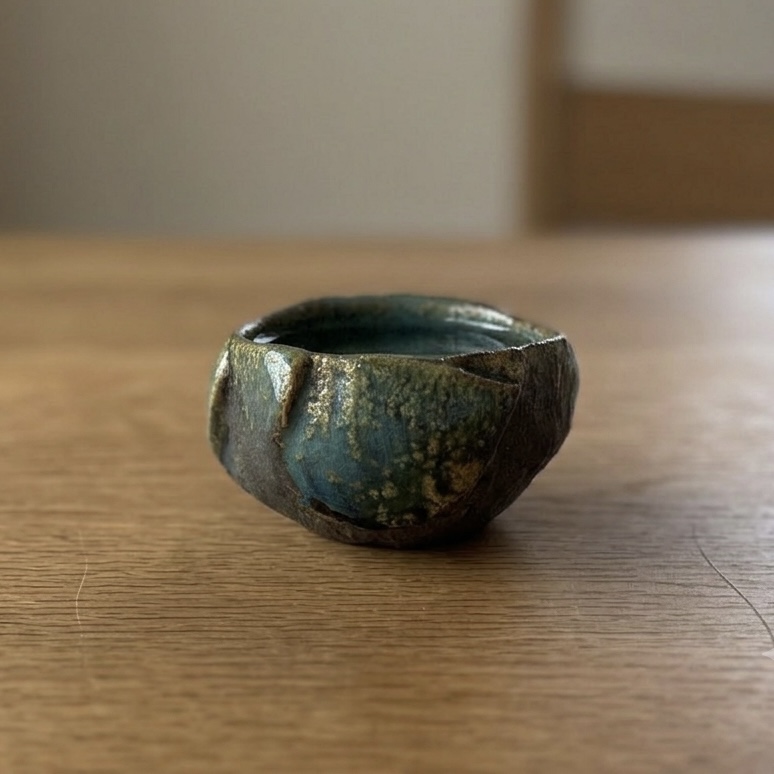
Pottery clay fires to reddish brown or gray because it contains iron. The more iron, the darker it gets, and the amount of oxygen in the kiln changes the color too. Fired in reduction, it can even turn bluish. Clay differs in makeup from one digging site to the next, so when the region changes, so does the color.
Porcelain clay contains almost no iron. That is why it is white without anything being done to it. Stoneware that is meant to look white has to be coated with white slip through shirogeshou, but porcelain is white in its body. That white becomes the ground for painting, which is why indigo painting such as sometsuke looks so good on it.
Glazes contain iron too. Even the same iron gives a different color in the clay than dissolved in a glaze. This is explained in the types of glaze.

Each region was decided by the clay underfoot
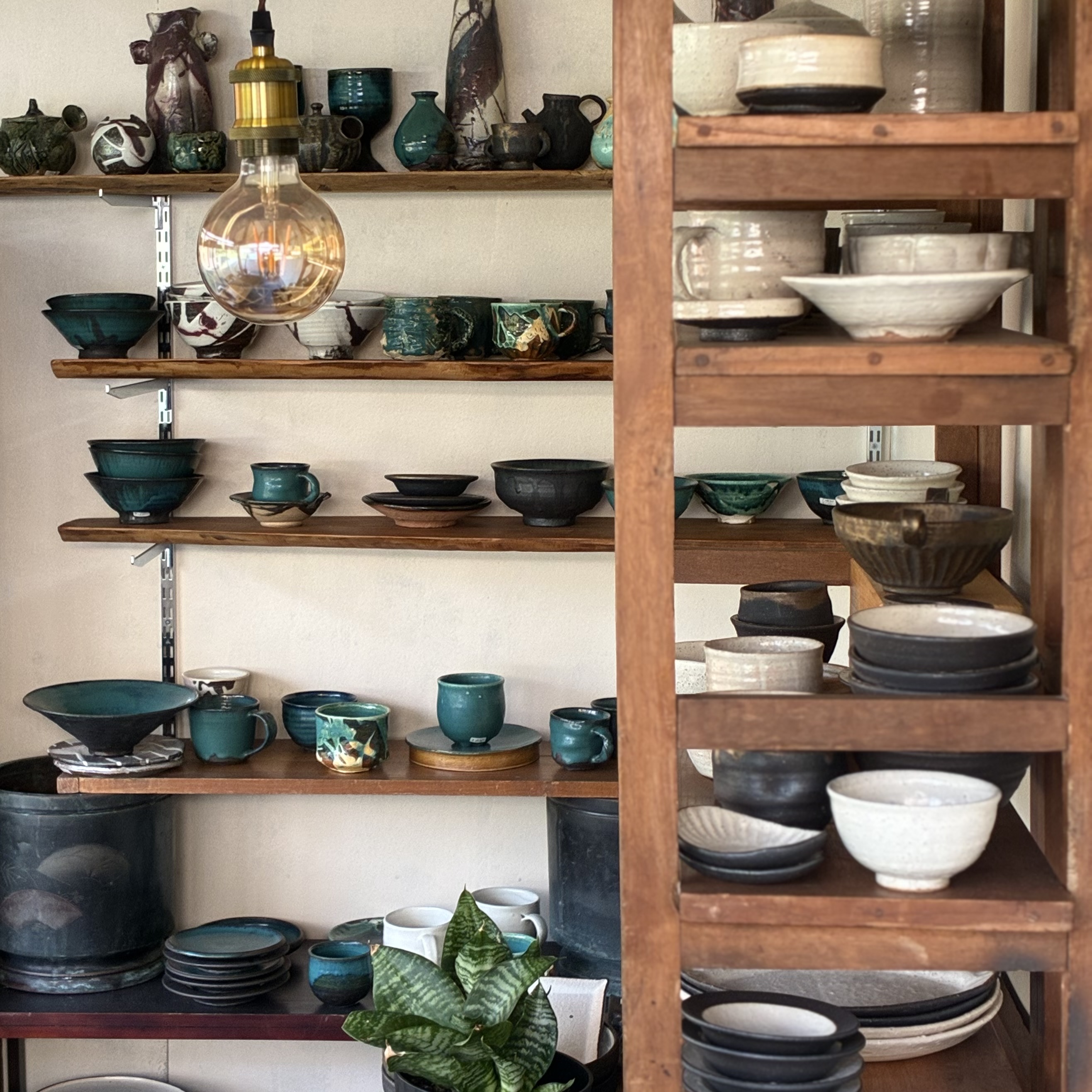
The character of a pottery region is almost entirely decided by the clay that could be dug there.
- Shigaraki A pottery clay full of feldspar grains. Fired, the white grains rise to the surface for a rough, gritty look
- Bizen An iron-rich clay from rice paddies. Fired without glaze to a reddish brown
- Arita Japanese porcelain began when white pottery stone was found at Izumiyama
Some regions grew for the opposite reason: because no clay could be dug there. Kyo ware and Kiyomizu ware come from a city that brings in clay from all over, and with no regional constraints their styles are free. Kasama ware, too, made "having no rules" its character. The six regions that have continued since medieval times are covered in Japan's Six Ancient Kilns.
Change the clay and the way of making changes
Plastic pottery clay holds its shape even when pressed by hand. So it can be built up by tebineri (hand-building) while keeping its thickness, and thrown on the rokuro (potter's wheel) with room to spare.
Porcelain clay has little plasticity and slumps partway through if thrown thin. It also shrinks a great deal in firing, so warping and cracking tend to appear at the drying and kiln-loading stages. The thinness and lightness of porcelain are bought by giving up yield. A porcelain plate can cost more than a stoneware plate of the same size because that difficulty is built into the price.
The difference in clay changes everyday use too
The question of material leads straight into how you handle a piece every day.
| Situation | Pottery clay pieces | Porcelain clay pieces |
|---|---|---|
| First use | Seal it first (medome) | Wash and use right away |
| Drying | Dry thoroughly to prevent stains | No need to worry |
| Dishwasher | Safer to avoid | Generally fine |
| Suited to | Simmered dishes, soups, Japanese sweets | Oily dishes, deeply colored dishes |
Make the pieces you use most every day porcelain, and the ones you use slowly on days off stoneware. Split them this way and looking after your table gets lighter. Care steps are in stoneware care, and the order to buy in is in building a Japanese dinner set.
Related articles and terms
Seen from the material
- Japanese Stoneware: Born From Clay, Grown Through Use
- Japanese Porcelain: Made from Stone, Not Clay
- Earthenware, Stoneware, Porcelain: The Real Differences
- Japanese Pottery Glazes: The Main Types Explained
Regions divided by clay
- Japan's Six Ancient Kilns: All 6 Regions Compared
- Shigaraki Ware: Why Its Clay Sparkles After 1,200 Years
- Arita Ware: Japan's First Porcelain, 400 Years On
- Kyo Ware and Kiyomizu Ware: Kyoto's Refined Ceramics
How it is made
- Rokuro: How a Pot Is Thrown on the Wheel
- Tebineri: Hand-Building Pottery Without a Wheel
- Shirogeshou: How Japanese Potters Make Dark Clay White
Compare the clays in your own hands
Even the same plate feels different in weight and touch in pottery clay and in porcelain clay. Enjoy one-of-a-kind pieces by our artisans, sent straight from where they are made, material differences and all.
See platesFAQ
Which is more durable, ceramic clay or porcelain clay?
Why is porcelain more expensive?
Why do pieces from the same region differ in color?
Shop the related pieces
Japanese Plates
188 pieces See all

White Japanese Tableware
135 pieces See all
Ryosuke Matsuo
Foliate Oval Plate, Brown No.1
¥4,200
Plates

jiucasca
Ash-Blue Glaze Coffee Cup — Kyoto
¥5,060
Japanese Coffee Cups

jiucasca
Blue-White Porcelain Foliate Arabesque Plate, Small
¥3,300
Plates

Furutani pottery
Iron-Line Rice Bowl, Large — Shigaraki
¥2,640
Japanese Rice Bowls
New to Japanese pottery? Start here — its history, how pottery differs from porcelain, the clays and glazes behind each style, and how to care for a piece. → Japanese Pottery: The Complete Guide