
Japanese Coffee Cups and Saucers for Pour-Over

Pour-over coffee is a slow ritual. You weigh the beans, heat the water, bloom the grounds and pour in circles for a few minutes, and then the whole effort ends up in whatever cup happens to be nearest. In Japan, where hand-drip coffee has been taken seriously for decades, the cup is part of the ritual. Traditional coffee houses, called kissaten, serve each pour-over in a cup on its own saucer, often chosen to suit the customer or the coffee.
This guide is about choosing a Japanese coffee cup and saucer for pour-over at home. It covers why a saucer is worth having, what size of cup suits a single pour-over, how the shape of the rim and the clay change the experience, the main Japanese styles to look for, and how to warm and care for your cup. If you mainly drink large milky coffees, a mug may suit you better, and our guide to Japanese mugs covers those.
Looking for a cup now? Browse our Japanese coffee cups, including cups with saucers, or see all our mugs and cups.
Why a Cup and Saucer for Pour-Over
A saucer can seem old-fashioned, but for pour-over it earns its place. Hand-drip coffee is usually made one or two cups at a time, poured straight from the server into the cup and drunk slowly. The saucer is what makes that slow cup comfortable.
- It catches the last drip When you lift a dripper off the cup or pour from a server, a drop always runs down the side. The saucer takes it instead of the table.
- It holds the extras A spoon, a sugar cube or a small sweet sits on the saucer beside the cup, the way it does in a kissaten.
- It protects the table A cup fresh from warming is hot, and an unglazed base can scratch wood. The saucer keeps both off the surface.
- It slows you down Setting a cup down on a saucer, rather than on the desk next to a keyboard, turns a coffee into a pause.
Cup, Mug or Handleless Cup?
Japanese potters make many shapes for hot drinks. Each one suits pour-over in a different way.
| Shape | Typical use | For pour-over |
|---|---|---|
| Coffee cup and saucer | A single cup of black coffee, drunk at the table | The classic choice. The right size for one pour-over, with a saucer to catch drips |
| Mug | Larger coffees, coffee with milk, drinks at the desk | Good for a big batch. The coffee cools more slowly in thick stoneware |
| Handleless cup (yunomi) | Tea, water, coffee when the drink is not too hot | Lovely for lighter roasts once they cool slightly, held in both hands |
| Demitasse | A small, strong coffee | Suits a short, concentrated pour-over or a tasting of a special bean |
Our guide to handleless cups covers the yunomi and other cups without handles. The rest of this article focuses on the cup and saucer.
Size: How Much Should the Cup Hold?
A single pour-over usually makes somewhere between 150 and 250 ml of coffee, depending on your recipe. A cup that holds a little more than you pour leaves room at the top, so you can carry it without spilling and the aroma gathers above the coffee.
| Cup | Holds roughly | Best for |
|---|---|---|
| Demitasse | 80 to 100 ml | A short, strong pour or a tasting cup |
| Standard coffee cup | 150 to 200 ml | One classic pour-over, black |
| Large coffee cup | 200 to 250 ml | A generous single pour, or coffee with a little milk |
| Mug | 250 to 350 ml | Two pours, or coffee with plenty of milk |
Handmade cups vary, so check the capacity listed for each piece if you have a fixed recipe. If you often make coffee for two, a pair of standard cups is more useful than one large one.
Shape and Rim
The shape of the cup changes how coffee feels and smells. You do not need to be an expert to notice the difference between a thick, straight-sided cup and a thin, flared one.
- A thin rim lets the coffee flow onto the tongue smoothly. Porcelain and finely made stoneware cups often have thin rims, and many people find they suit lighter, brighter roasts.
- A thicker rim feels softer and warmer on the lips and suits darker roasts and coffee with milk.
- A flared or tulip shape opens toward the top and gives the aroma room to spread, so you smell more of the coffee as you drink.
- A straight, cylindrical cup keeps the coffee deeper and hotter for longer, which suits a slow drinker.

A footed cup like this one lifts the coffee off the table and gives the cup an elegant, slightly formal look. The tulip-shaped bowl opens at the rim, and the stem makes it easy to lift. It is a good choice if you serve pour-over to guests after dinner.
Clay: Porcelain, Glazed Stoneware or Unglazed Bizen
Japanese coffee cups are made from many different clays, and the clay affects both the look of the cup and how it holds heat.
| Clay | Feel and heat | Suits |
|---|---|---|
| Porcelain | Thin, smooth and light. Heats quickly and cools a little faster | Light roasts, where you want to see the color of the coffee against white |
| Glazed stoneware | Thicker and warmer to hold. Keeps coffee hot for longer | Everyday pour-over, medium and dark roasts |
| Unglazed stoneware (Bizen and similar) | Earthy and slightly rough. The bare clay holds heat well | Dark roasts, and anyone who likes a cup that changes with use |
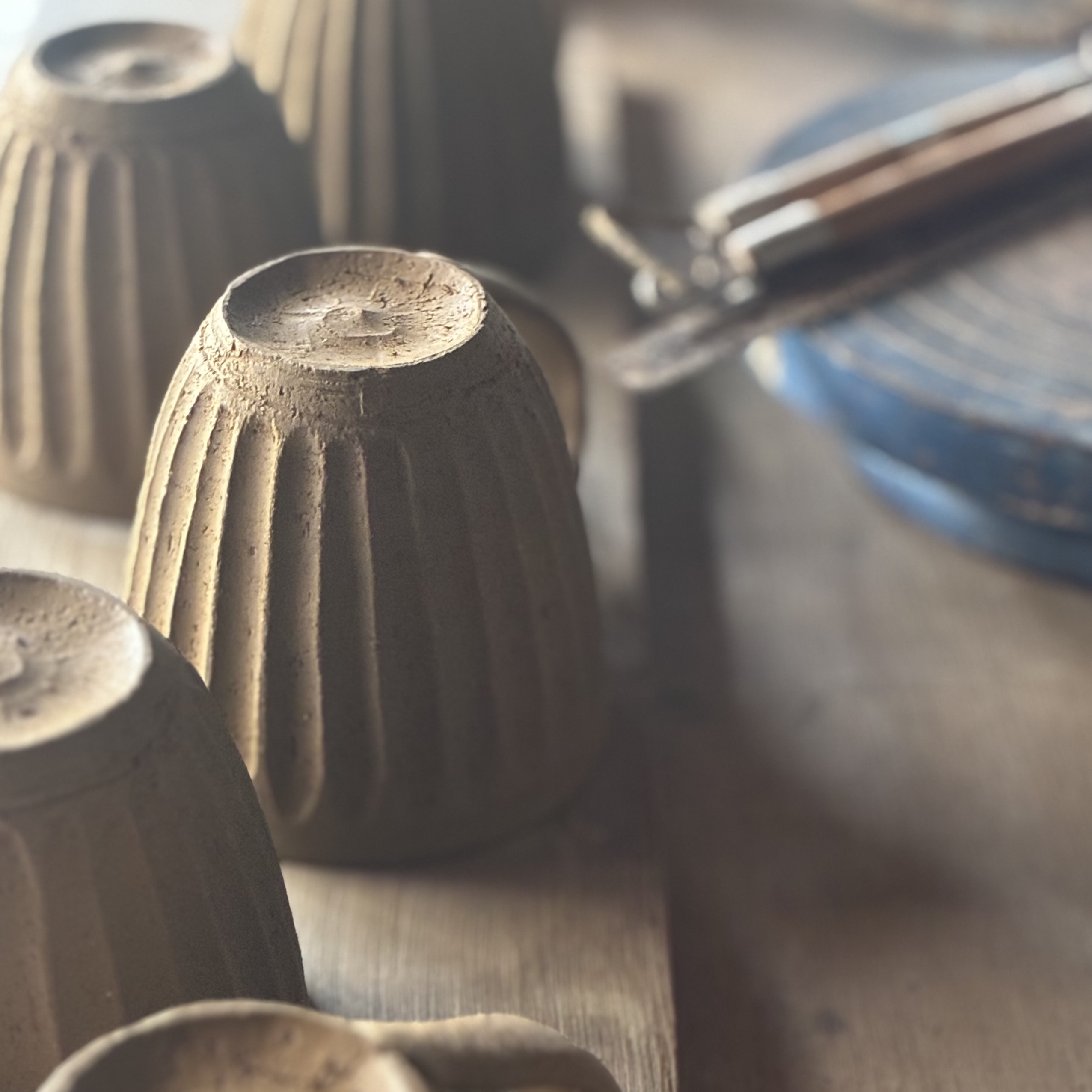
Unglazed Bizen is especially popular with coffee lovers in Japan. Many drinkers feel that coffee tastes rounder and softer from bare Bizen clay, although that is a matter of taste rather than proven science. What is certain is that unglazed clay absorbs a little of the coffee over time and slowly darkens, so the cup becomes more personal the longer you use it. Our guide to Bizen ware explains the clay and the firing.
Japanese Cup and Saucer Styles to Know
Bizen: Earth and Fire

Bizen cups and saucers are fired without glaze, so every set has its own color from the kiln. Many modern Bizen artisans play with the shape of the saucer as well as the cup. This triangular saucer is wide enough to hold a spoon and a small sweet beside the cup, and the softly rounded corners make it easy to carry. The black Bizen cup at the top of this page goes the other way, with a dark, silvery surface on a round saucer streaked with ash.
Okinawan Painted Cups

Okinawan pottery, known as yachimun, is famous for bold painting on a warm cream glaze. Cups and saucers from Okinawa bring a cheerful, relaxed feel to the table, with motifs from the island's own kitchens and gardens, like the bitter melon slices on this cup.

The classic proportions of these cups, a straight side and a curved handle on a wide saucer, make them easy to use every day. They are a good choice if you want a set that feels like a kissaten cup but with more color. Our guide to yachimun introduces Okinawan pottery.
Kyoto Glazes

Kyoto potters are known for refined glazes and fine detail. This pale ash-blue cup has a raised flower pattern and a softly scalloped rim, and its gentle color lets the deep brown of the coffee stand out. A cup like this suits a lighter roast, served in the afternoon.

Other Kyoto artisans work with bold, glossy glazes. The fine network of lines on this blue cup comes from a crackle glaze, which forms because the glaze and clay shrink by different amounts as they cool. Our article on crazing explains how these lines form and how to care for them. You can compare these styles side by side in our coffee cup collection.
A Ceramic Dripper to Match
If you are choosing a handmade cup, consider a ceramic dripper too. Ceramic holds heat well, so once it is warmed it keeps the water at a steady temperature through the brew. A dripper and cup from the same clay also look beautiful together on the table.

Handmade drippers vary in size, the number of drainage holes and the angle of the cone, and all of these affect how fast the water runs through. Before you buy, check the listing for which paper filter fits, and expect to adjust your grind or pour a little the first few times you use it.
How to Serve Pour-Over in a Japanese Cup
- Warm the cup Fill the cup with hot water while the kettle boils for the coffee, then pour it out just before serving. A warm cup keeps the coffee at its best for much longer, especially thick stoneware.
- Warm the dripper too Pour hot water through the paper filter and the dripper before adding the coffee. It rinses the paper and heats the ceramic.
- Pour into a server first If you brew directly onto the cup, the cup may be too full. Brewing into a server and then pouring lets you fill to the right level.
- Set the saucer with care Put the cup on the saucer with the handle to the right, and place the spoon or a small sweet beside it.
- Pair a sweet In Japan, a small biscuit or a piece of wagashi is often served with coffee. A wide saucer has room for it.
Caring for Your Coffee Cup
Most glazed Japanese coffee cups are easy to care for. Wash them by hand with a soft sponge after use, and dry them before you put them away. Coffee can leave a brown ring inside a pale glaze over time, and a little baking soda on a damp sponge usually lifts it.
Unglazed cups like Bizen need a slightly different approach. Rinse and wash them soon after use with plain water or a mild detergent, and let them dry completely, base up, before storing. They will slowly darken with use, which most owners see as part of the charm. Crackle glazes can also absorb a little coffee into the fine lines, which gradually makes the pattern more visible.
Before using any handmade cup in a dishwasher or microwave, check the notes for that piece. Pieces with metallic decoration, unglazed clay or crackle glazes are often hand-wash only. Our article on dishwasher and microwave use explains how to check, and our guide to stoneware care covers unglazed pieces in more detail.
Matching the Cup to the Coffee
If you drink different coffees through the week, it is worth having two or three cups that suit different roasts. A simple way to think about it is by color and weight.
- Light, fruity roasts A thin porcelain or pale glazed cup shows the bright amber color of the coffee and lets the aroma open up. Smaller cups suit these coffees, because they are best drunk before they cool too far.
- Medium roasts A glazed stoneware cup with a medium rim is the most versatile choice. It keeps the coffee warm through a slow cup without hiding its character.
- Dark roasts A thicker stoneware cup or unglazed Bizen suits the heavier body and deep flavor. A dark cup also hides the coffee ring that dark roasts leave behind.
- Coffee with milk A large cup or a mug gives room for the milk, and a wide rim makes it easy to drink while it is still hot.
Keeping a few different cups is also simply more enjoyable. Choosing the cup becomes part of the morning ritual, the way it is in a kissaten, where the owner picks a cup for each customer from a shelf behind the counter.
A Cup and Saucer as a Gift
A Japanese cup and saucer is one of the best gifts for a coffee lover, because it is something they will use every morning but are unlikely to buy for themselves. A matching pair suits a couple, and two different cups from the same artisan make a set that is more interesting than an identical pair. If they already brew pour-over, add a ceramic dripper to complete the set. Browse our mugs and cups for more ideas.
Related Articles
Cups for Coffee and Tea
- Japanese Ceramic Mugs: Why Handmade Changes Your Coffee
- Kyo Ware Mugs: Four Kyoto Artisans Compared by Glaze and Shape
- Japanese Handleless Cups and Tumblers: How to Choose by Size and Clay
Clay and Care
- Bizen Ware: Pottery With No Glaze at All
- Yachimun: The Okinawan Pottery Shaped by the Island’s Clay and Sea
- Crazing (Kannyu): Cracks in Glaze That Aren't Damage
- Japanese Stoneware Care: What Porcelain Never Needs
Find a Cup Worth Slowing Down For
Coffee cups, cups with saucers and drippers by Japanese artisans, chosen in Kyoto and shipped to your door, packed one by one.
Shop Japanese coffee cupsFAQ
What size cup is best for pour-over coffee?
Is unglazed Bizen good for coffee?
Can I put a Japanese coffee cup in the dishwasher?
Shop the related pieces
Japanese Coffee Cups
55 pieces See all
Utsuwa no Yukue
Pine Ash Glaze Compact Mug
¥3,500
Japanese Coffee Cups

yoshida pottery
Ball-Footed Coffee Cup, Brown
¥6,050
Japanese Coffee Cups

jiucasca
Ash-Blue Glaze Coffee Cup — Kyoto
¥5,060
Japanese Coffee Cups

Ryosuke Matsuo
Twisted-Handle Mug 260ml — Ooze Melt
¥4,800
Japanese Mugs
Japanese Mugs
76 pieces See all
Utsuwa no Yukue
Pine Ash Glaze Compact Mug
¥3,500
Japanese Coffee Cups
jiucasca
Ash-Blue Glaze Coffee Cup — Kyoto
¥5,060
Japanese Coffee Cups
yoshida pottery
Ball-Footed Coffee Cup, Brown
¥6,050
Japanese Coffee Cups

Kawasumi Tomokazu
Woodgrain Yunomi Teacup — Kasama
¥2,530
Mugs
New to Japanese pottery? Start here — its history, how pottery differs from porcelain, the clays and glazes behind each style, and how to care for a piece. → Japanese Pottery: The Complete Guide