Tokkuri: Choosing a Japanese Sake Carafe

A tokkuri is the small, narrow-necked flask that sake is served from in Japan. Put one on the table with a couple of small cups and an ordinary bottle of sake becomes a slower, more sociable drink: you pour for each other, a little at a time, and the sake stays at the temperature you chose. For many people, the tokkuri is the first piece of Japanese sake ware they buy after the cups.
This guide is only about the tokkuri, with a short comparison to its open cousin, the katakuchi. It covers how the shape works, how to choose the right size and material, how to warm sake in one, how to pour, how to match cups, and how to look after it. For an overview of every kind of Japanese sake cup and server, see our guide to the kinds of sake ware.
Looking for one now? Our sake carafes collection brings together the tokkuri and katakuchi we have now, most of them one of a kind, and our sake ware collection includes sets that pair a server with its cups.
What a Tokkuri Is, and Why the Shape Matters
A tokkuri has a rounded or tapering body, a narrow neck and a small mouth, often with a slightly flared lip. The name is often said to echo the glugging sound sake makes as it is poured, "toku toku," though no one can be sure. The shape is not only decorative. Each part has a job.

- The narrow neck Keeps warm sake warm and chilled sake cool for longer, because only a small surface is open to the air. It also holds in the aroma.
- The small mouth Lets you pour a thin, controlled stream into a cup that may hold only a few sips.
- The body Holds the sake. A round body sits low and steady; a tall, tapering body, like the one above, is easier to grip and warms evenly in a pan of hot water.
- The lip A slight flare, or a small pinch, helps the sake leave the mouth cleanly instead of running down the outside.
The Shapes of Tokkuri
Within that basic idea, tokkuri come in a surprising range of shapes, and each artisan has favorites. You do not need to know the names to choose one, but they help when you are reading listings or talking to a shop.
- Round and low A full, round body with a short neck, sometimes likened to a turnip. It sits very steadily, holds warmth well, and is comfortable to cradle in one hand.
- Tall and tapering A slim body that widens toward the base, like the one in the photo above. It is easy to grip, pours with control, and fits neatly into a pan of hot water.
- Long-necked A round body with a long, slender neck, sometimes called a crane neck. It is elegant on the table and keeps sake at temperature for longest, but it is the hardest shape to clean.
- Faceted or squared Some artisans cut the sides into flat facets or pinch the body into a square, which gives your fingers something to hold and catches the light in a different way.
Shape also changes how a tokkuri feels to use. A low, round body keeps the center of gravity close to the table, which is reassuring when it is full of hot sake. A tall body is easier to lift with one hand when you are pouring for someone across the table. If you can, pick it up and mime pouring before you buy. Online, look at the photos from the side and from above, and compare the height with the capacity. Our sake carafes collection shows each piece from several angles.
Tokkuri, Katakuchi or Something Else?
If you search for a "sake carafe," you will find several different shapes. Here is how they differ.
| Server | Shape | Best for | Keep in mind |
|---|---|---|---|
| Tokkuri | Closed flask with a narrow neck | Warm sake, and any sake you want to keep at temperature | The neck makes it harder to clean and dry |
| Katakuchi | Open bowl with a lip spout on one side | Chilled or room-temperature sake | Easy to clean, but sake warms or cools quickly |
| Glass carafe | Clear flask or pitcher | Chilled sake, showing its color | Not for warming over direct heat |
| Metal warmer (chirori) | Small metal pot with a handle | Warming sake quickly in hot water | Often transferred to a tokkuri to serve |
The short version: a tokkuri for warm sake and for keeping any sake at temperature, a katakuchi for cold sake and easy serving. Many people end up with one of each. Our glossary page on the katakuchi explains its other uses at the table.

Choosing the Right Size
Traditional sake measures are based on the go, a unit of about 180 milliliters (about 6 US fluid ounces). Most tokkuri are made to hold around one go or two, and the size you need depends on how many people are drinking and how much the sake should change temperature while you drink.
| Size | Roughly holds | Good for |
|---|---|---|
| Small | Under 150 ml (5 fl oz) | One person, a quiet nightcap, or warm sake that you want to drink before it cools |
| One go | About 180 ml (6 fl oz) | One or two people; the classic size in Japanese restaurants |
| Two go | About 360 ml (12 fl oz) | Two to four people, or chilled sake over a long meal |
When you check a listing, look at the capacity rather than the height. Two tokkuri of the same height can hold very different amounts depending on the shape of the body and the thickness of the walls. And remember that you will not fill it to the very top, especially for warming.
Choosing by Material
A tokkuri can be made of almost any ceramic, and the material affects how it feels in the hand, how it holds heat and, many drinkers feel, how the sake tastes.

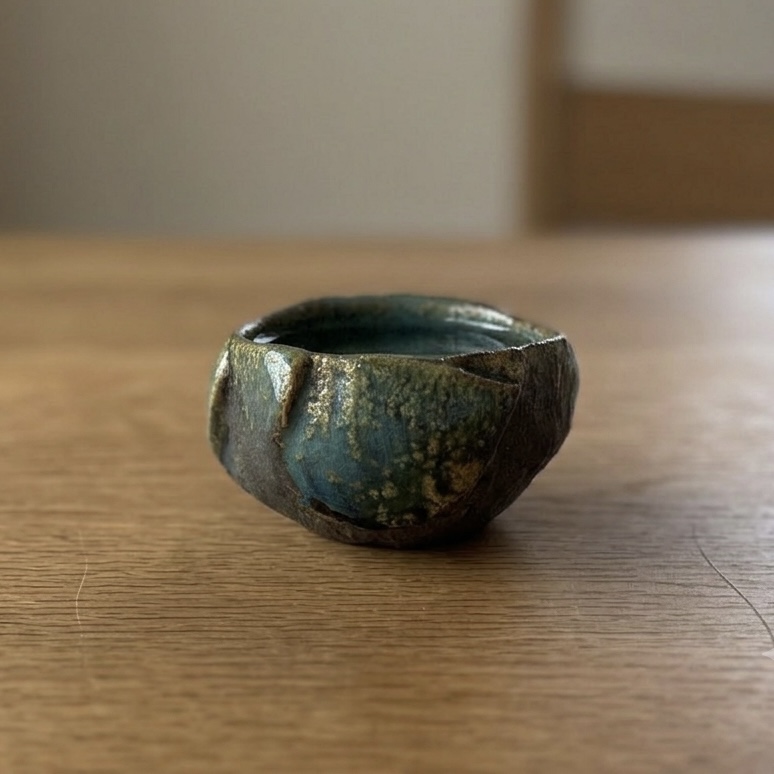
- Unglazed stoneware Bizen and other unglazed high-fired wares are classic choices for sake. The bare clay has a fine, slightly rough texture, holds warmth well, and darkens and softens in color with years of use. Many sake lovers say Bizen rounds out the taste of the sake. The small turnip-shaped tokkuri above, with green ash on its body, is also lovely as a bud vase when it is not on the table.
- Glazed stoneware Warm, heavy and comfortable to hold. A good all-round choice for warm sake, and easier to clean than unglazed clay.
- Porcelain Smooth, white and thin-walled. Porcelain keeps the flavor clean and is a natural choice for delicate, chilled sake. It also shows off painted decoration.
- Glass Lovely for cold sake on a summer evening, but not for warming.
If you would like to know more about unglazed clay, our guide to Bizen ware explains how it is fired, and our Bizen collection includes both tokkuri and katakuchi.
How to Warm Sake in a Tokkuri
Warm sake, called kanzake, is one of the main reasons to own a tokkuri. The gentlest way to warm it is a water bath, and the tokkuri is designed for it.
- Fill the tokkuri Pour in the sake, leaving a little space below the neck. Sake expands slightly as it warms.
- Heat some water Bring a pan of water to a boil, then turn off the heat.
- Stand the tokkuri in the water The water should come up to about the shoulder of the tokkuri. Leave it for a few minutes.
- Check the temperature Lift it out and touch the bottom. When it feels warm to the touch, it is ready for gentle warm sake. A few more minutes give you hot sake. A small kitchen thermometer takes the guessing out of it.
- Dry the outside and serve Wipe the tokkuri with a cloth so it does not drip on the table.
As a rough guide, nurukan, or lukewarm sake, is around 40°C (104°F), and atsukan, or hot sake, is around 50°C (122°F). Many rich, savory sakes taste wonderful at these temperatures, while light, fragrant sakes are usually better chilled. Avoid putting a handmade tokkuri on a direct flame, and check with the artisan before using one in a microwave. Our guide to Japanese sake explains which styles suit which temperature.
How to Pour and Serve
Serving sake from a tokkuri comes with a few simple customs. None of them are strict at home, but they are part of the pleasure.
- Pour for others In Japan, people usually fill each other's cups rather than their own. When your neighbor's cup is empty, offer to pour.
- Use two hands Hold the tokkuri in your right hand and lightly support it with the fingertips of your left. Pour slowly, in a thin stream.
- Lift your cup When someone pours for you, pick up your cup and hold it toward them rather than leaving it on the table.
- Fill, but not to the brim About eight-tenths full is a polite, practical amount, and easier to drink from.
Matching Cups to Your Tokkuri
A tokkuri is almost always served with small cups. The two most common are the ochoko, a small cup that holds a few sips, and the guinomi, a slightly larger cup with thicker walls. Our guide to the guinomi explains why many people prefer it for sipping at home.

You do not have to buy a matching set. In Japan it is common to choose a different cup for each person, and to mix materials: an unglazed tokkuri with porcelain cups, or a painted server with plain stoneware. The set above pairs a white Bizen katakuchi with a matching cup; a tokkuri from one artisan with cups from another can look just as good. If you are building a set, browse our sake cups alongside the servers.
What to Look For When You Buy
Whether you are shopping in person or online, these are the details that make a tokkuri pleasant to use for years.
- Balance A full tokkuri is heavier than it looks. It should feel steady in one hand and not tip easily on the table.
- A clean pour The lip should let the sake leave in a clean stream. A slight flare or a small pinched spout helps.
- The width of the neck Narrower keeps the temperature longer; wider is easier to fill, clean and dry. Choose based on how you will use it.
- A stable base Check that the foot sits flat. Unglazed feet can be rough, so a piece of cloth underneath protects a wooden table.
- The inside Many tokkuri are glazed inside, which makes them easier to clean. Unglazed ones are lovely to use, but need a little more care with drying.
The same checks apply to a katakuchi. With an open server, also look at the spout: a short, sharp lip like the one on the painted porcelain katakuchi below usually pours cleanly without dripping.

Caring for a Tokkuri
The narrow neck that makes a tokkuri so good at holding warmth also makes it the hardest piece of sake ware to keep clean and dry. A few habits keep it in good condition.
- Rinse right away After use, rinse it with warm water while it is still warm. Sake leaves little residue if it does not sit overnight.
- Go easy on soap Warm water is usually enough. If you use dish soap, use a little and rinse well, so no smell is left in the clay.
- Use a bottle brush A narrow brush helps if anything builds up inside.
- Dry upside down, for longer than you think Stand it upside down on a rack or in a cup so air can reach the inside. Give it a full day, or two for unglazed clay, before putting it away.
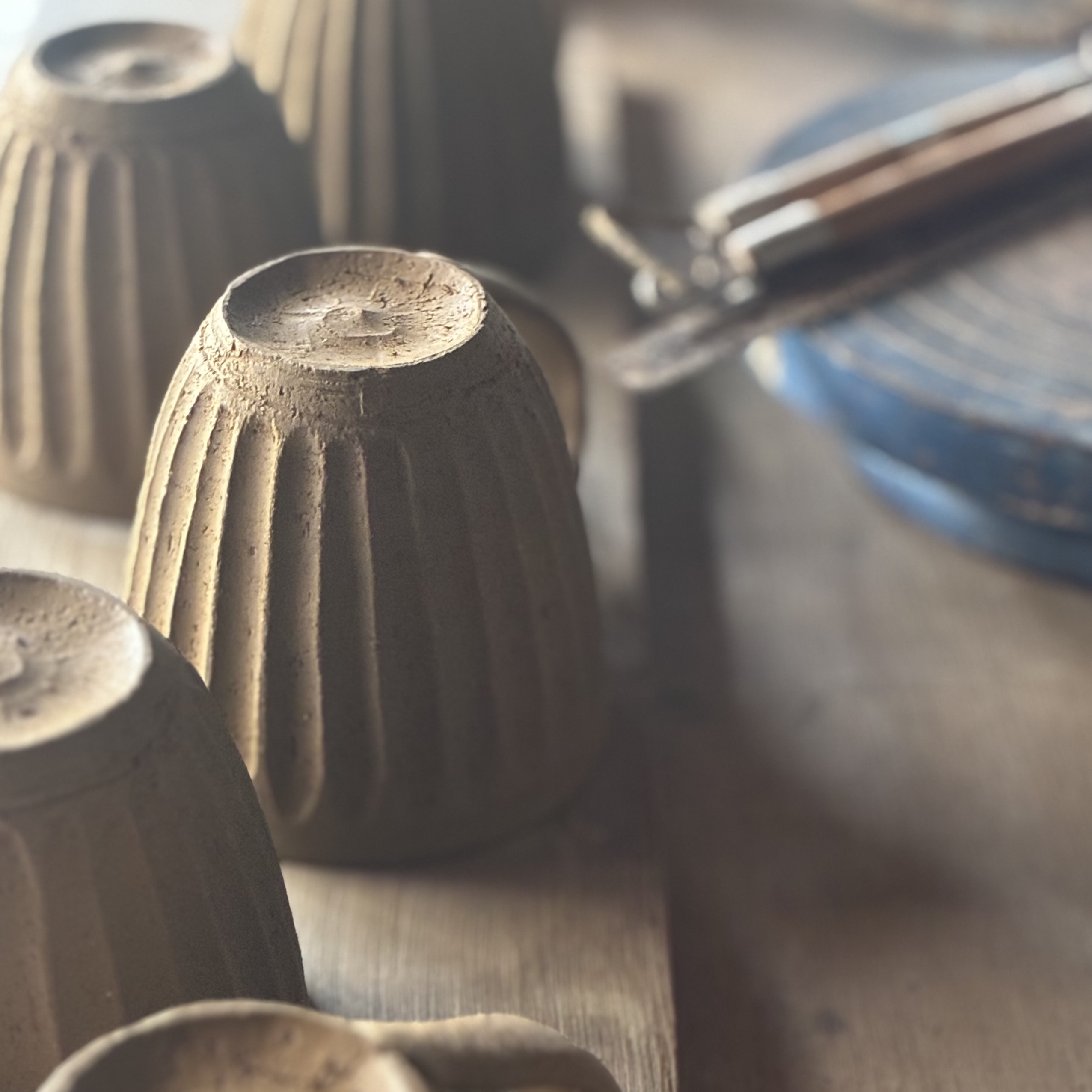
- Before first use If the tokkuri is unglazed, rinse it and let it soak in clean water for a while before its first use, then dry it fully.
For more on looking after unglazed and glazed stoneware, see our guide to stoneware care.
Tokkuri and Katakuchi at Nokaze
We keep a small, changing selection of sake servers, almost all of them one-of-a-kind pieces from the artisans we work with directly. You will find unglazed Bizen tokkuri and katakuchi by Fujiwara Akira and Takezaki Noriyasu, glazed and painted katakuchi from other regions, and cups to go with them. See them together in our sake carafes collection, or browse everything for the table in our sake ware collection.
Related Articles
Sake Ware
- Ochoko, Guinomi, Sakazuki: Japanese Sake Cups Compared
- Guinomi: The Japanese Sake Cup That Makes a Better Nightcap
- Katakuchi: The Japanese Lipped Bowl and How to Use It
- Japanese Sake: Types, Temperature and the Right Cup
Clay and Care
- Bizen Ware: Pottery With No Glaze at All
- Artisan Fujiwara Akira: Pulling Bizen From the Kiln to Make It Black
- Japanese Stoneware Care: What Porcelain Never Needs
Find a Tokkuri for Your Table
Handmade tokkuri and katakuchi from Japanese artisans, chosen in Kyoto and shipped to your door, packed one by one.
Shop sake carafesFAQ
What is the difference between a tokkuri and a katakuchi?
How much sake does a tokkuri hold?
How do I warm sake in a tokkuri?
Shop the related pieces
Sake Carafes (Tokkuri & Katakuchi)
4 pieces See all
Takezaki Noriyasu
Yohen Katakuchi Sake Pourer — Bizen Ware
¥16,500
Japanese Sake Ware

Bizen Ware Artist Fujiwara Akira
Red Clay Sake Set — Bizen Ware
¥30,000
Japanese Sake Ware

Higuchi Maki
Katakuchi Lipped Sake Pitcher
¥6,600
Japanese Sake Ware

Utsuwa no Yukue
Oni-Unofu Glaze Katakuchi Spouted Pourer
¥4,500
Japanese Sake Ware
Japanese Sake Ware
41 pieces See all
Bizen Ware Artist Fujiwara Akira
Hikidashi-guro Skull Sake Cup — Bizen Ware
¥20,000
Japanese Sake Ware

Utsuwa no Yukue
Pine Ash Glaze Dimpled Guinomi Sake Cup
¥2,000
Japanese Sake Ware
Utsuwa no Yukue
Oni-Unofu Glaze Katakuchi Spouted Pourer
¥4,500
Japanese Sake Ware

Ceramics - Rakudo
Polar Bear Sake Cup, Matte Grey
¥3,080
Japanese Sake Ware
New to Japanese pottery? Start here — its history, how pottery differs from porcelain, the clays and glazes behind each style, and how to care for a piece. → Japanese Pottery: The Complete Guide