

Unglazed Stoneware
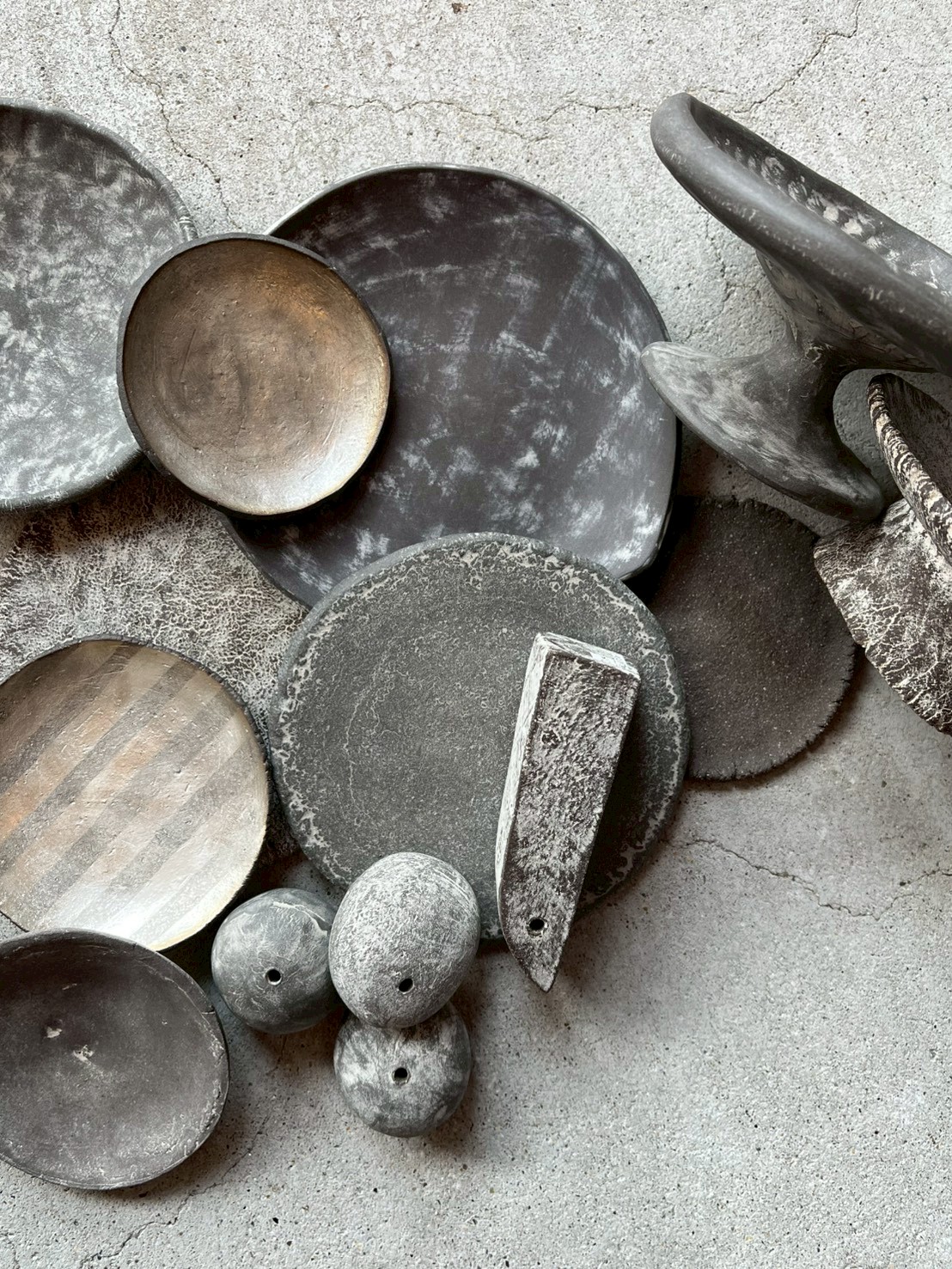
Pieces fired without any glaze at all, until the clay itself becomes dense. Everything on the surface was made by fire and ash over several days in the kiln.
Ash falls where the flame carried it and melts into glass at the shoulder. Where straw was wrapped against the body, red lines run in ways the potter cannot fully predict. The kiln does half the work, so the same landscape never appears twice. And from the day it arrives it keeps shifting colour, slowly, for as long as you use it.
Yakishime means fired to density. At around 1,300C the clay body itself closes up, so an unglazed piece holds liquid without any glaze. The green pooling is natural ash glaze, ash that fell and melted. The red lines are hidasuki, left where rice straw touched the clay. Season a new piece once and the sheen comes up within months.
Artisan Works

Plates
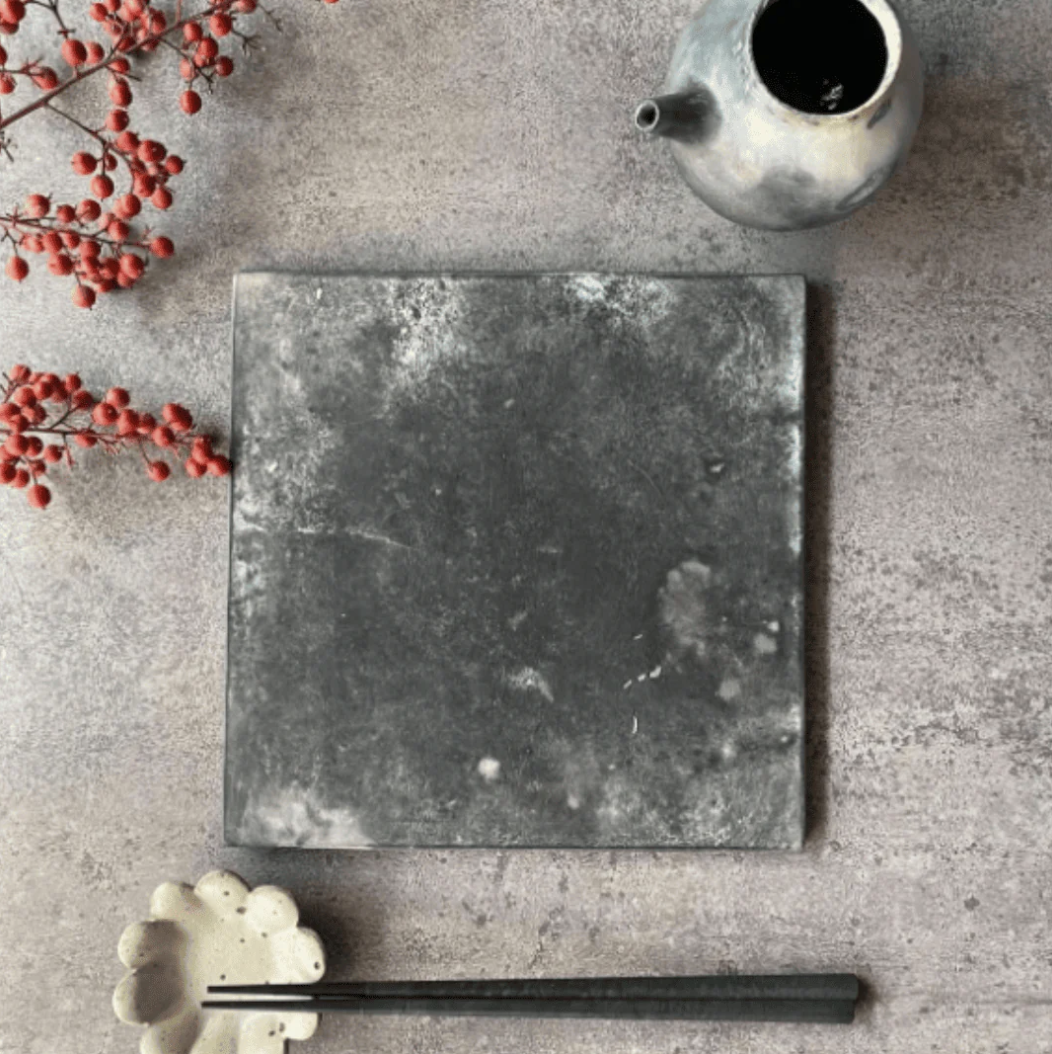
Carbonized Yakishime Square Bowl
¥9,900

Sake ware
White Bizen Sake Set, Tokkuri and Guinomi
¥25,000

Sake ware
Hikidashi-guro Skull Sake Cup — Bizen Ware
¥20,000

Plates
White Bizen Matcha Chawan
¥50,000

Sake ware
Hikidashi-guro Chilled Sake Server — Bizen Ware
¥13,000

Plates
Inbe-de Black Round Plate — Bizen Ware
¥6,000

Sake ware
Hikidashi-guro Guinomi Sake Cup No.1 — Bizen
¥13,000

Sake ware
Hikidashi-guro Guinomi Sake Cup No.2 — Bizen
¥13,000

Sake ware
Red Clay Sake Set — Bizen Ware
¥30,000

Tea ware
Inbe-de Black Shell Hohin Teapot — Bizen Ware
¥26,000

Flower vase
Hikidashi-guro Single-Flower Vase — Bizen Ware
¥25,000

Mugs
Hikidashi-guro Coffee Cup & Saucer — Bizen
¥15,000

Sake ware
Natural Ash Glaze Sake Set — Bizen Ware
¥26,000

Sake ware
Hikidashi-guro Shell Sake Set — Bizen Ware
¥28,000

Sake ware
Red Clay Guinomi Sake Cup — Bizen Ware
¥13,000

Plates
Hikidashi-guro Bamboo Plate — Bizen Ware
¥20,000

Tea ware
Hikidashi-guro Matcha Chawan — Bizen Ware
¥60,000

Tea ware
Inbe-de Black Dragon Hohin Teapot — Bizen Ware
¥26,000

Tea ware
Inbe-de Black Matcha Chawan No.2 — Bizen
¥50,000

Tea ware
Inbe-de Black Matcha Chawan No.1 — Bizen
¥50,000

Flower vase
Hammered Texture Vase — Tokoname
¥4,400

Tea ware
Yakishime Pear-Skin Kiln-Effect Teapot — Tokoname
¥17,600

Tea ware
Mogake Yunomi Teacup — Tokoname Ware No.2
¥3,300

Flower vase
Black Clay Hand-Pinched Vase No.4
¥13,200

Flower vase
Black Clay Hand-Pinched Vase No.3
¥4,950

Plates
Black Clay Yakishime Slab Plate No.4
¥2,420

Plates
Black Clay Yakishime Slab Plate No.3
¥3,300

Flower vase
Black Clay Hand-Pinched Vase No.1
¥4,950

Flower vase
Black Clay Hand-Pinched Vase No.5
¥2,750

Plates
Black Clay Yakishime Slab Plate No.1
¥2,420

Plates
Black Clay Yakishime Slab Plate No.2
¥3,300

Flower vase
Black Clay Hand-Pinched Vase No.2
¥6,820

Flower vase
Mogake Vase, Sand — Tokoname
¥4,400

Flower vase
Mogake Vase, Tall Black — Tokoname
¥6,600

Flower vase
Mogake Vase, Round Black — Tokoname
¥4,400

Flower vase
Mogake Vase, Amber — Tokoname
¥4,400

Tea ware
Mogake Japanese Teacup — Tokoname Ware
¥3,300

Tea ware
Mogake Yunomi Teacup, Vermilion No.1 — Tokoname
¥3,300

Tea ware
Mogake Yunomi Teacup, Vermilion No.2 — Tokoname
¥3,300

Sake ware
Hidasuki Guinomi Sake Cup — Mashiko No.2
¥5,500

Sake ware
Hidasuki Guinomi Sake Cup — Mashiko No.1
¥5,500

Sake ware
Hidasuki Guinomi Sake Cup — Mashiko No.4
¥5,500

Sake ware
Hidasuki Guinomi Sake Cup — Mashiko No.3
¥5,500
Plates
Carbonized Yakishime Square Bowl
¥9,900
Plates
White Bizen Matcha Chawan
¥50,000
Plates
Inbe-de Black Round Plate — Bizen Ware
¥6,000
Plates
Hikidashi-guro Bamboo Plate — Bizen Ware
¥20,000
Plates
Black Clay Yakishime Slab Plate No.4
¥2,420
Plates
Black Clay Yakishime Slab Plate No.3
¥3,300
Plates
Black Clay Yakishime Slab Plate No.1
¥2,420
Plates
Black Clay Yakishime Slab Plate No.2
¥3,300
Sake ware
White Bizen Sake Set, Tokkuri and Guinomi
¥25,000
Sake ware
Hikidashi-guro Skull Sake Cup — Bizen Ware
¥20,000
Sake ware
Hikidashi-guro Chilled Sake Server — Bizen Ware
¥13,000
Sake ware
Hikidashi-guro Guinomi Sake Cup No.1 — Bizen
¥13,000
Sake ware
Hikidashi-guro Guinomi Sake Cup No.2 — Bizen
¥13,000
Sake ware
Red Clay Sake Set — Bizen Ware
¥30,000
Sake ware
Natural Ash Glaze Sake Set — Bizen Ware
¥26,000
Sake ware
Hikidashi-guro Shell Sake Set — Bizen Ware
¥28,000
Sake ware
Red Clay Guinomi Sake Cup — Bizen Ware
¥13,000
Sake ware
Hidasuki Guinomi Sake Cup — Mashiko No.2
¥5,500
Sake ware
Hidasuki Guinomi Sake Cup — Mashiko No.1
¥5,500
Sake ware
Hidasuki Guinomi Sake Cup — Mashiko No.4
¥5,500
Sake ware
Hidasuki Guinomi Sake Cup — Mashiko No.3
¥5,500
Related Articles
All Articles-

Japanese Pottery Patterns: What the Motifs Actually Mean
-

Kintsugi: How to Repair Pottery With Gold (and Why)
-

Japandi Ceramics: Japanese Pottery in Minimal Interiors
-

Wabi-Sabi at Home: Ceramics for a Calmer Room
-

Pottery Regions of Japan: A Buyer's Map
-

Anagama vs Noborigama: Japanese Wood Kilns Compared


