
Tetsue: Iron Painting Under the Glaze That Fires Brown

Tetsue (iron painting) is a decoration in which pictures or lines are drawn on a piece with an iron-bearing clay or pigment, then covered with glaze and fired. The iron develops its color in the kiln, leaving lines from brown to nearly black.
Tetsue is one form of shita-etsuke (underglaze painting). Shita-etsuke is the name of the process of painting beneath the glaze, and when the painting is done in iron it is called tetsue. Within the same underglaze process, painting with gosu, a pigment that turns blue, gives you sometsuke. Tetsue and sometsuke are like siblings that differ only in their paint.
Because the lines sit under the glaze, tetsue does not rub off. Washing, or metal cutlery knocking against it, leaves the painted lines just as they were.
Iron is used both as a paint and as a glaze. Drawn as a picture it is tetsue; applied over the whole piece it becomes an iron glaze such as sabiyu. The same raw material looks entirely different depending on whether it is laid down as a line or spread over a surface.
Tetsue, sometsuke and uwa-etsuke compared
Which of these a painted line or picture on a piece belongs to can be sorted out like this.
| Name | What it is | Where it is painted, and its color |
|---|---|---|
| Shita-etsuke | The general name for painting under the glaze, then glazing over it | Under the glaze. Only colors that survive high heat can be used |
| Tetsue | Underglaze painting done in iron | Under the glaze. Fires brown to black |
| Sometsuke | Underglaze painting done in gosu | Under the glaze. Fires indigo blue |
| Uwa-etsuke | Painting on top of the fired glaze, then fixing it at a low temperature | Over the glaze. Free choice of colors such as red, green and yellow |
Tetsue and sometsuke can go under the glaze because both iron and gosu withstand the heat of a main firing above 1,200°C. Red and green overglaze enamels would burn away at that heat, so they are painted onto the piece after it is fired and fired again at a lower temperature. The number of colors available and the resistance to wear are a trade-off.
Why painting in iron turns brown
The paint used for tetsue is an earth or stone rich in iron. In Japan, oniita, a limonite-type earth, and bengara, a powdered iron oxide, are the most common.
The color changes with the concentration of iron and the way the kiln is fired.
- Brushed on thinly A yellowish brown. The line bleeds into something soft
- Laid on thickly A dark brown close to black. The outline is sharp
- Fired with the oxygen cut back It sinks into a black with a blue or green tinge
It is the nature of tetsue that the same paint never gives one fixed color. The depth of tone shifts within a single line, and the color pools only where the brush was set down. Reading that unevenness as part of the landscape is how to look at a tetsue piece.
What to look for in tetsue
- How the stroke starts and lifts Dark at the moment the brush touches down, fading as it lifts away. A freehand line is never the same width throughout
- The blur through the glaze Because the line sits under the glaze, its edges soften slightly. Overglaze painting cannot give this softness
- How it sits against the ground color Crisp over white slip, sunk and quiet under a gray or amber glaze
Tetsue grew up in stoneware regions before porcelain. In Seto ware and Mino ware, painting patterns in oniita and glazing over them is a long-standing practice. In the same Mino region, Shino and Oribe also include pieces with iron lines beneath a white or green glaze.
In Hizen, the e-garatsu (painted Karatsu) of Karatsu ware is the classic example of tetsue. Grasses and birds are sketched boldly in oniita on rough clay, then glazed over. Long before porcelain sometsuke appeared, tetsue carried Japan's painted pottery.
Using tetsue pieces
Because the lines of tetsue sit under the glaze, they will not wear away with use. In everyday care, what needs attention is the piece itself, not the painting.
- Microwave use depends on the piece The iron painting itself is no problem, but some clays and glazes are better kept out
- No metal scourers or abrasives Even if the lines are not scraped away, the glaze surface will dull
- Dry it thoroughly after washing Pieces combined with kohiki absorb water easily
Care differs between stoneware and porcelain. Everyday care is covered in caring for stoneware and caring for Japanese ceramics.
Related articles and terms
Techniques painted under the glaze
- Shita-etsuke: Underglaze Painting and Why It Never Fades
- Sometsuke: Blue and White Porcelain, Explained
- Gosu: The Cobalt Blue Behind Japanese Sometsuke
- Uwa-etsuke: How Overglaze Enamel Painting Works
Iron and the landscape of clay
- Kohiki Pottery: The White Slip Technique, Explained
- Shirogeshou: How Japanese Potters Make Dark Clay White
- Sabiyu Rust Glaze: Iron Brown Like Weathered Metal
- Japanese Pottery Glazes: The Main Types Explained
- Artisan Furutani Pottery | Making Kohiki White an Everyday Piece in Shigaraki
Hold a piece with a single painted line
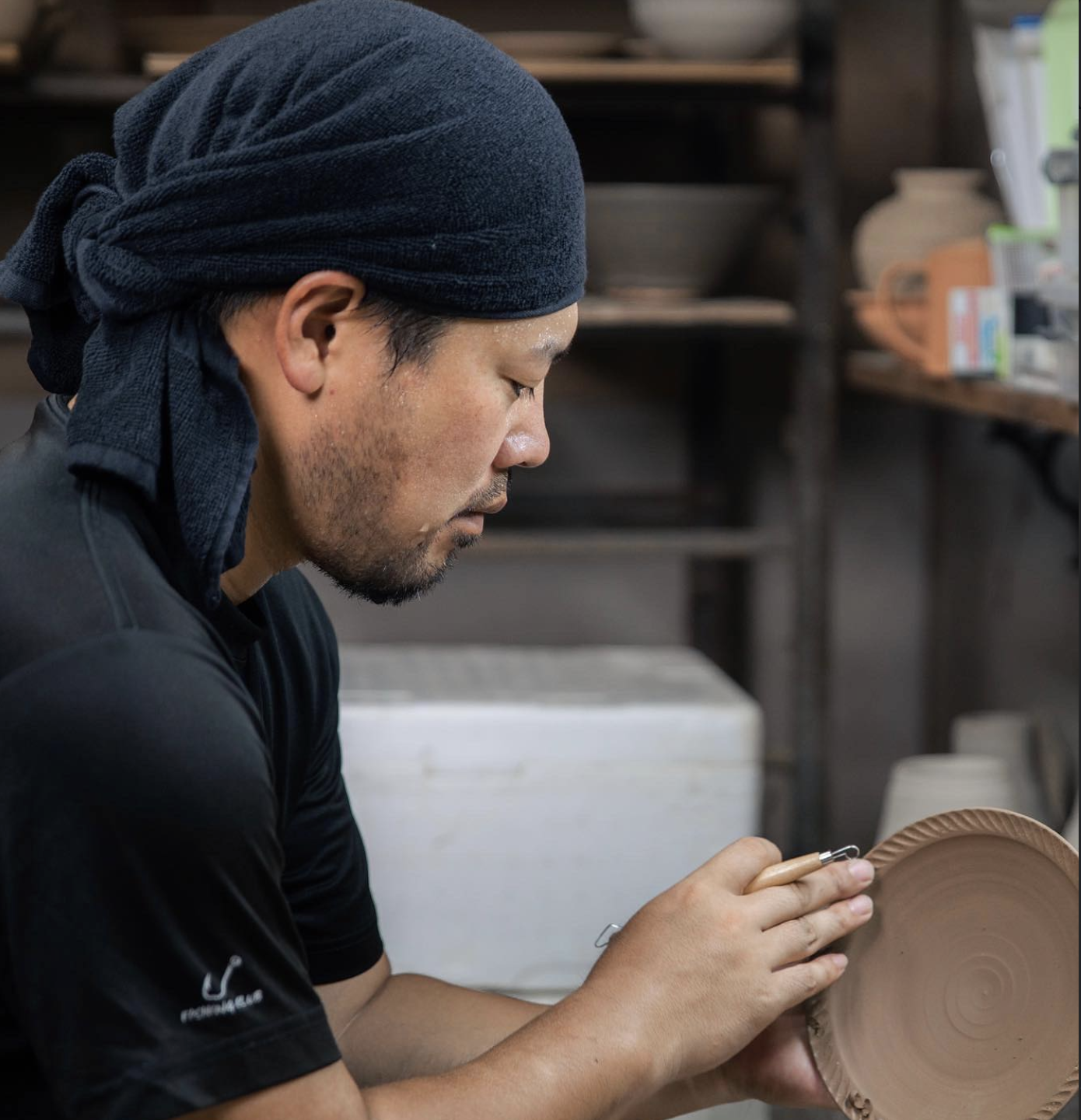
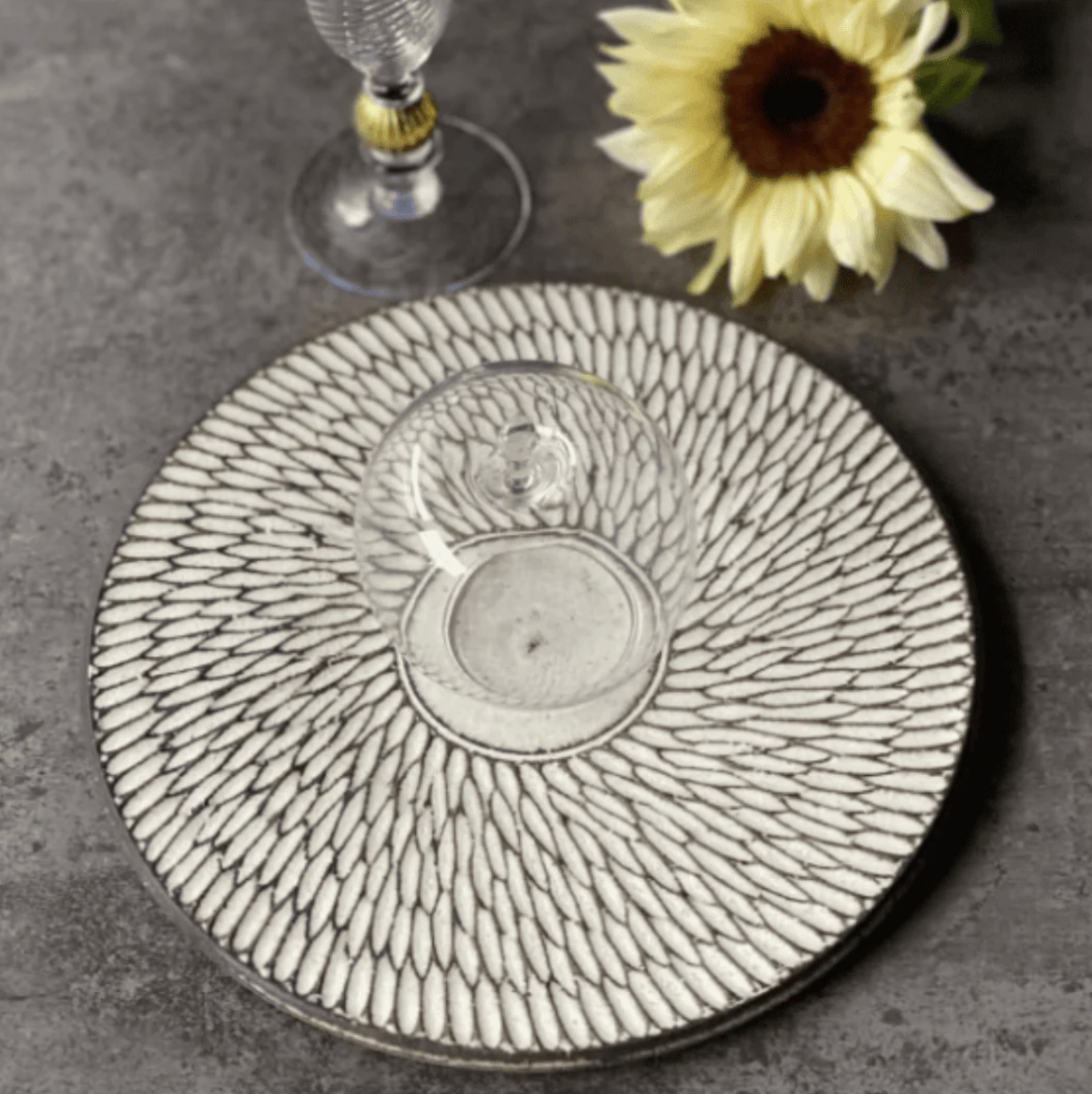
The appeal of tetsue lies in the depth of the line and the energy of the brush. A line that looks like flat brown in a photo shows its change of color, from the start of the stroke to where it lifts, once you hold it up to the light. In Shigaraki, Furutani Pottery draws lines with an iron stylus over kohiki white, making pieces for the everyday table. Start with one and hold it in your hands.
Shop Furutani PotteryFAQ
What is the difference between tetsue and sometsuke?
Will tetsue lines fade with use?
Is "Iron-Speckled" in a product name the same as tetsue?
Shop the related pieces
Furutani pottery
21 pieces See allShigaraki
42 pieces See all
Furutani pottery
Gosu Blue Line Rice Bowl, Small — Shigaraki
¥2,420
Japanese Rice Bowls

Furutani pottery
Iron-Line Rice Bowl, Large — Shigaraki
¥2,640
Japanese Rice Bowls

Furutani pottery
Rust Glaze Foliate Rim Deep Plate, Small — Shigaraki
¥2,420
Plates

Furutani pottery
Rough Iron-Line Oval Deep Bowl, Large — Shigaraki
¥3,740
Bowls
New to Japanese pottery? Start here — its history, how pottery differs from porcelain, the clays and glazes behind each style, and how to care for a piece. → Japanese Pottery: The Complete Guide