
Sabiyu Rust Glaze: Iron Brown Like Weathered Metal

Sabiyu (rust glaze) is a glaze rich in iron that fires to a brown like rusted iron. Its calm, low-sheen color is what sets it apart. In Japanese it is also written サビ釉.
Iron is the oldest colorant in the history of glazes. Among the types of glaze, those that take their color from iron are grouped together as iron glazes, and sabiyu is the name for the ones that come out brown with little shine.
Depending on the amount of iron and the firing, the same iron glaze can turn a clear amber or a glossy black. Sabiyu is neither. It leans toward the dry surface of oxidized metal. When the same iron is used as a paint to draw lines, it is called tetsue (iron painting). Over a surface it is a glaze; laid down as a line, it is a painting.
The word "rust" is in the name, but the piece does not rust. The name only says that the color and texture of the fired glaze resemble rusted iron.
What decides the color of sabiyu
The color of an iron glaze comes down to roughly three conditions.
- The amount of iron A little gives ochre; the more there is, the further it moves from dark brown toward black
- The oxygen in the kiln Fired with plenty of oxygen it turns a reddish brown; fired with the air cut back it sinks to black or a greenish tone
- The thickness of the glaze and the heat it takes The thinner and the better fired an area is, the more shine and color it shows
Sabiyu is a glaze whose results vary from piece to piece. Its base is matte, but well-fired areas such as the rim and the underside take on a green tinge and a little shine. Fired in the same kiln in the same way, no two pieces come out alike, and that is the nature of this glaze.

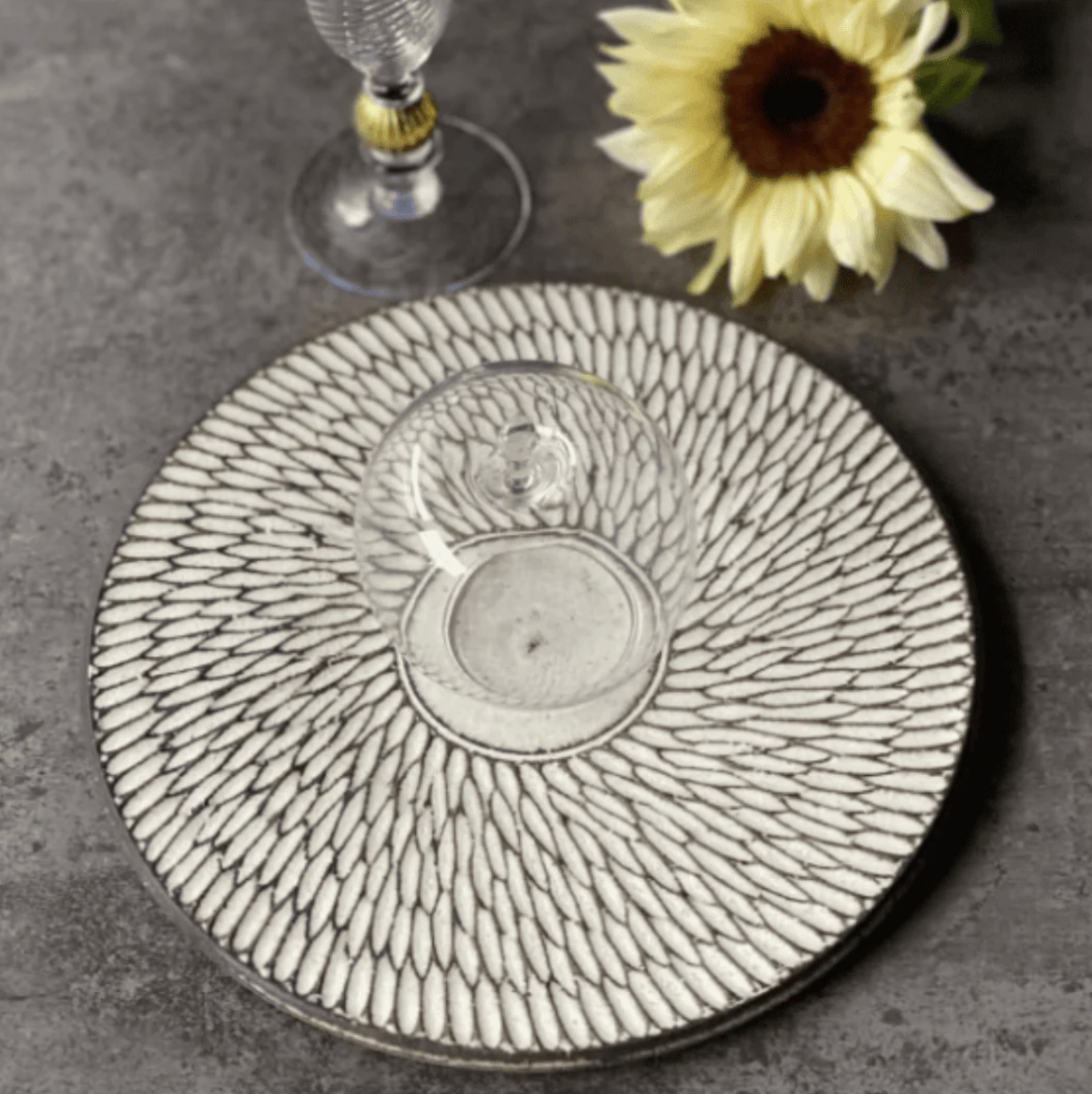
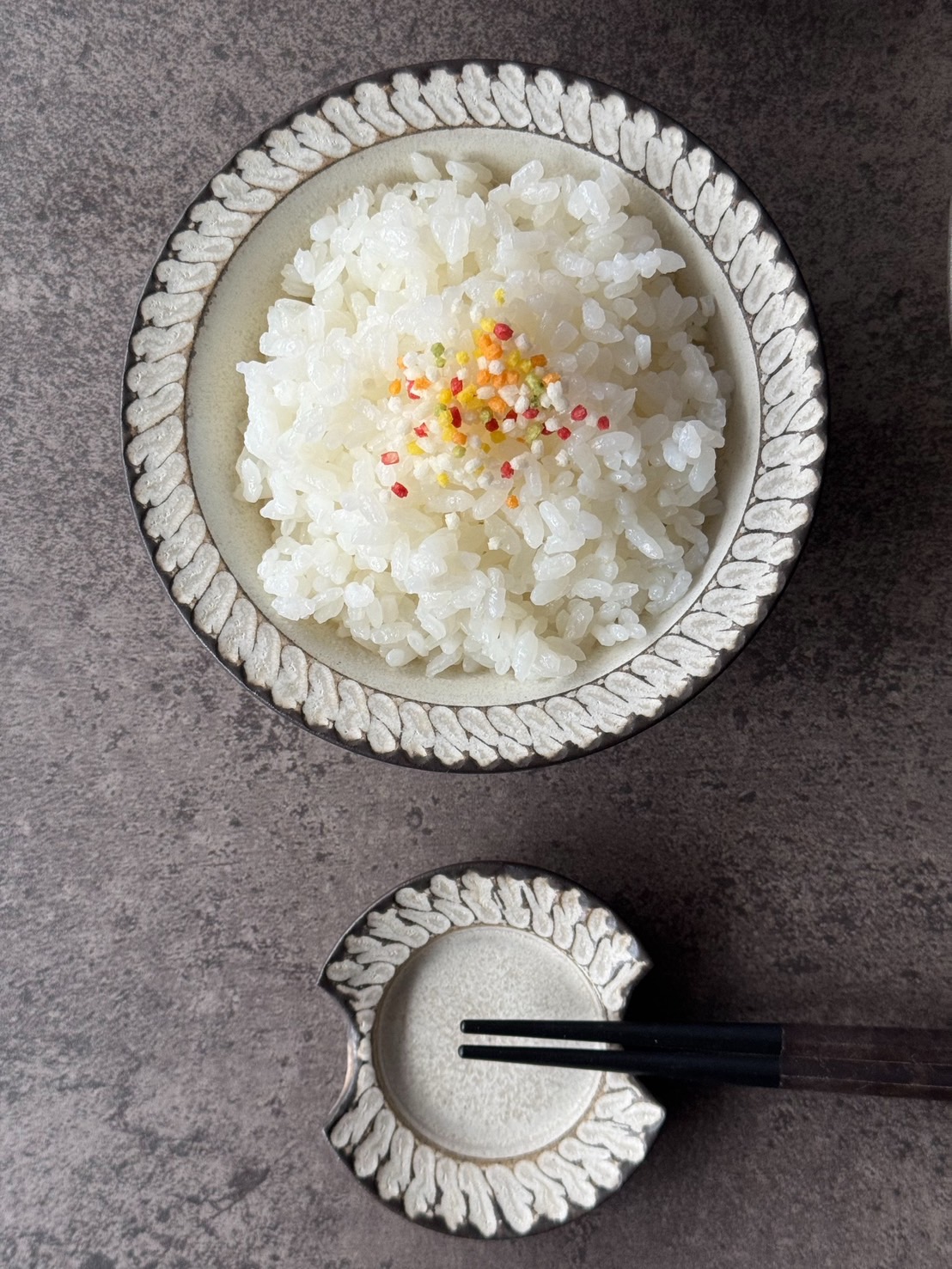
The photo shows a sabiyu ruffle plate by Furutani Pottery in Shigaraki, Shiga. A ruffle is a gathered, pleated trim like a frill. On the crests of the ridges the glaze runs thin and opens up to a light gold-brown. The more relief a piece has, the more clearly the light and dark of sabiyu show.
Matte, sheen and a dull glow
The hardest part of choosing sabiyu is the vocabulary of texture. Different looks live side by side on the same piece.
| Look | Where it appears | Why |
|---|---|---|
| Matte | Wide, flat areas such as the inside of a plate | The glaze is thick, and fine crystals form on the surface and scatter the light, so it reads matte |
| A slightly green sheen | The rim, the underside, faces that took the most heat in the kiln | The heat melts the glaze completely, the surface turns smooth, and the color takes on green |
| A light gold-brown | Carved ridges, edges, raised areas | The glaze runs thin and the clay beneath shows through, giving a brighter color |
All three mixing on one piece is the charm of sabiyu. Read it not as uneven color but as the shape of the piece showing through the glaze, and you will look for different things when you choose.
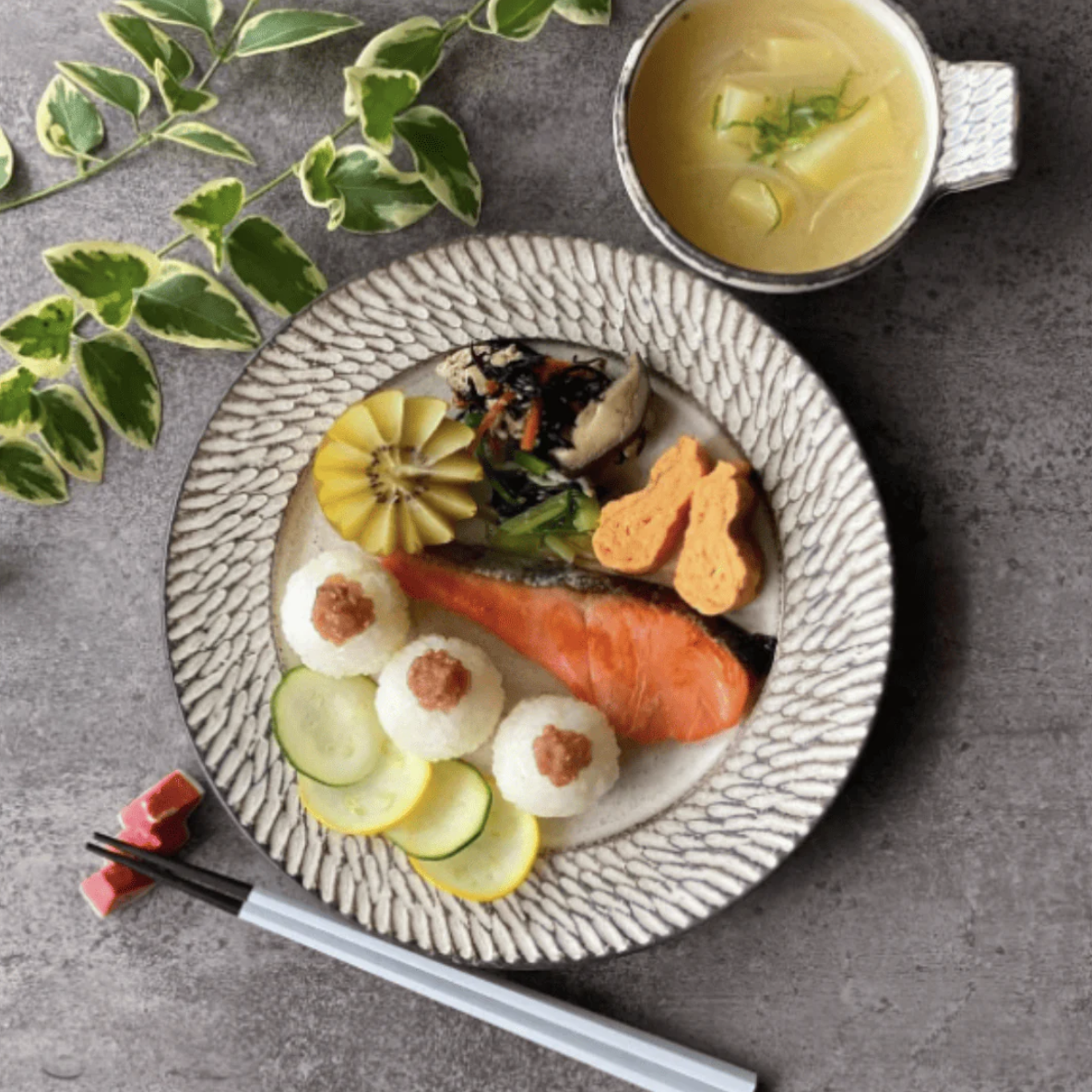
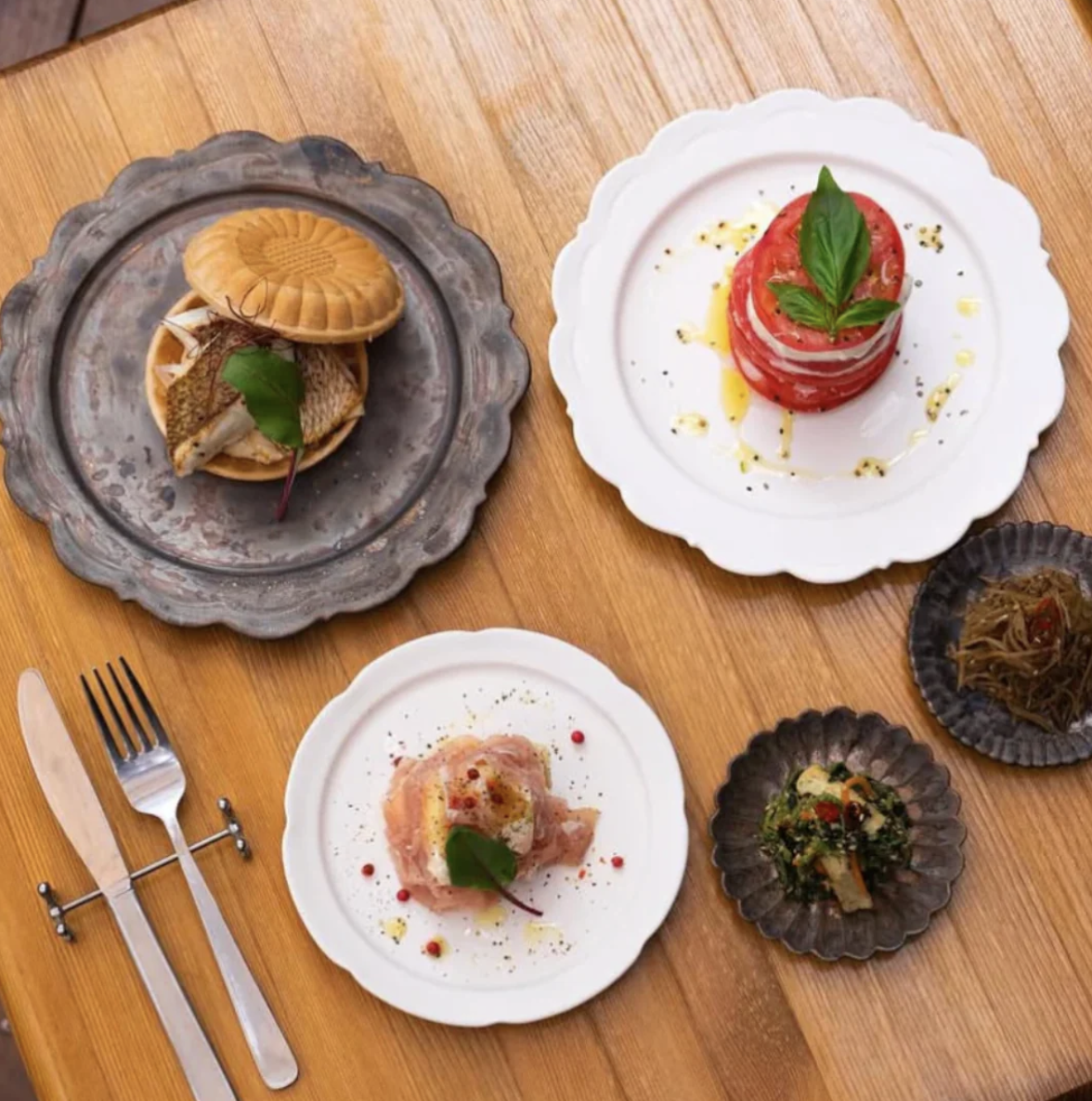
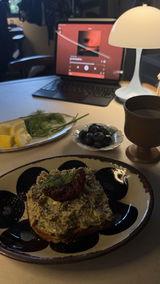
Rust-colored pottery takes the color of food well. White and green vegetables, the yellow of an egg, white rice. On a dark ground, the brighter a color is, the more it stands out. That contrast is why it suits a one-plate meal or a single main dish. Bring a sabiyu piece to your table and set a table that is calm and still has a glow.
Related articles and terms
Glaze and texture
- Japanese Pottery Glazes: The Main Types Explained
- Crazing (Kannyu): Cracks in Glaze That Aren't Damage
- Ash Glaze (Haiyu): The Origin of High-Fired Japanese Glazes
- Ki-Seto: The Yellow Glaze With Green Bleeding Through
- Tetsue: Iron Painting Under the Glaze That Fires Brown
- Brown Japanese Pottery: Unglazed, Rust and Amber Glazes Compared
Care and living with it
- Medome: How to Seal Unglazed Pottery Before First Use
- Japanese Stoneware Care: What Porcelain Never Needs
- Keinen Bika: Pottery That Gets Better With Age
- Artisan Furutani Pottery | Making Kohiki White an Everyday Piece in Shigaraki
One dark plate pulls a table together
Put a single rust-colored plate on a table of white pottery and the colors of the food stand out. A matte black-brown, with only the rim opening up to a light gold-brown. It may look like one color in a photo, but in your hands its face keeps changing. Furutani Pottery in Shigaraki makes this sabiyu in shapes for every day, such as lobed plates and ruffle plates.
See Furutani PotteryFAQ
Does sabiyu pottery need medome sealing?
Why does every sabiyu piece come out a different color?
What is the difference between sabiyu and tetsue?
Shop the related pieces
Furutani pottery
21 pieces See all


Brown Japanese Tableware
93 pieces See all


New to Japanese pottery? Start here — its history, how pottery differs from porcelain, the clays and glazes behind each style, and how to care for a piece. → Japanese Pottery: The Complete Guide