
Artisan Suzuki Takashi | Growing Mikan Trees to Make Blue Glaze From Their Ash

Odawara, in Kanagawa Prefecture, is known for its citrus.
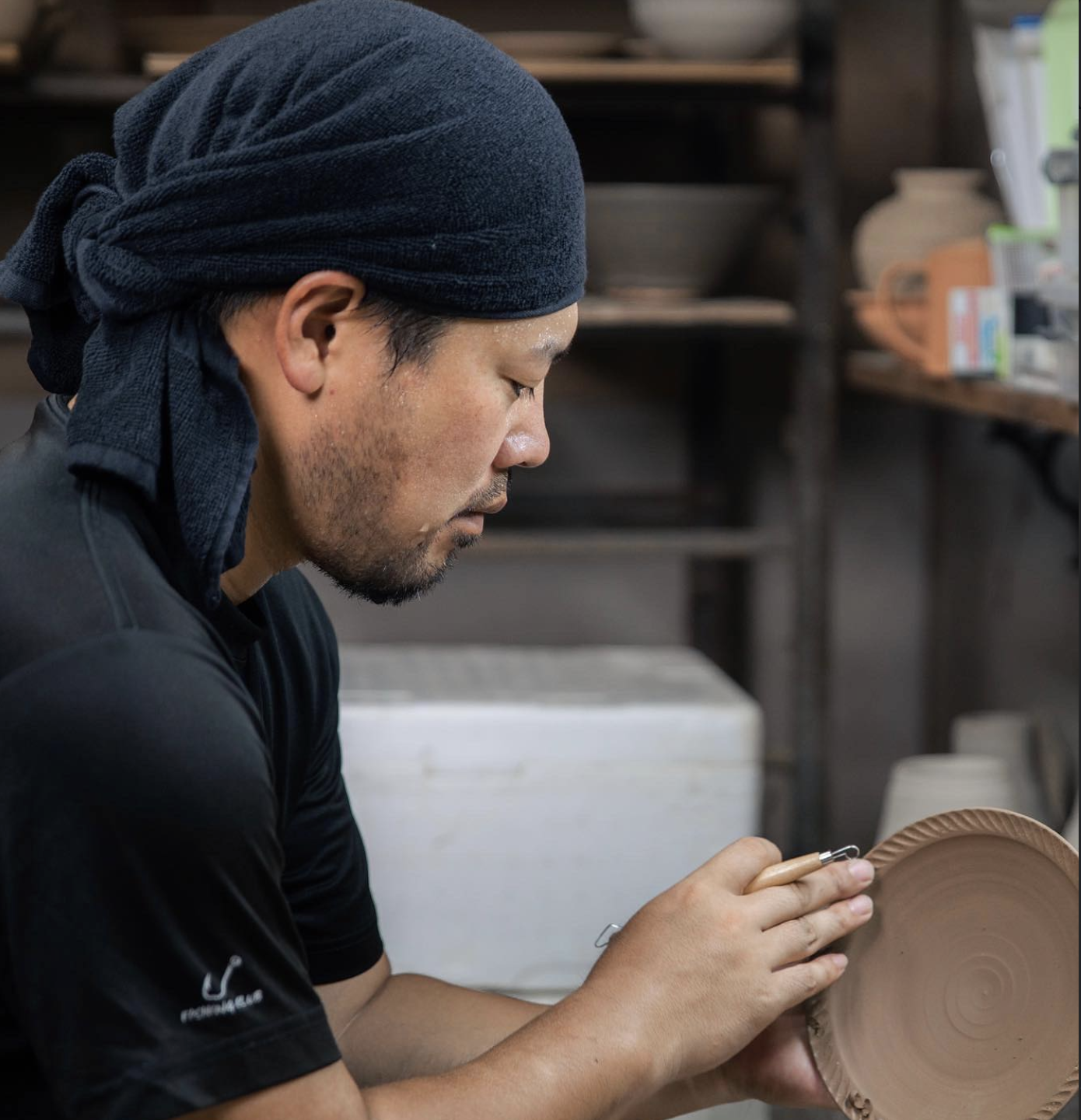
Suzuki Takashi is a potter who was born and raised on a mikan (mandarin orange) farm in Odawara. The mikan trees grown on the farm are burned to ash, the ash is made into glaze, and the glaze is fired onto the pottery. From growing the mikan, to making the ash and glaze, to the pottery itself, every step is done by Suzuki Takashi's own hands. There are almost no other artisans in Japan who work this way.
What comes out of it is the blue of "mikan ash glaze." A blue as warm as the fruit and as clear as the sea at Odawara. The other main line is the "seiji" and "hakuji" series, where crazing shines brightly in the glaze. The studio is called "Daidai," Japanese for the bitter orange.
nokaze carries Suzuki Takashi's work.
Self-Taught, From the Age of 35
Suzuki Takashi began making pottery at 35, and is self-taught.
Over more than 20 years of trying, Suzuki Takashi found a personal style. The answer was the mikan trees of the family farm. The ash of the trees closest at hand became the glaze.
Growing the trees, touching the clay, facing the flame, making the work. Making in which everything is joined in a single line is what defines Suzuki Takashi.
The materials for the pottery are prepared from the artisan's own fields. Time spent growing trees as a farmer and time spent at the kiln as a potter are joined in one line. That is the defining feature of Suzuki Takashi's work.
Mikan Ash Becomes the Blue of the Sea
A glaze made by mixing the ash of burned plants and trees is called ash glaze. Which wood the ash comes from changes the fired color. Suzuki Takashi uses ash from the mikan trees in the artisan's own fields.
Mikan ash gives a blue like no other, one that carries the warmth of the fruit while being as clear as the sea at Odawara. That a blue should come from the tree of an orange fruit is part of what makes this glaze so interesting.

Seiji, Hakuji and the Landscape of Crazing
The other series are "seiji" and "hakuji." In pursuit of the beauty of blue and of a bluish white, Suzuki Takashi researched everything from the glaze recipe to the clay blend, and created these two.
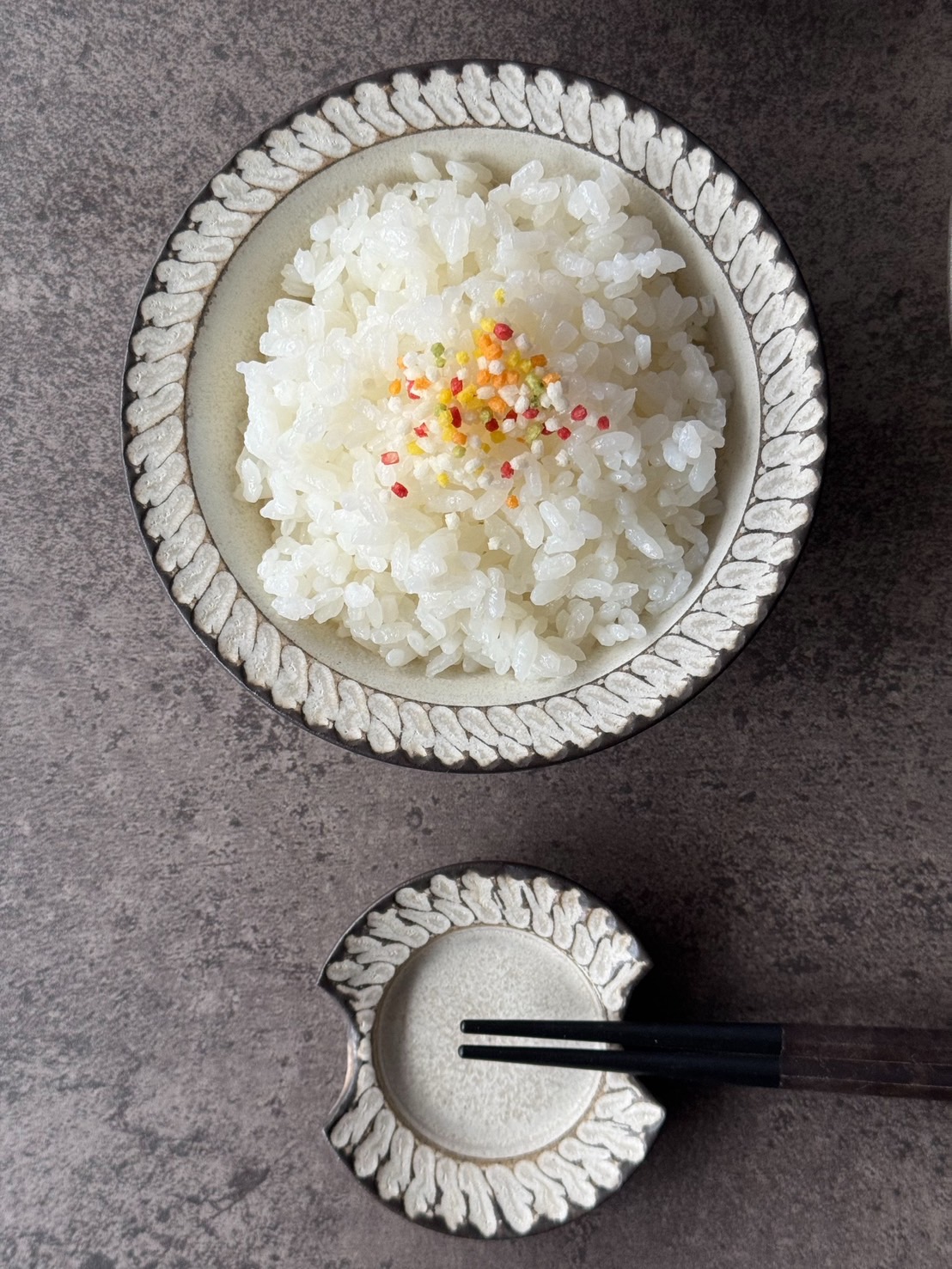
Like celadon, this seiji is pottery in which the trace of iron in the glaze turns blue-green in a reduction firing. Suzuki Takashi's seiji and hakuji have a depth and luster like marble, and glow quietly when they catch the light.

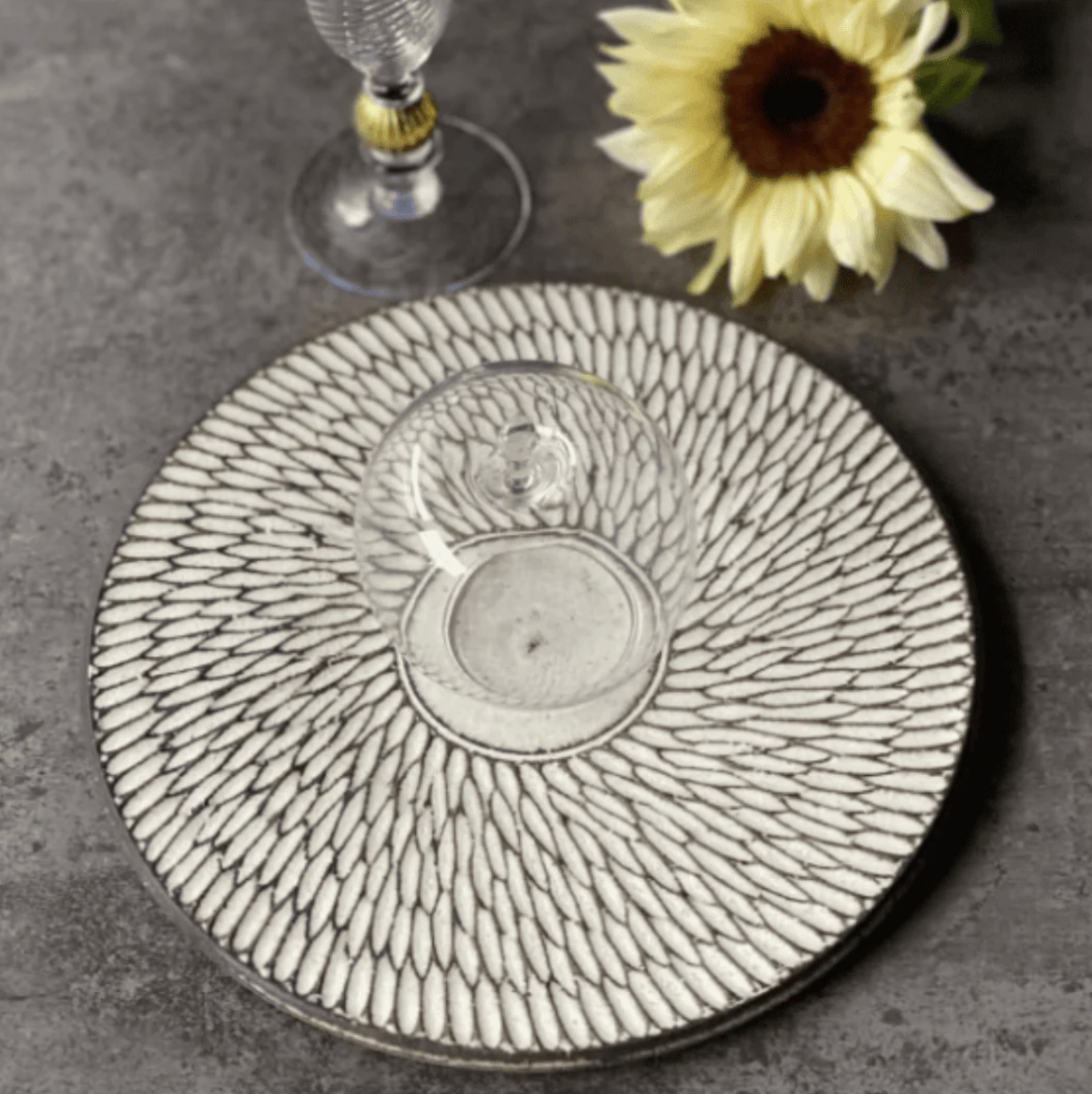
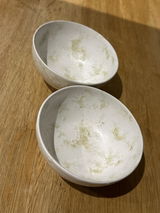
The fine cracks running across the surface are crazing. They form in the glaze during firing and are not cracks or damage. How the flame strikes, what is in the clay, how thick the glaze is: all of it together decides how the crazing forms, so no two patterns are the same. The fine lines change with the angle of the light and give the piece a quiet movement.
Hakuji is the series that shows the same crazing in a bluish-white glaze. On some pieces, the crazing spreads out from the center like ripples. In the Suzuki Takashi collection, you can compare the different landscape on each plate.
Pottery That Grows and Glows With Use
Crazed pottery keeps changing after you start using it. With daily use, color slowly settles into the crazing lines, and the piece's face develops over time. It is not finished when you buy it; it is pottery that grows, completed in the life of the person who uses it.
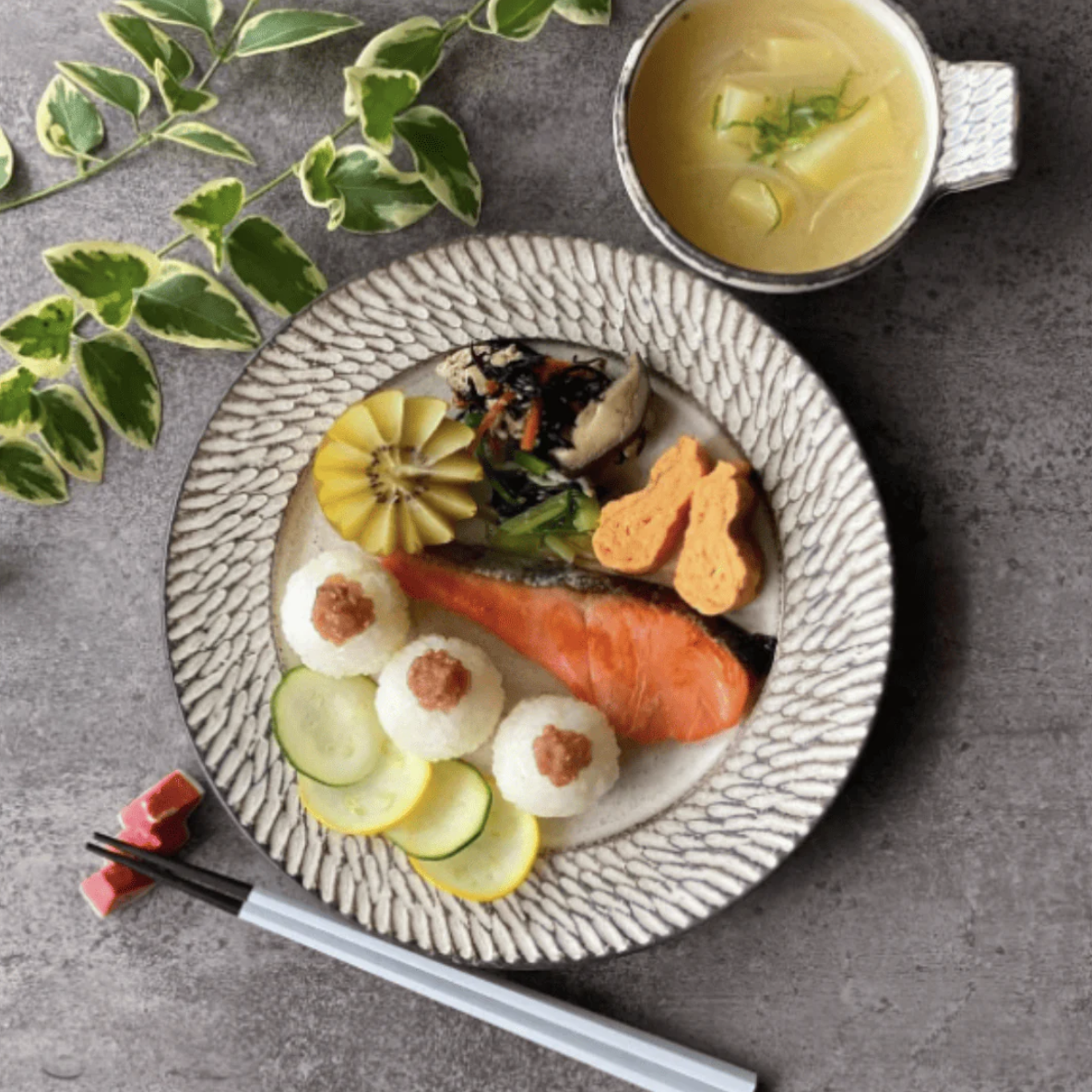
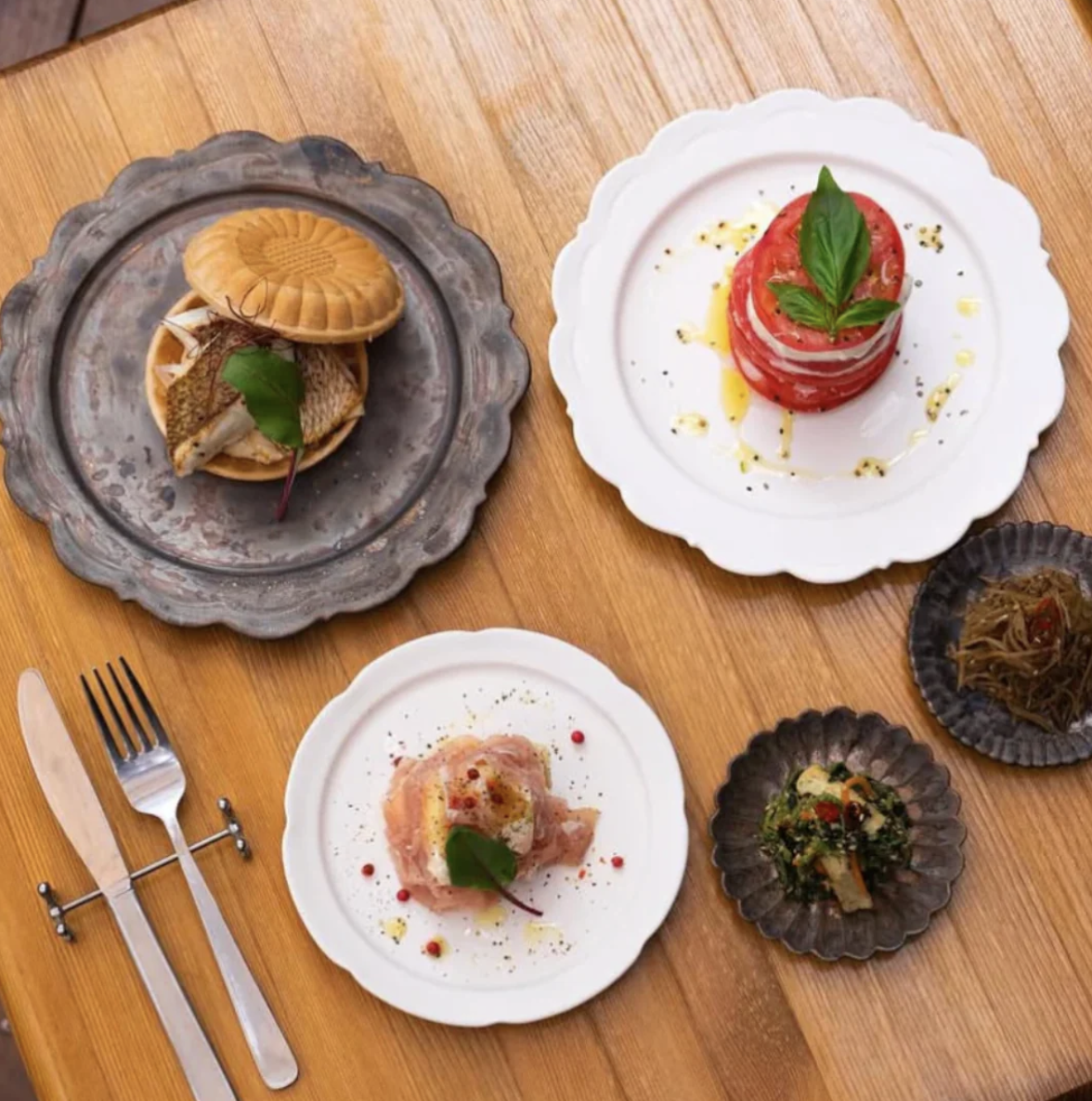
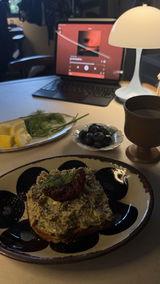
On the plates, light-colored food such as white-fish sashimi or fruit sets off the blue and white glazes beautifully. And Suzuki Takashi's pieces are not only for use. Just one in the house lights up the room, and they are a pleasure simply to look at. On days when there is no food on it, a plate looks lovely propped up on a shelf.

Caring for Suzuki Takashi's Pottery
Suzuki Takashi's pieces cannot go in the microwave, dishwasher or oven. Wash them by hand and let them dry well before putting them away. How to tell piece by piece is covered in our article on microwave and dishwasher safe pottery. For everyday care, see stoneware care.

Related Reading
Glaze and crazing
- Ash Glaze (Haiyu): The Origin of High-Fired Japanese Glazes
- Celadon (Seiji): The Blue-Green Glaze of Iron and Fire
- Crazing (Kannyu): Cracks in Glaze That Aren't Damage
- Blue Japanese Tableware: Sometsuke, Gosu, Celadon and Ruri Glaze
Use and care
- Pottery That 'Grows': How Ceramics Change With Use
- Katakuchi: The Japanese Lipped Bowl and How to Use It
- Japanese Plates: Which Size and Shape for Which Dish
- Japanese Stoneware Care: What Porcelain Never Needs
Shop
- Suzuki Takashi | Celadon & White Porcelain Plates, Odawara
- Crackle Glaze (Kannyu) | Japanese Pottery with Crazed Surfaces
- Blue Japanese Tableware | Sometsuke & Blue Glaze
Suzuki Takashi's Pottery
We carry Suzuki Takashi's seiji and hakuji plates and katakuchi pourers. The crazing forms differently on every piece, so each is one of a kind. If a particular landscape catches your eye, don't wait too long.
Shop the CollectionFAQ
What is Suzuki Takashi's mikan ash glaze?
Are the fine cracks on the seiji and hakuji pieces damage?
Can they go in the microwave or dishwasher?
Shop the related pieces
Suzuki Takashi
5 pieces See all


Crackle Glaze (Kannyu)
6 pieces See all

New to Japanese pottery? Start here — its history, how pottery differs from porcelain, the clays and glazes behind each style, and how to care for a piece. → Japanese Pottery: The Complete Guide