
Blue Japanese Tableware: Sometsuke, Gosu, Celadon and Ruri Glaze

Ask most people to picture blue Japanese pottery and they will think of sometsuke, blue painted on a white ground. Much of the Japanese pottery described abroad as "blue and white" is this sometsuke.
But the blue in Japanese pottery is not only sometsuke. There is blue painted in pigment, pottery whose glaze itself is blue, and pottery that turns blue in the kiln's flame. They are all "blue," yet the depth of color, the feel in the hand and the way you use them are completely different.
This guide sorts blue pottery into six groups by where the blue comes from, and covers how each one looks, what food it suits, how to choose by type of piece, and how care differs, using work by the artisans Nokaze carries now as examples.
If you would rather see the pieces first, the blue Japanese tableware collection brings together sometsuke, gosu and blue-glazed pieces.
Six Kinds of Blue, Sorted by Where the Color Comes From
The blue in pottery divides broadly into two: painted blue and glaze blue. Painted blue is brushwork in a pigment called gosu on a white ground. Glaze blue is the glassy coat over the whole piece turning blue in the firing.
| Type | Where the blue comes from | How it looks | Suits someone who |
|---|---|---|---|
| Sometsuke | A picture painted in gosu, then fired under a clear glaze | Indigo painting on white. The pattern takes the lead | Wants one piece with a picture on it |
| Gosu lines | Only lines or dots added in gosu | Plenty of white, with blue as an accent | Wants everyday pieces close to plain |
| Celadon | A trace of iron in the glaze turns blue-green in the flame | A clear blue-green over the whole piece, sometimes with crazing | Wants to enjoy the color itself |
| Ruri glaze | A glaze that fires blue, applied over the whole piece | A deep, vivid blue with a gloss | Wants one strong color on the table |
| Blue in ash and Hagi glazes | Glazes built on ash or clay come out a pale blue | From pale aqua to blue, with uneven depth | Wants a soft color |
| Yachimun blue | Bold patterns dabbed in blue pigment on Okinawan clay | Thick blue dots and lines on a cream ground | Wants something relaxed for every day |
When choosing, start by deciding whether you want to enjoy pictures and lines, or the color itself. For the first, look at the top two; for the second, look among the bottom four.
Sometsuke: The Most Classic Blue, Painted on White
Sometsuke is a technique in which a picture is painted in gosu on bisque-fired ware, then fired under a clear glaze. Gosu looks almost black when it is applied, and only turns indigo once it is fired in the kiln. Because the picture sits under the glaze, it does not rub off however long the piece is used.
The sometsuke of Imari and Kyoto in the Edo period was mostly painted on hard white porcelain. Among today's artisans, some paint sometsuke on earthy stoneware. A stoneware ground is slightly gray and shows small iron specks and crazing, so the lines look softer and older than sometsuke on porcelain.
The photo at the top is a 7-sun plate (about 21 cm) by Higuchi Maki, who paints pottery in Tokyo. Peaches, a symbol of long life and happiness, sit at the center, surrounded by indigo leaves and karakusa scrollwork. Higuchi Maki does everything from forming to painting alone, placing each brushstroke to suit the character of the clay. The meanings of the patterns are covered in our article on painted motifs.
Gosu Lines: Plenty of White, a Blue for Every Day
With the same gosu, some pieces carry no picture at all, only a single line or a few dots. With plenty of white left, they never get in the way of the food, and still have more character than a plain white piece.

The "gosu line" rice bowl by Furutani Pottery in Shigaraki has a single freehand line of gosu and a glossy glaze so the blue comes out cleanly. Because each line is drawn by hand, every bowl is slightly different. The firing often brings out pale pink spots called gohon, adding a faint warmth to the white and blue.
For pieces you pick up every day, such as rice bowls and small bowls, line pieces like these are easier to live with than patterned sometsuke.
Celadon: Iron in the Glaze Turns Blue in the Flame
Celadon is pottery where the glaze itself is blue, not a picture. A trace of iron in the glaze turns blue-green in a reduction firing, with the oxygen cut back. Even with the same glaze, the depth of color changes with its thickness and the piece's position in the kiln.

In Odawara, Suzuki Takashi researched everything from the glaze recipe to the clay blend in pursuit of a beautiful blue, and makes plates in "seiji." The fine cracks running across the surface are crazing, not damage. With use, color slowly settles into the crazing, and the piece's face develops over time.
White porcelain where pale blue gathers only in the carved grooves is called seihakuji, and is thought of separately from celadon. Choose celadon if you want the whole piece to look blue, and seihakuji if you want a faint blue on white.
Ruri Glaze: One Deep, Vivid Blue
Ruri glaze is pottery with a glaze that fires blue applied over the whole piece. It is a deep blue likened to lapis lazuli (ruri), usually with a glossy finish, and it is the blue that draws the eye most on the table.
The ruri-glazed free mug by Sato Akane of Aizu is known for its deep lapis color, a gradation of blue and a glossy surface. Because the color is strong, a single piece pulls the whole table together. In a home with many white or earth-toned pieces, it is easy to match as the first blue piece.
Blue in Ash and Hagi Glazes: Pale, Uneven Blue
Some glazes built on ash or clay fire to a pale aqua or blue. The color tends to vary in depth, so this is not an even blue like ruri glaze but a blue that changes with the light.

The faceted mug by Matsuura Takaharu of Shokozan in Hagi is in a soft, clear "ao-hagi" glaze. The glaze changes depth on each cut face of the side, and the look shifts with the light. With use, color works into the crazing and the character changes, so you can also enjoy the "seven transformations" typical of Hagi ware.
The small mug in "pine ash glaze" by Fujii Naomi of Kanagawa is a soft, gentle aqua. The handle is large enough to get your fingers well through, and it is a color you will not tire of, which makes it a good everyday cup.
Yachimun Blue: Bold Blue on Okinawan Clay
Okinawa's yachimun also has many pieces with blue patterns. They are known for thick dots and lines dabbed boldly in blue pigment on clay with a cream or white slip, a generous blue that is the opposite of delicate sometsuke.

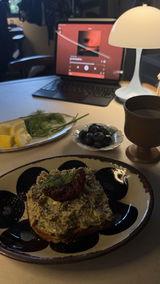
The oval plate by Edome Tobo is dotted with deep cobalt-blue circles. The contrast between the plain clay and the strong blue brings out the food, and it has just enough depth to hold sauces, so it works for curry, pasta and a one-plate breakfast. Okinawan pieces are gathered in the yachimun collection.
Blue Pottery and Food
Blue sits on the opposite side of the color wheel from food. The brown of grilled food, the yellow of eggs and citrus, the red of tomatoes and salmon all stand out sharply on blue. This is why blue pottery is said to "make food look good."
- Grilled fish, fried food, simmered dishes Brown food looks sharpest on the blue of sometsuke or ruri glaze
- Curry, pasta, omelets Yellow and red dishes go well with the thick blue of yachimun
- Sashimi, cold dishes, fruit White and pale food looks cool on the pale blue of celadon or Hagi
- Rice, soups White rice suits pieces with plenty of white, like a rice bowl with a gosu line
On the other hand, a dish of only green vegetables tends to sink into blue pottery, so choose sometsuke or gosu-line pieces with plenty of white space and you will not go wrong.
How to Choose by Type of Piece
| Piece | Recommended blue | What to look for |
|---|---|---|
| Side plates and medium plates | Sometsuke, celadon | 5 to 6 sun (about 15 cm and up). Patterned plates are fun even as a set with a different pattern on each |
| Large plates and oval plates | Sometsuke, yachimun | 7 sun (about 21 cm) or more. For saucy dishes, choose one with a little depth |
| Rice bowls and small bowls | Gosu lines | Used every day, so choose pieces with plenty of white that you will not tire of |
| Mugs and cups | Ruri glaze, Hagi glaze, ash glaze | Pieces chosen for color. Check the capacity and how your fingers fit the handle |
How to think about plate sizes is covered in choosing Japanese plates, and choosing a mug in Japanese ceramic mugs. If you are looking for patterned pieces, also see the hand-painted sometsuke collection.
Caring for Blue Pottery: It Depends on Porcelain or Stoneware
Care for blue pottery depends not on the color but on whether the body is porcelain or stoneware.
- Porcelain sometsuke It absorbs almost no water, so everyday washing with detergent and drying is enough
- Stoneware sometsuke and yachimun The clay absorbs water, so dipping it in water before use keeps stains from setting in. After washing, let it dry well before putting it away
- Celadon, Hagi glaze and other crazed pieces Enjoy color entering the crazing as part of how the piece "grows." If you would rather avoid it, do not leave strongly colored food on it for long
Whether a piece can go in the microwave or dishwasher differs by artisan and piece. Check the product page, and see our article on microwave and dishwasher use for how to tell. Care by body type is covered in stoneware care and caring for Japanese tableware.
Related Reading
Techniques and materials that make blue
- Sometsuke: Blue and White Porcelain, Explained
- Gosu: The Cobalt Blue Behind Japanese Sometsuke
- Celadon (Seiji): The Blue-Green Glaze of Iron and Fire
- Seihakuji: White Porcelain Where Blue Pools in the Carving
- Ruri Glaze (Ruriyu): Deep Cobalt Blue on Japanese Pottery
- Crazing (Kannyu): Cracks in Glaze That Aren't Damage
Artisans and regions behind blue pottery
- Artisan Higuchi Maki | From Cranes to a Coelacanth, Hand-Painted Japanese Pottery
- Artisan Suzuki Takashi | Growing Mikan Trees to Make Blue Glaze From Their Ash
- Artisan Furutani Pottery | Making Kohiki White an Everyday Piece in Shigaraki
- Artisan Shokozan | Hagi Ware Shaped by Hand, Down to the Rim
- Hagi Ware: The Tea Bowl That Changes Colour as You Use It
- Yachimun: The Okinawan Pottery Shaped by the Island’s Clay and Sea
Shop
- Blue Japanese Tableware | Sometsuke & Blue Glaze
- Japanese Blue and White Pottery | Hand-Painted Sometsuke
- Suzuki Takashi | Celadon & White Porcelain Plates, Odawara
- Yachimun | Handmade Okinawan Pottery from Ryukyu
Bring One Blue Piece to Your Table
Indigo sometsuke on white, a single gosu line, clear celadon, deep ruri, pale Hagi blue, and the bold blue of yachimun. Even within one color, each piece changes the look of the table completely. At Nokaze, you can browse blue pottery made by artisans and kilns, from plates and bowls to mugs, all in one place.
Shop Blue Japanese TablewareFAQ
What is the difference between sometsuke and celadon?
What food goes well on blue pottery?
Does the blue on blue pottery fade or wear off with use?
Shop the related pieces
Blue Japanese Tableware
69 pieces See all
Teramoto Shiori
Large Bowl — Seto Porcelain
¥3,960
Bowls

Utsuwa no Yukue
Pine Ash Glaze Compact Mug
¥3,500
Japanese Coffee Cups

Furutani pottery
Gosu Blue Line Rice Bowl, Small — Shigaraki
¥2,420
Japanese Rice Bowls

Higuchi Maki
Squid Diamond Plate
¥4,400
Plates
Japanese Painted Ceramics
50 pieces See all


New to Japanese pottery? Start here — its history, how pottery differs from porcelain, the clays and glazes behind each style, and how to care for a piece. → Japanese Pottery: The Complete Guide