
Yachimun Buying Guide: Choosing Okinawan Pottery by Shape and Studio

Yachimun is the Okinawan word for pottery. Thick clay, a warm cream ground, and patterns brushed in cobalt blue, amber and green: it is one of the most relaxed kinds of Japanese pottery, and one of the easiest to use every day.
Buying it online, though, raises questions a pottery shop in Okinawa would answer for you. Which shapes actually get used? What separates one studio from another? Is the traditional look or the modern one right for your table? This guide answers those, using pieces from the nine Okinawan studios nokaze carries now.
If you would rather see the pieces first, every piece in this guide is in the yachimun collection.
Why Is It Called "Yachimun"?
"Yachimun" is the Okinawan word that corresponds to yakimono, "fired things" or pottery, in mainland Japanese. In the Okinawan language, "ki" often becomes "chi," and the "o" sound often becomes "u." Just as Okinawa becomes "Uchinaa" and kokoro (heart) becomes "kukuru," yaki became "yachi" and mono became "mun," so yakimono became yachimun. The same "yachi" (fired) appears in arayachi, unglazed high-fired pottery, and joyachi, glazed pottery.
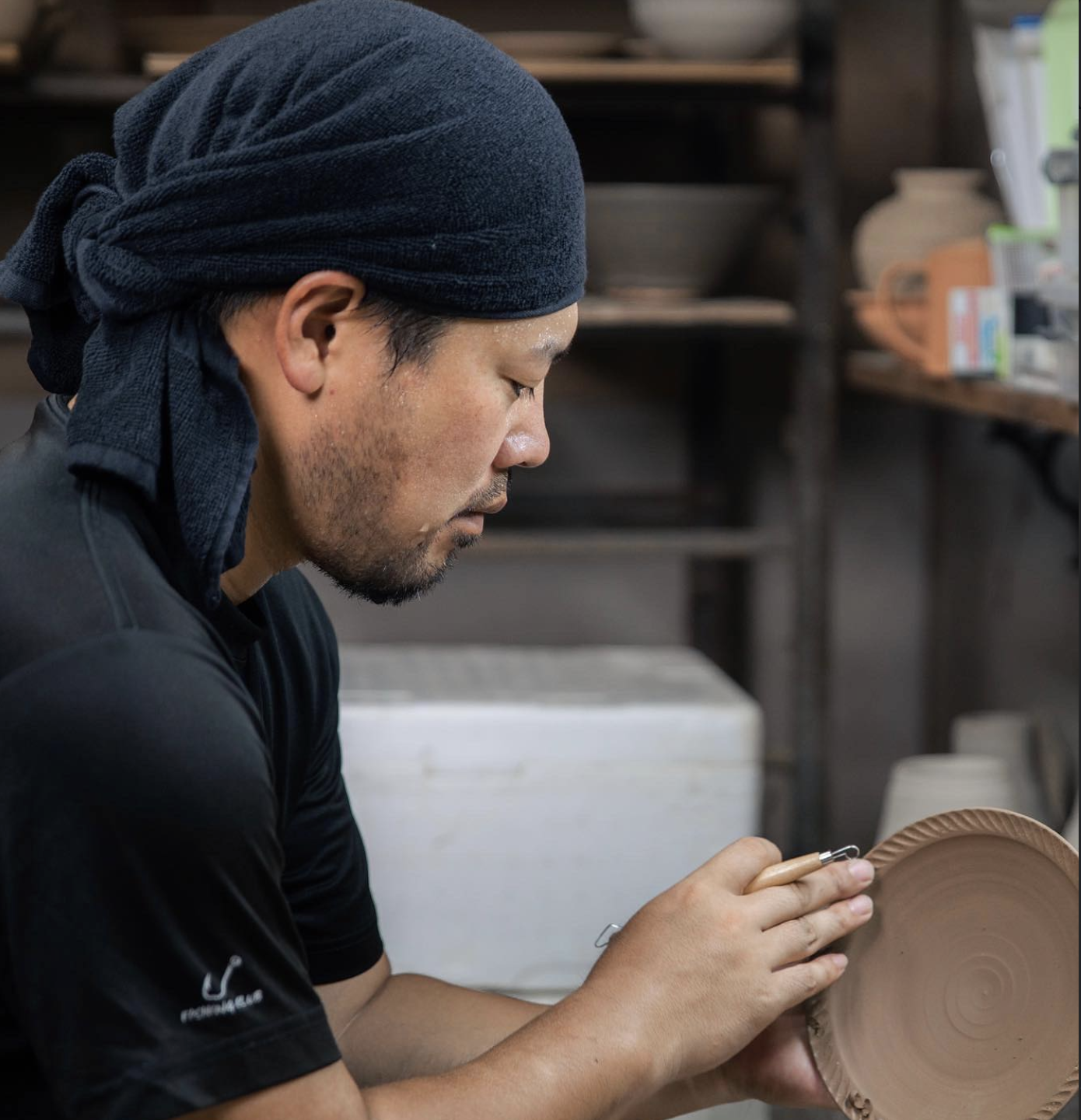
The word covers pottery of every kind, so not only plates and bowls but jars for storing water and awamori, and the shisa guardians that protect houses from rooftops and gateposts, are all yachimun if they are fired. The shisa in the photo at the top is one of them.
Why a Rice Bowl Is Called a "Makai"
In Okinawa, a bowl for rice or soup is called a "makai." The Konkoken-shu, a dictionary of the old court language compiled by the Ryukyu royal government in 1711, lists the word "makari" as "a kind of tea bowl," and adds that mainland Japanese also had the expression "makari-bachi." This "makari" is thought to have become "makai" in Okinawan pronunciation.
A makai is used not only for rice but for Okinawa soba, yushi-dofu (soft tofu) and soups. Many are a little larger than a mainland rice bowl, with a wider mouth. Browsing yachimun, you will come across other Okinawan words too.
| Word | Meaning |
|---|---|
| Yachimun | Pottery. Refers to all the pottery made in Okinawa |
| Makai | A bowl. From the old word "makari." For rice, soup and Okinawa soba |
| Champuru plate | "Champuru" is Okinawan for "mixed together." It is the name of a dish of vegetables and tofu stir-fried together, and the plate is a deep one for serving it |
| Arayachi and joyachi | Unglazed high-fired pottery and glazed pottery. Most everyday tableware is joyachi |
| Tsuboya ware | Pottery from Tsuboya in Naha, where the island's kilns were gathered in 1682 |
What Makes Yachimun Different
In 1682, the Ryukyu royal government brought the island's kilns together in Tsuboya, Naha, and Okinawan pottery grew from there. In the early Showa era, Yanagi Soetsu and the mingei movement praised its healthy, unpretentious beauty. From the 1970s, when the smoke from climbing kilns became a problem in the middle of Naha, many potters moved their kilns to Yomitan, creating what is now known as Yachimun Village.
What you notice in the hand is the thickness. Yachimun is usually thick and sturdy, so it stands up to daily use, and the brushwork keeps all its momentum. The history, patterns and forms are covered in our guide to yachimun; this page is about choosing a piece.
Choose by Shape: What Gets Used
| Shape | How to use it | What to look for |
|---|---|---|
| Makai (rice bowl) | Rice, soup, a small donburi. The piece you will use most | 4.5 sun (about 13.5 cm) is the standard everyday size for adults |
| Rectangular and oval plates | Main dishes, sushi, a one-plate breakfast, sharing | Large ones for the center of the table, small ones for side dishes |
| Champuru plate | Stir-fries, curry, pasta, salad | A raised rim with enough depth to hold sauce |
| Cups and mugs | Coffee, tea, cup and saucer | Check the capacity and how your fingers fit the handle |
| Soba choko | Dipping sauce, a small side bowl, cold drinks | A straight shape that works for almost anything |
If you are buying your first piece, start with a makai or a mid-size plate. They come out every day, so you get to know the clay quickly.
The 4.5-sun makai by Yokotaya Kiln is a rice bowl fired in the traditional way. It looks solid, yet the curve settles comfortably in the hand, and at about 13.5 cm it is the easiest size for everyday rice, ochazuke, hearty soups or a small donburi. Bowl sizes in general are covered in choosing a rice bowl.
Choose by Studio: Nine Studios, Nine Characters
Yachimun is not one style. Some studios carry the tradition forward; others make pieces for how people live now. These are the ones in the nokaze collection.
Issui Kiln, Yomitan: Bold Pattern and Color
The photo below is a large rectangular plate by Issui Kiln. Free brushstrokes, dots and zigzags in blue, green, purple and red cover a cream ground, so the plate looks like a painting even before food goes on it. Issui Kiln also makes champuru plates finished in overglaze enamel, with color baked on top of the glaze for a raised, glossy pattern.
 More from Okinawan Pottery (Yachimun)
Seiho Kiln, Iriomote Island: A Mineral From the Island
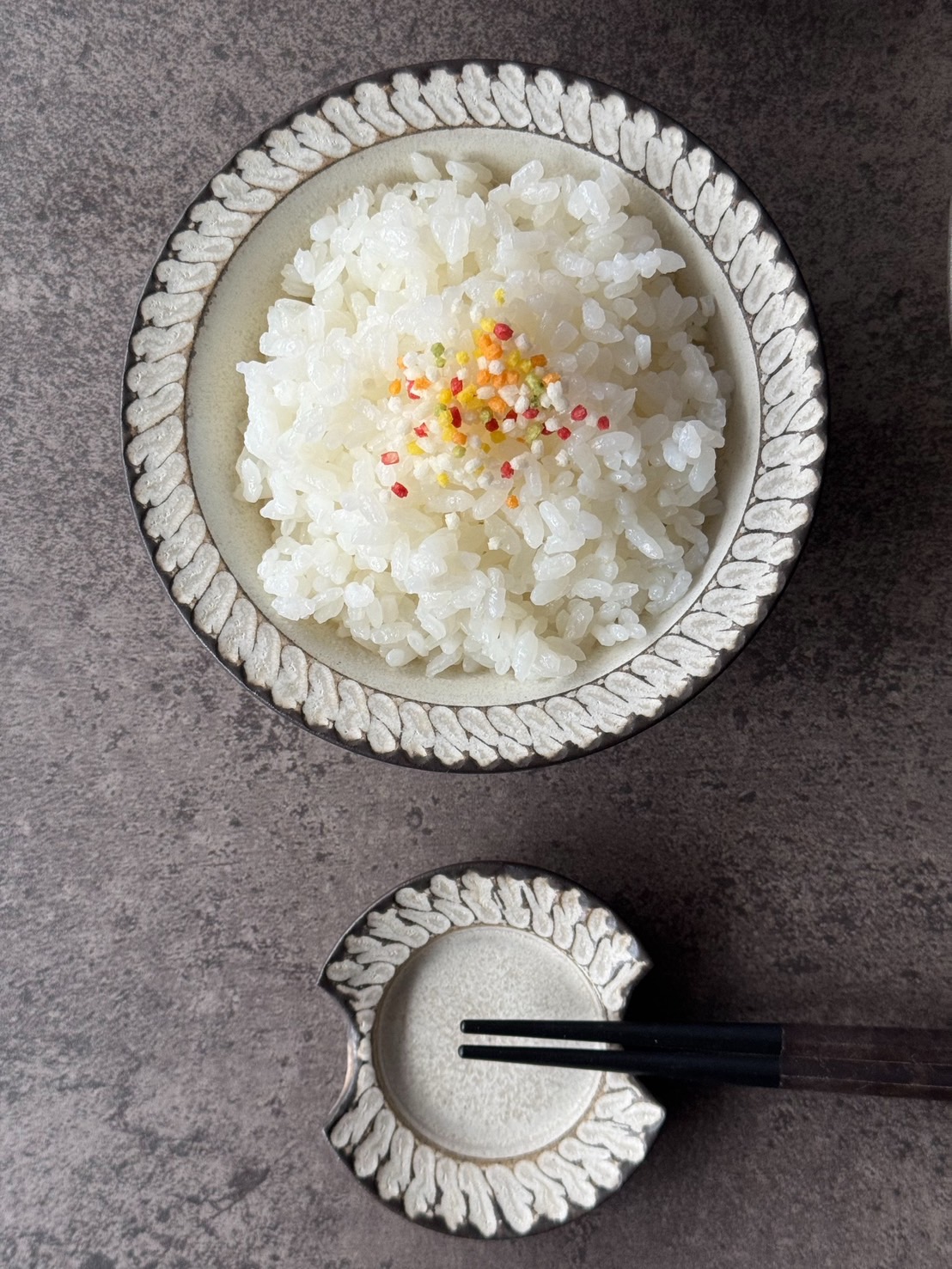
On Iriomote Island, Seiho Kiln kneads suzu-ishi, a rare natural mineral found on the island, into its own "suzu-gesho" slip. The rice bowl in the photo has a smooth, quiet clay surface inside a band of carved scrolls, and a weight that settles in the hand. It is yachimun at its calmest.

sui, Kitanakagusuku: Carved Lines and Clear Blue
sui carves fine lines around the rim of an oval plate like a picture frame. Glaze pools in the carving and leaves light and shadow, framing whatever you serve. An oval also fits neatly on a table full of round plates.

nakamurakenoshigoto, Nanjo: Matte Manganese
nakamurakenoshigoto works in a manganese glaze, a deep, matte color that recalls bronze, black or antique metalware. It is the quietest yachimun in the collection, and a small oval is as useful for nuts and butter as for keys and rings.

Five More Studios (and Okinawa Has Many More)
- Edome Pottery Bowls and plates with karakusa scrolls, round crests and chrysanthemums
- Yokotaya Kiln Makai and other bowls fired in the traditional way
- Atelier Gokoya, Taketomi Island Island plates carrying the Paterna patterns of medieval Spain
- Atelier Kucchane Goya, shikwasa and other Okinawan fruit, painted like a picture book
- dango (Iha Yuya) Simple white and brown pieces that let the material speak
Traditional or Modern?
If you are unsure, yachimun is easiest to choose by how it differs from what you already own.
- Mostly white or plain pottery at home Choose a traditional piece with bold brushwork, such as Issui Kiln or Edome Pottery. One piece changes the whole table
- Plenty of patterned pieces already Choose something quieter, such as sui, Seiho Kiln or nakamurakenoshigoto. It will sit with everything
- Buying a gift Atelier Kucchane's cup and saucer or Atelier Gokoya's small plates read as Okinawan at first glance
Yachimun and Food
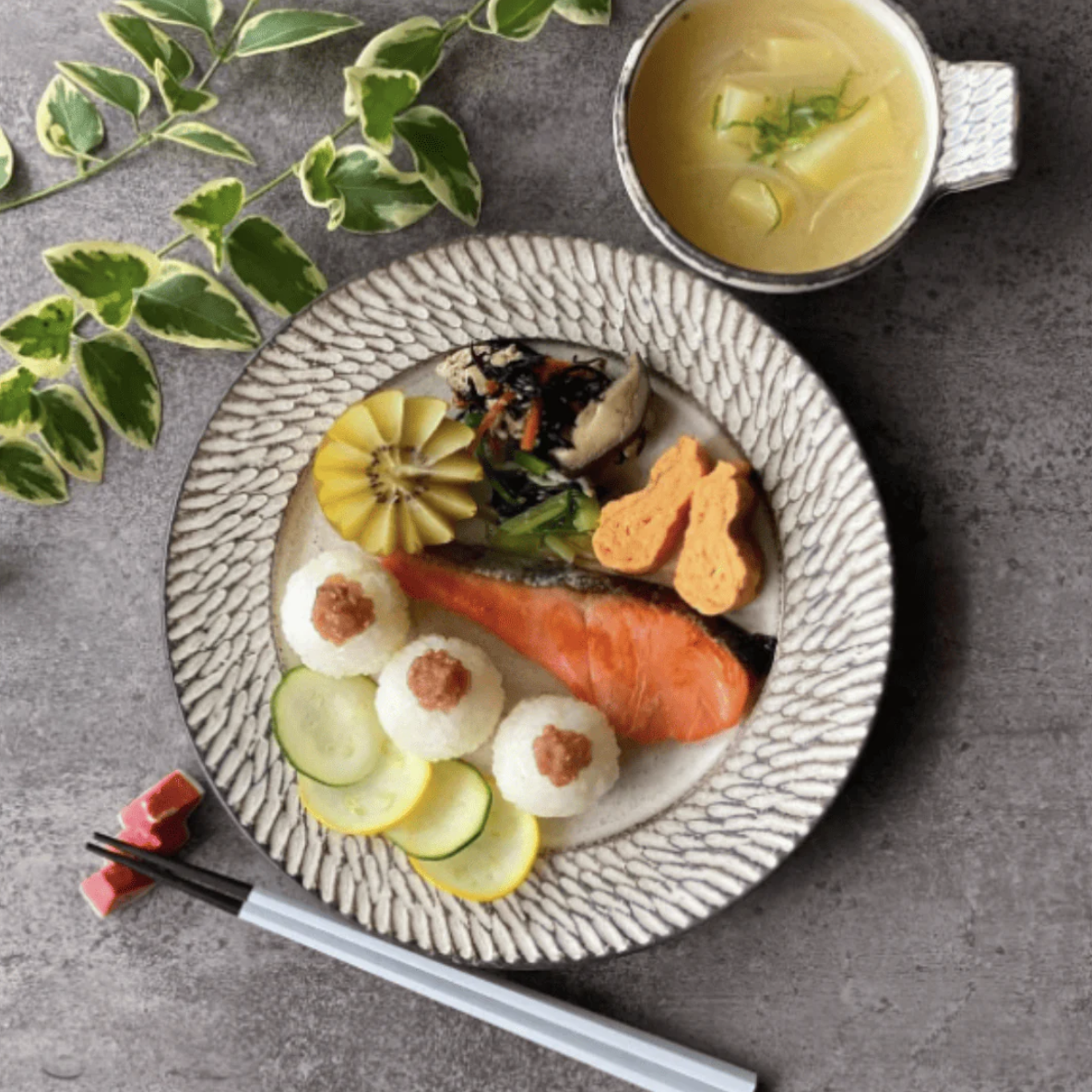
Yachimun was made for everyday island cooking, so it suits generous, home-style food. Champuru, curry, pasta and stir-fries sit naturally on its thick clay. The cream ground and cobalt blue bring out the yellow of eggs and the red of tomatoes, while the deeper glazes make white rice and pale food stand out.
Blue yachimun in particular pairs well with brown and yellow dishes. The way blue works with food is covered in blue Japanese tableware.
Caring for Yachimun
Yachimun is stoneware, so the clay can take up water.
- Before use Dip it in water first to keep stains from setting in. For oily or strongly colored dishes, this makes a real difference
- After washing Let it dry fully, including the unglazed foot ring, before stacking it away
- Microwave and dishwasher This varies by studio and piece, so check the description on each product page
How to tell is covered in microwave and dishwasher, and everyday care in stoneware care.
Related Articles and Terms
Getting to Know Yachimun
- Yachimun: The Okinawan Pottery Shaped by the Island’s Clay and Sea
- Mingei: The Folk Craft Movement That Changed Pottery
- Uwa-etsuke: How Overglaze Enamel Painting Works
Choosing and Caring
- How to Choose a Japanese Rice Bowl (Chawan)
- Blue Japanese Tableware: Sometsuke, Gosu, Celadon and Ruri Glaze
- Japanese Stoneware Care: What Porcelain Never Needs
Browse
- Yachimun | Handmade Okinawan Pottery from Ryukyu
- Japanese Bowls | Rice Bowls, Soup Bowls & Donburi
- Japanese Plates | Handmade Ceramic Plates from Japan
Bring Okinawa to Your Everyday Table
Bold brushwork from Yomitan, a mineral from Iriomote, carved lines, matte manganese and fruit painted like a picture book. Yachimun is thick, generous and made for daily use. You can browse pieces from all nine studios in one place.
See yachimunFAQ
Which yachimun should I buy first?
How should I choose between traditional and modern yachimun?
Is there anything to watch out for when caring for yachimun?
Shop the related pieces
Okinawan Pottery (Yachimun)
21 pieces See all


Japanese Bowls
69 pieces See all
Teramoto Shiori
Large Bowl — Seto Porcelain
¥3,960
Bowls

Furutani pottery
Gosu Blue Line Rice Bowl, Small — Shigaraki
¥2,420
Japanese Rice Bowls

Furutani pottery
Iron-Line Rice Bowl, Large — Shigaraki
¥2,640
Japanese Rice Bowls

Furutani pottery
Rough Iron-Line Oval Deep Bowl, Large — Shigaraki
¥3,740
Bowls
New to Japanese pottery? Start here — its history, how pottery differs from porcelain, the clays and glazes behind each style, and how to care for a piece. → Japanese Pottery: The Complete Guide