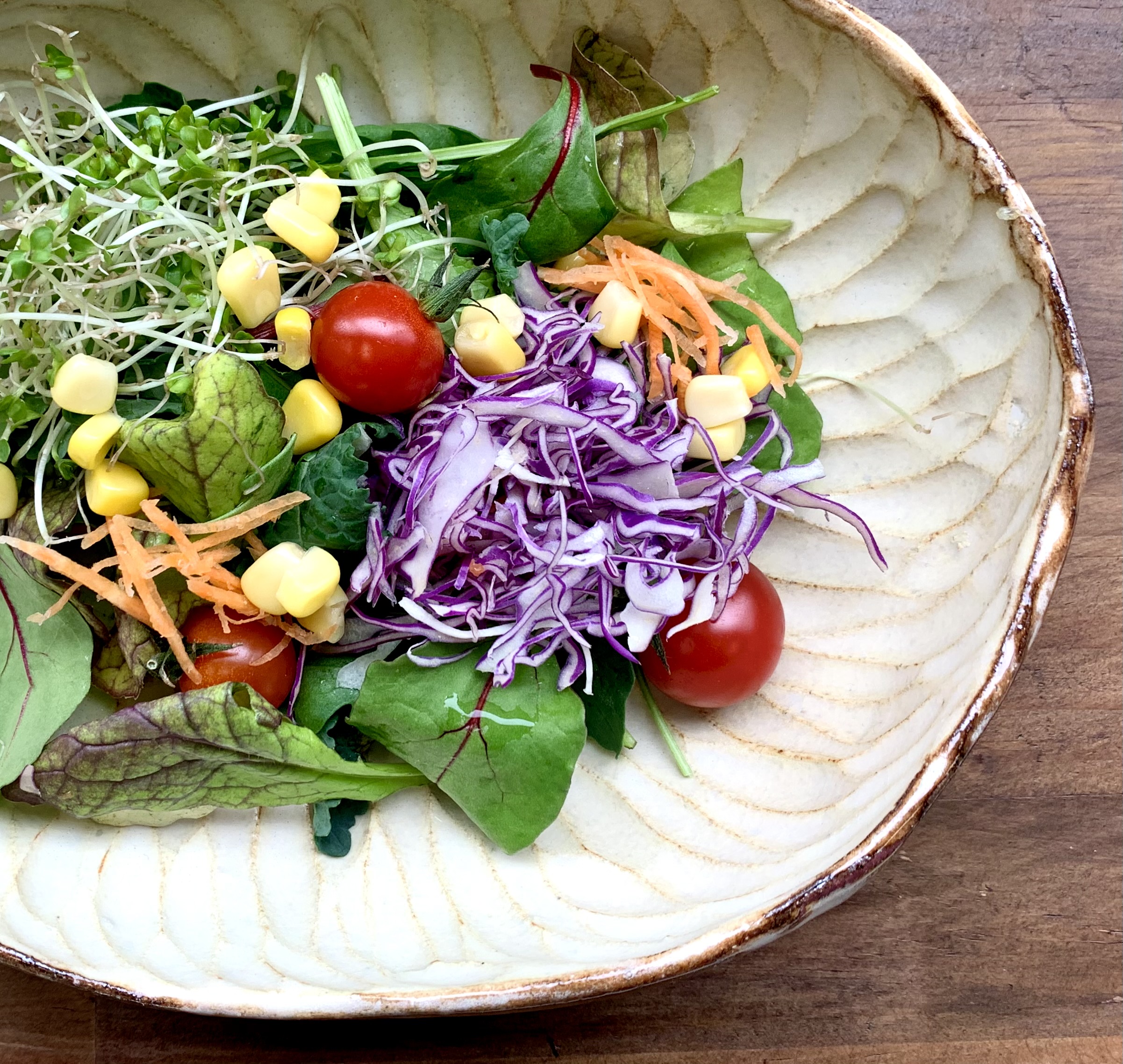

Artisans Takezaki Noriyasu and Takezaki Yoko | Two Traditional Craftspeople Firing One Bizen Kiln

Bizen City, Okayama Prefecture. In the home of Bizen ware, pottery finished with no glaze at all, only clay and flame, Takezaki Noriyasu and Takezaki Yoko make their work together as a married couple.
Both of them are certified Bizen ware Traditional Craftspeople. Yoko was the first woman ever certified as a Bizen ware Traditional Craftsperson, and Noriyasu was certified in 2025. That makes two Traditional Craftspeople under one roof.
Noriyasu's current focus is the Reki series, which turns the look of cracked earth directly into pottery. Yoko inlays white clay into Bizen clay so smoothly that there is no step between the two. We asked each of them the same six questions separately. Asked which step is the hardest, both named the same one.
nokaze carries pieces by Takezaki Noriyasu and pieces by Takezaki Yoko.
A Married Couple Who Are Both Traditional Craftspeople
Traditional Craftsperson (dento kogeishi) is a title awarded by examination to artisans who have worked for at least 12 years in a region producing a traditional craft designated by the national government (the Minister of Economy, Trade and Industry). The certification is granted by the Association for the Promotion of Traditional Craft Industries, and it tests practical skill as well as knowledge.
Bizen ware was designated a traditional craft in 1982. To be designated, a craft must be made with techniques and methods handed down over a long history. A Traditional Craftsperson is someone who has actually carried those techniques for many years. The system is separate from that of the Living National Treasures, whom the government recognizes as holders of Important Intangible Cultural Properties.
| Item | Takezaki Noriyasu | Takezaki Yoko |
|---|---|---|
| Traditional Craftsperson | Certified in 2025 | The first woman certified |
| Main work | Vases and sake ware, thrown on the wheel and built by hand | Tea ware, mugs and guinomi sake cups |
| Current focus | The Reki series | Inlay with no step |
| Hardest step | Kiln loading | Preparing the clay, drying and firing, especially kiln loading |
Takezaki Noriyasu | The Faces of Everyday Earth, Turned Into Pottery

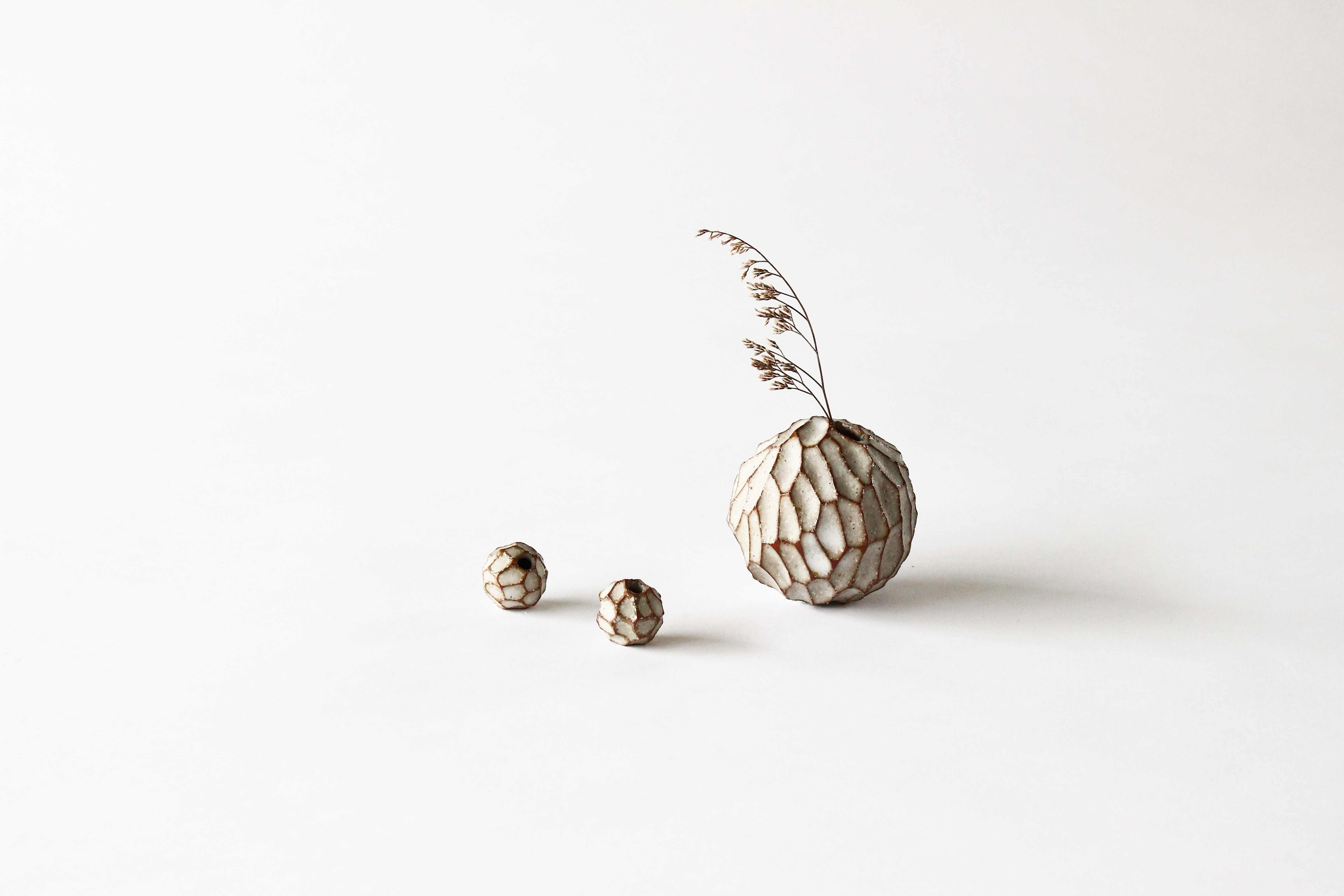
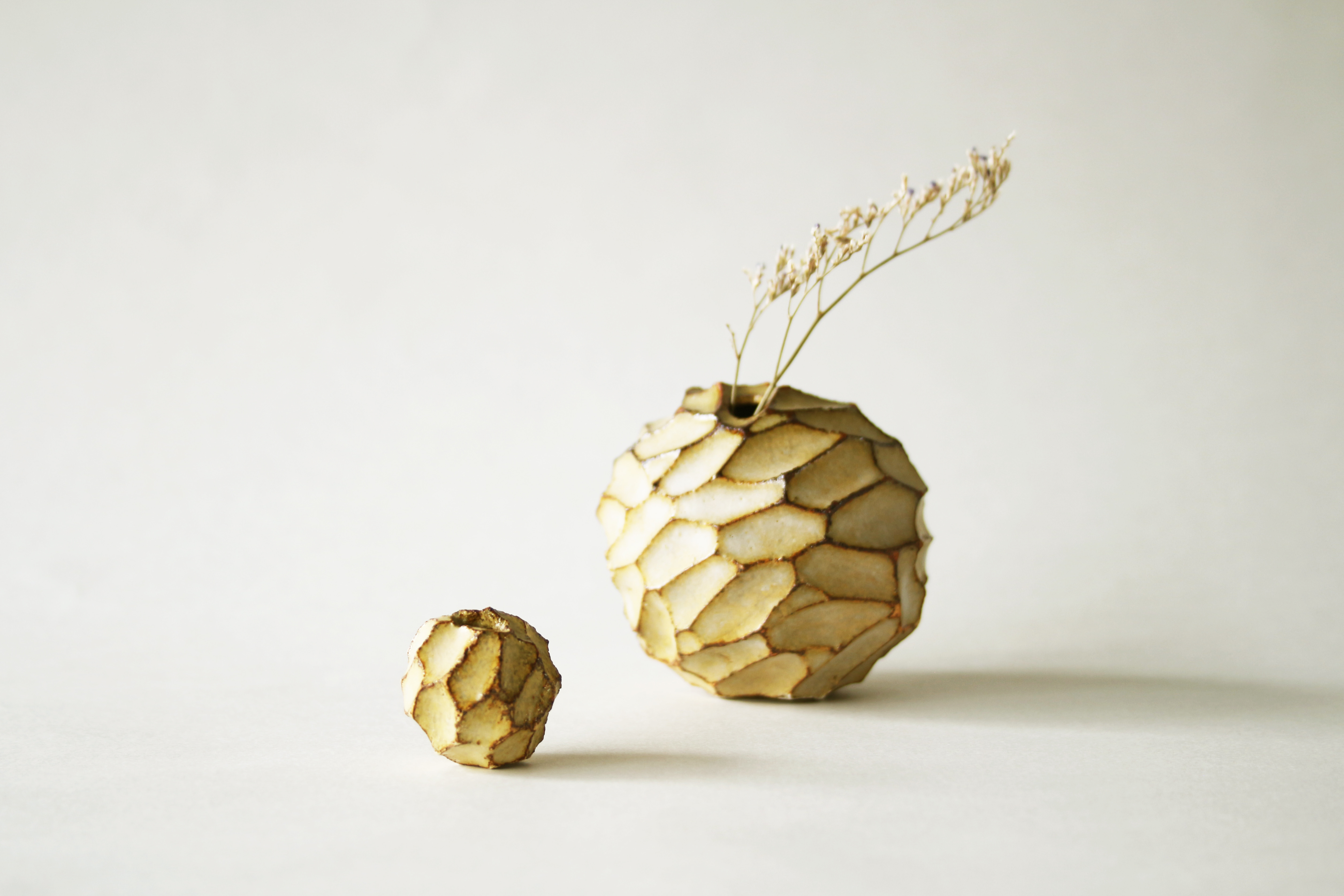
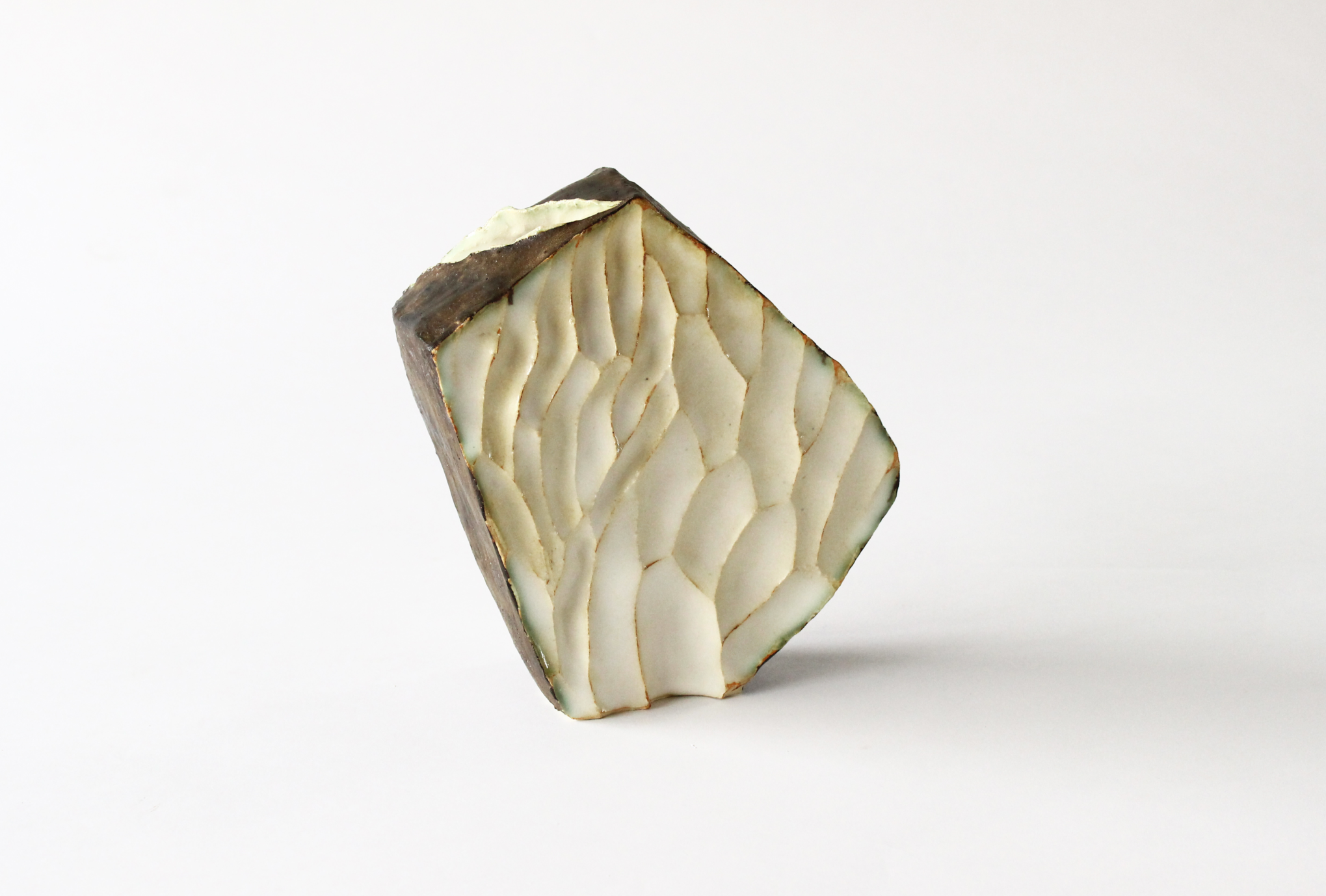
Noriyasu has made vases and sake ware on the wheel and by hand. What he is putting the most into right now is the Reki series. Reki means small stones. The surface cracks into a skin that looks like pebbles gathered together.
The Reki series expresses, in pottery, one of the many faces that earth shows us, the kind we see in ordinary moments of daily life.
— Takezaki Noriyasu
A dry rice field, the ground after rain. Cracked earth is a sight everyone has seen. Noriyasu copies that look onto the skin of a piece, then fixes it once more in the flames of the kiln. Into the gaps of the cracks come the reds and oranges where the flame struck.
The care behind the Reki pieces starts with the clay itself.
So that the character of the raw clay I have on hand comes through, I crush raw clay dug from many different places, turn it into slip, adjust the particle size, and work with that precious clay.
— Takezaki Noriyasu
Raw clay (gendo) is earth just as it is dug from the hills or the rice fields, mixed with stones, sand and grass roots. It is crushed, dissolved in water into a thick slip, its fineness adjusted, and then brought back to clay. The iron content and grain differ with each place it was dug, so the character of that earth shows in the fired piece. How the type of clay shapes the character of a piece is explained in our article on clay and porcelain stone.

Before firing, the Reki pieces are the pale color of dried earth. After passing through the wood-fired kiln, they turn into a skin mixed with dark brown, gray and scarlet.


Takezaki Yoko | "I Want to Work With Bizen Ware, in Bizen"
Yoko studied industrial design at Salesian Polytechnic. She first met pottery in one of its classes.
As a student, part of a three-dimensional design class was set aside for learning pottery. That is where I made my first piece. It was so much fun to watch the clay change shape freely and become a piece of pottery that I was completely absorbed. I started using the school studio after classes, and I even visited potters who had graduated from the school.
On the advice of the teacher who taught us pottery, I went to Bizen to see it for myself. The simple, rustic feel of pottery made without glaze, the powerful kiln effects of the wood-fired kiln, the order hidden inside the warped forms. All of it drew me in. I decided "I want to work with Bizen ware, in Bizen," and during my one-week stay I went around the kilns looking for a place to work.
— Takezaki Yoko
One week of visiting, and in that week she looked for the kiln where she would work. What drew Yoko to Bizen was the taste of unglazed clay and the yohen kiln effects left by the wood fire. Eyes trained in form through industrial design also saw the order inside the warped shapes.
The words Yoko works by today are "Giving form to feelings." She wants to carry each piece through her own hands, from choosing the materials to design, forming and firing, and deliver it to the person who will use it.

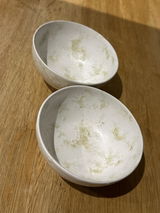
Yoko's technique is inlay (zogan). A pattern is carved into the surface, clay of a different color is pressed into the hollows, and the surface is shaved flat. In Yoko's inlay, white clay is set into Bizen clay.
When I believe something is good, I give it everything and never cut corners. More work takes more time, but I believe the care put into a piece reaches the customer just as it is. Even a single small piece is, for the customer, "the one and only piece they met."
In my inlay, there is no step between the body clay and the white inlay clay. The fine adjustment of each clay, and the work it takes, are more than you would imagine.
— Takezaki Yoko
Each type of clay shrinks differently as it dries and as it is fired. If the body clay and the white clay shrink by different amounts, the border lifts or cracks. To finish it so flat that you cannot find the border with your finger, the two clays have to be adjusted little by little until they shrink the same way.

The photo above is an inlaid matcha bowl with a lotus motif. On the dark brown skin, the lines of white petals circle the body.
Kiln Loading, the Step Both Named
Asked which step is the hardest, they both named the same one: kiln loading (kamazume), arranging the pieces inside the kiln before firing.
Every step is hard, but kiln loading, where I place and set up each piece while picturing how it will come out, is the hardest.
— Takezaki Noriyasu
Preparing the clay, drying and firing. Firing above all. But in the end, what a piece looks like when it comes out is decided by the work of loading. Thinking about how the fire will flow, I decide where each piece goes, which way it faces, how pieces are stacked, and how it sits in relation to the others.
— Takezaki Yoko
Bizen ware has no glaze. The color and pattern of a piece are decided by how the flame and ash strike it inside the kiln. Placed in the path of the flame, ash settles on it and yohen kiln effects appear. Buried in ash, it takes on the gray and blue of sangiri. Wrapped in straw and set where the flame does not reach, it keeps the red lines of hidasuki.

The photo above shows the preparation for hidasuki. Straw is wrapped around unfired mugs, and straw and clay discs are packed inside the cups as well. Once the straw burns away, red lines remain where it reacted with the iron in the clay.

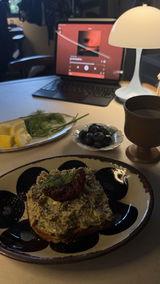
Set another piece or a lump of clay on top of a piece, and the flame cannot reach that spot, leaving a round mark called botamochi. The round patterns on the plates above were also set up at the loading stage. Where, which way, and stacked with what. That judgment decides almost everything about how the pieces look when they come out of the kiln.

Fired in the same kiln on the same day, two pieces placed a few dozen centimeters apart come out completely different. That is why each of their pieces is one of a kind.
Firing, Feeding the Kiln With Wood Without Pause
When loading is done, the mouth of the kiln is closed with bricks and clay, and the fire is lit. Firing Bizen ware means feeding the kiln with wood day and night for days on end.


The mouth of the kiln is sealed by plastering clay into the gaps between the stacked bricks. The wood piled in front is what will be fed to the fire.


As the temperature rises, both the amount of wood and the timing change. Watching the color of the flame and how the smoke comes out, they read the temperature inside the kiln.


The flame in the firebox gets so hot that it looks white. To keep the fire from weakening, they stay in front of the kiln day and night, adding wood.


Black smoke rises from the chimney just after wood is added, when the inside of the kiln is short of oxygen. How the smoke behaves also affects the color of the fired pieces. Kiln types and how they are built are covered in our articles on the noborigama and on anagama vs noborigama.
How to Use Bizen Ware
| Type | How to use it |
|---|---|
| Sake cups and guinomi | A cup of sake. Some of Noriyasu's yohen and Reki sake cups come with a paulownia wood box, so they also make good gifts |
| Katakuchi pourer and small kabura tokkuri | For pouring sake. The small turnip-shaped tokkuri also works as a bud vase |
| Happo-zara eight-sided plate | For sashimi, grilled dishes or wagashi. The eight-sided shape is considered auspicious |
| Rice bowl | For rice every day |
| Handleless cup | For tea or shochu, with the red lines of hidasuki |
| Faceted mug | A large mug that holds plenty. For morning coffee or tea |
| Matcha bowl and inlaid bowl | For whisking matcha. The inlaid bowl has a lotus pattern |
| Pot and plate | A pot for coffee or tea, and a flat plate with a stone-grain pattern |
| Tomaya incense burner | An incense burner shaped like a thatched hut. Smoke escapes through openings cut in the walls |
The first thing Noriyasu recommends is sake.
First of all, I'd like you to drink sake from Bizen ware sake ware. The same goes for the dishes that hold the food to go with it. I want my pieces to be ones that stay close to the person using them, in everyday life.
— Takezaki Noriyasu

Bizen ware sake ware has a finely textured surface, and it is said to make sake taste rounder. How to choose sake ware by material and shape is covered in our article on how sake ware changes sake, and how to enjoy guinomi in our article on guinomi.
Please use them every day. I hope they can help make everyday life fun and bring a smile.
— Takezaki Yoko

For a first piece, a guinomi or a sake cup is the easiest way in. It fits in the palm of your hand and works straight away for the sake Noriyasu recommends "first of all." For everyday tea or coffee, Yoko's faceted mugs are a good choice.
No Two Pieces Are the Same
The Bizen ware you buy is one of a kind. No other piece has the same shape or the same firing colors. Bold, eye-catching firing colors are attractive, but I think pieces with quieter firing colors let you feel the change in the clay more.
— Takezaki Noriyasu
I would be happy to connect with you through my pottery. I only speak Japanese, but I hope my work can carry warm feelings to you, the way words do. Bizen ware becomes soft and settles into your hand as you use it.
— Takezaki Yoko
When pottery changes in feel and color the more you use it, we say it grows. The pieces with the "quieter firing colors" Noriyasu mentions are the ones where that change is easiest to see. Care such as drying pieces well before putting them away and doing medome before first use is covered in our article on stoneware care.
Their pieces are not suitable for the microwave, dishwasher or oven. Wash them by hand and let them dry well before use.
What Comes Next for Takezaki Noriyasu and Takezaki Yoko
My work is still only halfway there, so I want to let it mature.
— Takezaki Noriyasu
I put inlay on tea ware and vases, but I want to bring it to everyday pottery too.
— Takezaki Yoko
Even after being certified as Traditional Craftspeople, Noriyasu calls his work "halfway there," and Yoko is working to bring inlay to everyday pottery. Their pieces will keep changing in the clay and flame of Bizen.
Related Articles
Learn About Bizen
- Bizen Ware: Pottery With No Glaze at All
- Bizen Pottery History: 1,200 Years from Sueki to the Tea Bowl
- Living National Treasures: Japan's Greatest Potters
Learn About Firing Colors and Kilns
- Hidasuki: The Red Straw Marks on Bizen Pottery
- Sangiri: The Gray and Blue Bizen Gets When Buried in Ash
- Noborigama: The Climbing Kiln, Chamber by Chamber
- Anagama vs Noborigama: Japanese Wood Kilns Compared
See the Pieces
- Pottery by Takezaki Noriyasu
- Pottery by Takezaki Yoko
- Bizen Pottery | Unglazed Japanese Stoneware from Okayama
Pottery by Takezaki Noriyasu and Takezaki Yoko
Noriyasu's Reki and yohen sake ware, eight-sided plates and incense burners. Yoko's inlaid bowls, faceted mugs and guinomi. Each piece is one of a kind, its firing colors shaped by where it sat in the kiln.
See Takezaki Noriyasu's pieces See Takezaki Yoko's piecesThis article is based on answers provided by Takezaki Noriyasu and Takezaki Yoko.
Interview and editing: nokaze editorial team
FAQ
What is a Traditional Craftsperson?
How are the colors and patterns of Bizen ware decided?
Can Takezaki Noriyasu's and Takezaki Yoko's pieces go in the microwave or dishwasher?
Shop the related pieces
Takezaki Noriyasu
11 pieces See all
Incense & Accessories
Tomaya Incense Burner No.2 — Bizen Ware
¥24,200

Japanese Sake Ware
Yohen Sake Cup with Paulownia Box — Bizen Ware
¥11,000

Japanese Sake Ware
Yohen Ido Sake Cup — Bizen Ware
¥9,900

Japanese Sake Ware
Yohen Katakuchi Sake Pourer — Bizen Ware
¥16,500
Takezaki Yoko
11 pieces See all


New to Japanese pottery? Start here — its history, how pottery differs from porcelain, the clays and glazes behind each style, and how to care for a piece. → Japanese Pottery: The Complete Guide