
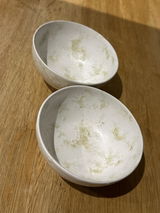

Before First Use: Preparing Unglazed and Crackled Japanese Pottery

Buy a handmade cup or bowl in Japan, or from a Japanese artisan, and it may come with a small slip of paper that says something like this: "Before first use, soak in water," or "Simmer in rice water before use." For many people outside Japan, this is the first time they have been told that a new dish needs preparing at all. A porcelain plate from a department store never asked for that.
This guide is only about that first time. It explains which kinds of Japanese pottery need preparing and which do not, two simple methods you can do at home in an afternoon, the special cases where you should not use them, and what to expect from crackled glazes afterward. For the term itself, our glossary page on medome gives a short definition, and for washing, drying and storing after the first use, see our guide to stoneware care.
Pieces that need this first step are often the ones that change the most with use. Browse our unglazed yakishime pieces to see what we mean.
Why Some Pottery Needs Preparing
It comes down to one question: does the body of the piece absorb water?
Porcelain is fired at high temperature from a fine white stone, and it comes out of the kiln dense and glassy all the way through. It absorbs almost nothing. Most Japanese pottery, though, is made from clay, and clay bodies can stay slightly porous even after firing. Where there is glaze, the glaze seals the surface. Where there is no glaze, or where the glaze is crackled, water and anything dissolved in it can reach the clay.
That is not a defect. It is part of why stoneware feels warm and soft in the hand. But it means that oil, soy sauce, coffee or the smell of a strong dish can be drawn into a dry piece and stay there. The first-use preparation does two things: it lets the clay take up clean water before anything else, and, in the rice water method, it fills the finest pores with starch so that less can get in later. Our guide to how porcelain and stoneware differ explains the materials in more depth.
Does Your Piece Need It?
Here is a quick way to decide. When in doubt, follow the note from the artisan or shop: they know their own clay.
| Type of piece | How to recognize it | Before first use | Before each use |
|---|---|---|---|
| Porcelain | White, thin, rings when tapped, light shows through thin edges | Just wash it | Nothing special |
| Unglazed stoneware (yakishime) | No glaze, bare clay surface, such as Bizen | Wash, then soak in water | Rinse or wet it briefly |
| Glazed stoneware with crackle | A fine web of lines in the glaze, often on soft, warm-colored clay | Rice water simmer, or a long soak | Wet it briefly |
| White slip ware (kohiki) | A soft white coating over darker clay | Rice water simmer | Wet it briefly |
| Fully glazed stoneware | Smooth, even glaze with no crackle, including the foot ring | Wash, an optional soak | Usually nothing |
Kohiki, a white slip brushed or dipped over dark clay, is especially absorbent and stains easily, which is why it is the pottery most often sold with a rice water note. Our page on kohiki describes it.
Method 1: A Simple Soak for Unglazed Stoneware
For unglazed pieces such as Bizen and other yakishime, a simple soak in clean water is usually all that is needed. The clay is fired hard and dense, so it does not drink much, but a dry piece will still take up a little of whatever you first put in it.

- Wash it Rinse the piece in lukewarm water and wipe it gently with a soft sponge to remove any dust from the shop or the packing.
- Soak it Put it in a bowl or sink of clean water so that it is fully covered. Thirty minutes is a reasonable minimum; many people leave it for a few hours. You may see tiny bubbles rise from the clay as water replaces air. That is normal.
- Dry it Take it out, wipe it, and let it dry completely, upside down or on its side, in a place with good airflow. Thick pieces can take a day or more.
From then on, the habit that matters most is wetting the piece briefly before you use it. A quick rinse under the tap, then a wipe, is enough. Japanese restaurants do this with unglazed plates and cups for a practical reason: a damp surface takes up much less oil and sauce than a dry one, and it brings out the color of the clay.

Sake cups are a good example. A small unglazed guinomi like the one above is often dipped in water for a moment before it is filled, so that the first sip tastes of sake rather than of dry clay.
Method 2: Simmering in Rice Water
For crackled glazes, kohiki and softer, more absorbent clay, the traditional first step is to simmer the piece in rice water. In Japanese this is called medome, and in English it is often called seasoning. The starch in the water works its way into the finest pores and cracks and seals them, so that stains and smells have less room to settle.
- Make the rice water The cloudy water from rinsing rice is ideal. If you do not cook rice, stir a spoonful or two of flour or potato starch into a pan of water instead.
- Start cold Put the piece in the pan first, then pour in the rice water until it is fully covered. Starting cold matters: putting a cold, dry piece straight into hot water can shock the clay.
- Simmer gently Bring it slowly to a low simmer and keep it there for 10 to 20 minutes. Avoid a rolling boil, which can knock the piece against the pan. A folded cloth on the bottom of the pan helps.
- Cool in the pan Turn off the heat and let the piece cool completely in the water. This is the step people most often rush. Taking it out hot can stress the clay.
- Wash and dry Rinse off the starch, wash it gently, then let it dry upside down overnight or longer.
If a large plate will not fit in any pan you own, soak it in a sink or tub of rice water for several hours instead. It is less thorough than simmering, but it still helps.
Wide, flat unglazed pieces like this carbonized plate are where a long soak in the sink is often more practical than a pan. The result is much the same: clay that has taken up clean water before it ever meets food.
When Not to Simmer
A rice water simmer is gentle, but it is not right for everything. Skip it, or ask the artisan first, in these cases.
- Kintsugi or lacquer repairs Pieces repaired with lacquer and gold, or with any lacquer detail, should not be boiled. Heat and long soaking can weaken the lacquer. Our guide to kintsugi explains how these repairs are made.
- Gold or silver overglaze Decoration fired on top of the glaze is more delicate than the glaze itself. Wash these pieces gently by hand and leave them out of the pan.
- Pieces with wood, rattan or cord Teapots with bamboo handles, lidded pieces with wooden knobs and anything tied with cord should not be submerged.
- Very large or very thin pieces If the piece barely fits, or if the walls are very thin, the risk of knocking it in the pan is higher than the benefit. Use a long soak instead.
Crackle: What to Expect After the First Use
Crackle, or kannyu, is the fine network of lines that forms in some glazes as the piece cools in the kiln, because the glaze and the clay shrink by different amounts. The glaze is not broken, and a crackled piece does not leak. Our article on crazing explains the science.
What surprises people is that crackle changes. Over months and years of use, tea, coffee and food slowly darken the lines, and the pattern becomes clearer. In Japan this is usually welcomed as the piece "growing" with its owner, and some people choose crackled cups precisely so that they can watch it happen. Our guide to pottery that grows follows how different pieces change.
The rice water simmer slows this down; it does not stop it. If you want the lines to stay pale for as long as possible, do the first-use simmer, wet the piece before each use, rinse it soon after, and dry it fully. If you want them to darken, just use it every day. You can see how varied crackle can be in our crackle glaze collection.

Not all crackle behaves the same way. On a dense, high-fired body like the celadon plate above, the crackle is mostly in the glaze, and it changes slowly. On soft, warm-colored clay, the lines can darken within weeks. The artisan Suzuki Takashi grows mikan trees to make blue glazes from their ash, and Kawai Taichi uses an ice-like crackle on everyday cups and bowls; both are good examples of how varied crackle can be.
After the First Use
Once the first preparation is done, everyday care is simple. The most important thing is drying. A piece that is put away damp, especially stacked or in a closed cupboard, is the most common cause of smells and spots on unglazed and crackled pottery.

- Rinse soon after use Do not leave food or drink sitting in the piece overnight.
- Wash gently Use lukewarm water, a soft sponge and a little mild dish soap if needed. Avoid leaving the piece soaking in soapy water for a long time, because the clay can take up the smell of the detergent.
- Dry completely Leave it upside down or on its side until it is dry all the way through, including the foot ring. Thick pieces can take a day or two.
- Store with air Put it away only when it is fully dry, and give unglazed pieces a little space in the cupboard.
Our full care guide covers stains, smells and what to do if something goes wrong.
Common Mistakes
- Putting a dry piece straight into hot water Sudden changes of temperature are hard on handmade clay. Start in cold water and heat it gradually.
- Lifting it out of the pan while hot Let it cool in the water.
- Using it dry with oily food The first oily meal in a dry unglazed plate is the one most likely to leave a mark. Wet it first.
- Stacking it damp This traps moisture and can lead to musty smells.
- Using strong bleach without asking Bleach can soak into bare clay. If you need to remove a stain, ask the artisan or shop what they recommend for that clay.
- Preparing porcelain It does no harm, but it is not necessary. Save your time for the pieces that benefit.
A Quick Checklist
- Read the note If the piece came with instructions from the artisan, follow them first.
- Unglazed? Wash, soak in clean water, dry fully. Wet it briefly before each use.
- Crackled glaze or kohiki? Simmer in rice water, cool in the pan, wash and dry. Wet it briefly before each use.
- Porcelain or smooth glaze? Just wash it.
- Lacquer, gold, wood or cord? Do not simmer. Ask the artisan.
Pieces Worth the Extra Step
The pottery that asks for a little preparation is often the pottery that becomes most personal with time: unglazed cups that darken and soften, and crackled bowls whose lines fill in with years of tea. Browse our yakishime collection for unglazed pieces from Bizen and other kilns, or our crackle glaze collection for pieces with kannyu. Each one is listed by the artisan who made it.
Related Articles
Caring for Japanese Pottery
- Medome: How to Seal Unglazed Pottery Before First Use
- Japanese Stoneware Care: What Porcelain Never Needs
- How to Care for Japanese Ceramics: A Practical Guide
- Pottery That 'Grows': How Ceramics Change With Use
Clay and Glaze
- Crazing (Kannyu): Cracks in Glaze That Aren't Damage
- Yakishime: Unglazed Pottery Fired to Its Limit
- Kohiki Pottery: The White Slip Technique, Explained
- Earthenware, Stoneware, Porcelain: The Real Differences
Pottery That Grows With You
Unglazed and crackled Japanese pottery, listed by artisan, chosen in Kyoto and shipped to your door, packed one by one.
Shop unglazed potteryFAQ
Do I need to boil Japanese pottery before using it?
How do I do the rice water method?
Will the crackle in my cup change color?
Shop the related pieces
Unglazed Stoneware
97 pieces See all
Bizen Ware Artist Fujiwara Akira
Hikidashi-guro Skull Sake Cup — Bizen Ware
¥20,000
Japanese Sake Ware

Bizen Ware Artist Fujiwara Akira
Hikidashi-guro Bamboo Plate — Bizen Ware
¥20,000
Plates

Shimizu Yayoi
Hidasuki Mosaic Bread Plate — Bizen Ware
¥5,500
Plates

Shimizu Yayoi
Hidasuki Small Round Plate, Stroke — Bizen Ware
¥1,320
Plates
Crackle Glaze (Kannyu)
6 pieces See all


New to Japanese pottery? Start here — its history, how pottery differs from porcelain, the clays and glazes behind each style, and how to care for a piece. → Japanese Pottery: The Complete Guide