
How to Choose Kyo Ware and Kiyomizu Ware Plates: Five Kyoto Artisans Compared by Body and Glaze

Look for Kyo ware or Kiyomizu ware plates and you will find white porcelain, black plates that look like iron, and hand-painted plates. They are all "Kyoto pottery," yet they look nothing alike.
That is because Kyo ware and Kiyomizu ware are not tied to a particular clay or style. The names cover pottery fired in Kyoto in general, and the techniques and colors differ from one artisan to the next. So the quickest way to choose a Kyo ware plate is by the artisan, not by the name of the region.
This guide uses plates by five Kyoto artisans that nokaze carries now to cover the differences in body and glaze, how to pair them with food, how to choose a size, and how to care for them.
If you would rather see the pieces first, the Kyoto collection brings together work by Kyoto artisans.
What Kyo Ware and Kiyomizu Ware Are: Kyoto Pottery With No Fixed Style
Kyo ware (kyo-yaki) is the general name for pottery fired in Kyoto, and pieces fired around Gojozaka, the slope leading up to Kiyomizu-dera temple, have been called Kiyomizu ware (kiyomizu-yaki). Today the two are usually named together as "Kyo-Kiyomizu ware," which is designated a Traditional Craft of Japan.
As the capital, Kyoto drew craftspeople and commissions from all over the country, and while bringing in clay and kilns from outside, it changed shapes and painting to suit each order. So unlike Arita porcelain or unglazed Bizen ware, there is no single look that says "this is Kyo ware." The history and features are covered in the article on Kyo ware, and where to buy pottery in Kyoto in the article on Kyoto pottery.
Plates by Five Kyoto Artisans: Tell Them Apart by Body and Glaze
First, here is how the five artisans' plates differ. Looking at the body (porcelain or stoneware) and the surface finish makes choosing easier.
| Artisan | What sets the plates apart | How they look | Food they suit |
|---|---|---|---|
| Jiucasca Maeda Asami | Patterns raised on porcelain with slip trailing and relief | Bronze, pale celadon and ash blue. Glaze pools in the relief | Sweets, bread, side plates |
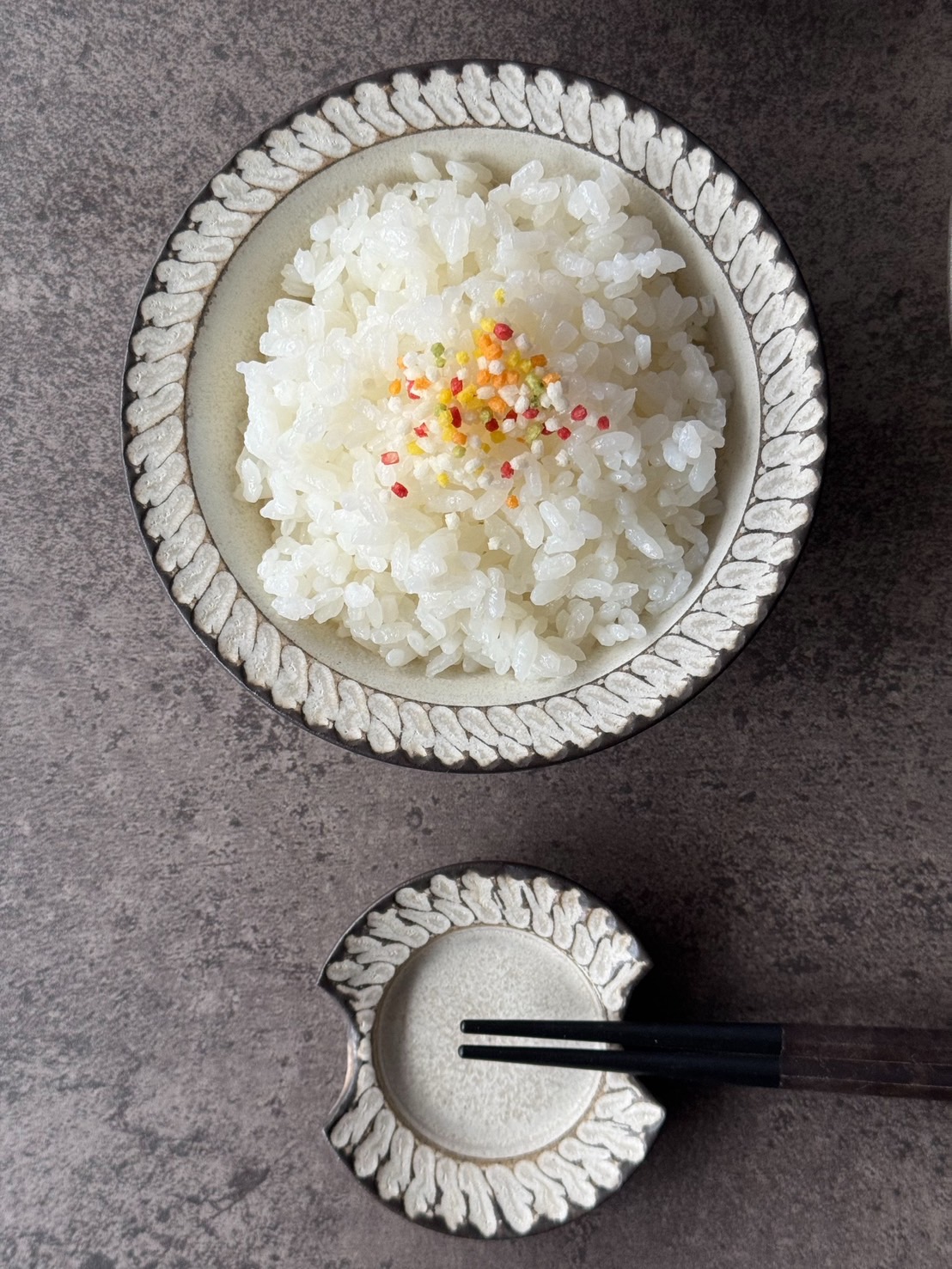
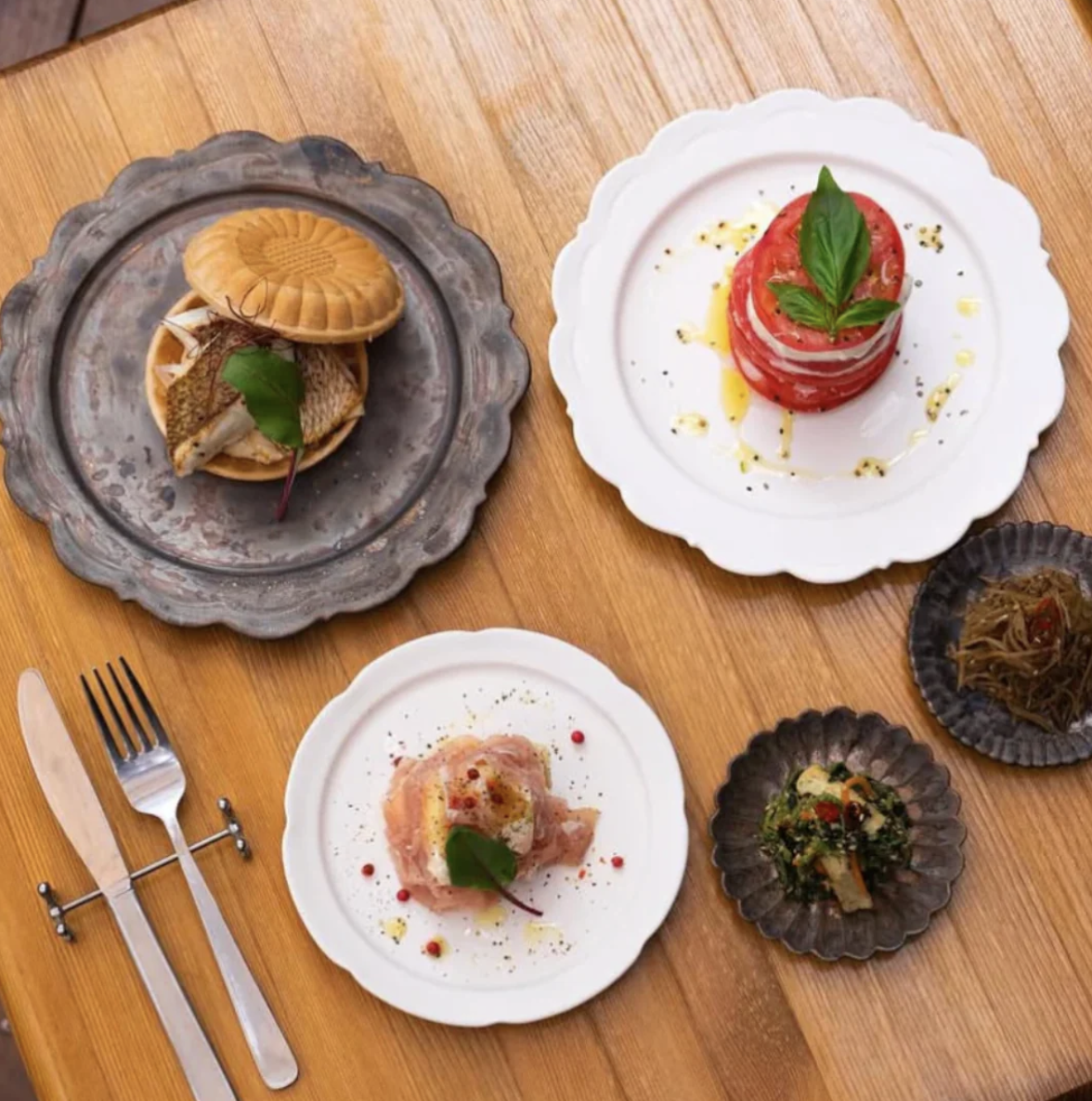
| Hirai Shu | A "black gold" glaze with the texture of aged iron, and flowing glazes | Silver and rust tones mottled over black. Light in the hand | Meat dishes, baked goods, brightly colored food |
| TATA pottery studio | A two-person studio: Tanaka Daiki shapes, Tanabe Kei paints | Retro painting on white. Octagonal and cut-corner shapes | Breakfast, children's meals, one-plate meals |
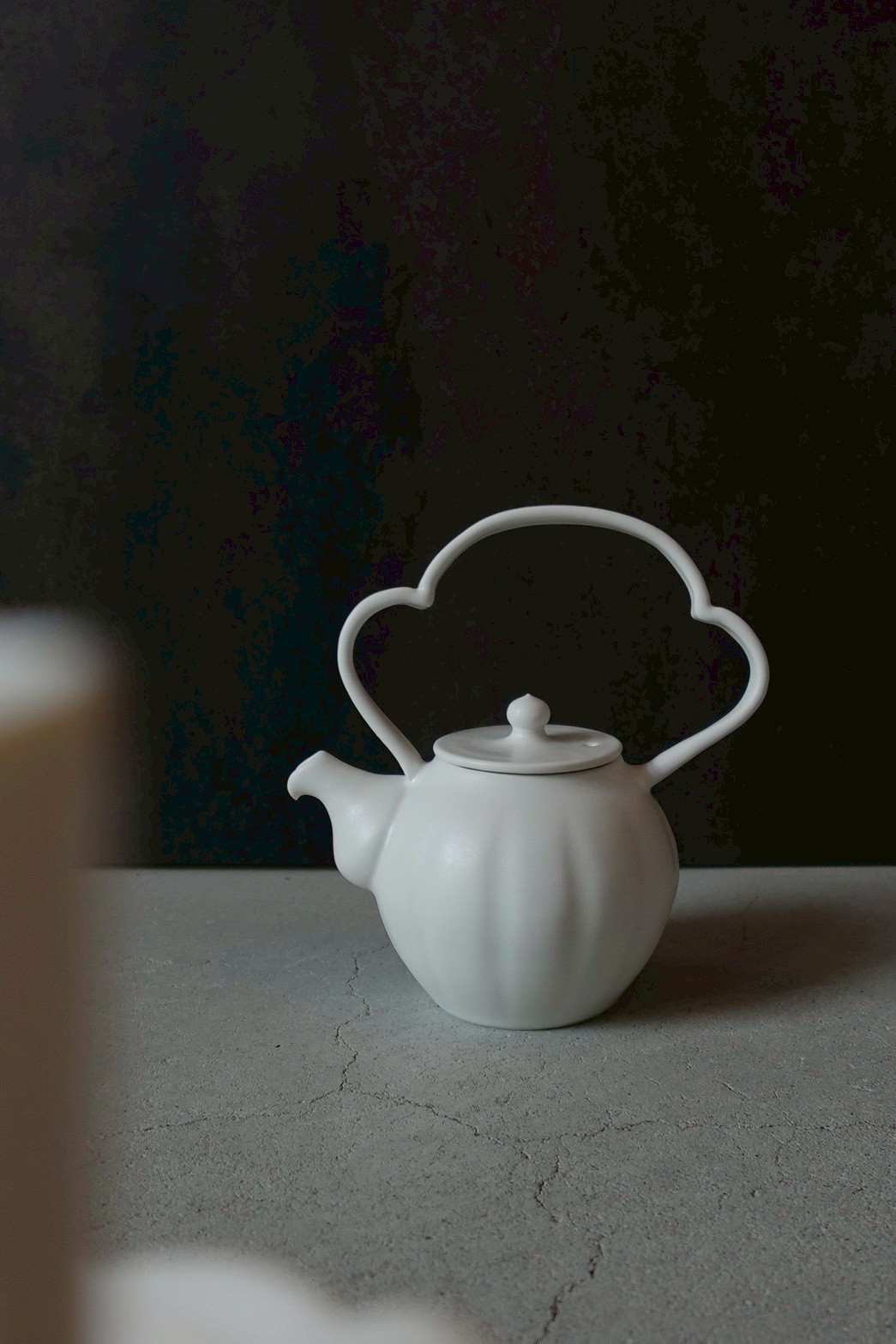
| Matsuo Ryosuke | Metallic colors brushed over the rim of an ivory glaze | Lobed ovals. Blue and dark brown bleed into the glaze at the rim | Starters, side dishes, single servings |
| Lo YikSze | Five to seven glazes layered on themes of Kyoto's moon, night and moss | A painterly landscape that differs on every plate | Sweets, small portions, display plates |
Jiucasca Maeda Asami: Patterns Raised on Porcelain

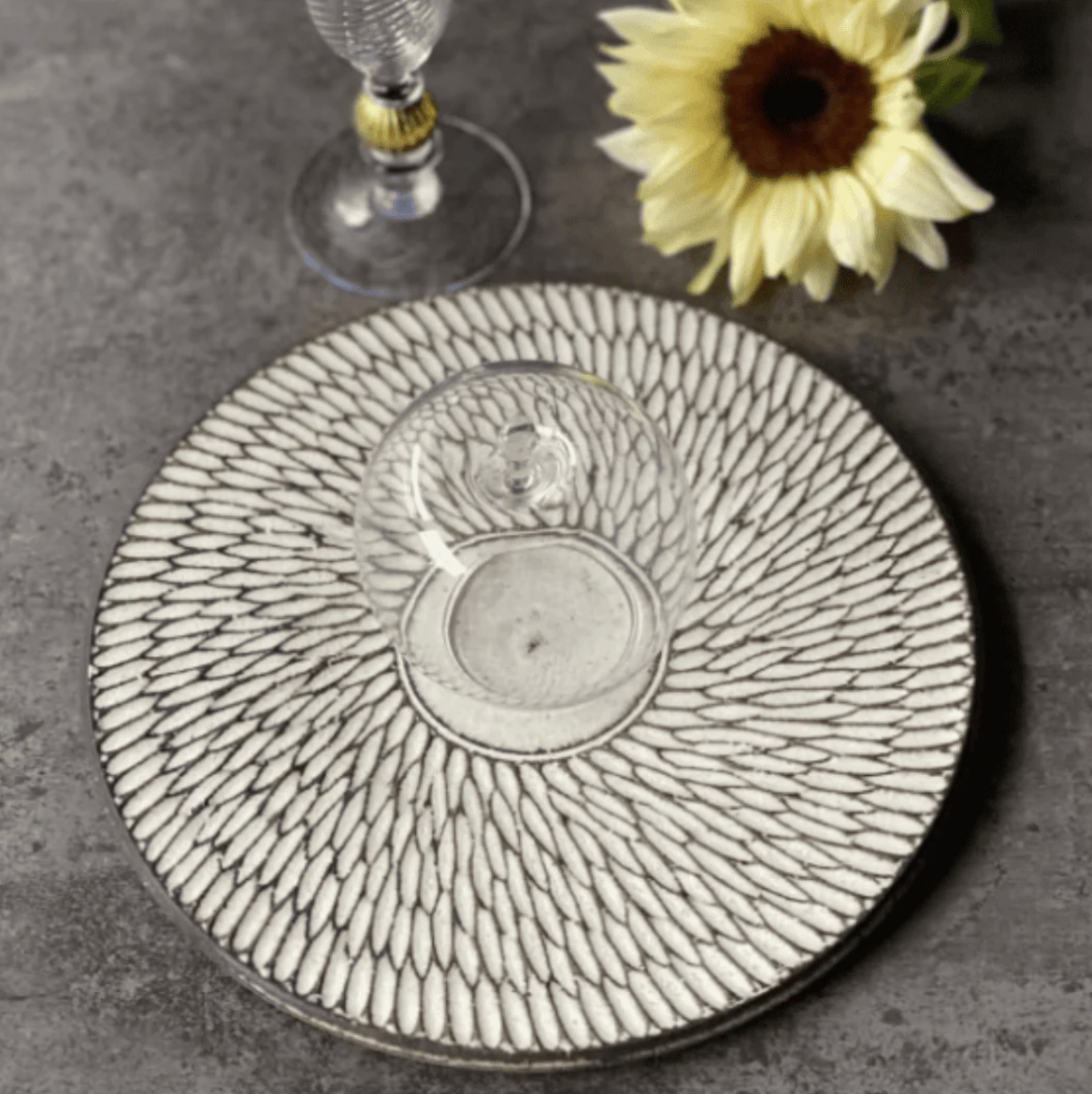
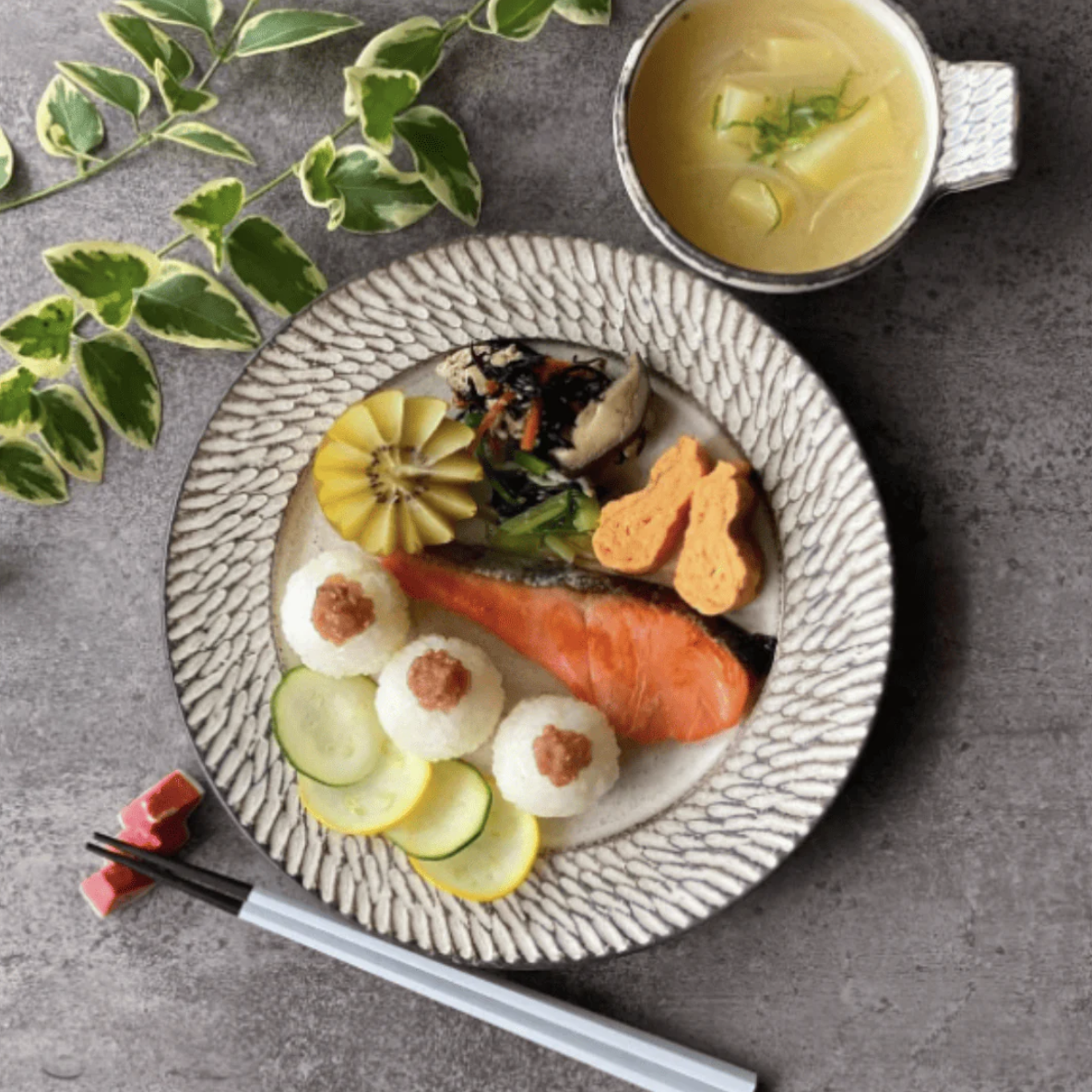
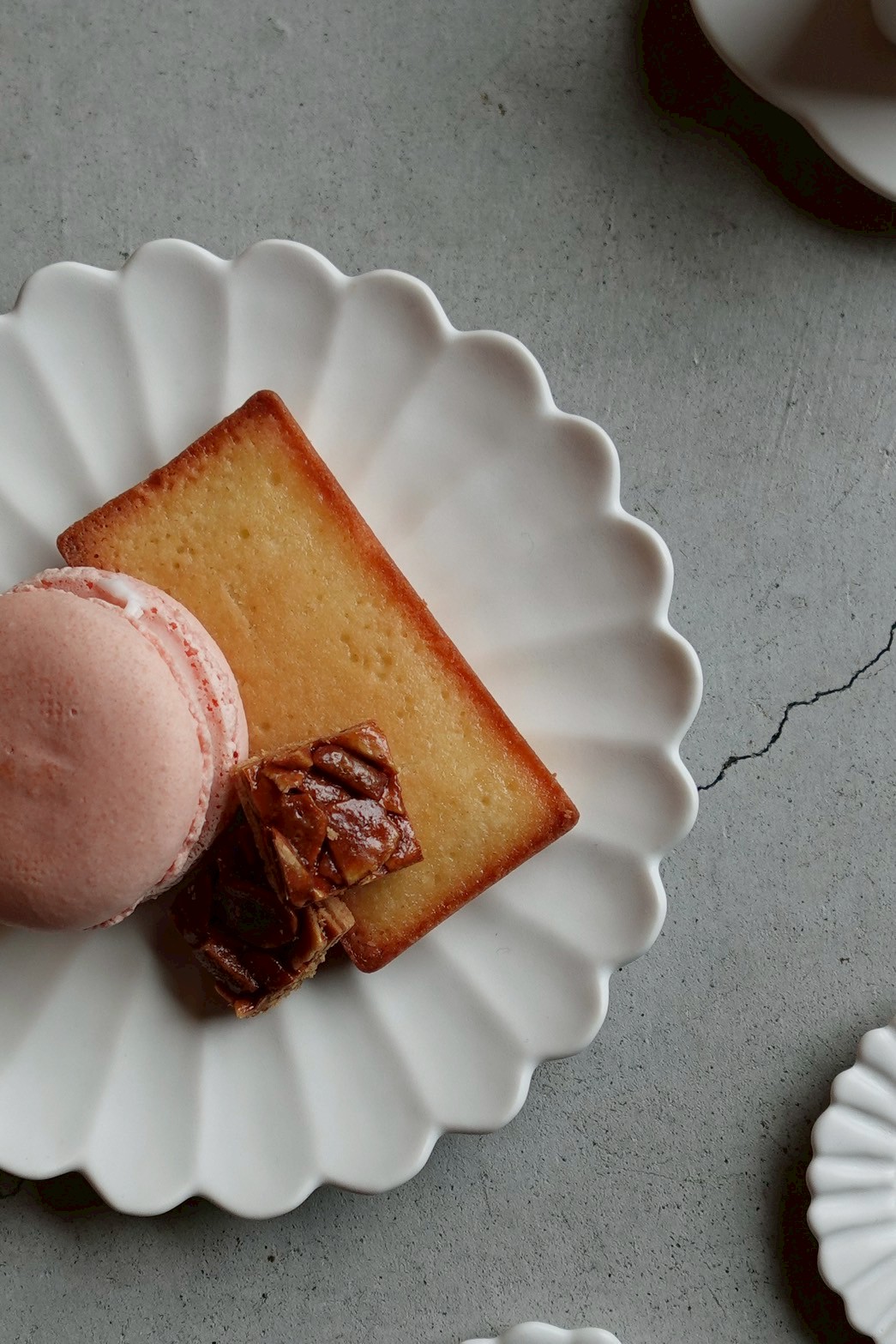
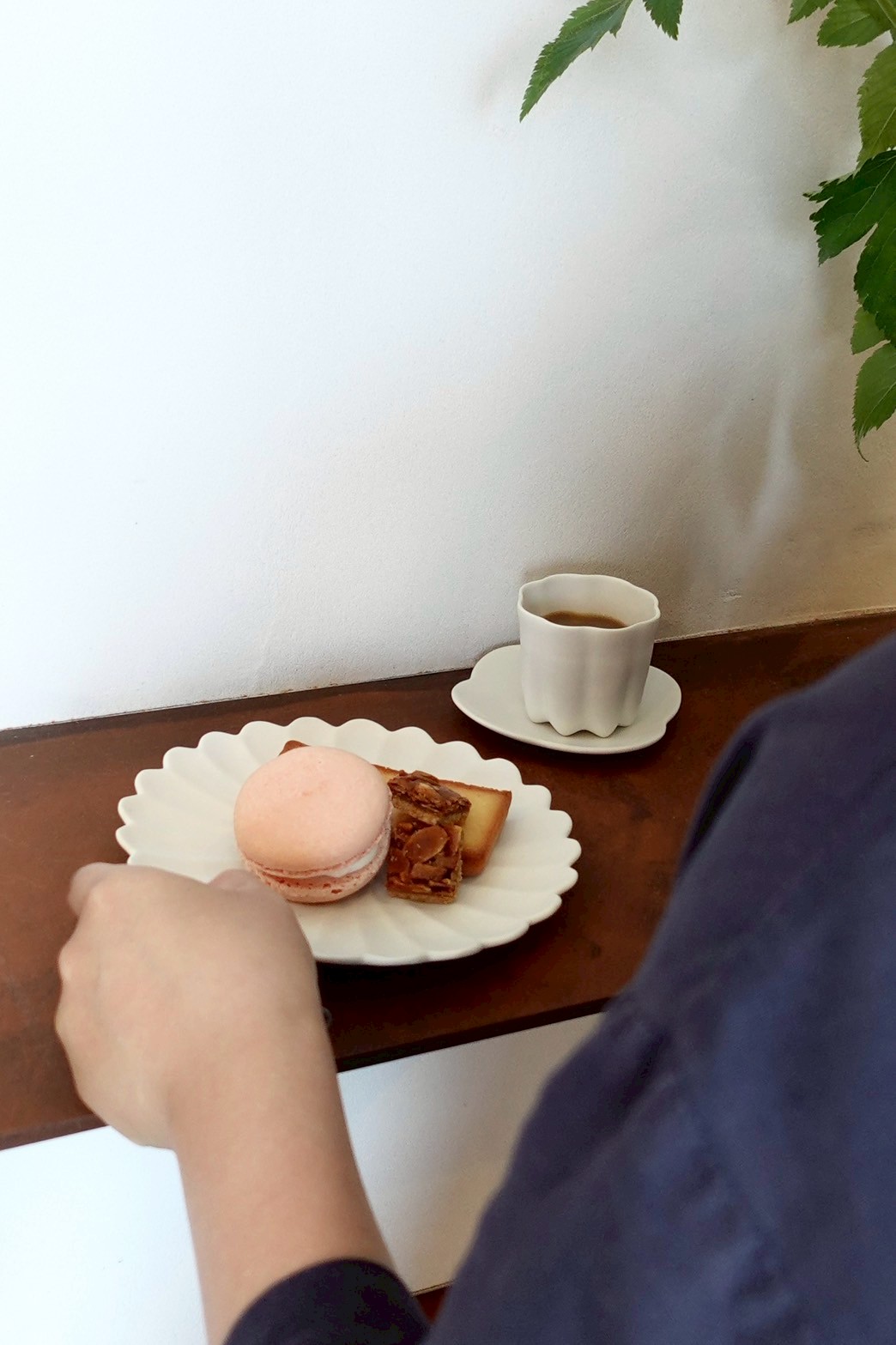
Maeda Asami raises patterns on a porcelain body with icchin (drawing lines by squeezing slip from a dropper) and relief carving. The photo lays out pale celadon pieces: lobed plates whose rims ripple like petals, octagonal plates and leaf-shaped plates, each with a lace-like pattern standing out on it. Glaze pools in the valleys of the pattern, so the relief becomes light and dark. The same technique also comes as an octagonal 7-sun plate finished in bronze glaze.
By color, there are three lines: pale celadon that sits easily on a white table, bronze, an antique-looking metallic glaze, and a pale blue-green ash-blue glaze. The technique and the artisan are introduced in the Maeda Asami artisan article.
Hirai Shu: "Black Gold" Like Aged Iron

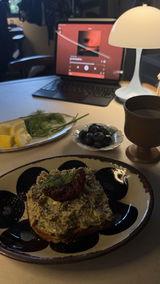
Hirai Shu's "black gold" series is pottery that expresses the texture of aged iron with an original glaze. Silver and rust tones are mottled over a black ground, and the round plate in the photo has a slightly raised rim. It looks weighty but is light in the hand, and the surface is smooth, so it is easy to use every day without a second thought. The black ground makes the colors of grilled meat, bread and fruit stand out sharply.
TATA pottery studio: Shape and Painting by Two People

TATA pottery studio is a two-person studio where Tanaka Daiki shapes the pieces and Tanabe Kei paints them. Easy-to-use shapes made with "the beauty of use" in mind carry painting with a slightly retro feel. The flower-shaped plates in the photo have an animal painted at the center of the white ground and flowers around a gold-edged rim. The octagonal 7-sun plate has a bear, and the cut-corner rectangular plates and oval flat plates have flowers. These are plates that brighten the table even on days when nothing is served on them. The studio's story is in the Tanaka Daiki artisan article.
Matsuo Ryosuke: Blue and Dark Brown Bleeding at the Rim

Matsuo Ryosuke's lobed plate gives a soft oval a flower-like outline. Metals that fire blue or dark brown are brushed over the rim of an ivory glaze, so in the kiln the color bleeds into the glaze, and each plate holds shades from pale to deep. The way it bleeds differs from plate to plate. It is a good size for bread, starters or a single serving.
Lo YikSze: Kyoto Landscapes Painted in Glaze

Lo YikSze layers five to seven glazes in each firing, on themes of the moon and the feel of night seen in Kyoto, and of stone and moss. "Night Mist" in the photo is a semi-porcelain plate with white glaze scattered like stars or mist over a black ground. Even within one series, every plate shows a different landscape, and choosing one is part of the pleasure. Besides sweets and small portions, it can also stand as a display plate.
Choosing by Size and Shape
Once you have chosen an artisan, next comes size. Plates by Kyoto artisans tend to be on the small side, so working back from how you will use them keeps it simple.
| Size and shape | How to use | Examples in this article |
|---|---|---|
| Mamezara and small plates | Condiments, sweets, side plates. Also a tray for jewelry | Maeda Asami's mamezara, Lo YikSze's small plates |
| Medium plates (5 to 6 sun) | Cake, salad, side dishes. The plate you will use most | Maeda Asami's medium plates, Hirai Shu's plates |
| 7-sun plates | One person's main dish, one-plate meals | Maeda Asami's octagonal plates, TATA pottery studio's octagonal plates |
| Oval and rectangular plates | Starters, grilled fish, bread. A change of pace on a table full of round plates | Matsuo Ryosuke's ovals, TATA pottery studio's rectangular plates |
How to think about size is covered in choosing Japanese plates, and more detail by type in the articles on medium plates and square and oblong plates.
Caring for Plates by Kyoto Artisans
Care depends not on whether a piece is from Kyoto but on its body and glaze.
- Porcelain (such as Maeda Asami's plates) Absorbs almost no water, so washing and drying is enough. Wash raised patterns with a soft sponge
- Stoneware and semi-porcelain The clay can absorb water, so dipping it in water before use helps keep it from staining. After washing, let it dry well before putting it away
- Metallic glazes (bronze, black gold and similar) Avoid sponges with abrasives. The texture settles and softens the more you use it
Whether a piece can go in the microwave or dishwasher differs by artisan and piece, so check the description on the product page. How to tell is covered in our article on microwave and dishwasher use, and everyday care in stoneware care.
Related Articles and Terms
Understanding Kyoto Pottery
- Kyo Ware and Kiyomizu Ware: Kyoto's Refined Ceramics
- Where to Buy Pottery in Kyoto: Gojozaka, Kiyomizu & Online
- Artisan Maeda Asami | Japanese Porcelain Patterned in Relief, Not Paint
- TATA pottery studio | The Charming Kyoto Porcelain Two People Make Together
Techniques and Choosing Plates
- Icchin: Slip Trailing, the Raised Dot Technique
- Rinka: The Flower-Shaped Rim on Japanese Plates and Bowls
- Metallic Glaze: A Metal Sheen Made Without Metal
- Japanese Plates: Which Size and Shape for Which Dish
Shop
- Kyoto Pottery | Kyo-yaki & Kiyomizu-yaki Ceramics
- Maeda Asami | Bronze & Ash-Blue Glazed Porcelain, Kyoto
- Hirai Shu | Metallic Glaze Sake Ware, Cups & Plates, Kyoto
- Matsuo Ryosuke | Plates & Bowls Shaped by Running Glaze
- Lo YikSze | Poem-Titled Bowls, Plates & Sake Cups
- Japanese Plates | Handmade Ceramic Plates from Japan
Plates by Kyoto Artisans, for Your Table
Porcelain with raised patterns, black gold like iron, painted plates made by two people, blue bleeding at the rim, and glazes that capture Kyoto at night. Because Kyo ware has no fixed style, there are as many faces of a plate as there are artisans. At nokaze, you can browse plates by Kyoto artisans one by one.
See Kyoto potteryFAQ
Is there anything Kyo ware and Kiyomizu ware plates have in common?
What size is best for a first plate?
Can they go in the microwave or dishwasher?
Shop the related pieces
Kyoto
37 pieces See all
Ryosuke Matsuo
Foliate Oval Plate, Brown No.1
¥4,200
Plates

jiucasca
Ash-Blue Glaze Coffee Cup — Kyoto
¥5,060
Japanese Coffee Cups

jiucasca
Blue-White Porcelain Foliate Arabesque Plate, Small
¥3,300
Plates

Tobo Usurai
Ice-Crackle Rice Bowl, Large — Bubble Blue
¥4,400
Japanese Rice Bowls
Japanese Plates
188 pieces See all

New to Japanese pottery? Start here — its history, how pottery differs from porcelain, the clays and glazes behind each style, and how to care for a piece. → Japanese Pottery: The Complete Guide