

Kyoto
Kyoto pottery developed to put the food first. The painting and the form are both worked out for the moment a dish is served on it.
What sits here is the work of makers based in Kyoto. Porcelain so thin and light it seems to have come off the palm. Plates painted by a craftsman who still works at a Kiyomizu kiln. Crazing shown through the glaze like cracked ice. Shigaraki clay carried into Kyoto and layered under five or more glazes. Cups in a cream glaze edged with dark brown or blue. Kyoto has drawn people and techniques from every region for a thousand years, which is why each maker starts from somewhere different.
Kyo-yaki and Kiyomizu-yaki do not name a particular clay or glaze. They are collective names for pottery fired in Kyoto, which is exactly why the range is so wide. Painting in cobalt under the glaze is sometsuke, and the gosu pigment only turns blue inside the kiln. The ring your finger finds underneath is the kodai, the one place the bare clay shows. For the history, read Kyo-yaki and Kiyomizu-yaki.
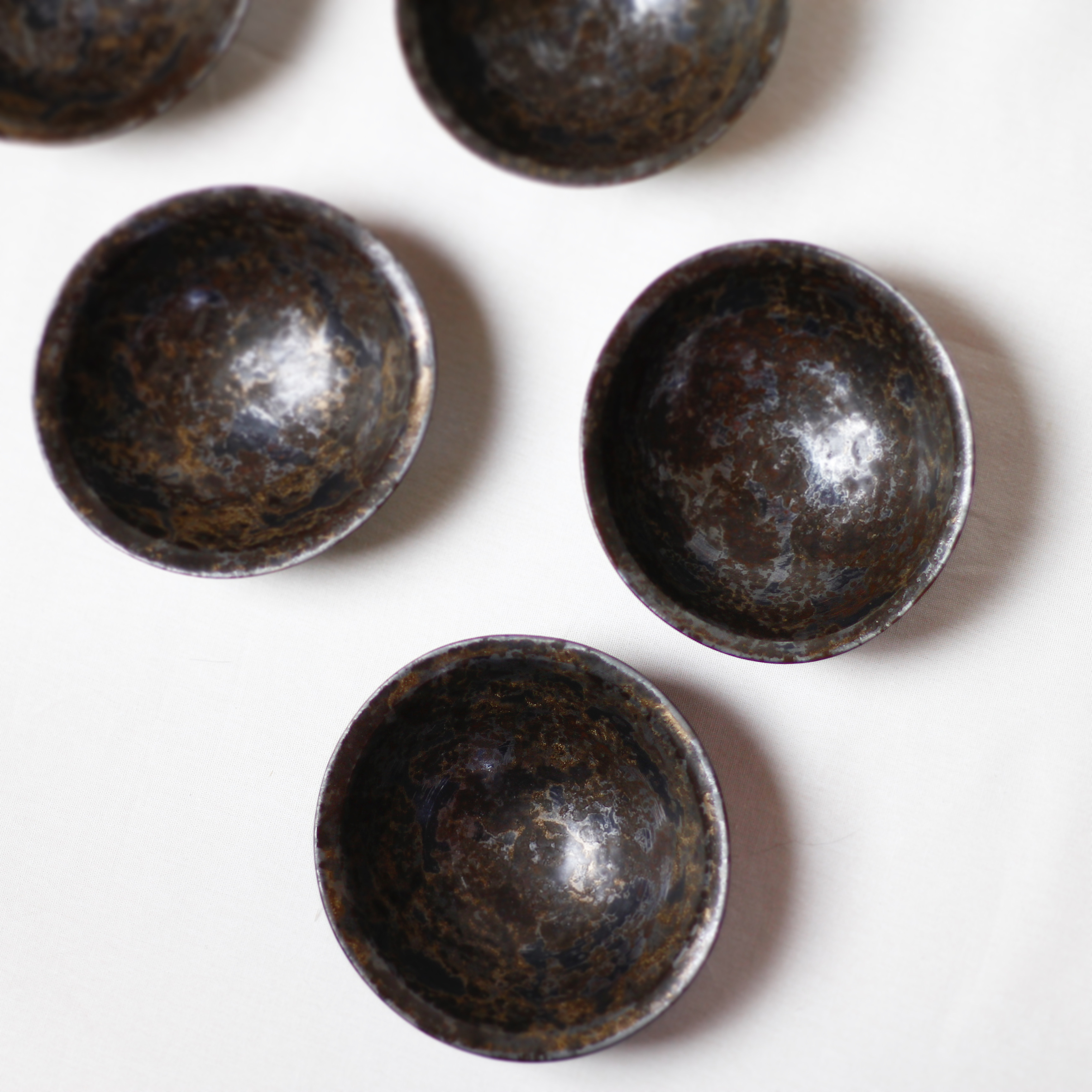
Pickup Items

Ryosuke Matsuo
Foliate Oval Plate, Brown No.1
¥4,620
Japanese Plates

jiucasca
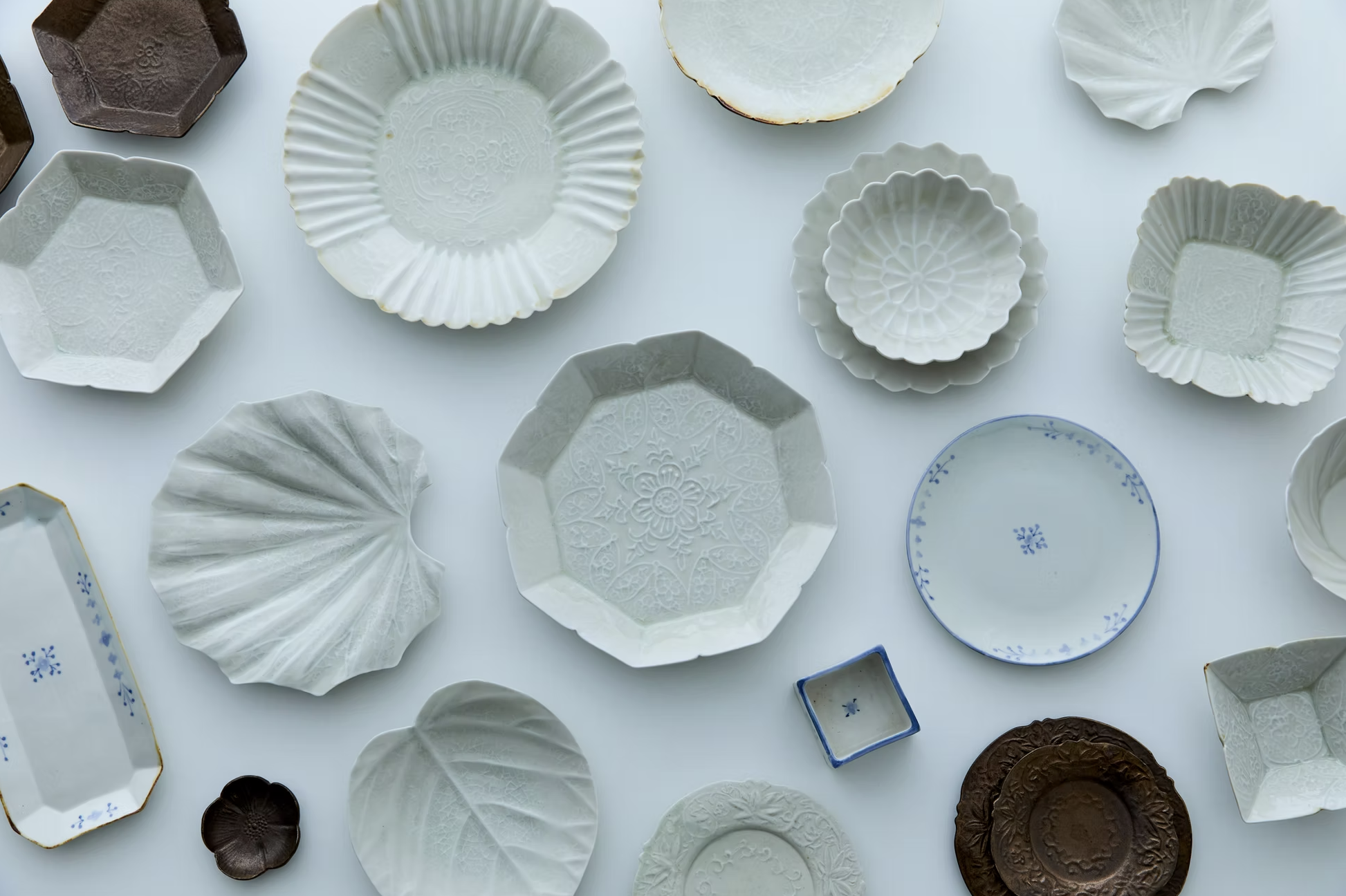
Blue-White Porcelain Foliate Arabesque Plate, Small
¥3,300
Plates

Ceramics - Rakudo
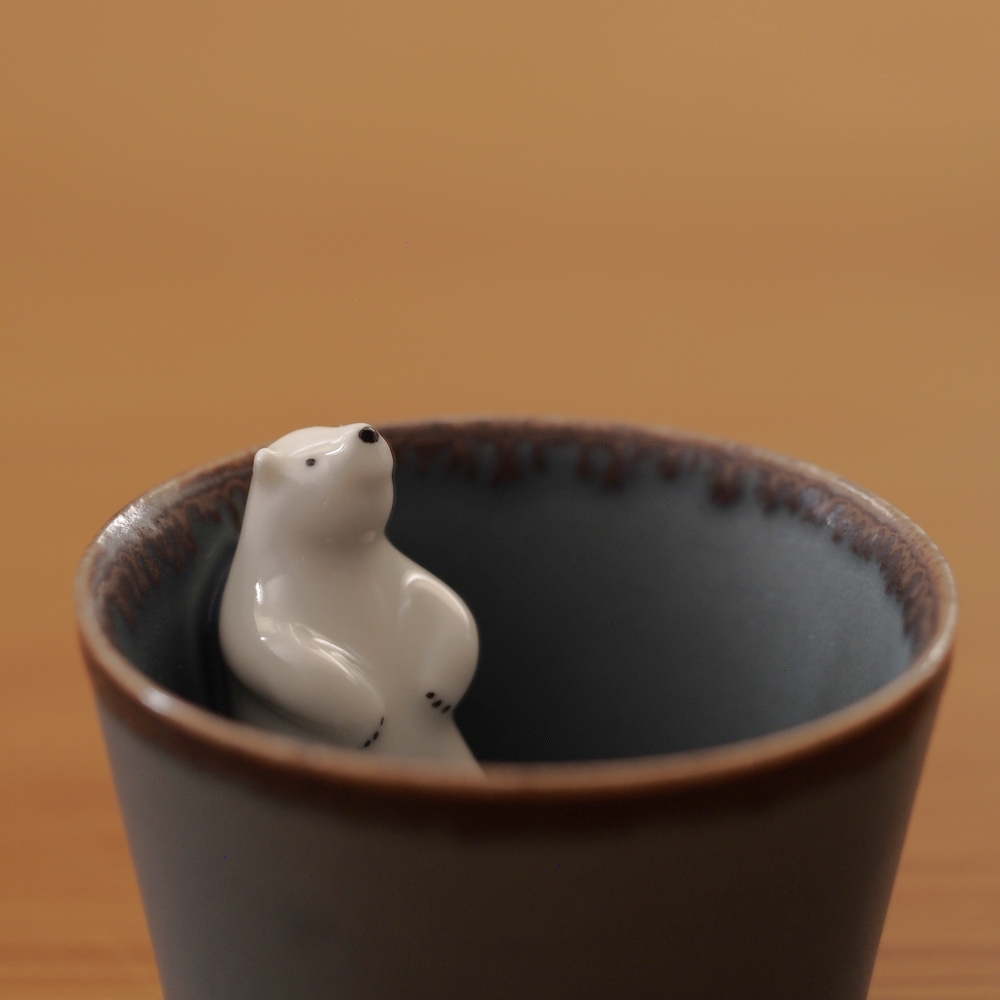
Panda Sake Cup
¥3,520
Japanese Sake Ware

Tobo Usurai
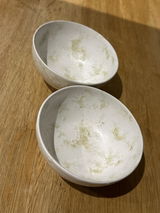
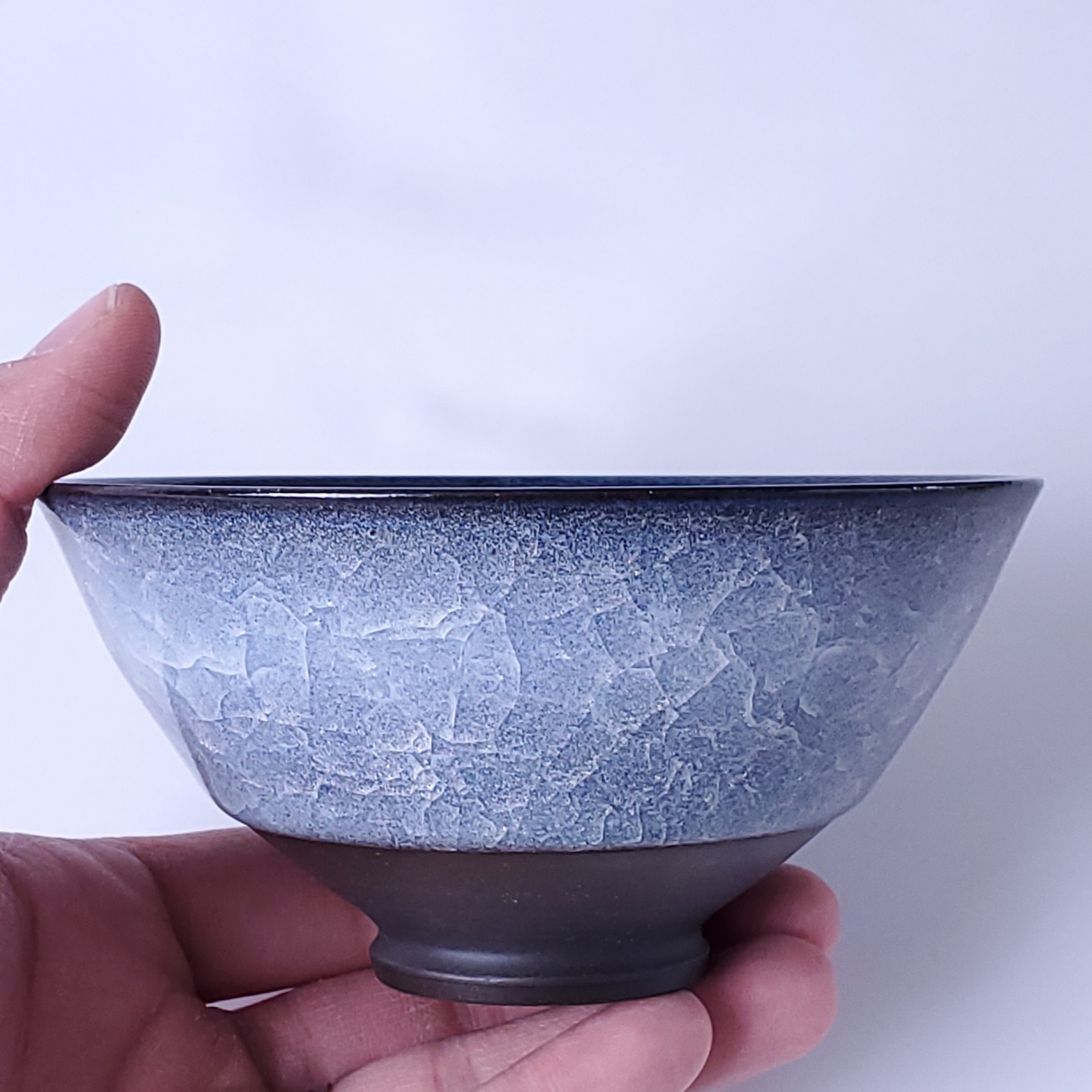
Ice-Crackle Rice Bowl, Large — Bubble Blue
¥4,400
Japanese Rice Bowls

Ryosuke Matsuo
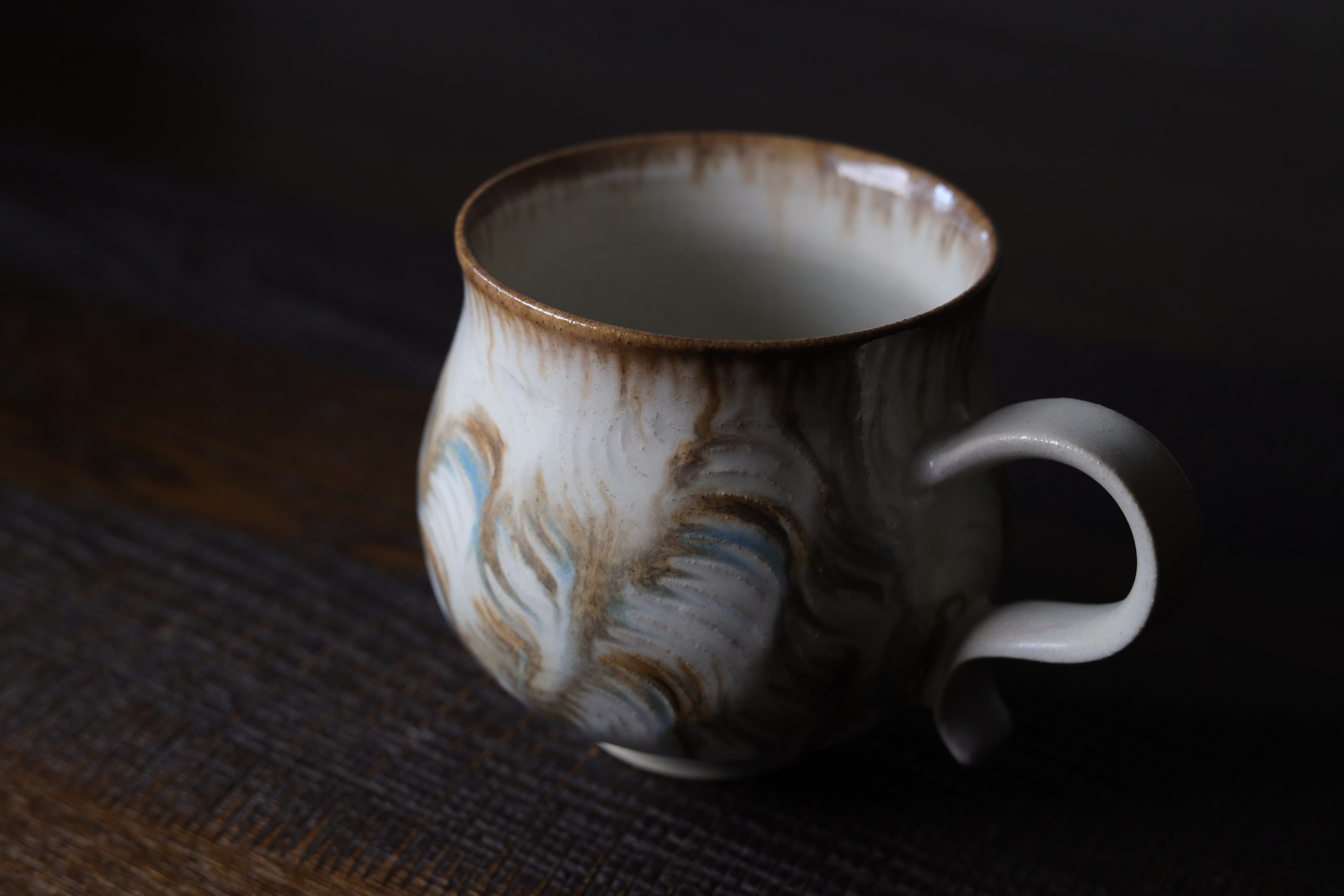
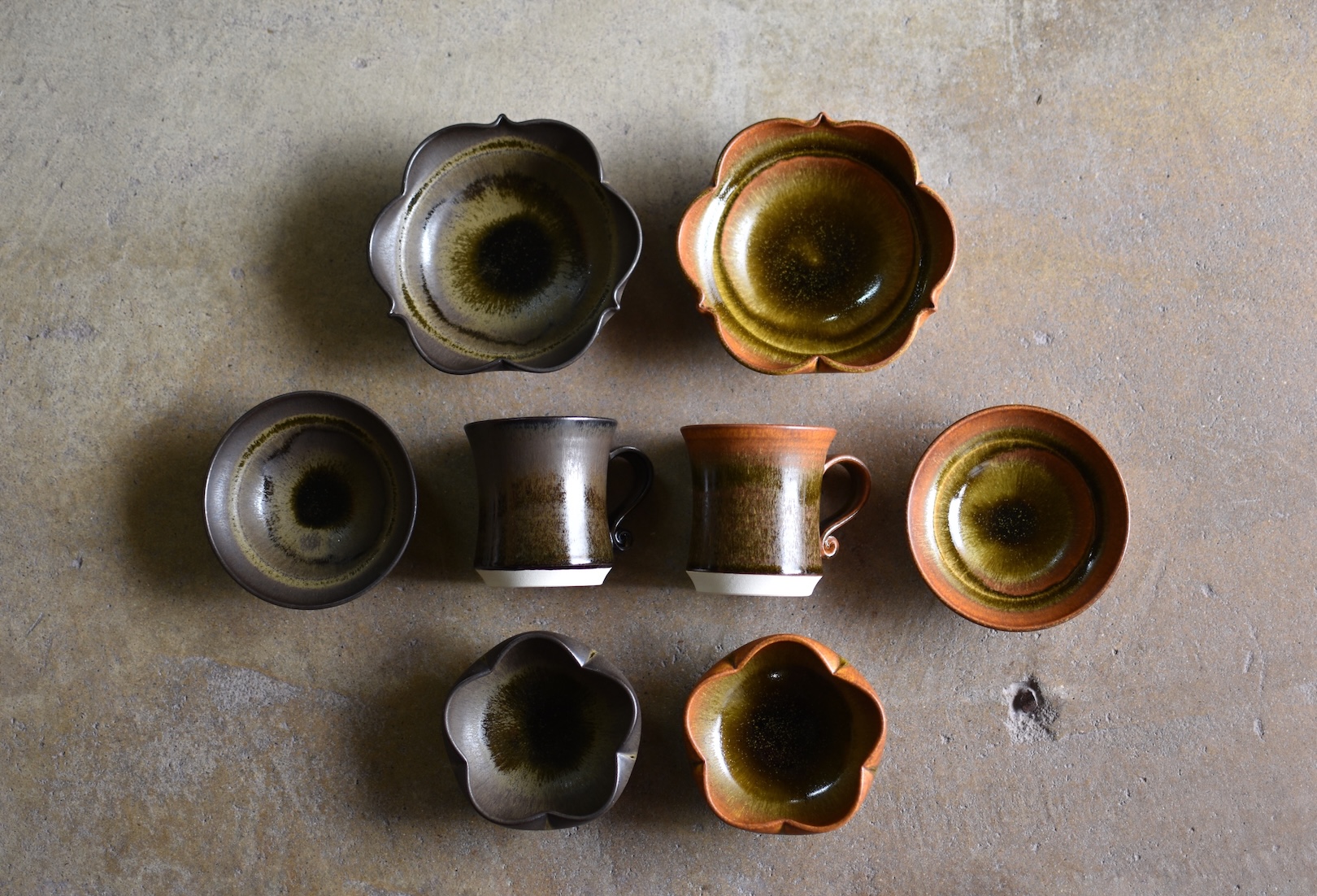
Twisted-Handle Mug 260ml — Ooze Blue
¥5,170
Japanese Mugs

Ryosuke Matsuo
Twisted-Handle Mug 260ml — Ooze Melt
¥5,280
Japanese Mugs

Lo YikSze
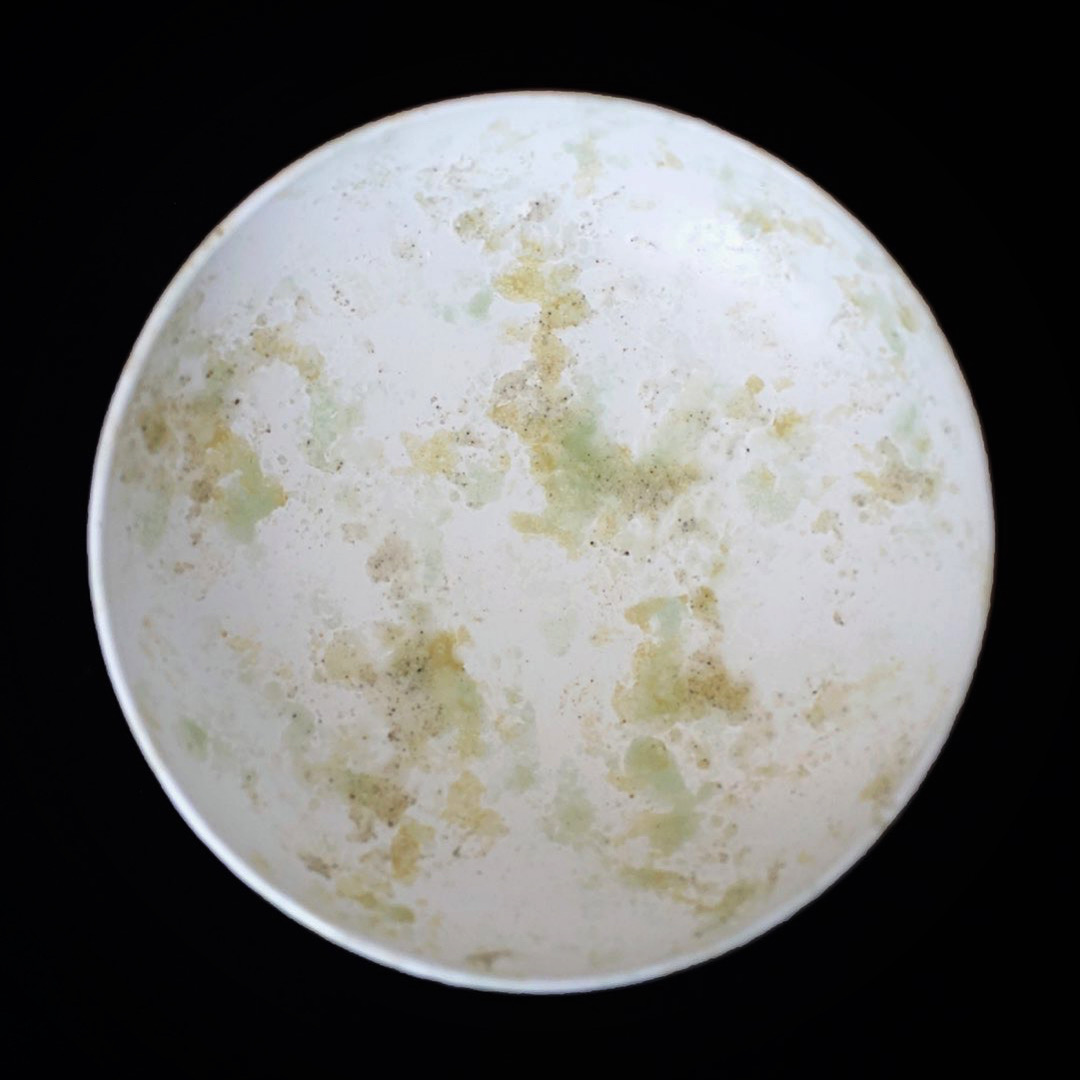
Walk to the Moon Small Plate — Kyoto
¥2,500
Plates

jiucasca
Bronze Glaze Foliate Arabesque Mamezara Tiny Plate
¥3,080
Plates
Ryosuke Matsuo
Foliate Oval Plate, Brown No.1
¥4,620
Japanese Plates
jiucasca
Blue-White Porcelain Foliate Arabesque Plate, Small
¥3,300
Plates
Lo YikSze
Walk to the Moon Small Plate — Kyoto
¥2,500
Plates
jiucasca
Bronze Glaze Foliate Arabesque Mamezara Tiny Plate
¥3,080
Plates

jiucasca
Bronze Glaze Foliate Arabesque Plate, Medium
¥5,060
Plates

jiucasca
Dahlia Bronze Glaze Plate, 15cm — Kyoto
¥3,740
Plates

jiucasca
Tsuwabuki Leaf Ash-Blue Glaze Plate, 18cm
¥5,280
Plates

jiucasca
Dahlia Ash-Blue Glaze Tiny Mame Plate — Kyoto
¥1,320
Plates
Tobo Usurai
Ice-Crackle Rice Bowl, Large — Bubble Blue
¥4,400
Japanese Rice Bowls

Ryosuke Matsuo
Mud-Textured Small Bowl — Blue
¥3,740
Japanese Bowls

Ryosuke Matsuo
Mud-Textured Small Bowl — Brown
¥3,630
Japanese Bowls

Ryosuke Matsuo
Rice Bowl — Ooze Brown
¥4,620
Japanese Bowls

Ryosuke Matsuo
Rice Bowl — Ooze Blue
¥4,730
Japanese Bowls

Ryosuke Matsuo
Rice Bowl — Ooze Melt
¥4,840
Japanese Bowls

jiucasca
Chrysanthemum Ash-Blue Glaze Bowl, 12cm
¥3,300
Bowls

jiucasca
Chrysanthemum Ash-Blue Glaze Small Bowl
¥2,200
Bowls
Ryosuke Matsuo
Twisted-Handle Mug 260ml — Ooze Blue
¥5,170
Japanese Mugs
Ryosuke Matsuo
Twisted-Handle Mug 260ml — Ooze Melt
¥5,280
Japanese Mugs

Ryosuke Matsuo
Beer Cup 350ml — Ooze
¥4,840
Japanese Mugs

Ryosuke Matsuo
Beer Cup 350ml — Blue
¥4,730
Japanese Mugs

Ryosuke Matsuo
Beer Cup 350ml — Brown
¥4,620
Japanese Mugs

Ryosuke Matsuo
Pudding Mug 230ml — Blue
¥4,290
Japanese Mugs

Ryosuke Matsuo
Pudding Mug 230ml — Brown
¥4,180
Japanese Mugs

Ryosuke Matsuo
Soup Mug 400ml — Brown
¥6,050
Japanese Mugs

Related Articles
All Articles-

Artisan Fujiwara Jun | A Blue Like a Lake and Sky, Sealed in Shigaraki Clay
-

Artisans Takezaki Noriyasu and Takezaki Yoko | Two Traditional Craftspeople Firing One Bizen Kiln
-

Tsuboya Yachimun Street: Okinawa's Pottery Quarter
-

Visiting Imbe: A Day in Bizen's Pottery Village
-

Pottery Towns Near Kyoto: Day Trips to Shigaraki, Tamba and Iga
-

Hasami Pottery Festival 2027 | Usually April 29 to May 5: Parking, Shuttle Buses and Avoiding the Crowds


