

Tokoname
Tokoname is where most of Japan's teapots have come from. Its iron-rich clay rounds off the astringency of green tea, so what you pour actually tastes different.
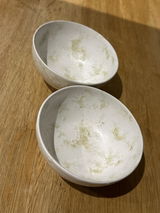
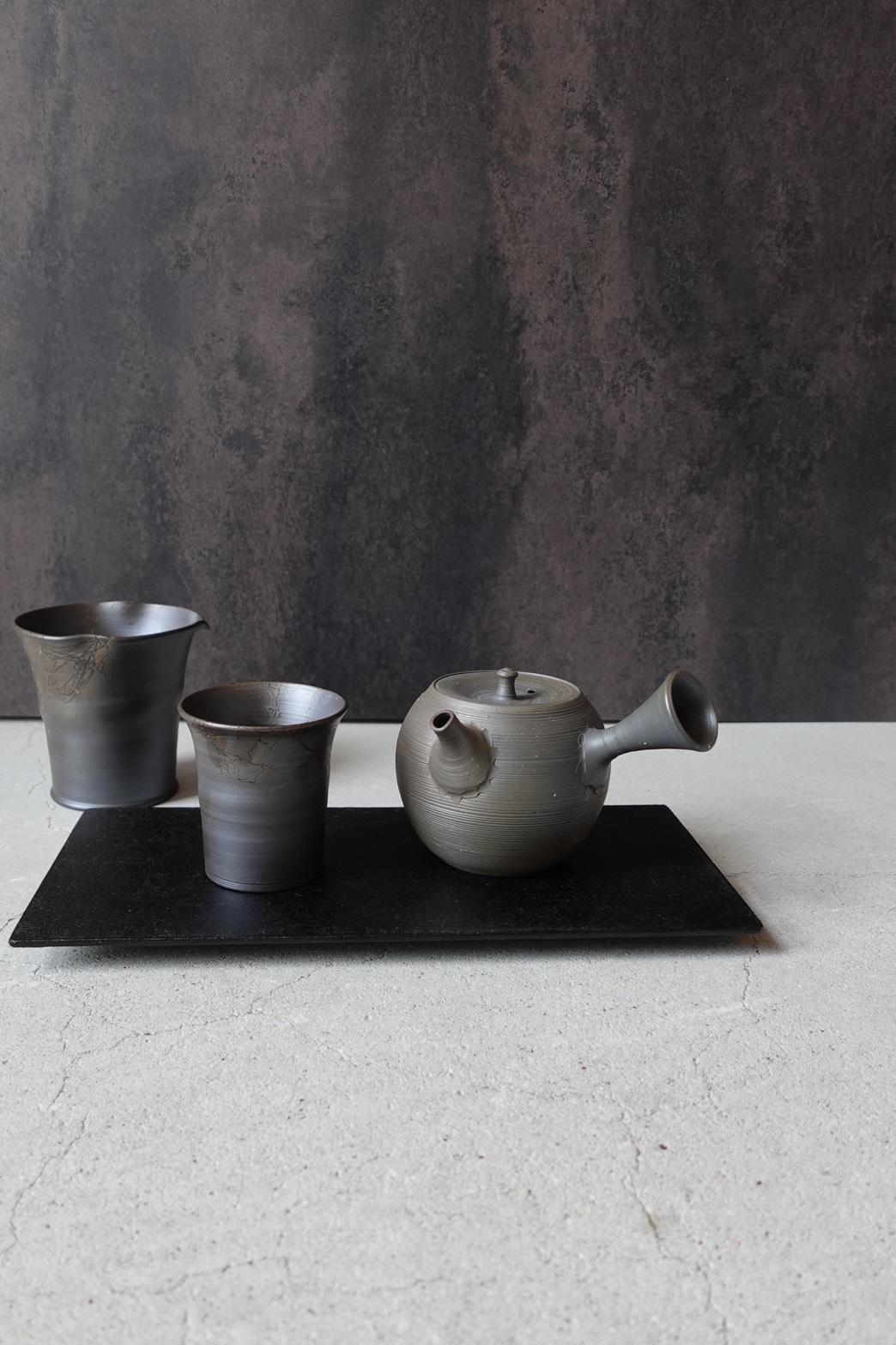
What sits here is the work of a maker born and raised in the teapot town. You notice the lightness the moment you lift one, then the fineness of the strainer. On the mogake pieces, seaweed is wrapped around the body before firing, and only where it touched does the color change, leaving greenish lines and mottling. What happened inside the kiln is the surface pattern. The cups and the vases come from the same clay and the same firing.
Tokoname is one of Japan's Six Ancient Kilns and has been firing since the Heian period. Shudei teapots suit green tea because the iron in the clay reacts gently with the tannin. There is no glaze, so the inside gains sheen with use and the outside settles under the oil of your hands. Give one teapot one kind of tea and the flavor builds. On choosing one, see Tokoname kyusu and kyusu, houhin and dobin.
Pickup Items

Yamada Yutaro
Mogake Vase, Sand — Tokoname
¥4,400
Japanese Vases

Yamada Yutaro
Mogake Vase, Round Black — Tokoname
¥4,400
Japanese Vases

Yamada Yutaro
Hammered Texture Vase — Tokoname
¥4,400
Japanese Vases

Yamada Yutaro
Mogake Vase, Amber — Tokoname
¥4,400
Japanese Vases

Yamada Yutaro
Mogake Japanese Teacup — Tokoname Ware
¥3,300
Japanese Tea Cups (Yunomi)

Yamada Yutaro
Mogake Yunomi Teacup, Vermilion No.1 — Tokoname
¥3,300
Japanese Tea Cups (Yunomi)

Yamada Yutaro
Mogake Yunomi Teacup, Vermilion No.2 — Tokoname
¥3,300
Japanese Tea Cups (Yunomi)
Related Articles
All Articles-

Artisan Fujiwara Jun | A Blue Like a Lake and Sky, Sealed in Shigaraki Clay
-

Artisans Takezaki Noriyasu and Takezaki Yoko | Two Traditional Craftspeople Firing One Bizen Kiln
-

Tsuboya Yachimun Street: Okinawa's Pottery Quarter
-

Visiting Imbe: A Day in Bizen's Pottery Village
-

Pottery Towns Near Kyoto: Day Trips to Shigaraki, Tamba and Iga
-

Hasami Pottery Festival 2027 | Usually April 29 to May 5: Parking, Shuttle Buses and Avoiding the Crowds


