

Arita
Arita is where porcelain was first fired in Japan. White stone was found here four hundred years ago, and the history of Japanese porcelain starts from that.
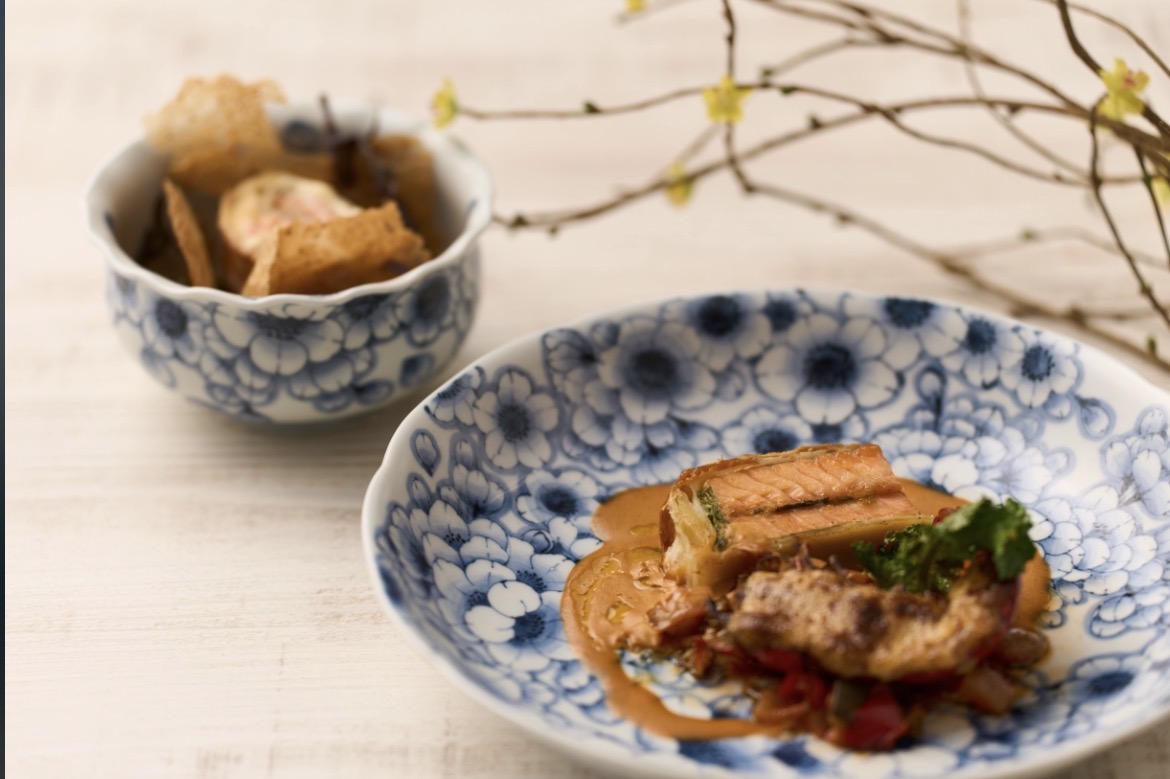
What sits here comes from Sojiro kiln in the town of Arita. Father and son, two generations, throwing on the wheel and painting each piece by brush. An oversized mug with cherry blossom running right across it. A rim plate with fruit and leaves crossing the edge. Nothing is transferred, so even in the same design the branches reach differently on every piece. Set two side by side and that difference is the point.
Porcelain is fired near 1,300C from crushed pottery stone, so it stays strong while thin, and the rim glows faintly against the light. Painting in cobalt before the glaze is sometsuke, and the gosu pigment is grey when it goes on. It turns blue only in the kiln, so even the painter does not know the final depth until the firing ends. Wash it like any everyday tableware; it takes the dishwasher. For the history, read Arita ware.
Pickup Items

Plates
Nozberry Rim Plate, 21cm
¥17,600

Glass ware
Gentle Cherry Blossom Mug, Extra Large
¥26,400

Plates
Nozberry Compote Stand, 21cm
¥19,800

Tea ware
Nozberry Coffee Dripper
¥19,800

Glass ware
Nozberry Free Cup
¥11,000

Glass ware
Allover Cherry Blossom Mug, Extra Large
¥22,000

Glass ware
Swirling Cherry Blossom Mug, Extra Large
¥26,400

Plates
Nozberry Rim Plate, 24cm
¥22,000
Related Articles
All Articles-

TATA pottery studio | The Charming Kyoto Porcelain Two People Make Together
-

Arita vs Hasami Porcelain: Why the Same White Porcelain Took Two Paths
-

Arita Pottery Fair: The Usual Dates, and How to Miss the Million-Person Crowd
-

Kyoto Pottery: Where to Buy Ceramics in Kyoto
-

Iga Pottery Festival 2026: 30 Booths, and the Home of the Donabe
-

Koishiwara Folk Pottery Village Festival 2026: Free Shuttle and Traffic


